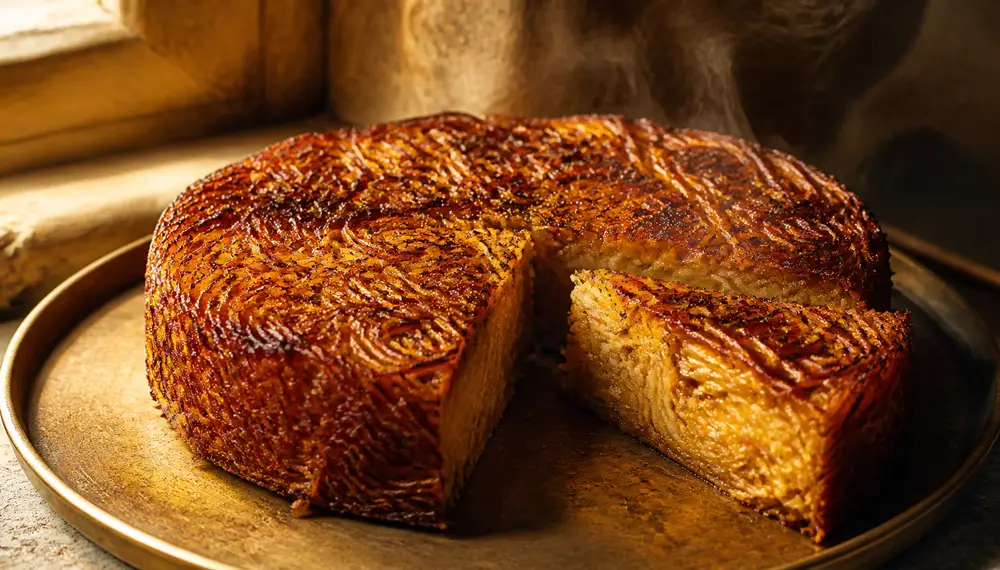
Huevos Haminados: The Slow-Cooked Sephardic Eggs That Turn Amber Overnight
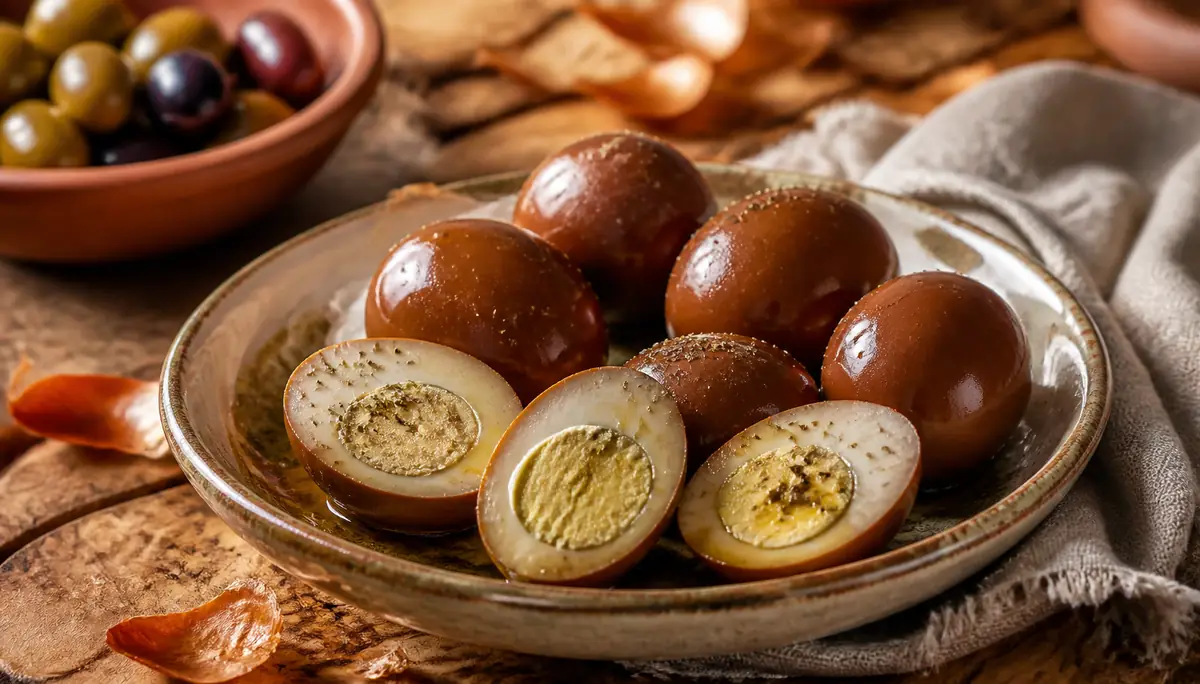
Crack open a huevo haminado and nothing about it looks like a hard-boiled egg. The white has gone the color of weak tea, sometimes deep mahogany near the shell. The yolk is not chalky and gray-rimmed but dense, smooth, almost like a savory custard, with a faintly sweet, roasted flavor that no seven-minute egg can fake. It tastes of patience, because that is the only ingredient you cannot substitute.
Huevos haminados — known as beid hamine in Arabic-speaking Jewish communities and simply as “brown eggs” in a lot of Sephardic households — are eggs simmered for six to twelve hours in water darkened with onion skins, coffee grounds, or tea. They came out of a religious constraint and turned into one of the most beloved textures in the Jewish kitchen. This guide covers where they come from, why cooks everywhere are rediscovering them, and exactly how to make them at home with a pot you already own.
Table of Contents
- What Huevos Haminados Actually Are
- Historical and Cultural Context
- Why Slow-Cooked Eggs Are Trending Again
- Ingredients and What Each One Does
- Step-by-Step: The Stovetop Method
- The Oven and Slow Cooker Methods
- Expert Tips for Perfect Amber Eggs
- Common Mistakes to Avoid
- How to Serve Them
- Storage and Food Safety
- Frequently Asked Questions
- Key Takeaways
- Conclusion
What Huevos Haminados Actually Are
The name comes from the Ladino word haminado, built on the same root as hamin, the Sephardic Sabbath stew. Hamin means “hot” — the pot that stayed warm from Friday afternoon until Saturday lunch. A haminado egg is, literally, an egg that spent the night in that pot.
Two things happen over those long hours. First, the tannins and pigments in the cooking liquid seep through the porous shell and stain the white a translucent brown. Second, the proteins in the egg cook so slowly and gently that they never seize. Instead of the rubbery bounce of a boiled egg, you get a white that yields like firm panna cotta and a yolk that spreads rather than crumbles. There is also a slow Maillard-style browning inside the egg itself, which is where that mellow, almost caramelized flavor comes from.
Historical and Cultural Context
Jewish law forbids kindling or adjusting a flame on Shabbat, but food set to cook before sundown may keep cooking. Every Jewish community answered that rule with a long-simmered pot: cholent in Poland and Lithuania, dafina in Morocco, hamin in Turkey and the Balkans, t'beet in Baghdad. Eggs, still in their shells, were tucked into the gaps between the meat, beans, and potatoes. They cost almost nothing, they took up no extra fuel, and by Saturday morning they had become something new.
Jews expelled from Spain in 1492 carried the practice into the Ottoman Empire, where it settled into the everyday food of Salonica, Istanbul, Izmir, and Rhodes. Egyptian and Syrian Jews made the same egg and called it beid hamine, often flavored with a little oil floating on top of the water to slow evaporation. In Ethiopia, Yemen, and India, parallel versions appeared wherever a Sabbath pot sat overnight.
The egg also carries symbolic weight. A whole egg is the classic Jewish food of mourning and of cycles — no beginning, no end — which is why it appears on the Passover seder plate as the beitzah and why some families dip a haminado egg in salt water at the seder meal. At Sephardic seders, a bowl of brown eggs is often passed around before the meal begins, alongside charoset and other symbolic foods. Our classic charoset guide covers the rest of that plate.
A haminado egg is the cheapest luxury in the Jewish kitchen: pennies of ingredients, a night of quiet heat, and a texture you cannot buy.
Why Slow-Cooked Eggs Are Trending Again
Three currents are pushing these eggs back into fashion. The first is the global interest in Sephardic and Mizrahi cooking, which has moved from specialty cookbooks into mainstream restaurant menus. Chefs in Tel Aviv, London, and New York now list haminado eggs as a side, a sandwich filling, or a garnish on hummus.
The second is zero-waste cooking. The main coloring agent is onion skins — the papery brown layers most people bin without thinking. A recipe that turns kitchen scraps into a striking result photographs beautifully and lines up with how a lot of home cooks want to shop and cook now.
The third is texture. The food world has spent a decade chasing the perfect egg, from sous-vide 63-degree eggs to jammy ramen eggs. Huevos haminados reach a similar custardy result with no immersion circulator and no timer anxiety, because the window of doneness is measured in hours rather than seconds.
Ingredients and What Each One Does
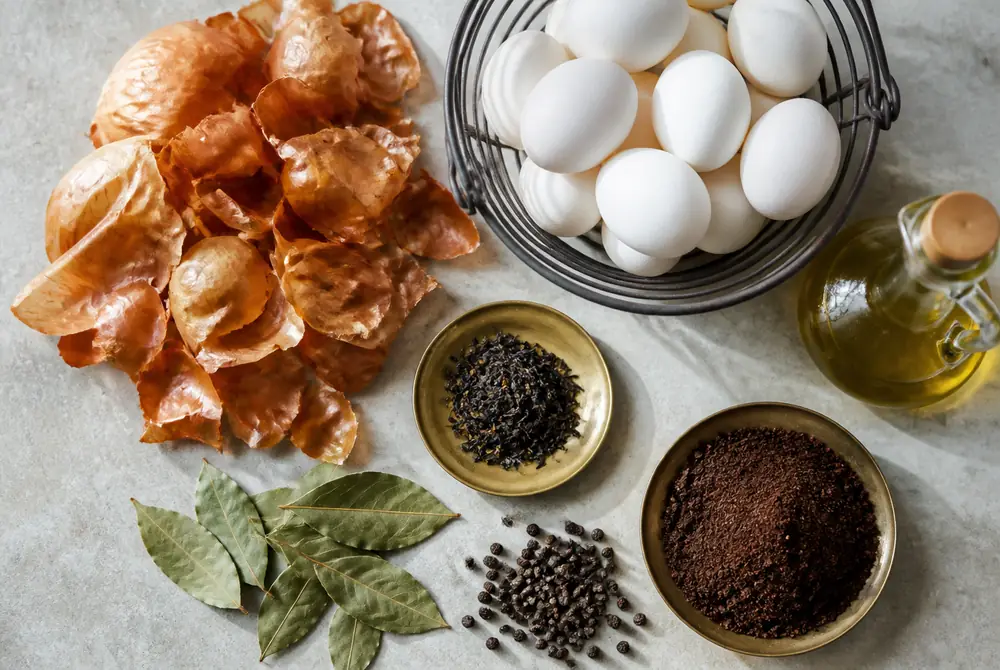
- 12 large eggs, preferably at least a week old (older shells peel more cleanly)
- Skins from 8 to 10 yellow or brown onions, loosely packed — the primary color and a soft sweetness
- 2 tablespoons used or fresh coffee grounds, or 3 black tea bags — deepens the brown and adds a faint bitterness that balances the yolk
- 1 tablespoon olive oil — forms a film on the water, slowing evaporation over a long cook
- 1 teaspoon whole black peppercorns
- 2 bay leaves
- 1 teaspoon kosher salt
- Water to cover the eggs by at least two inches
Optional additions vary by family. Turkish households sometimes add a handful of walnut shells, Egyptian cooks a spoonful of ground turmeric for a warmer tone, and Moroccan cooks a cinnamon stick. None of these are required; the onion skins do most of the work.
Step-by-Step: The Stovetop Method
- Rinse the onion skins under cool water to remove dust and any grit. Do not soak them.
- Line the bottom of a heavy pot with a thick layer of skins. This cushions the eggs and keeps them off direct heat, which is the main cause of cracking.
- Nestle the eggs in a single layer, then bury them under the rest of the skins. Tuck in the bay leaves and peppercorns and scatter the coffee grounds or tea bags around.
- Add cold water to cover by two inches, then the salt and the tablespoon of olive oil. Starting cold prevents thermal shock.
- Bring the pot to a bare simmer over medium heat — you want lazy bubbles at the edge, never a rolling boil.
- Reduce the heat to its lowest setting, cover with the lid slightly ajar, and hold there for 6 to 8 hours. A heat diffuser under the pot makes this effortless on a gas burner.
- Check the water level every couple of hours and top up with boiling water if the eggs are no longer submerged.
- Turn off the heat and let the eggs cool in the liquid for at least an hour. The color keeps developing as they sit.
- Peel under cool running water, starting at the wide end. Serve at room temperature, drizzled with olive oil.
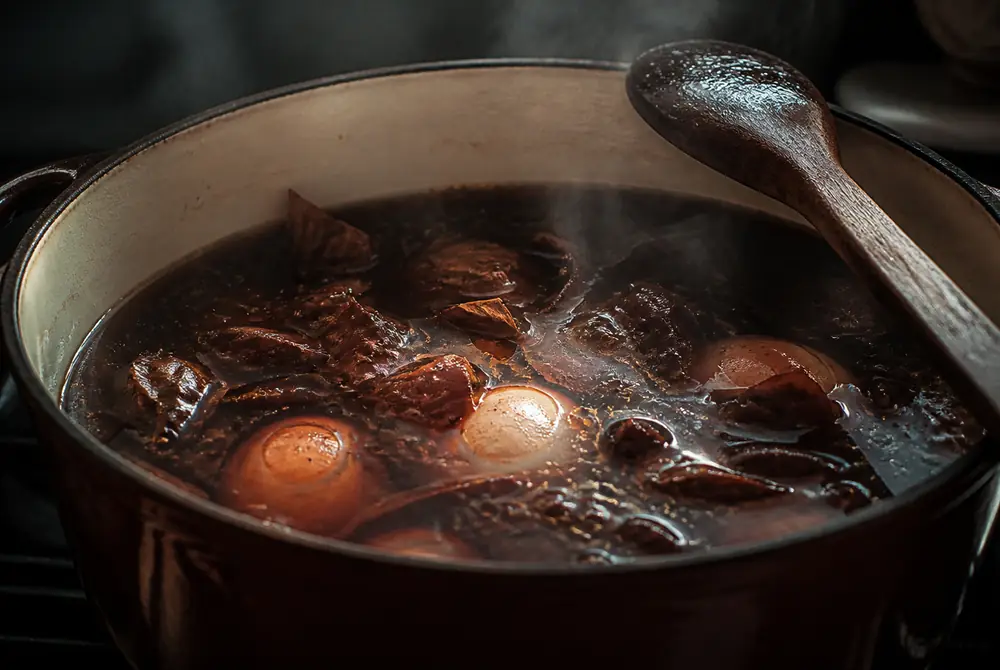
At six hours the whites are pale caramel and already silky. At eight they are a proper amber. Push to twelve, as many Shabbat cooks do out of necessity, and the eggs turn deep brown with a pronounced roasted flavor. All three are correct; the difference is preference, not error.
The Oven and Slow Cooker Methods
Oven
The oven is the most reliable route for overnight cooking, because the heat is even and there is no burner to watch. Assemble the pot exactly as above, cover tightly, and set it in a 225°F oven for 8 to 10 hours. Use an oven-safe Dutch oven with a heavy lid and check the water level before you go to bed. Many Shabbat cooks simply slide the pot in Friday afternoon and take it out after synagogue.
Slow cooker
A slow cooker on low is the closest modern equivalent to a coal-banked oven. Layer the skins and eggs the same way, fill with water, and cook 8 to 10 hours. Because slow cookers lose almost no moisture, you will rarely need to top up the water. This is also the safest option if you want to leave the kitchen.
Inside the Shabbat pot
The traditional method is still the best one if you already make a Sabbath stew. Wash the eggs, nestle them among the potatoes and beans, and let them cook alongside everything else. They pick up the fat and spice of the stew and come out darker and more savory. Our classic cholent and Iraqi t'beet guides both work beautifully as hosts.
Expert Tips for Perfect Amber Eggs
- Save onion skins in a paper bag in the pantry for a few weeks before you plan to cook. You need far more than one shopping trip supplies, and dry skins color just as well as fresh ones.
- Use eggs that are 7 to 14 days old. Very fresh eggs bond tightly to the inner membrane and peel badly no matter how long they cook.
- Never let the pot reach a full boil. Agitation cracks shells, and cracked eggs weep white into the liquid and take on a mottled surface.
- Add the olive oil. That thin film cuts evaporation noticeably over an eight-hour cook and is the traditional Egyptian touch.
- For deeper color, leave the peeled eggs in the strained cooking liquid overnight in the refrigerator. The exterior darkens dramatically.
- Salt the water. It seasons the white faintly through the shell and slightly firms the outer layer, which helps with peeling.
- Let them cool fully before peeling. Hot haminados are so soft they tear.
Common Mistakes to Avoid
Boiling instead of simmering
This is the single most common failure. A rolling boil for eight hours gives you a rubbery white and a dry yolk — the exact opposite of the point. If your smallest burner still runs hot, use a heat diffuser or move the pot to the oven.
Not enough onion skins
A few skins tint the water but barely touch the egg. You want the pot genuinely packed, with skins above and below. Under-skinned eggs come out beige and disappointing.
Letting the water drop below the eggs
Exposed eggs cook unevenly and can scorch against the pot wall. Top up with boiling water, never cold, so the temperature stays steady.
Peeling too early
Give the eggs at least an hour in the cooling liquid. The white firms as it cools, and the color continues to set.
Adding vinegar or baking soda
Both are common hard-boiled-egg hacks and both work against you here. Vinegar softens the shell and encourages leaks; baking soda can give the white a soapy edge over a long cook.
How to Serve Them
At Shabbat lunch, haminados are typically quartered and set out with olives, pickles, and bread. Across the Sephardic world they anchor breakfast: eggs, salted cheese, tomato-cucumber salad, and warm bread with tea. In Israel they are the traditional egg in a sabich sandwich, where their soft texture melts into the eggplant and tahini.
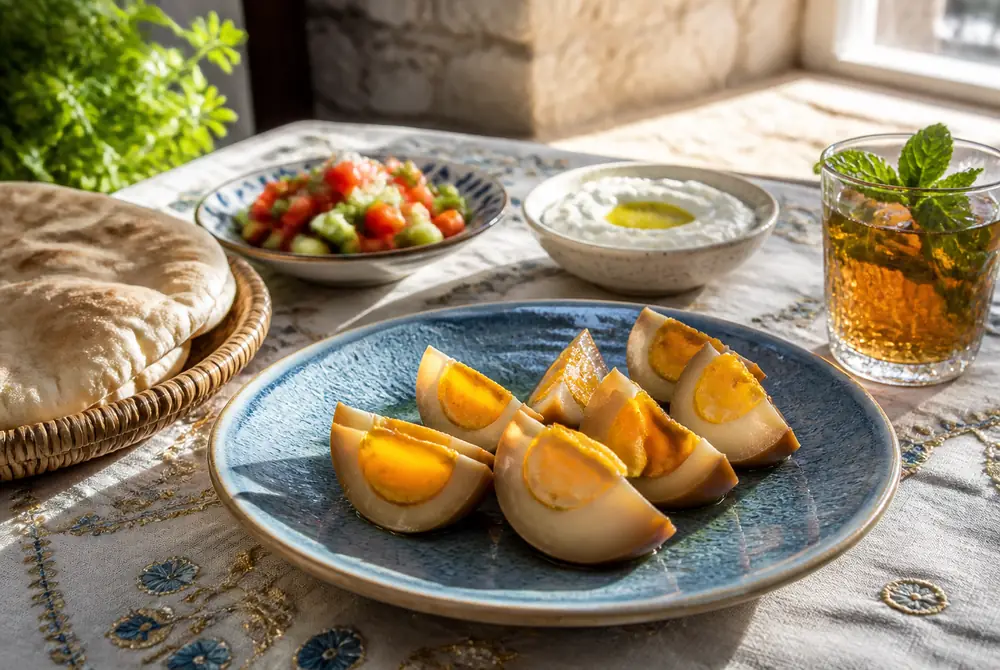
Other easy directions: mash them with olive oil, lemon, and scallion for a Sephardic-style egg salad; halve them over hummus with a dusting of paprika; slice them into a warm potato salad; or bring a bowl of them to the seder table alongside salt water. They also make an excellent, quietly impressive addition to a brunch board.
Storage and Food Safety
Unpeeled haminados keep in the refrigerator for up to one week; peeled ones for about four days in a sealed container, ideally covered with a little of the strained cooking liquid. Do not leave cooked eggs at room temperature for more than two hours. If you cook them in a Shabbat stew that stays hot overnight, the pot must remain above 140°F the entire time — which a proper low oven or warming plate does easily. The USDA food safety guidance on eggs is a good reference point for exact temperatures.
Conclusion
Huevos haminados are proof that the most memorable dishes are rarely the most complicated. A pot, a heap of onion skins, and a night of low heat transform the most ordinary ingredient in the kitchen into something with real depth — and with five centuries of Sephardic Shabbat behind it. Make a dozen on a Friday afternoon, let them cook while you sleep, and you will have breakfast, seder, and sandwich filling handled for the week.
Start with eight hours and yellow onion skins, taste the result, and adjust from there. Once you learn how your own pot and burner behave, this becomes one of those recipes you never need to look up again.
Key Takeaways
- Huevos haminados are eggs simmered 6 to 12 hours with onion skins, coffee or tea, producing amber whites and dense, custardy yolks.
- The dish grew out of the Sabbath prohibition on cooking, where eggs were tucked into the overnight hamin or cholent pot.
- Onion skins do the coloring; coffee grounds deepen it; a spoonful of olive oil slows evaporation over the long cook.
- Never boil — a bare simmer, a 225°F oven, or a slow cooker on low all work; a rolling boil ruins the texture.
- Use eggs at least a week old and cool them fully in the liquid before peeling for clean, unbroken results.
- Serve at Shabbat lunch, at the Passover seder, in sabich, over hummus, or as a Sephardic breakfast with salad and bread.
Frequently Asked Questions
Why do huevos haminados turn brown?
Pigments and tannins from onion skins, coffee grounds, or tea pass through the porous eggshell over many hours and stain the white. A gentle internal browning of the egg proteins during the long, low cook adds to the color and gives the yolk its mellow, roasted flavor.
How long do I really need to cook them?
Six hours is the practical minimum for the signature texture and color. Eight to ten hours is the sweet spot for most home cooks. Twelve hours produces a much darker egg with a stronger roasted note. Anything under four hours is just a tinted hard-boiled egg.
Can I make huevos haminados without onion skins?
You can, but the result is different. Strong black tea, coffee grounds, or a spoonful of turmeric will color the eggs, though onion skins give the particular warm amber tone and light sweetness that define the dish. Save skins over a few weeks in a paper bag so you always have enough.
Are huevos haminados kosher for Passover?
Yes. Eggs, onion skins, salt, and water are all kosher for Passover, and brown eggs are a traditional Sephardic seder food. Skip coffee grounds or tea if your household does not use them during Passover, and check that any added spices carry Passover certification.
Is it safe to cook eggs overnight?
Yes, as long as the pot stays hot the entire time. Eggs held at a steady simmer, in a 225°F oven, or in a slow cooker on low remain well above the food safety danger zone. The risk comes from letting a pot cool slowly on a turned-off burner, so keep the heat on or refrigerate promptly.
Loved this recipe?
Share it with your family, leave a comment, and explore more traditional and modern Jewish dishes on JewishCuisine.
Explore more Traditional recipes