Classic Charoset: The Sweet Passover Symbol That Steals the Seder
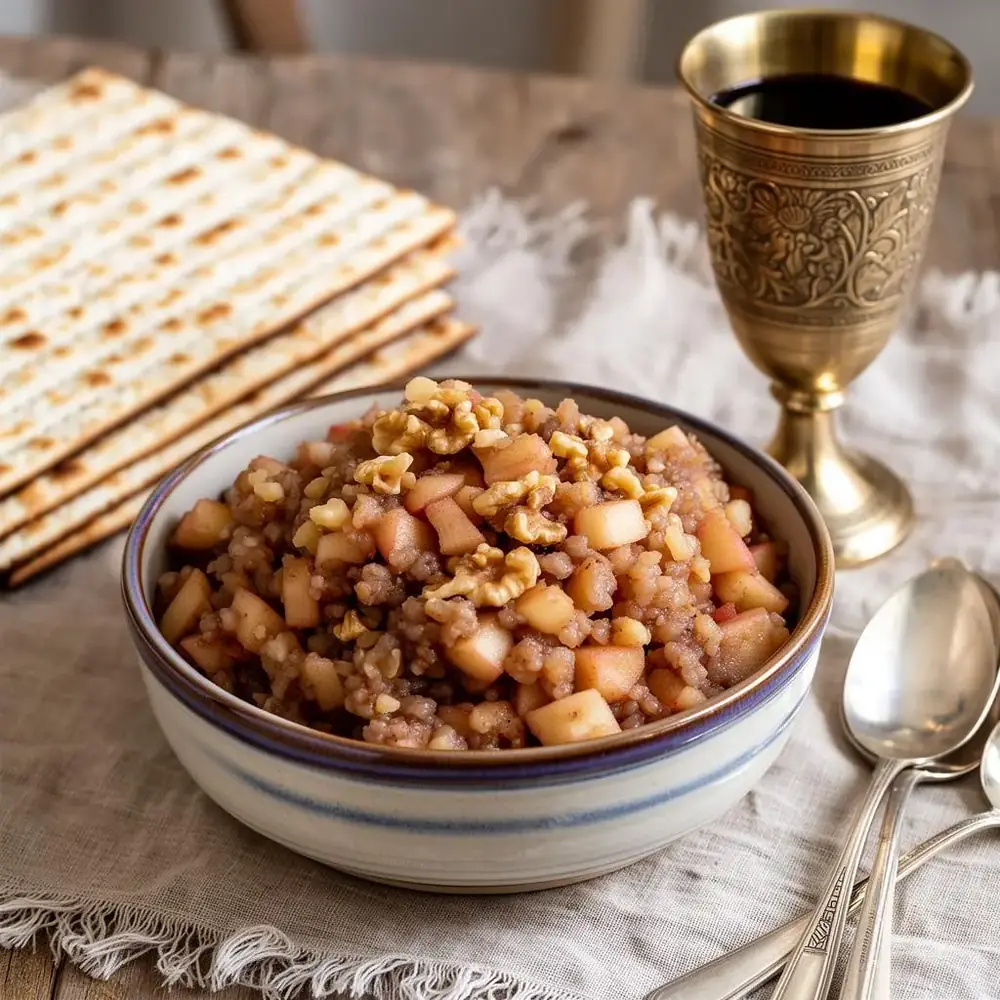
Of all the foods on the Passover seder plate, charoset is the one everyone reaches for. It is sweet where the rest is solemn, soft where the matzo is brittle, fragrant with cinnamon and wine in a meal otherwise built around symbolism and restraint. Children love it because it tastes like dessert smuggled onto a plate of bitter herbs. Adults love it because it carries a whole story in a single spoonful — the mortar that enslaved Israelites used to build the cities of Egypt, transformed into something so delicious it almost makes you forget the hardship it represents. That tension, between bitterness remembered and sweetness tasted, is the entire genius of charoset.
If you have only ever eaten charoset out of a plastic deli tub, this recipe will be a revelation. Real homemade charoset — crisp apples chopped by hand, walnuts toasted until fragrant, a generous pour of sweet red wine, cinnamon and honey binding it all together — is a different food entirely. It takes fifteen minutes, requires no cooking, and improves as it sits. Whether you keep the Ashkenazi classic or wander toward the dried-fruit-and-date paste of the Sephardic world, this guide will give you a charoset worthy of leading your seder.
What Is Charoset?
Charoset (also spelled haroset or charoses, depending on your family's pronunciation) is a sweet paste eaten during the Passover seder. Its name comes from the Hebrew word cheres, meaning clay, because the mixture is meant to resemble the mortar that the enslaved Israelites used while building for Pharaoh. On the seder plate it sits among the maror (bitter herbs), karpas (a green vegetable), zeroa (a roasted shank bone), beitzah (a roasted egg), and often chazeret (a second bitter herb). Each item tells part of the Exodus story; charoset's role is to represent the mortar of bondage.
But here is the beautiful contradiction: the food that symbolizes slavery is the sweetest thing on the table. The rabbis explained that even in the harshest labor, our ancestors held onto the sweetness of hope and faith. Charoset is also eaten as a practical foil to the maror — during the Hillel sandwich, a smear of sweet charoset tempers the sharp burn of the bitter herbs, a culinary reminder that sweetness and suffering live side by side.
A Short History of Charoset
Charoset is ancient. It is mentioned in the Mishnah (compiled around 200 CE), where the sages debate whether it is a religious obligation or simply a custom. The great medieval commentator Maimonides described it as a mixture meant to evoke mortar, suggesting fruit, spices, and a thickening agent. Over the centuries, Jewish communities scattered across the globe each made charoset from whatever grew locally — which is exactly why the dish looks so different from one tradition to the next.
Ashkenazi Jews of Eastern Europe leaned on apples, walnuts, and cinnamon, the orchard fruits and nuts of colder climates. Sephardic and Mizrahi Jews of the Mediterranean and Middle East built theirs from dates, figs, raisins, and almonds — echoing the fruits named in the biblical Song of Songs, which is traditionally read during Passover. Italian Jews added chestnuts; Persian Jews layered in pistachios, pomegranate, and a riot of spices. Charoset is, in a sense, a delicious map of the Jewish diaspora.
Charoset is the seder plate's quiet storyteller — every family's bowl tastes like the place their grandparents called home.
Ingredients for Classic Ashkenazi Charoset
This is the version most American Jews grew up with: chunky, apple-forward, and bound with sweet kosher wine. The recipe makes roughly 3 cups, enough for a seder of eight to ten people with leftovers (and you will want leftovers).
- 3 medium apples, a mix of sweet and tart (Honeycrisp plus Granny Smith is ideal), peeled and finely diced
- 1 cup walnuts, lightly toasted and chopped
- 1–2 teaspoons ground cinnamon, to taste
- 2–3 tablespoons honey (or sugar for a firmer set)
- 3–4 tablespoons sweet red kosher wine, such as Manischewitz, plus more as needed
- 1 teaspoon fresh lemon juice, to keep the apples bright
- Pinch of ground ginger or nutmeg (optional)
How to Make Charoset (Step by Step)
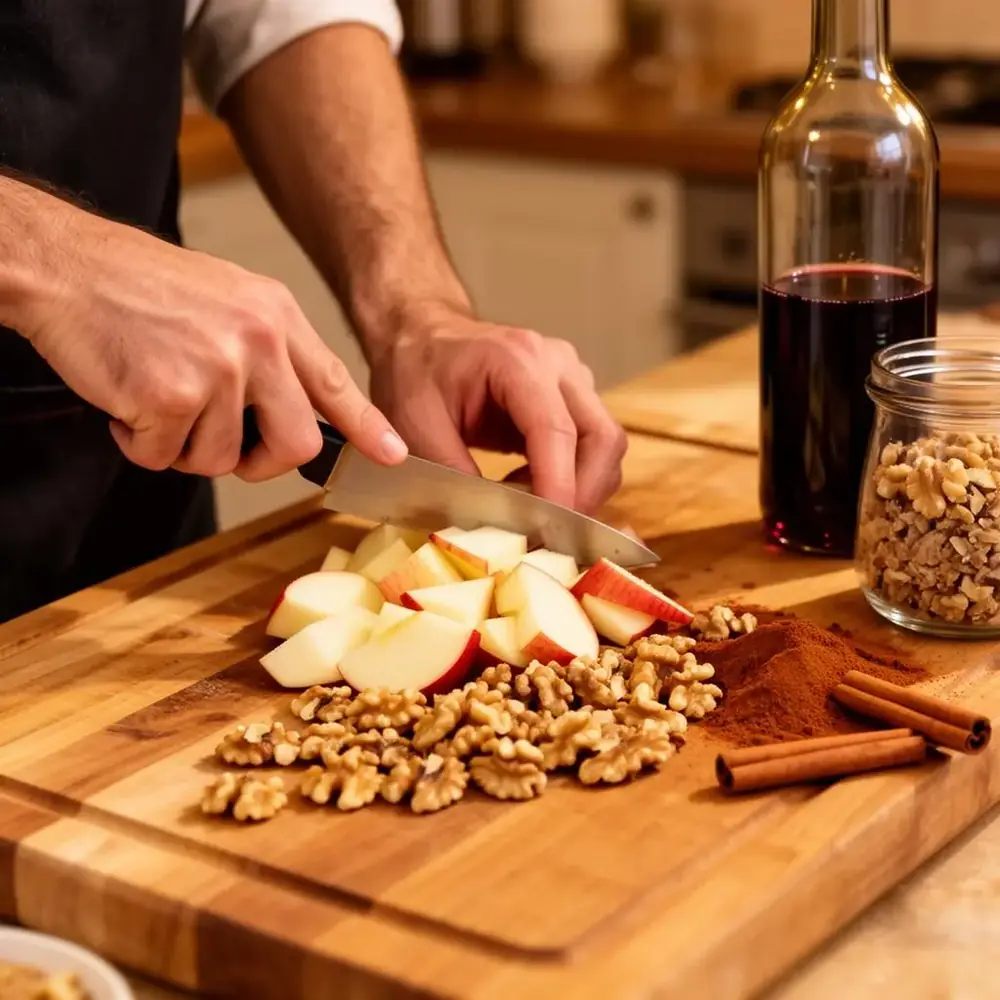
Step 1: Toast the Walnuts
Spread the walnuts on a dry skillet over medium heat and toast for 4 to 5 minutes, shaking the pan often, until they smell nutty and warm. Toasting is the single biggest upgrade you can make — it deepens the flavor and adds a faint crunch that survives the wine. Let them cool, then chop them by hand into small, irregular pieces. Resist the food processor here; you want texture, not paste.
Step 2: Dice the Apples
Peel and core the apples, then dice them into small, even pieces roughly the size of a pea. Toss them immediately with the lemon juice to slow browning. Using a mix of sweet and tart apples gives the charoset complexity — the Granny Smith keeps it from turning cloying, while the Honeycrisp brings honeyed perfume. If you prefer a smoother charoset, you can pulse a portion of the apples, but the classic Ashkenazi style is proudly chunky.
Step 3: Combine and Season
In a large bowl, fold together the apples, walnuts, cinnamon, and honey. Add the wine a tablespoon at a time, stirring after each addition, until the mixture is glossy and just holds together when pressed — like damp mortar. Taste and adjust: more cinnamon for warmth, more honey for sweetness, a pinch of ginger for brightness. The seasoning is personal, and this is where your charoset becomes yours.
Step 4: Rest Before Serving
Cover the bowl and refrigerate for at least an hour, ideally two to three. Resting lets the wine soak into the apples and the cinnamon bloom, melding the flavors into something far greater than the sum of its parts. Give it a final stir and a splash more wine before serving if it has dried out. Serve cold or at cool room temperature.
Sephardic and Mizrahi Variations
If the Ashkenazi version is a crisp autumn orchard, the Sephardic version is a sun-warmed Mediterranean market. Instead of fresh apples, it leans on dried fruit cooked down into a dense, fudgy paste — closer in texture to real mortar and often rolled into small balls for serving.
- Sephardic date charoset: Simmer pitted dates with a little water until soft, then blend with toasted almonds, cinnamon, and a splash of sweet wine into a thick paste.
- Persian charoset (charoset-e): A lavish blend of dates, raisins, pistachios, almonds, pomegranate, and warm spices like cardamom and clove.
- Italian charoset: Chestnuts, pine nuts, dates, and even a little cocoa or grated citrus zest.
- Egyptian charoset: Dates and raisins cooked into a sticky jam, sometimes thickened with matzo meal.
How to Serve Charoset at the Seder
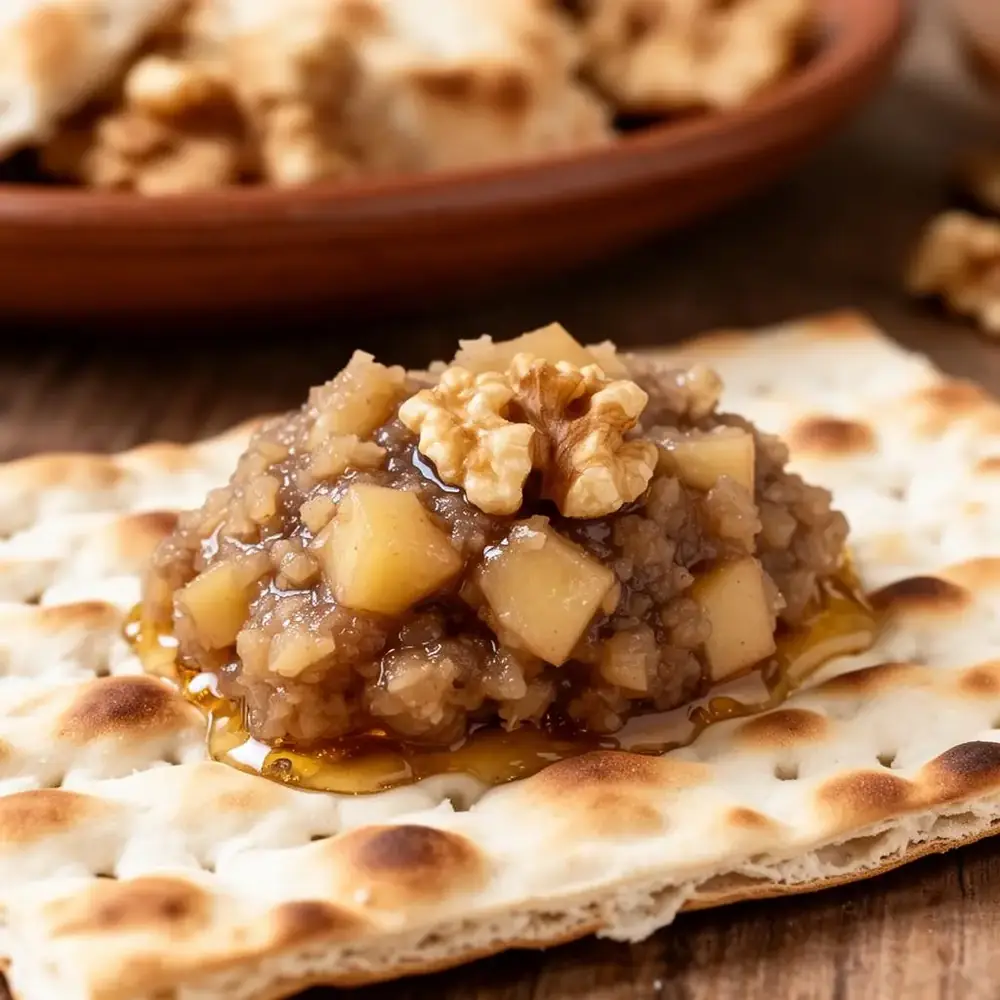
During the seder, charoset appears in two ceremonial moments. First, a small amount sits on the seder plate as a symbol. Later, during the Korech or Hillel sandwich, a spoonful is tucked between two pieces of matzo along with maror, fulfilling the ancient practice of eating the bitter and the sweet together. Beyond the ritual, set out a generous bowl for the meal itself — guests will spread it on matzo throughout dinner.
Charoset is also wonderful well beyond the seder. Spoon it over Greek yogurt, swirl it into oatmeal, layer it on a cheese board, or fold it into matzo brei the morning after. Its apple-cinnamon-wine flavor makes it one of the most versatile leftovers of the entire Passover week.
Make-Ahead and Storage
Charoset is happiest made a day ahead. Stored in an airtight container in the refrigerator, Ashkenazi apple charoset keeps for 3 to 4 days, though the apples will soften and release liquid over time — just stir before serving. For the freshest texture and color, make it the day before or the morning of your seder. Dried-fruit Sephardic versions keep longer, up to a week, because they contain no fresh fruit to weep.
Common Mistakes to Avoid
- Over-processing the apples into applesauce — charoset should be chunky, not smooth.
- Skipping the lemon juice, which leaves the apples brown and dull.
- Adding too much wine at once, turning the mixture soupy. Build it up gradually.
- Forgetting to toast the walnuts, which leaves the flavor flat.
- Making it too far ahead, so the apples weep and lose their crunch.
Charoset rewards a light hand and a willingness to taste as you go. There is no single correct recipe — every family's version is the right one. Make it your own, write down what you did, and let it become part of your own seder story to pass down.
Key Takeaways
- Charoset is the sweet apple-and-nut paste on the Passover seder plate that symbolizes the mortar of slavery in Egypt.
- Classic Ashkenazi charoset uses apples, toasted walnuts, cinnamon, honey, and sweet red wine; Sephardic versions use dates, figs, and almonds.
- It takes about 15 minutes, requires no cooking, and improves after resting an hour or more.
- Hand-chop the fruit and nuts for the signature chunky texture and toast the walnuts for deeper flavor.
- Make it a day ahead for best flavor, and enjoy leftovers on matzo, yogurt, or in matzo brei.
Frequently Asked Questions
What does charoset symbolize?
Charoset represents the mortar that the enslaved Israelites used to build for Pharaoh in Egypt. Its sweetness, despite symbolizing hardship, reminds us of the hope and faith our ancestors held onto during slavery.
What is the difference between Ashkenazi and Sephardic charoset?
Ashkenazi charoset is made with fresh apples, walnuts, cinnamon, and sweet wine, resulting in a chunky texture. Sephardic and Mizrahi charoset uses dried fruits like dates, figs, and raisins blended with almonds and spices into a denser, fudgier paste.
Can I make charoset without wine?
Yes. Sweet grape juice is a popular substitute, especially for a child-friendly bowl. You can also use a little apple juice or simply more honey and lemon juice to bind the mixture.
How far in advance can I make charoset?
Apple-based Ashkenazi charoset is best made one day ahead and keeps 3 to 4 days refrigerated, though the apples soften over time. Dried-fruit Sephardic versions keep up to a week.
Loved this recipe?
Share it with your family, leave a comment, and explore more traditional and modern Jewish dishes on JewishCuisine.
Explore more Holidays recipes