T'beet: The Iraqi Jewish Shabbat Chicken and Rice Everyone Is Rediscovering
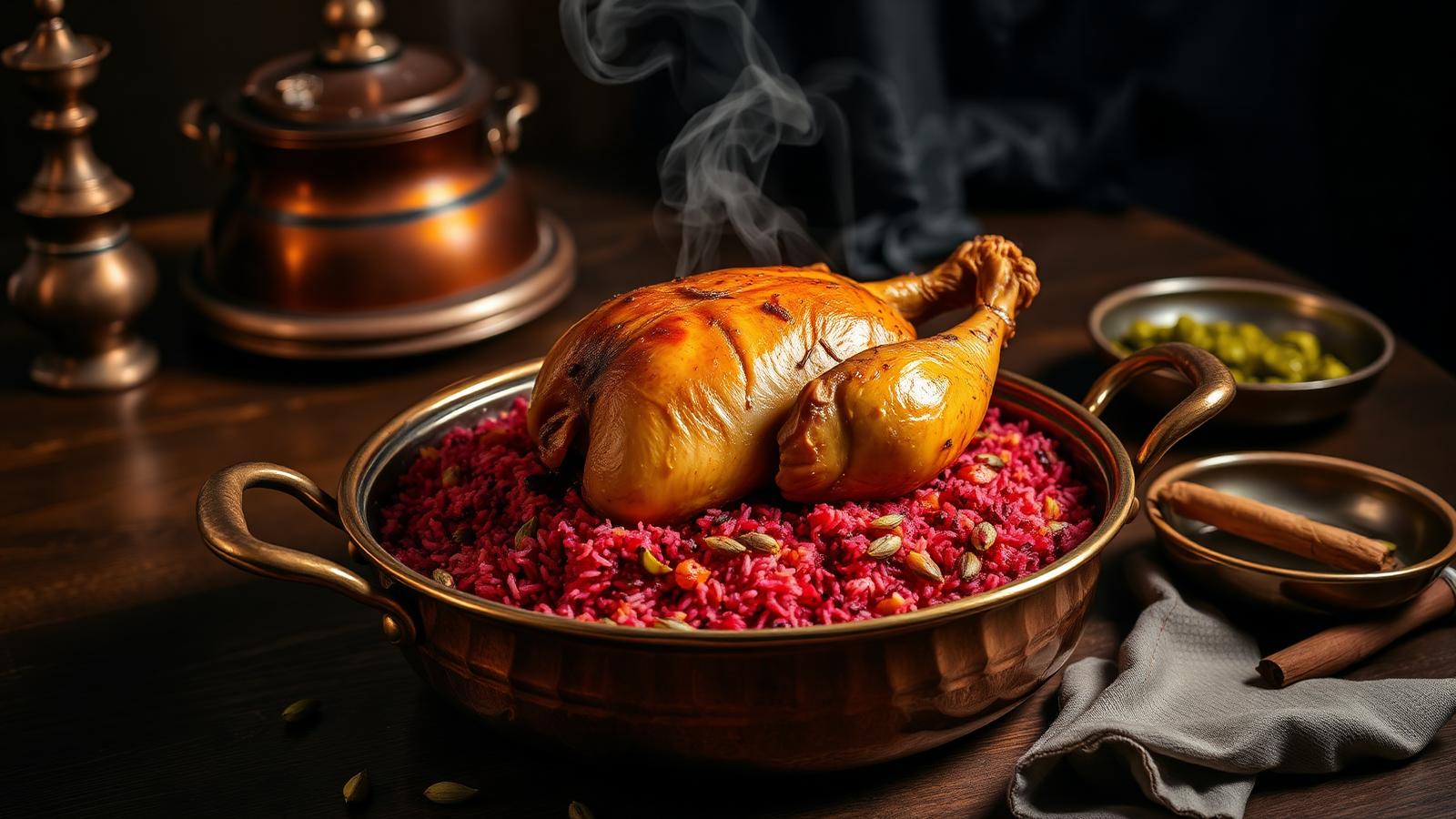
There is a particular smell that used to drift through Baghdad's Jewish quarter on Friday afternoons: warm cardamom, sweet onion, tomato, and the low, roasted note of chicken skin darkening in a covered pot. That smell has a name, and the name is t'beet. It is the Iraqi Jewish answer to the Shabbat cooking puzzle — how to serve a hot, generous meal on a day when you cannot cook — and it has become one of the most sought-after regional dishes in the current wave of interest in Mizrahi and Sephardic cooking.
Unlike Ashkenazi cholent, which leans on beans and barley, t'beet is built around long-grain rice and a whole chicken, often stuffed, all simmered slowly in a heavy pot until the bottom layer of rice caramelizes into a shattering red-gold crust called hakaka. It is savory, deeply spiced, and quietly showy in a way that turns first-time eaters into evangelists. This guide walks through where t'beet comes from, why it is having a moment right now, the ingredients that matter, and exactly how to build one at home that lands soft, fragrant, and crisp in all the right places.
Table of Contents
- A Short History of T'beet
- Why T'beet Is Trending Right Now
- Ingredients and Why They Matter
- Step-by-Step: How to Make T'beet
- Expert Tips from Iraqi Home Cooks
- Common Mistakes to Avoid
- Serving T'beet: Sides, Pickles, and the Sabbath Table
- FAQs
- Key Takeaways
A Short History of T'beet
The Jewish community of Iraq is one of the oldest in the world, tracing itself back roughly 2,600 years to the Babylonian exile. Long before Baghdad became a caliphal capital, Jewish households along the Tigris and Euphrates were building a cuisine on rice, dates, freshwater fish, tamarind, and the deep spice trade that flowed through Mesopotamia. T'beet grew out of that lineage. The word itself comes from an Arabic root meaning "to spend the night," a plain, honest description of what the dish does in the oven.
Halacha forbids lighting or adjusting a fire on Shabbat, but food that was fully set to cook before sundown may keep warm. Jewish communities from Morocco to Poland each answered that constraint with their own long-simmered pot: dafina in North Africa, hamin in the Levant, cholent in Eastern Europe. For Iraqi Jews, the answer was t'beet — a heavy pot of rice and chicken tucked into the coals or oven late Friday, pulled out at lunch on Saturday, tender and browned and ready.
Why T'beet Is Trending Right Now
A few things are pushing t'beet into wider conversation. Cookbooks like Linda Dangoor's Flavours of Babylon and the recent surge of writing on Mizrahi food from outlets such as The Nosher and Tablet have introduced younger cooks to dishes their grandparents rarely wrote down. Instagram and TikTok have done the rest: videos of the pot being flipped to reveal the burnished hakaka rack up millions of views because the reveal is genuinely dramatic.
There is also a cultural reckoning at work. The Iraqi Jewish community numbered around 135,000 in 1948, according to the Jewish Virtual Library, and today only a handful remain in Iraq itself. Dishes like t'beet became one of the strongest anchors of memory for the community's descendants scattered across Israel, London, New York, and Sydney. Cooking it feels like keeping a door open. Add the current appetite for slow-cooked, one-pot, deeply spiced comfort food, and t'beet is landing at exactly the right cultural moment.
Ingredients and Why They Matter
The Rice
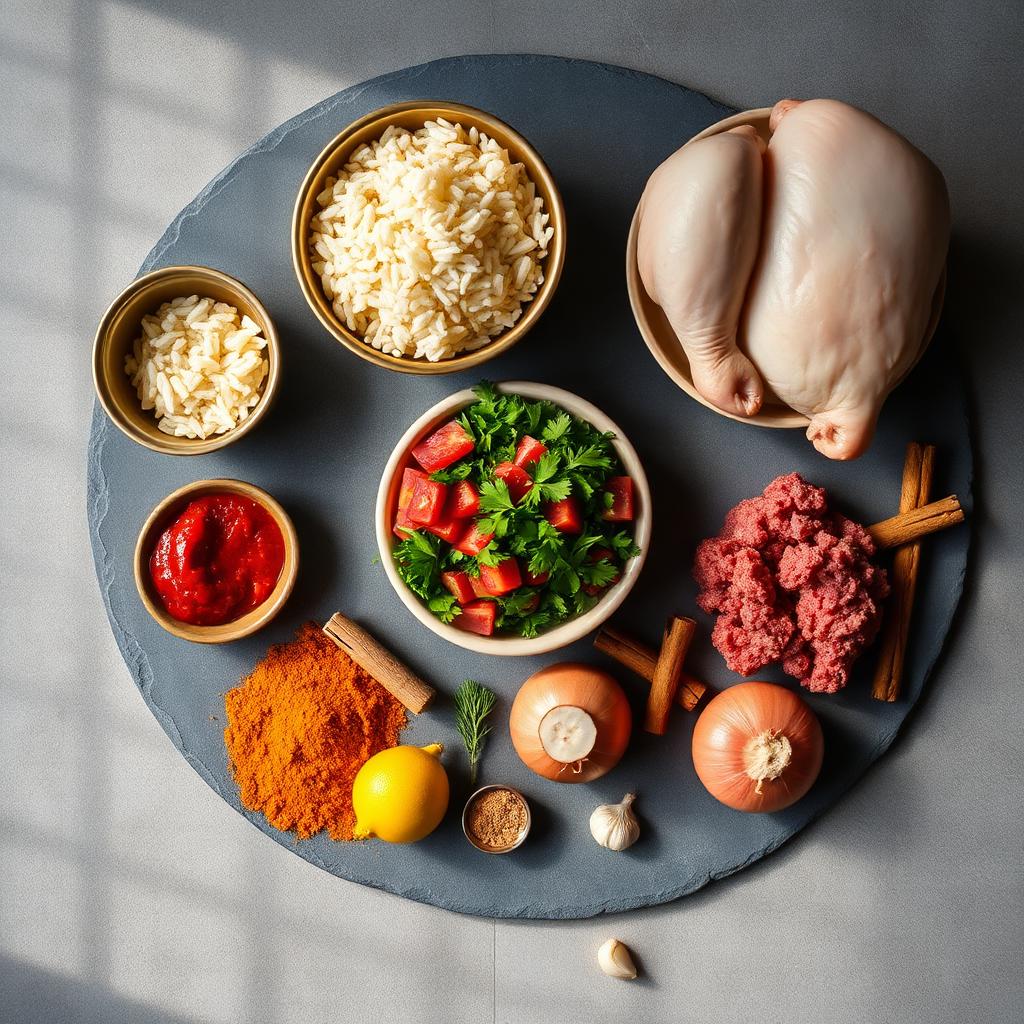
Long-grain basmati is the standard. The grains stay separate, absorb spice cleanly, and crisp beautifully at the bottom of the pot. Rinse until the water runs clear and, ideally, soak for 30 minutes to help the grains cook evenly and stretch.
The Chicken
Traditionally a whole chicken, often stuffed with a rice-and-meat mixture called hashu. If a whole bird feels ambitious, bone-in thighs work well and cook more predictably. Kosher chickens, already salted, need very little extra seasoning; adjust accordingly.
The Spice Mix
Iraqi Jewish cooking leans on baharat: a warm, sweet-savory blend that usually includes cinnamon, cardamom, cumin, coriander, black pepper, allspice, and cloves. Turmeric adds color and earthiness. A dried lime (loomi), pierced and dropped into the pot, brings a citrusy, fermented tang that is hard to fake with anything else.
The Tomato and Aromatics
A generous spoonful of tomato paste, a couple of fresh tomatoes, one or two large onions, and plenty of garlic form the base. The tomato is what pulls the rice into that signature ruby color; skimp on it and the dish looks pale and tastes flat.
Step-by-Step: How to Make T'beet
Step 1: Build the Stuffing (Hashu)
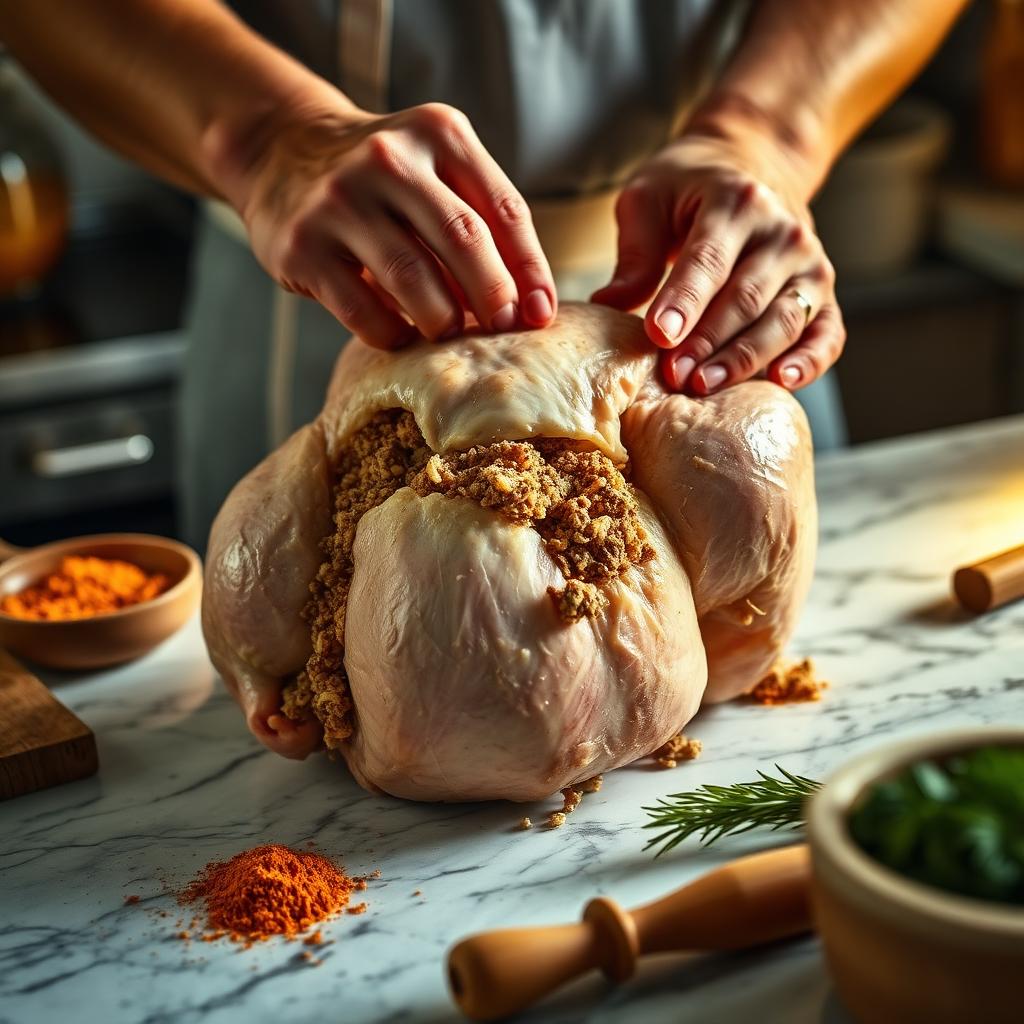
- In a bowl, combine about 1 cup rinsed basmati rice, 1/2 pound ground beef or lamb, a chopped tomato, a handful of chopped parsley, 1 teaspoon baharat, 1/2 teaspoon turmeric, salt, and pepper.
- Mix gently with your hands until evenly seasoned. The stuffing should be moist but not wet.
- Loosely pack the mixture into the cavity of the chicken. Do not overfill; the rice inside will expand as it cooks.
- Truss the legs together with kitchen twine so the stuffing stays put.
Step 2: Sear the Chicken
- Heat a few tablespoons of oil in a large, heavy Dutch oven over medium-high heat.
- Brown the chicken on all sides, about 4 minutes per side, until the skin is deeply golden.
- Transfer the bird to a plate. In the same pot, cook one or two sliced onions in the rendered fat until soft and lightly caramelized, about 8 minutes.
- Stir in 2 tablespoons tomato paste, 4 chopped garlic cloves, 1 chopped tomato, 2 teaspoons baharat, 1 teaspoon turmeric, and a good pinch of salt. Cook for a minute until fragrant.
Step 3: Layer the Pot
- Push the onion-spice base to the edges of the pot to create a seat for the chicken.
- Rinse about 2 cups of basmati rice until the water runs clear, then scatter it around and under the chicken.
- Nestle the stuffed chicken back in, breast up, and pierce a whole dried lime with a knife tip and tuck it beside the bird.
- Pour in warm water or a light chicken stock until the liquid just covers the rice by about 1/2 inch. Taste the liquid and adjust for salt — it should taste well-seasoned but not aggressive.
Step 4: The Long Slow Cook
- Bring the pot to a gentle simmer on the stovetop, then cover tightly. If the lid does not seal well, lay a sheet of parchment or foil under it.
- Transfer to an oven set at 225 degrees Fahrenheit for the classic overnight approach, or 300 degrees Fahrenheit if you want it ready in 3 to 4 hours.
- For a Shabbat lunch, put it in Friday evening before sundown and pull it out around midday Saturday. The long, low heat renders the chicken tender while the rice crust develops slowly.
- Do not lift the lid to peek. Every opening releases steam and interrupts the crust.
The pot is doing the work. Your only real job is to season it well, seal it, and leave it alone.
Step 5: The Flip
- When you are ready to serve, uncover and gently lift the chicken onto a platter to rest and carve.
- Run a spatula around the edges of the rice to loosen it.
- Place a large serving platter over the pot and, holding both firmly with mitts, invert the pot in one confident motion.
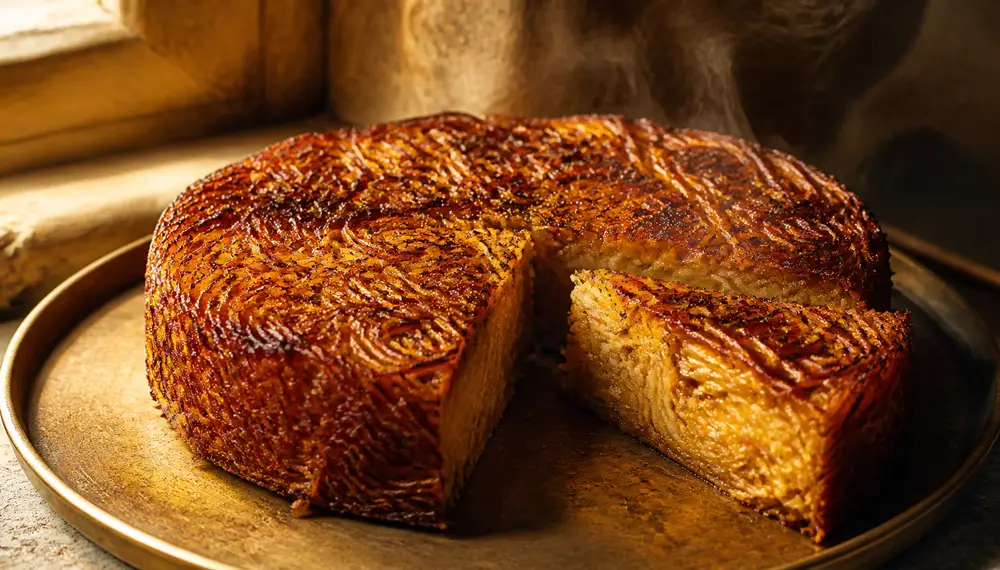
- Lift the pot to reveal a dark red, crackly disc of rice — the hakaka. This is the moment.
Expert Tips from Iraqi Home Cooks
- Use a heavy, well-fitting Dutch oven. Thin-walled pots scorch the crust before the rice inside is cooked through.
- Do not skip the sear. It is where the color and depth of the whole dish come from.
- Add one dried lime, not three. It is powerful and can overwhelm the pot if overdone.
- If you are making this for Shabbat, taste and adjust the seasoning before you seal the lid — you will not get another chance.
- A drizzle of oil around the edges of the pot in the last 30 minutes helps the crust release cleanly at the flip.
Common Mistakes to Avoid
- Using too much liquid. The rice should be just covered, not swimming; excess water gives you soft, gummy rice and a soggy bottom.
- Packing the stuffing tightly. Rice needs room to swell — dense hashu turns into a wet brick.
- Rushing the cook. Turning the heat up to shorten the timeline browns the outside and leaves the inside chalky.
- Skipping the rinse. Unrinsed rice releases extra starch and glues the grains together.
- Flipping without loosening the edges first. That is how the beautiful crust ends up broken in the pot instead of intact on the plate.
Serving T'beet: Sides, Pickles, and the Sabbath Table
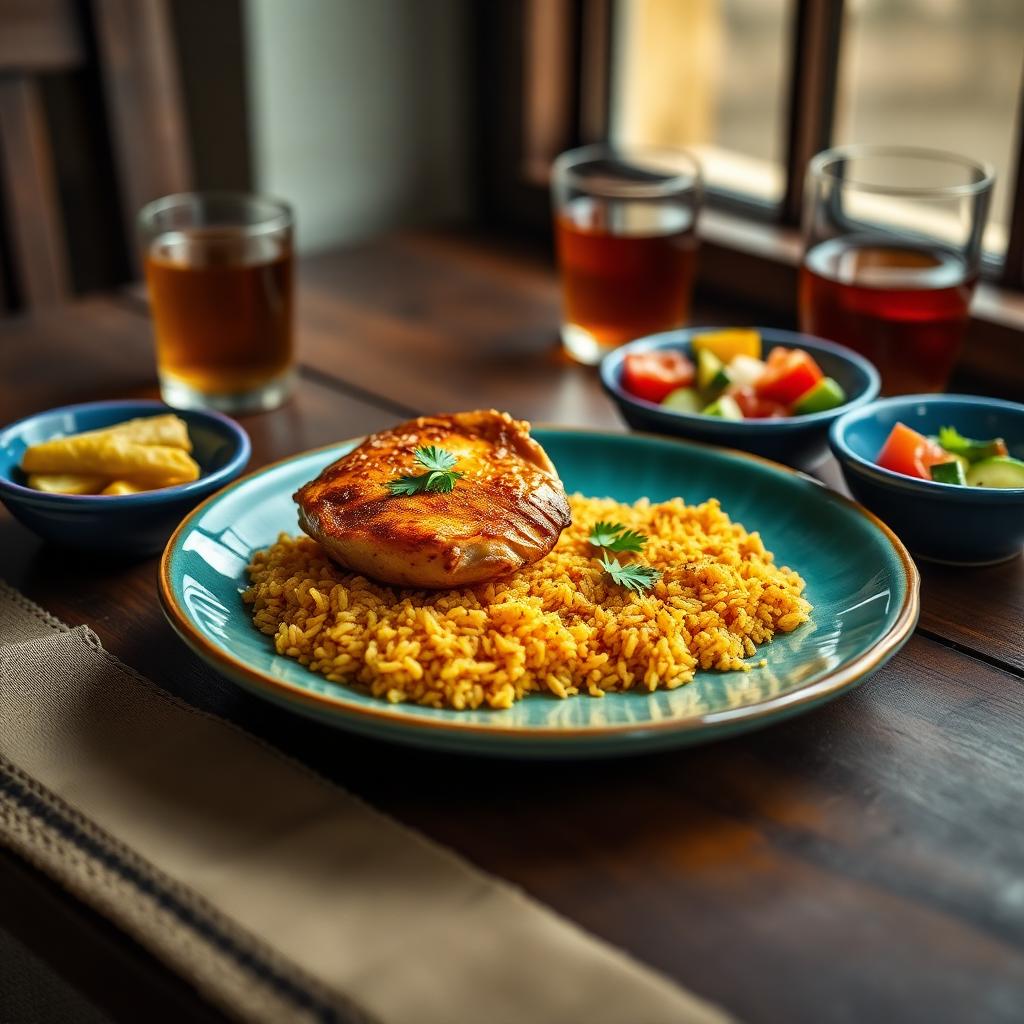
Iraqi Jewish tables build sharpness and freshness around the richness of t'beet. Expect a small salad of finely chopped tomato, cucumber, and parsley dressed simply with lemon and salt. Amba, the mustardy-sour mango pickle, is almost non-negotiable; a spoonful cuts through the spiced rice beautifully. Torshi (mixed pickled vegetables) and a bowl of yogurt round the meal out. A pot of black tea, sweetened and served in small glasses, follows.
For a weekday version, skip the stuffing, use bone-in thighs, and serve straight from the pot after 90 minutes at 325 degrees. The full ritual belongs to Shabbat, but the dish itself is generous enough to reward a quicker take. Either way, t'beet is one of those recipes that gets better the more times you make it. The pot teaches you.
Key Takeaways
- T'beet is the Iraqi Jewish overnight Shabbat dish of whole chicken and spiced rice slow-cooked into a caramelized crust called hakaka.
- The core spice profile is baharat plus turmeric, with a dried lime for citrusy depth.
- Long-grain basmati, a well-seasoned tomato-onion base, and a heavy sealed pot are what make the dish work.
- Low and slow beats fast and hot every time — 225 to 300 degrees Fahrenheit gives you tender meat and a proper crust.
- Serve with amba, torshi, and a chopped Israeli-style salad to balance the rich, warmly spiced pot.
Frequently Asked Questions
What is t'beet and how is it different from cholent?
T'beet is the traditional Iraqi Jewish Shabbat dish of whole chicken and rice slow-cooked overnight. Cholent, its Ashkenazi cousin, is built on beans, barley, and beef. T'beet is lighter, rice-forward, and defined by its crispy caramelized bottom crust known as hakaka.
Can I make t'beet in a slow cooker or Instant Pot?
A slow cooker works for the meat and rice, but you will not get the signature hakaka crust because there is no dry heat at the base. For the crust, finish the dish in a heavy pot on the stovetop for the last 20 to 30 minutes on low heat until you hear a light crackle.
What can I use instead of a dried lime?
Dried limes, called loomi, are hard to substitute exactly. In a pinch, use the zest of one fresh lemon plus a teaspoon of lemon juice added near the end of cooking. The flavor will be brighter and less fermented, but it keeps the citrus backbone of the dish intact.
Is t'beet a good make-ahead dish?
Yes. T'beet is designed to sit in a low oven for many hours, which makes it ideal for Shabbat lunch or any make-ahead meal. Assemble it in the afternoon, keep the oven at a low setting, and serve straight from the pot.
Can I make t'beet without stuffing the chicken?
Absolutely. Many Iraqi families skip the stuffing on weeknights and cook the rice, meat, and aromatics together in the pot with cut-up chicken pieces. You lose a bit of the ceremony but keep all the flavor.
Loved this recipe?
Share it with your family, leave a comment, and explore more traditional and modern Jewish dishes on JewishCuisine.
Explore more Traditional recipes