Authentic Israeli Hummus: How to Make the Silkiest, Creamiest Bowl at Home
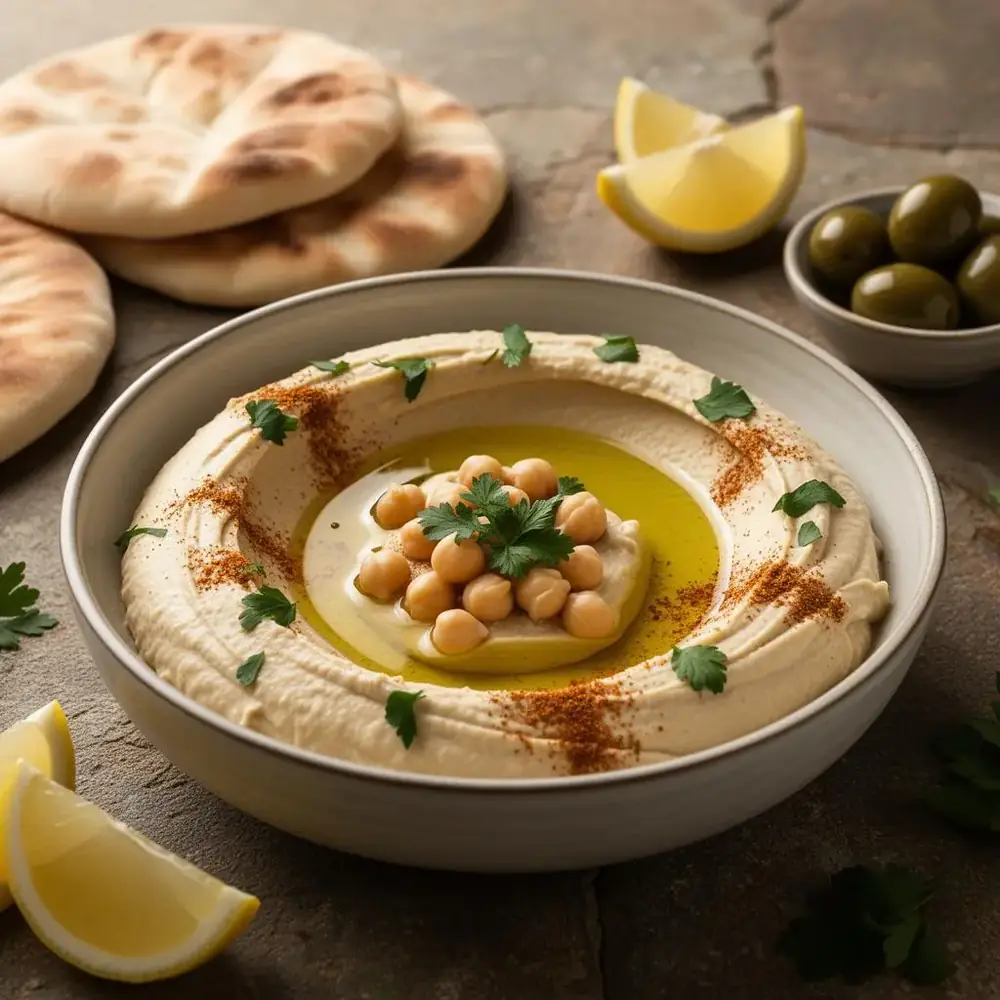
There is hummus, and then there is real Israeli-style hummus. If your only experience is the firm, slightly grainy stuff from a plastic tub, the difference will stop you in your tracks. Authentic hummus — the kind served warm in bustling hummusiyot across Tel Aviv, Jerusalem, and Haifa — is impossibly smooth, almost airy, with a deep nuttiness from generous tahini and a bright lift of lemon and garlic. Scooped up with a torn piece of pillowy pita, it is less a dip than a full, soul-satisfying meal.
The good news: you can make that exact bowl at home, and it costs a fraction of what you'd pay at a restaurant. The not-so-secret secret is that great hummus is built on technique, not exotic ingredients. A handful of pantry staples — chickpeas, tahini, lemon, garlic, salt — become extraordinary when you understand the small steps that create that signature silky texture.
This complete guide covers everything: where hummus comes from, why it is having such a global moment, the ingredients that matter most, a foolproof step-by-step method, expert tips, and the common mistakes that keep home cooks stuck with gritty results. By the end, you'll be able to whip up a bowl that rivals your favorite Middle Eastern spot.
Table of Contents
- A Short History of Hummus
- Why Hummus Is Trending Worldwide
- What You'll Need: Ingredients
- Step-by-Step Instructions
- The Secret to Ultra-Smooth Hummus
- Expert Tips for Perfect Hummus
- Ways to Serve and Top It
- Common Mistakes to Avoid
- Make-Ahead, Storage, and Freezing
- Frequently Asked Questions
- Key Takeaways
- Conclusion
A Short History of Hummus
Hummus — the word simply means “chickpeas” in Arabic — is one of the oldest and most beloved foods of the Eastern Mediterranean and the Levant. Dishes combining mashed chickpeas with sesame, lemon, and oil have been part of the region's kitchens for centuries, and the modern version, hummus b'tahini, is shared across the cuisines of the Levant, Egypt, Turkey, and beyond. It is genuinely communal food, woven into the daily life of many peoples and cultures.
Within Jewish cuisine, hummus has a special story. Sephardic and Mizrahi Jewish communities from across the Middle East and North Africa carried their own chickpea traditions with them. As waves of Jewish immigrants arrived in the land of Israel throughout the twentieth century, hummus became a unifying dish on the table — a food that crossed backgrounds and quickly became a defining part of modern Israeli food culture. Today the neighborhood hummusiya, a casual eatery devoted almost entirely to fresh hummus, is an institution.
What distinguishes the Israeli style is its devotion to texture and tahini. Where some traditions keep hummus thicker and more rustic, the Israeli approach prizes a luxuriously smooth, almost pourable consistency, served warm or at room temperature, swimming in good olive oil, and built on a generous proportion of high-quality sesame tahini.
Great hummus is a humble dish taken seriously — five everyday ingredients transformed, through care and technique, into something silky, warm, and deeply satisfying.
Why Hummus Is Trending Worldwide
Hummus has quietly become one of the most popular foods on the planet, and its momentum keeps building. The first driver is the surge in plant-based and high-protein eating. As more people cut back on meat or simply look for satisfying, nutrient-dense snacks, a creamy bowl of chickpeas and tahini checks every box: plant protein, fiber, healthy fats, and serious staying power.
The second is the global rise of Israeli and broader Middle Eastern cuisine. Acclaimed chefs and cookbook authors have brought tahini, za'atar, and warm hummus into the mainstream spotlight, and diners everywhere are now seeking out the real, restaurant-style version rather than settling for the supermarket tub. Social media has only amplified the trend, with endless videos of glossy, swirled bowls dripping with olive oil.
Finally, there's the practical appeal. Hummus is affordable, naturally vegan, naturally gluten-free, and endlessly adaptable. It works as a dip, a spread, a sauce, or the centerpiece of a full meal. In a moment when home cooks want food that is healthy, budget-friendly, and genuinely crave-worthy, hummus is perfectly positioned.
What You'll Need: Ingredients
This recipe makes about 4 cups and serves 6 to 8 as a generous appetizer. The ingredient list is short, which is exactly why quality matters — especially the tahini.
For the Hummus
- 1 cup dried chickpeas (or 3 cups cooked / two 15-oz cans, drained)
- 1 tsp baking soda (½ tsp for soaking, ½ tsp for cooking — the key to softness)
- ⅔ to 1 cup good-quality tahini (pure sesame, well-stirred, smooth and pourable)
- ¼ to ⅓ cup fresh lemon juice (about 2 lemons), to taste
- 1 to 2 cloves garlic, minced or grated
- 1 to 1½ tsp kosher salt, to taste
- ½ cup ice water, plus more as needed
- ¼ tsp ground cumin (optional but classic)
For Serving
- Good extra-virgin olive oil, for a generous drizzle
- A spoonful of warm whole chickpeas
- Sweet or smoked paprika and chopped fresh parsley
- Optional toppings: za'atar, ground sumac, pine nuts, or a sprinkle of cumin
- Warm pita bread, for scooping
Step-by-Step Instructions
Step 1: Soak and Cook the Chickpeas
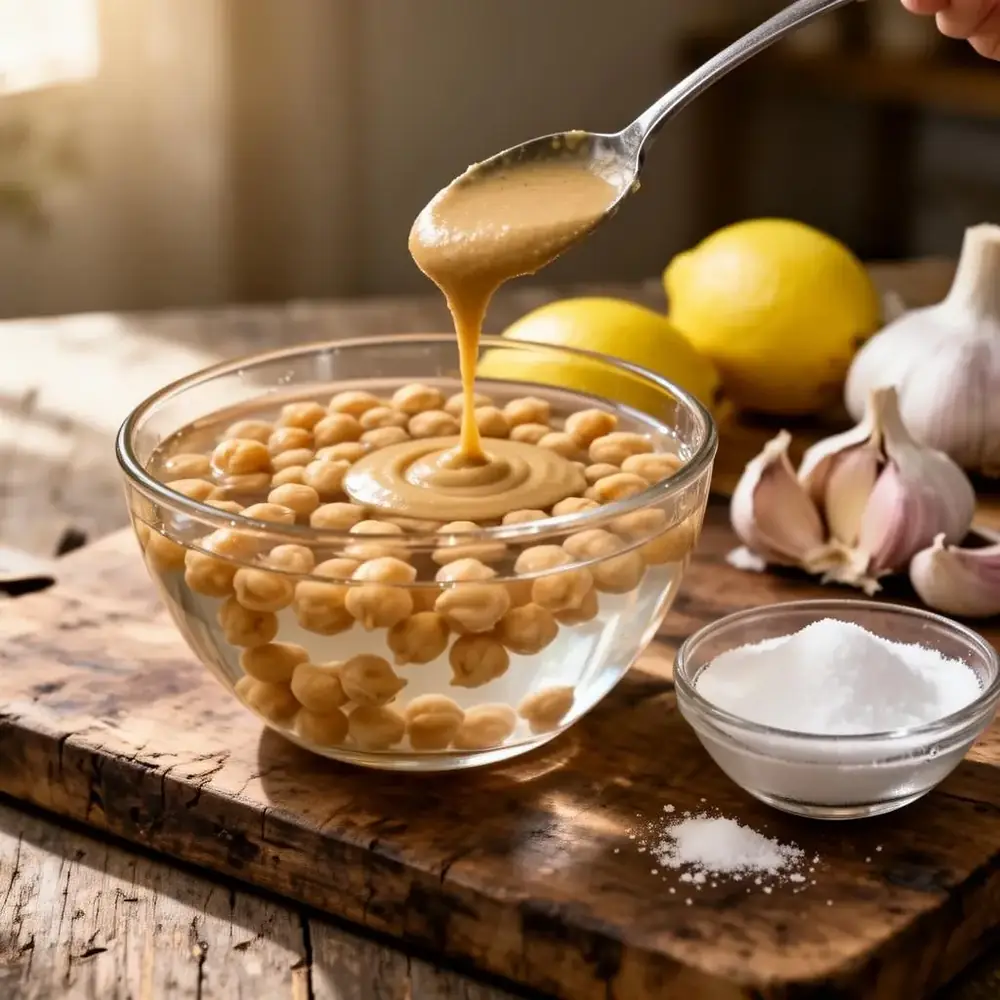
For the very best hummus, start with dried chickpeas — canned will work in a pinch, but dried delivers a noticeably creamier, fresher result. Place the chickpeas in a large bowl, cover with several inches of cold water, stir in ½ teaspoon of baking soda, and let them soak overnight (at least 8 to 12 hours). They will roughly double in size.
Drain and rinse the soaked chickpeas, then add them to a pot with fresh water and the remaining ½ teaspoon of baking soda. Bring to a boil, skim off any foam and loose skins that rise to the surface, then reduce to a simmer. Cook for 45 minutes to an hour, until the chickpeas are very soft — almost falling apart when pressed between two fingers. This level of doneness is essential; undercooked chickpeas can never blend completely smooth.
Step 2: Blend the Base
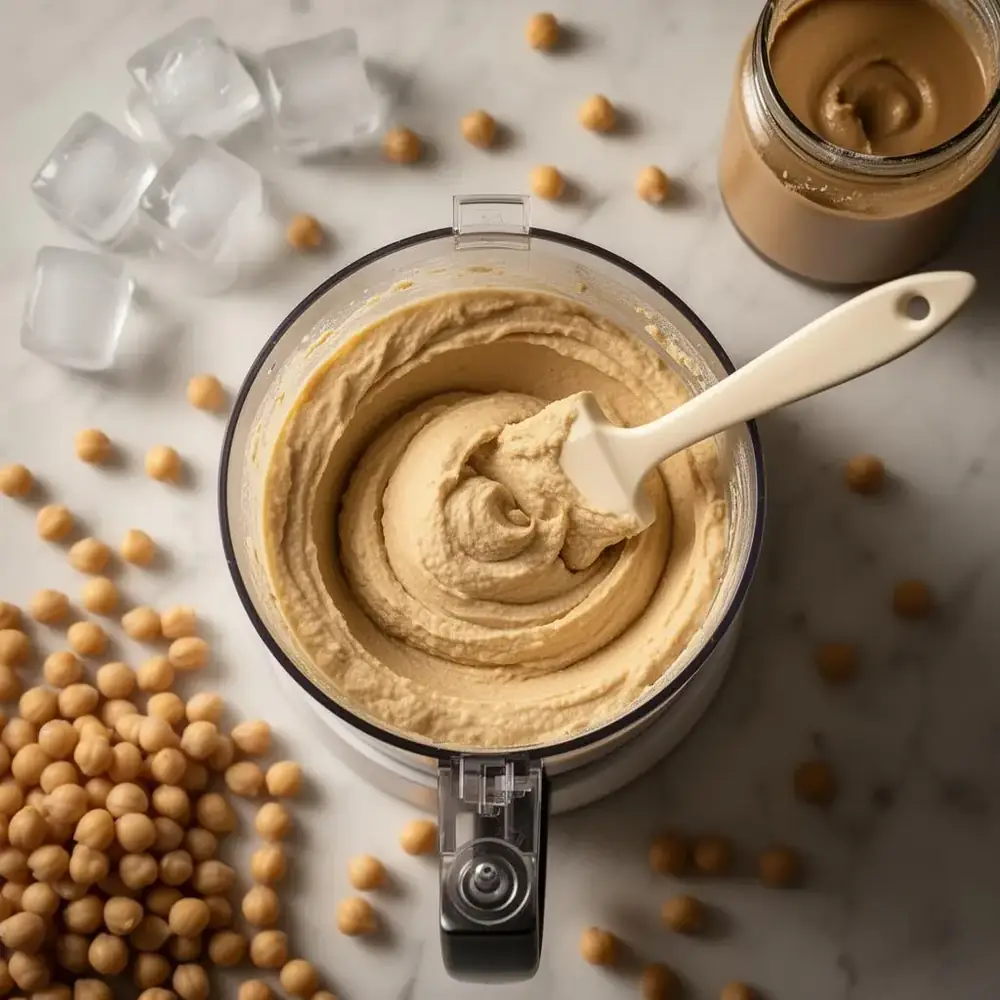
While the chickpeas are still warm, transfer them to a food processor (reserve a spoonful for garnish). Add the garlic, lemon juice, and salt first and blend for a minute — letting the raw garlic mellow in the lemon juice tames its bite. Then add the tahini and process until thick and paste-like. The mixture will look stiff and pale, almost seized; that's exactly what you want before the next step.
Step 3: Whip in Ice Water
With the processor running, slowly stream in ice-cold water a tablespoon at a time. Something almost magical happens: the stiff paste loosens, lightens in color, and turns glossy and airy. Keep blending for a full 3 to 5 minutes, scraping down the sides as needed, until the hummus is completely smooth and silky. Taste and adjust — more lemon for brightness, more salt for depth, a little cumin for warmth.
Step 4: Plate and Top
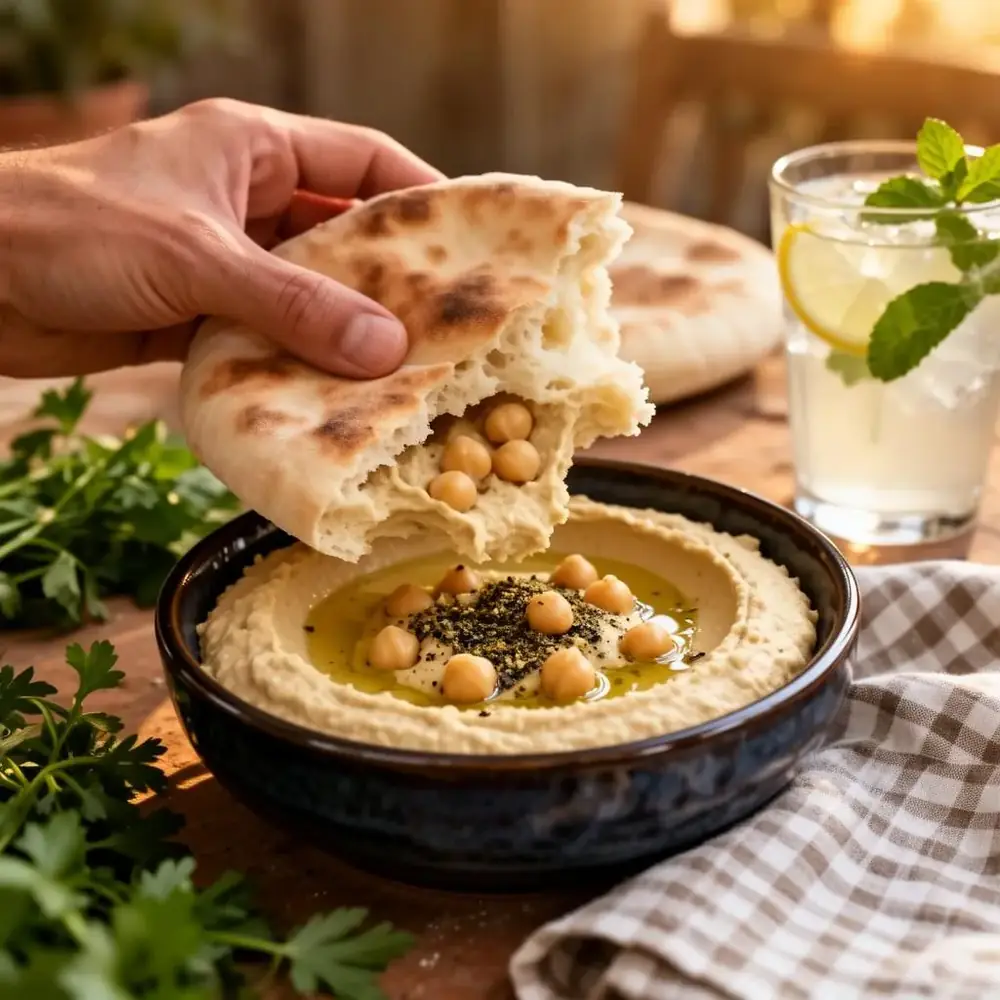
Spoon the warm hummus into a shallow bowl and use the back of the spoon to create a wide, swooping well in the center — the classic crater that holds the olive oil. Drizzle generously with extra-virgin olive oil, mound the reserved warm chickpeas in the middle, and finish with paprika, chopped parsley, and any toppings you love. Serve immediately with warm pita.
The Secret to Ultra-Smooth Hummus
If there's one thing that separates restaurant hummus from the homemade version, it's texture — and three techniques get you there. First, baking soda: a little in both the soak and the cook breaks down the chickpea skins and softens the legumes so they blend into pure cream. Second, blending while warm and for far longer than feels necessary; the heat and the extended whipping emulsify the tahini and water into a satiny base. Third, ice water rather than the chickpea cooking liquid, which lightens the color and lifts the whole bowl into something airy.
For the very smoothest result, some cooks slip the skins off the cooked chickpeas before blending. It's tedious, but the baking soda does most of that work for you, loosening the skins so they float off during cooking — skim them away and you're most of the way there.
Expert Tips for Perfect Hummus
- Buy the best tahini you can find — it is the soul of the dish. Look for pure, smooth, pourable sesame tahini (single-origin Ethiopian or Lebanese sesame is prized), and always stir it well before measuring.
- Blend the garlic and lemon first and let them sit a minute; the acid mellows the raw garlic so it never turns harsh or bitter.
- Serve hummus warm or at room temperature, never fridge-cold — chilling dulls both the flavor and the creamy texture.
- Don't skimp on salt or lemon. Hummus needs enough seasoning to taste vibrant rather than flat; add gradually and taste as you go.
- Use ice water, not warm water, in the final blend — it's the trick that makes the color pale and the texture light.
Ways to Serve and Top It
Hummus is a canvas. Keep it classic with olive oil, whole chickpeas, paprika, and parsley, or build a heartier bowl: hummus topped with spiced ground meat and pine nuts (hummus basar), with a soft-cooked egg, with sautéed mushrooms, or with a scoop of warm fava beans for the beloved hummus ful. Sprinkle with za'atar or sumac, pile on quick-pickled vegetables, or swirl in harissa for heat. Beyond pita, serve it with fresh vegetables, as a sandwich spread, or as a creamy base under roasted vegetables and grains.
Common Mistakes to Avoid
- Undercooking the chickpeas — firm chickpeas can never blend completely smooth, no matter how long you process.
- Using low-quality or bitter tahini, which will dominate and ruin the flavor of the whole bowl.
- Under-blending. Most home cooks stop too soon; a full 3 to 5 minutes of whipping is what creates the silk.
- Skipping the baking soda, then wondering why the texture stays grainy.
- Serving it ice-cold straight from the fridge, which mutes the flavor and stiffens the texture.
Make-Ahead, Storage, and Freezing
Hummus keeps well in an airtight container in the refrigerator for up to 4 to 5 days. The flavors meld nicely overnight, though the texture firms up when cold — let it come to room temperature and stir in a splash of water or a fresh drizzle of olive oil to loosen it before serving. Hummus also freezes surprisingly well for up to 3 months; thaw it in the fridge, then re-whip with a little water and lemon to bring back its creaminess. Add fresh toppings just before serving so they stay bright.
Conclusion
Authentic Israeli hummus proves that the simplest dishes are often the most rewarding. With nothing more than chickpeas, tahini, lemon, garlic, and salt — plus a few smart techniques — you can make a bowl that's silkier and more flavorful than almost anything you'll buy. Make it once with dried chickpeas and a long, patient blend, and you may never reach for the tub again. Serve it warm, swimming in olive oil, with plenty of soft pita, and watch it disappear.
Key Takeaways
- Authentic Israeli hummus is defined by its ultra-smooth, creamy texture and generous, high-quality tahini.
- Dried chickpeas plus baking soda (in the soak and the cook) are the foundation of silky, lump-free hummus.
- Blend warm chickpeas for 3–5 minutes and whip in ice water to make the hummus light, glossy, and airy.
- Quality tahini is non-negotiable — it carries the flavor of the entire dish.
- Hummus is naturally pareve, vegan, and gluten-free, making it endlessly versatile on any table.
Frequently Asked Questions
Can I make authentic hummus with canned chickpeas?
Yes — canned chickpeas make a quick, convenient hummus. For the smoothest result, simmer the drained canned chickpeas with a little baking soda for about 20 minutes until very soft, then blend while warm. Dried chickpeas still give the creamiest, most flavorful bowl, but canned works well when you're short on time.
Why is my hummus grainy instead of smooth?
Graininess almost always comes from undercooked chickpeas or under-blending. Cook the chickpeas until they're very soft (with baking soda to help break down the skins), blend while they're still warm, and process for a full 3 to 5 minutes while streaming in ice water until completely silky.
What kind of tahini should I use?
Use pure sesame tahini that is smooth, pourable, and not bitter — quality varies a lot between brands. Stir it well before measuring, since the oil separates. Good tahini tastes nutty and mild; if yours is harsh or chalky, the whole batch of hummus will suffer.
Is hummus healthy?
Hummus is a nutritious choice: chickpeas provide plant protein and fiber, while tahini and olive oil add healthy fats. It's naturally vegan and gluten-free. It is calorie-dense thanks to the tahini and oil, so enjoy it in reasonable portions as part of a balanced diet.
How long does homemade hummus last?
Stored in an airtight container in the refrigerator, homemade hummus keeps for 4 to 5 days. Let it come to room temperature and stir in a splash of water or olive oil before serving. It also freezes for up to 3 months — thaw in the fridge and re-whip to restore the creamy texture.
Loved this recipe?
Share it with your family, leave a comment, and explore more traditional and modern Jewish dishes on JewishCuisine.
Explore more Traditional recipes