Keftes de Prasa: The Sephardic Leek Fritters That Anchor a Ladino Passover Table
Fry a leek slowly and it stops behaving like an onion. The sharpness burns off, the sulfur softens, and what is left is something closer to sweet cream with a green edge. That transformation is the entire argument for keftes de prasa, the leek fritters that Ladino-speaking Sephardic families have made for centuries and still fight over at the end of the Passover seder.
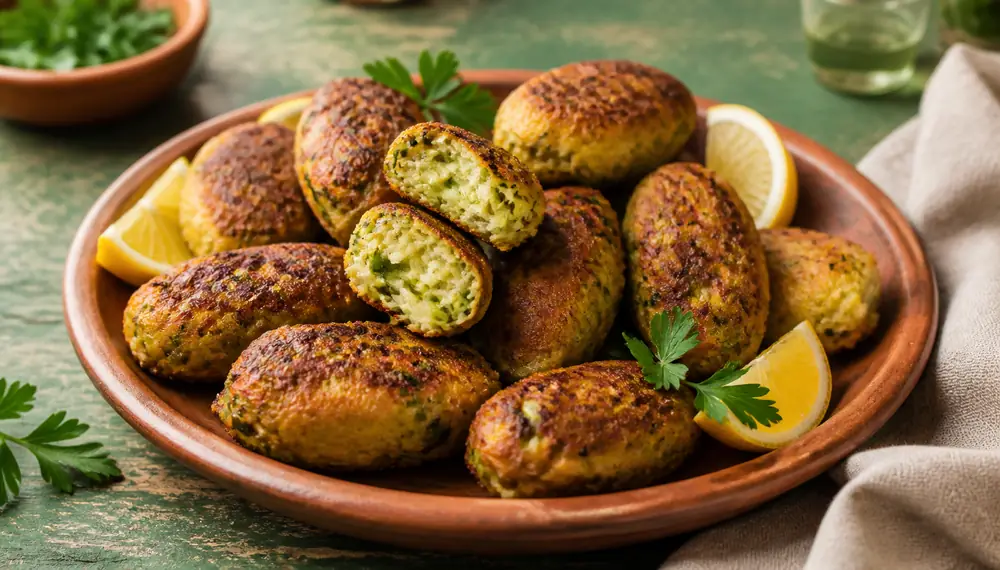
They look modest: small ovals, browned hard on the outside, pale green and almost custardy inside. But they are one of those dishes where technique matters more than the shopping list. Squeeze the leeks properly and you get a fritter that shatters at the edges. Skip that step and you get a sad, steamy pancake that falls apart in the pan. This guide covers where keftes de prasa come from, why they are showing up on restaurant menus again, and exactly how to make a batch that holds together.
Table of Contents
- What Keftes de Prasa Are
- Historical and Cultural Context
- Why Sephardic Leek Fritters Are Trending
- Ingredients and What Each One Does
- Step-by-Step: Making Keftes de Prasa
- Expert Tips for Crisp Fritters
- Common Mistakes to Avoid
- Serving, Storing, and Reheating
- Frequently Asked Questions
- Key Takeaways
- Conclusion
What Keftes de Prasa Are
The name is Ladino, the Judeo-Spanish language carried out of Iberia in 1492 and spoken for centuries afterward in Salonica, Istanbul, Izmir, Rhodes, and Sarajevo. Keftes means patties or croquettes, a cousin of the Turkish kofte. Prasa means leeks. Put together you get, plainly, leek patties — and the plainness is the point. This is a dish built out of a cheap winter vegetable and whatever binder the kitchen had on hand.
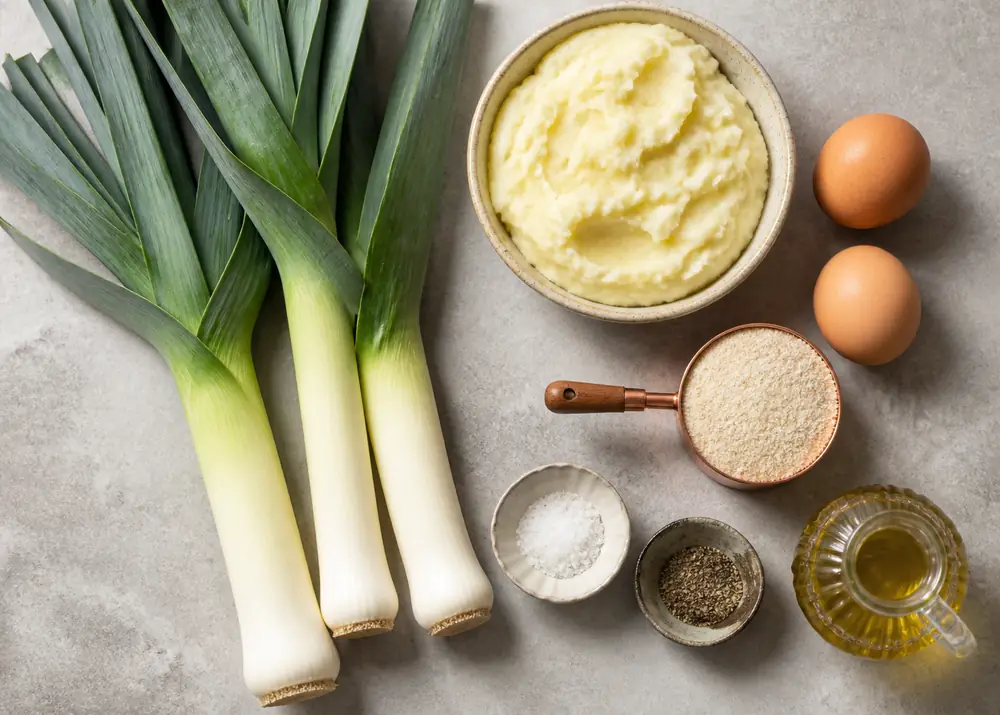
The construction is simple. Leeks are cooked until fully tender, chopped or pulsed, wrung out until nearly dry, then bound with egg and a starch: mashed potato, matzo meal, or ground walnuts, depending on the family and the season. The mixture is shaped into small ovals or discs and shallow-fried in olive oil until deeply browned. Some households dip the shaped patties in beaten egg before frying, which gives a lacy, frilled crust. Others fold the egg straight into the mix for a denser, cleaner-edged fritter.
Meat versions exist and are common in Turkey and Greece, where ground beef is worked into the same base and the result is served as a main course. The vegetarian version is the one that travels, because it fits both a dairy meal and a meat meal without adjustment. Made with potato instead of matzo meal, it is also naturally gluten-free.
Historical and Cultural Context
Leeks are one of the oldest vegetables in the Jewish culinary record. They appear in the Book of Numbers, in the list of foods the Israelites remembered from Egypt alongside cucumbers, melons, onions, and garlic. The Talmud discusses them. Egyptian and Mediterranean cooks were growing them long before either text was written. So when Sephardic families fry leeks, they are working with a vegetable that has been in the neighborhood for several thousand years.
The specific dish, though, belongs to the Ottoman chapter of Sephardic history. After the 1492 expulsion from Spain, tens of thousands of Jews resettled in Ottoman lands, and Salonica — today Thessaloniki, Greece — became one of the largest Jewish cities in the world, with Ladino as its working language for four centuries. The cooking that developed there blended Iberian habits with Balkan and Anatolian ingredients. Vegetable keftes, fried in olive oil, seasoned lightly, and served at room temperature, are a signature of that kitchen.
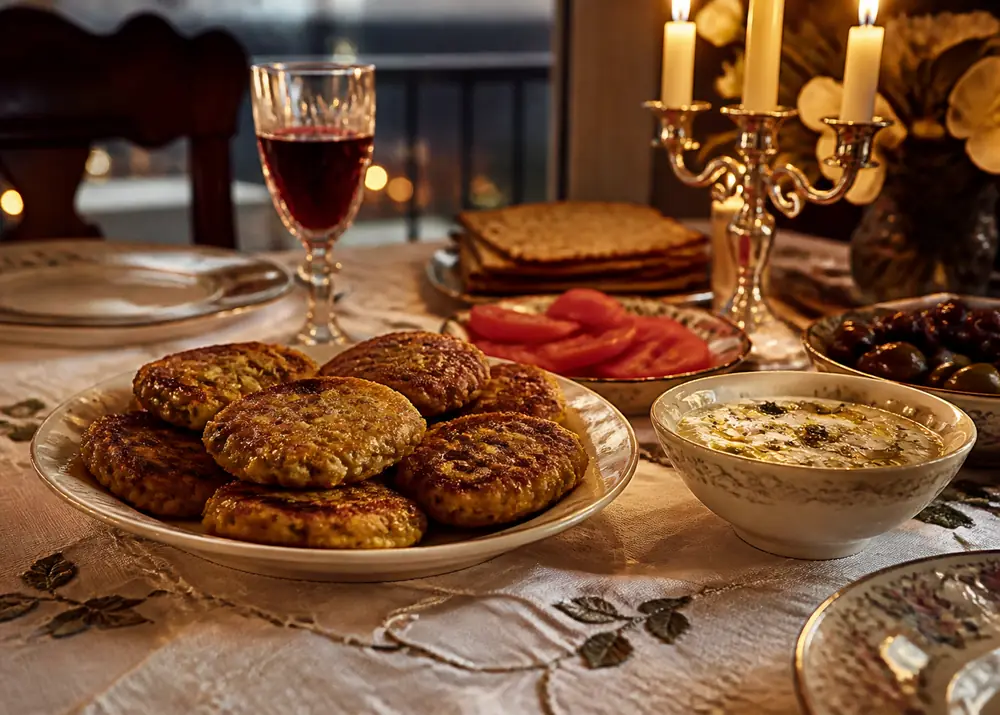
Passover pushed the dish to the center of the calendar. Leeks are one of the vegetables associated with the Rosh Hashanah simanim — the symbolic foods eaten with short blessings at the New Year meal — where karti, usually understood as leeks, accompanies a wish that enemies be cut off. Sephardic seder tables often keep that custom too. And practically, leeks are in season in early spring, matzo meal binds them, and the fritters sit happily at room temperature through a long seder. A dish that stays good for two hours on a crowded table earns its place.
In a Ladino kitchen, a keftico is never one thing. There are keftes of leek, spinach, eggplant, potato, and meat, and every family insists theirs is the correct proportion.
The Holocaust destroyed the Salonican Jewish community almost entirely; the survivors and earlier emigrants carried the recipes to Israel, to New York, to Seattle, and to South America. Keftes de prasa are one of the dishes that made the crossing intact, largely because they were written down in nobody's cookbook and simply repeated by hand, every spring, until they stuck.
Why Sephardic Leek Fritters Are Trending
Several currents are pushing this dish forward at once. The first is the broader correction happening in Jewish food writing. For decades, American Jewish cuisine meant Ashkenazi cuisine by default — brisket, kugel, bagels. The last ten years have brought sustained attention to Sephardic and Mizrahi cooking, and dishes like this one benefit directly. Readers who already know matzo ball soup are looking for what else Passover can taste like.
The second is the vegetable-forward turn in home cooking. Keftes de prasa are, functionally, a vegetable fritter with a bit of egg. They are cheap, they use a vegetable most Americans buy for soup and nothing else, and they deliver a fried-food payoff from about eighty cents of produce. That combination performs well in a grocery economy where people want the results of restaurant cooking without the protein budget.
Third, Passover cooking has become a genuine search category rather than a two-week niche. Home cooks want unleavened dishes that do not taste like compromise. A leek fritter bound with matzo meal is not a substitution for anything; it is simply what the dish always was. Our crispy potato latkes guide covers the Ashkenazi side of the same fried-patty instinct, and it is worth tasting both to see how differently two communities solved the same problem.
Finally, there is the leek itself. Chefs have been talking about charred and confited leeks for a few years now, and home cooks who bought leeks for one recipe are looking for a second use. This is the best one.
Ingredients and What Each One Does
This makes roughly 18 to 20 small fritters, enough for six people as a first course or eight as part of a larger spread.
- 4 large leeks (about 2.5 pounds untrimmed) — the whole dish. Use the white and pale green parts; save the dark tops for stock.
- 1 medium russet potato (about 8 ounces) — boiled and mashed. It binds, adds body, and keeps the interior soft rather than rubbery.
- 2 large eggs — the structural binder. One more if your mixture reads dry.
- 1/3 cup matzo meal — absorbs residual moisture and firms the mix. Substitute more mashed potato or ground almonds for a gluten-free version.
- 1 1/4 teaspoons kosher salt — leeks are sweet and bland without enough salt. Season the mix, then taste a test fritter.
- 1/2 teaspoon freshly ground black pepper — the traditional and often only spice.
- Optional: 1/4 cup chopped flat-leaf parsley, a grating of nutmeg, or 2 tablespoons grated hard cheese for a dairy meal.
- Olive oil for shallow frying — about 1/2 inch in the pan. A neutral oil works, but olive oil is what the dish was built on.
- Lemon wedges, for serving.
Step-by-Step: Making Keftes de Prasa
Step 1: Clean the leeks properly
Leeks grow with soil packed between their layers, and grit in a fritter is unforgivable. Trim the roots and the dark green tops. Slice each leek in half lengthwise, then crosswise into half-moons about half an inch thick. Drop everything into a large bowl of cold water, swish hard with your hands, and let it sit five minutes. The sand sinks. Lift the leeks out with your hands rather than pouring the bowl through a colander, which would tip the grit right back over them.
Step 2: Cook the leeks until fully soft
Boil them in well-salted water for 10 to 12 minutes, until a piece collapses with no resistance when you press it. Undercooked leeks stay stringy and the fritters will pull apart in your mouth. You can also steam them, or braise them in a covered pan with a splash of olive oil and water, which concentrates the flavor and is what I do when I have the time.
Step 3: Boil and mash the potato
Peel, cube, and boil the potato in the same pot if you like, then mash it smooth with a fork or a ricer and let it cool. No butter, no milk — the mash here is a binder, not a side dish, and added fat makes the mixture slack.
Step 4: Wring the leeks dry — the step that decides everything
Drain the cooked leeks and let them cool enough to handle. Then gather them in a clean kitchen towel or a few layers of cheesecloth and squeeze, hard, over the sink. You will be startled by how much liquid comes out; a pound of cooked leeks can release most of a cup. Keep squeezing until only a few drops fall. This is the difference between a fritter with a crackling crust and one that steams itself soggy in the oil.
Step 5: Chop and combine
Chop the squeezed leeks finely with a knife, or pulse them four or five times in a food processor — pulse, do not puree, or the texture turns to baby food. Combine with the mashed potato, eggs, matzo meal, salt, and pepper. The mixture should hold a shape when you press it in your palm and feel tacky but not wet. If it slumps, add matzo meal a tablespoon at a time and rest it for 10 minutes; the meal keeps absorbing as it sits.

Step 6: Shape and fry
Heat about half an inch of olive oil in a heavy skillet over medium heat until a crumb of the mixture sizzles steadily on contact — roughly 350°F. Scoop a heaping tablespoon of the mixture, roll it lightly between wet palms into an oval, and flatten it to about half an inch thick. Slide it into the oil. Work in batches of four or five; crowding drops the oil temperature and the fritters absorb rather than sear.
Fry three to four minutes on the first side, until the edge you can see has gone deep golden, then flip once and give the second side another two to three minutes. Flip once only. Every extra turn breaks the crust that is holding the fritter together.
Step 7: Drain and season
Move the finished fritters to a wire rack set over a sheet pan, not to paper towels, which trap steam underneath and soften the bottom. Sprinkle with a little salt while they are still hot. Fry a single test fritter before committing the whole batch — it tells you whether the mix needs more salt or more binder while you can still fix it.
Expert Tips for Crisp Fritters
- Squeeze twice. Wring the leeks, let them sit five minutes, and wring again. More liquid always comes out the second time.
- Chill the mixture. Thirty minutes in the refrigerator firms the mix, hydrates the matzo meal, and makes shaping far easier.
- Keep the oil at a steady medium. Too cool and the fritters drink oil; too hot and the outside blackens while the center stays raw and eggy.
- For the classic frilled crust, shape the patties, then dip each one in beaten egg just before it hits the oil. The egg sets in ruffles at the edges.
- Season assertively. Leeks are sweet and mild, and an underseasoned keftico tastes like nothing at all.
- Add a squeeze of lemon at the table, never in the mix. Acid in the batter can loosen the bind.
- Wipe the pan and refresh the oil between the second and third batches if crumbs start to darken and smoke.
Common Mistakes to Avoid
- Wet leeks. The single most common failure. Damp mixture will not brown, will not hold, and will spatter.
- Undercooked leeks. If they still have bite after boiling, the finished fritter will be fibrous and hard to eat.
- Over-processing. A food processor run continuously turns cooked leeks into a pale puree with no texture left to speak of.
- Too much binder. Loading in matzo meal to fix a wet mixture gives you a dense, bready patty. Squeeze harder instead.
- Crowding the pan. Five fritters in a twelve-inch skillet is plenty; the sixth costs you the crust on all of them.
- Flipping repeatedly. Patience on the first side builds the structure that lets the fritter survive the flip.
- Draining on paper towels in a stack. Use a rack and keep them in a single layer.
Serving, Storing, and Reheating
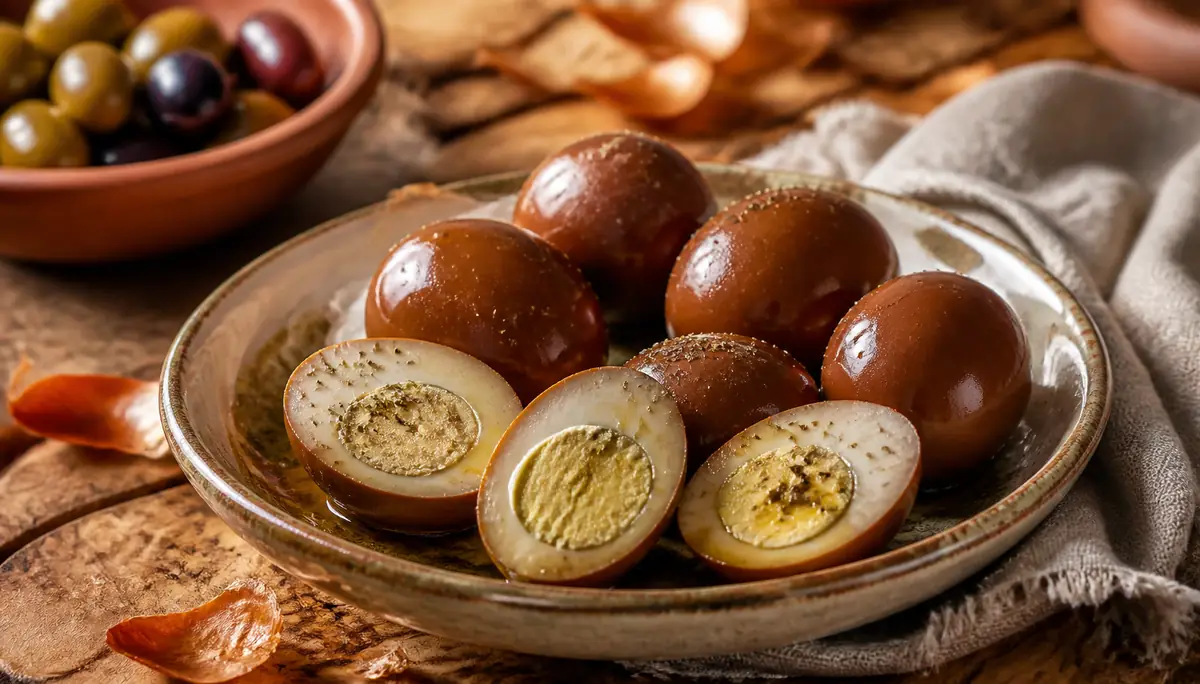
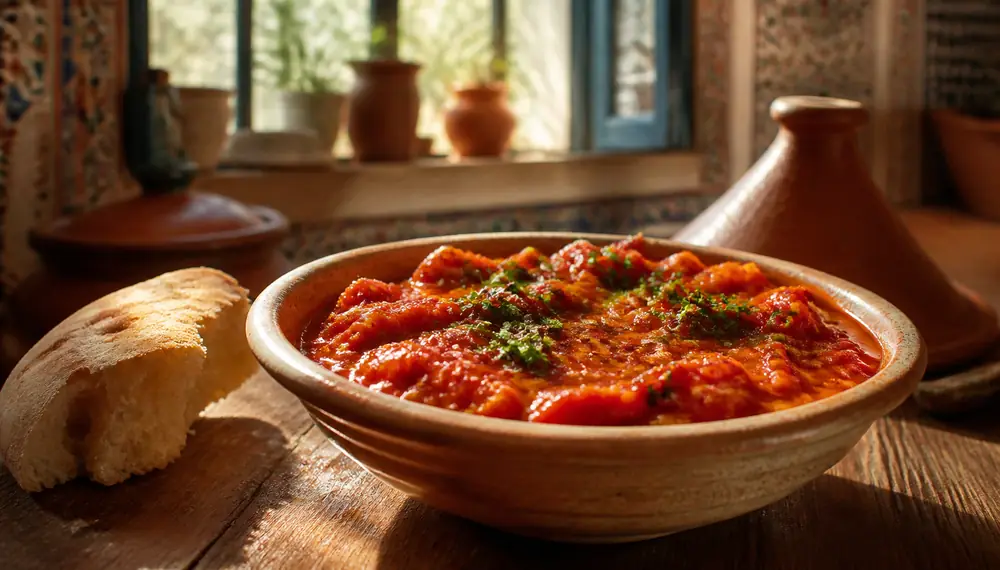
Keftes de prasa are traditionally served warm or at room temperature, which is part of why they suit a seder or a Shabbat lunch so well. Lemon wedges are standard. A cool yogurt-and-herb dip is a modern and very good addition for a dairy meal, and a spoonful of a bright cooked-vegetable salad alongside works beautifully — our Moroccan matbucha recipe makes an excellent partner. They also sit well next to eggs; if you are building a Sephardic spread, the huevos haminados recipe covers the slow-cooked brown eggs that share the same table.
Refrigerate leftovers in a covered container for up to four days. Reheat on a wire rack in a 375°F oven for eight to ten minutes, or in an air fryer for four; the microwave will make them limp. The shaped, unfried patties freeze well on a parchment-lined tray, then transfer to a bag for up to three months and fry straight from frozen with an extra minute per side.
Variations Worth Trying
Keftes de espinaka swaps the leeks for spinach, cooked and wrung out the same way, and is often enriched with cheese for a dairy meal. Keftes de patata are all potato, gentler and more childlike. In Turkey and the Balkans, ground beef is folded into the leek base at roughly a one-to-two ratio, turning the fritter into a main course; in that version the potato is often dropped entirely. A walnut-bound variation appears in some Rhodes and Izmir families, giving a richer, slightly bitter edge that pairs well with the leek's sweetness.
For a lighter finish, you can bake the shaped patties on an oiled sheet pan at 425°F for about 25 minutes, flipping once. They will be good, though not crisp in the same way — the ruffled edge only happens in oil. If you want the fried-Jewish-holiday experience in its fullest form, our Moroccan sfenj doughnuts recipe is the sweet counterpart to this savory one.
Conclusion
Keftes de prasa are a small dish that carries a lot: five centuries of Ladino cooking, a vegetable the Torah names by memory, and a technique that rewards attention rather than expense. The whole recipe comes down to one honest hour — cleaning, boiling, and above all squeezing — and then a few minutes of confident frying.
Make them once for a Passover seder or a Rosh Hashanah table and they will quietly become the thing people ask about. Make them on a Tuesday with four leeks and a leftover potato and you will understand why they lasted.
Key Takeaways
- Keftes de prasa are Sephardic leek fritters, named in Ladino, rooted in the Ottoman Jewish kitchens of Salonica and Istanbul.
- Squeezing every drop of water from the cooked leeks is the step that determines whether the fritters crisp or collapse.
- Mashed russet potato plus egg and matzo meal binds the mixture; skip the matzo meal and add ground almonds for gluten-free.
- Fry in about half an inch of olive oil at roughly 350°F, in small batches, and flip only once.
- They are served warm or at room temperature with lemon, which makes them ideal for a Passover seder or Shabbat lunch.
- Shaped patties freeze for three months and fry straight from frozen with an extra minute per side.
Frequently Asked Questions
What does keftes de prasa mean?
It is Ladino, the Judeo-Spanish language of Sephardic Jews. Keftes means patties or croquettes, related to the Turkish kofte, and prasa means leeks. So the name translates simply to leek patties.
Are keftes de prasa kosher for Passover?
Yes, when bound with matzo meal or mashed potato rather than flour or breadcrumbs. They are a classic Sephardic seder dish. Ashkenazi households observing the kitniyot custom should note that the recipe contains no legumes or grains beyond matzo meal, so it works for both traditions.
Why do my leek fritters fall apart in the pan?
Almost always excess moisture. Wring the cooked leeks in a towel until barely any liquid comes out, chill the mixture for thirty minutes before shaping, make sure the oil is hot enough to set the crust immediately, and flip only once.
Can I make keftes de prasa without frying?
You can bake the shaped patties at 425°F for about 25 minutes, flipping halfway, or air-fry them at 380°F for around 14 minutes. They will be tasty and lighter, but you lose the ruffled, crackling edge that shallow frying in olive oil produces.
Can I prepare them ahead of a holiday meal?
Yes. The mixture keeps refrigerated for two days, shaped raw patties freeze for three months, and fried fritters reheat well on a rack in a 375°F oven for eight to ten minutes. Since they are traditionally eaten at room temperature, frying a few hours ahead is entirely authentic.
Loved this recipe?
Share it with your family, leave a comment, and explore more traditional and modern Jewish dishes on JewishCuisine.
Explore more Traditional recipesKeep Reading
External Sources
- Sephardic Jews of Salonica — United States Holocaust Memorial Museum
- Leeks: growing and nutrition — University of Illinois Extension
- Passover overview — My Jewish Learning
- Safe frying and food handling — USDA Food Safety and Inspection Service
- Ladino language and Sephardic culture — Jewish Museum of Thessaloniki