Jerusalem Kugel: The Sweet, Peppery Noodle Kugel That Defines Shabbat in the Old City
The first bite never makes sense. You taste caramel — dark, almost burnt, the kind of sugar that has gone one shade past comfortable — and then, a second later, black pepper arrives and takes over the whole thing. Sweet, then hot, then sweet again. If nobody has warned you, the reaction is usually a confused pause followed by reaching for a second slice.
That is Jerusalem kugel, known in Hebrew as kugel Yerushalmi. It is a baked pudding of very thin noodles bound with eggs, oil, burnt caramel, and far more coarsely ground black pepper than any American recipe would dare suggest. It belongs to the Ashkenazi neighborhoods of Jerusalem's Old City and Mea She'arim, where it has been eaten warm on Shabbat morning with pickles and a glass of tea for something close to two hundred years. This guide covers where it came from, why home cooks outside Israel are suddenly making it, and exactly how to get the caramel right — because the caramel is the whole dish.
Table of Contents
- What Jerusalem Kugel Actually Is
- A Short History of Kugel Yerushalmi
- Why Jerusalem Kugel Is Trending Right Now
- Ingredients and Why Each One Matters
- Step-by-Step: How to Make Jerusalem Kugel
- Expert Tips
- Common Mistakes to Avoid
- How to Serve and Store It
- Nutrition Notes
- Frequently Asked Questions
- Key Takeaways
What Jerusalem Kugel Actually Is
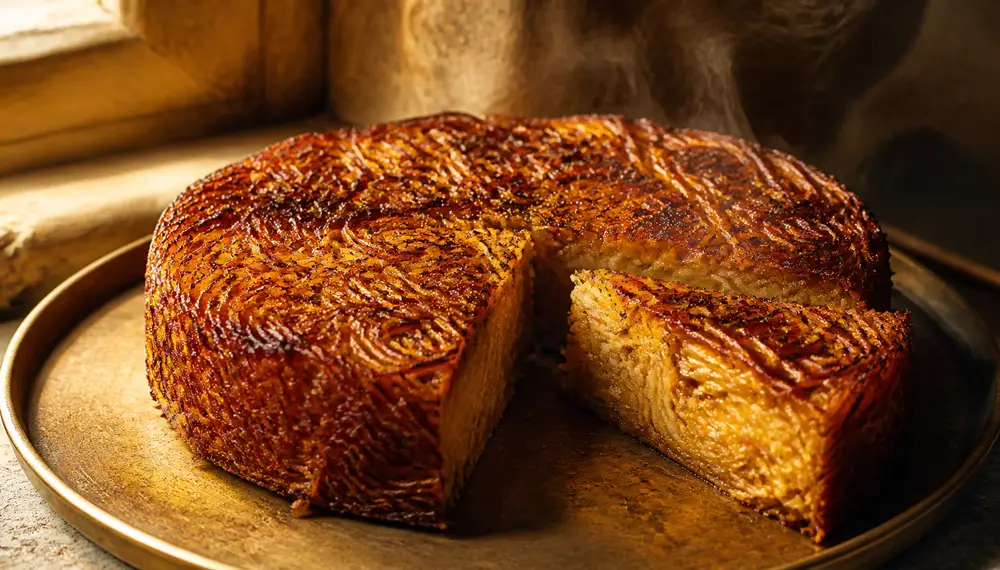
Strip away the mythology and Jerusalem kugel is four things: thin egg noodles, caramelized sugar, eggs, and black pepper, baked slowly until the outside darkens into a chewy crust and the inside sets into something between a noodle pudding and a dense cake. There is no dairy, no fruit, no cinnamon-sugar streusel. Unlike the sweet dairy noodle kugels common in American Jewish homes — the ones with cottage cheese, sour cream, and crushed cornflakes on top — this one is pareve, which is precisely why it can be carried from house to house on Shabbat and served alongside a meat lunch without anyone thinking twice.
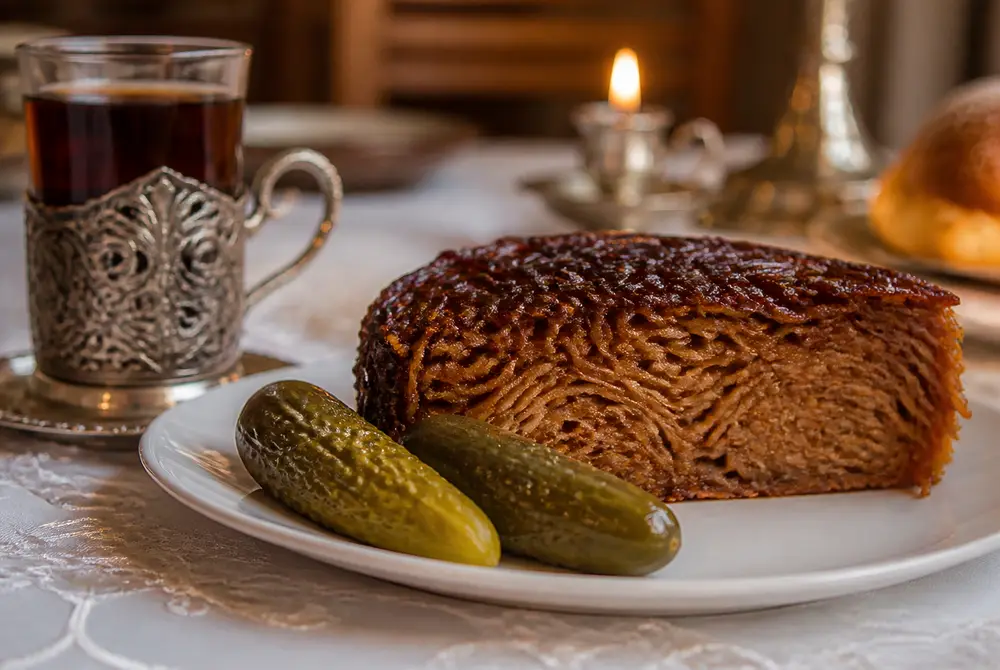
The texture is the argument. A proper Yerushalmi kugel is sliceable, slightly springy, and glossy where the caramel has pooled, with a nearly black rim that tastes faintly of espresso. The sweetness is restrained. The pepper is not.
A Short History of Kugel Yerushalmi
Kugel itself is old — medieval Ashkenazi cooks in the Rhineland were baking bread-and-fat puddings in the corner of the Shabbat stew pot long before noodles entered the picture, which is where the German word Kugel, meaning ball or sphere, comes from. The dish traveled east into Poland, Lithuania, and Hungary, picked up noodles and eggs along the way, and split into a hundred regional variations.
The Jerusalem version emerged in the nineteenth century, in the wave of Lithuanian and Hungarian Jews who settled in what was then Ottoman Palestine — the community often described as the Old Yishuv. Sugar was expensive and imported; pepper was cheap and available in the local markets. Cooking the sugar to a deep caramel stretched a small quantity a long way and gave the dish color and depth without needing more of it. The pepper filled in the rest. What began as thrift hardened into identity, and by the early twentieth century every Jerusalem family had its own ratio, guarded like a small state secret.
In Mea She'arim, people don't ask whether the kugel is good. They ask whose kugel it is — and the answer settles the matter.
Traditionally the kugel was assembled Friday afternoon and left in a slow oven or on a covered flame overnight, coming out Saturday morning at exactly the right point: crust set, interior soft, the whole thing warm without being hot. Many Jerusalem families still eat it at kiddush after morning prayers rather than at the Friday night meal.
Why Jerusalem Kugel Is Trending Right Now
Three things happened at once. First, sweet-and-savory stopped being a novelty. A generation of home cooks now happily puts chili in chocolate, black pepper on strawberries, and miso in caramel, so a dish built on burnt sugar and pepper reads as sophisticated rather than baffling. Second, Israeli food writing in English has widened past hummus and shakshuka into regional and communal dishes, and Jerusalem kugel photographs beautifully — that lacquered dark dome is hard to scroll past.
Third, and least glamorous, it is a make-ahead dish that improves with time. It bakes low and slow, it holds for hours, it travels, and it is fully pareve. For anyone cooking for a crowd, that combination is worth more than novelty.
Ingredients and Why Each One Matters
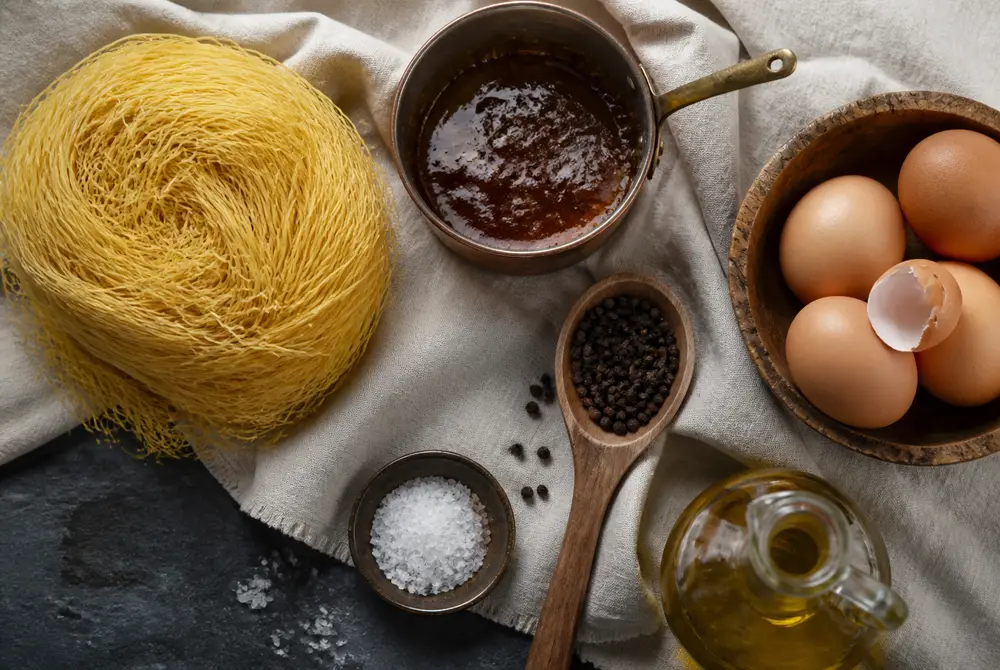
- Thin noodles (about 12 oz / 340 g): angel hair, fine egg noodles, or Israeli kugel noodles. Thin is essential — thick ribbons hold too much air and the kugel never compacts into a sliceable block.
- Granulated sugar (¾ cup): most of it becomes caramel. Do not substitute brown sugar; the molasses masks the burnt notes you are working so hard to build.
- Neutral oil (½ cup): traditionally schmaltz or oil, never butter, because the kugel must stay pareve. Oil also keeps it tender for a full day.
- Eggs (4 large): the binder. Fewer and the kugel crumbles; more and it turns rubbery and omelet-like.
- Coarsely ground black pepper (1½ to 2 tsp, and yes, really): grind it fresh and grind it coarse. Fine pepper dust disappears; cracked pepper gives you the intermittent heat that makes the dish work.
- Salt (1½ tsp): the bridge between sweet and hot. Undersalted Jerusalem kugel tastes flat no matter how good the caramel is.
- Boiling water (¼ cup) for stopping the caramel — the single most important safety step in the recipe.
Step-by-Step: How to Make Jerusalem Kugel
- Boil the noodles in well-salted water until just past al dente — about a minute softer than you would want for pasta. Drain them thoroughly and return them to the empty pot. They should be dry, not dripping.
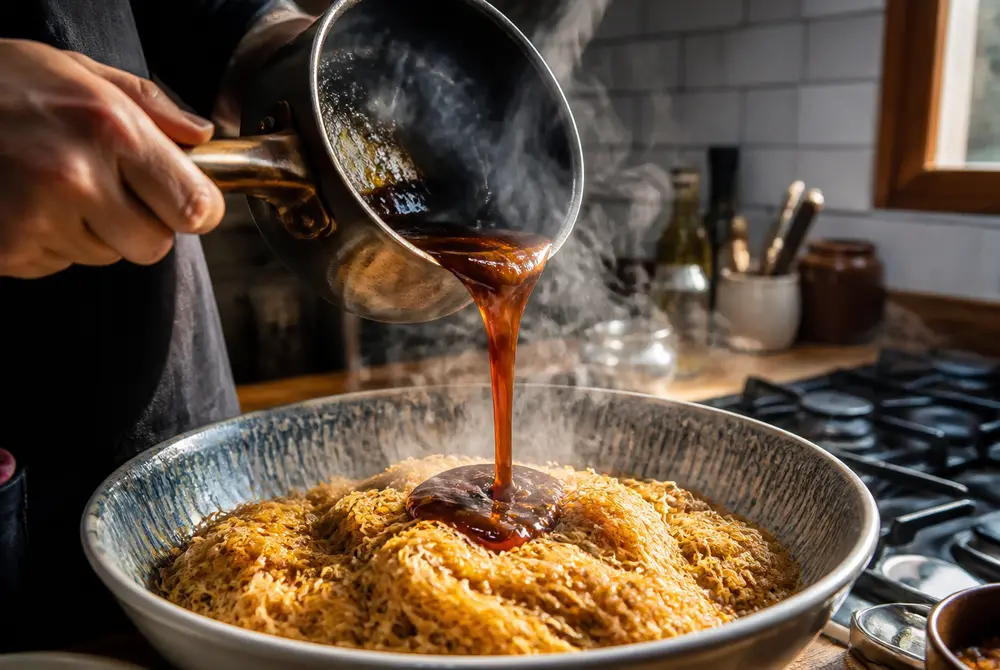
- Start the caramel. In a heavy small saucepan, heat the sugar with two tablespoons of the oil over medium heat. Do not stir. Swirl the pan as the edges liquefy and the color moves from clear to gold to amber.
- Take it further than feels right. You want a deep mahogany, the color of strong tea, with the first hint of smoke coming off the surface. Roughly 350°F on a candy thermometer. Thirty seconds separates perfect from ruined here, so do not walk away.
- Stop the caramel safely. Off the heat, add the boiling water in a slow stream at arm's length — it will hiss violently and steam. Swirl until smooth. Using boiling rather than cold water prevents the sugar from seizing into a rock.
- Combine hot with hot. Pour the caramel over the warm noodles immediately and toss with two forks until every strand is coated. Warm noodles absorb caramel; cold noodles let it pool and harden at the bottom.
- Season while warm. Add the remaining oil, the salt, and the pepper, and toss again. Taste a strand now — this is your only chance to correct the balance.
- Add the eggs last. Let the noodles cool for about ten minutes so they no longer scramble the eggs, then beat the eggs and fold them through evenly.
- Bake low and long. Pour into a well-oiled 9-inch round pan or tube pan, press down firmly to compact, cover with foil, and bake at 325°F for about one hour. Uncover and bake another 45 to 60 minutes until the top is deeply browned and the center is set.
- Rest before slicing. Give it at least 30 minutes in the pan. A hot kugel falls apart; a rested one slices clean.
Expert Tips
- For the traditional overnight version, bake covered at 200°F for eight to ten hours. The crust deepens, the interior turns almost custardy, and the sweetness mellows considerably.
- Use a tube pan if you want maximum crust. The central column exposes more surface to the oven, which is exactly the point for anyone who eats kugel for the edges.
- Line the bottom with parchment. Caramel welds itself to metal, and no amount of oil fully prevents it.
- Grind the pepper coarse in a mortar rather than a mill if you can. Uneven shards give the dish its characteristic bursts of heat.
- Make it a day ahead. Jerusalem kugel on day two is better than day one — the pepper settles and the caramel distributes.
- Reheat covered at 300°F for 20 minutes. A microwave turns the crust leathery.
Common Mistakes to Avoid
- Pulling the caramel too early. Pale gold caramel makes a kugel that tastes like sweetened pasta. The bitterness of a dark caramel is not a flaw — it is the flavor.
- Adding cold water to hot sugar. It seizes into a solid lump and you start over. Boiling water, poured slowly, off the heat.
- Pouring caramel over cold noodles. It sets on contact into brittle shards that never distribute.
- Adding the eggs to noodles that are still hot. You get scrambled egg pockets instead of a smooth bind.
- Being timid with pepper. One teaspoon in a full pan is background noise. The dish is defined by the contrast.
- Baking hot and fast. High heat browns the top before the interior sets, leaving a raw, loose middle.
- Slicing it straight from the oven. Patience is a structural ingredient here.
How to Serve and Store It
In Jerusalem, kugel is a Shabbat morning food. It appears at kiddush after prayers, cut into thick wedges, served warm or at room temperature with sour pickles and glasses of hot tea. The pickle is not optional in spirit — the vinegar cuts the sweetness and resets the palate between bites. It also shows up alongside cholent at lunch, where it plays the same role a starch plays anywhere else.
Wrapped tightly, it keeps four to five days in the refrigerator and freezes well for up to three months. Freeze it in slices rather than whole, and reheat from frozen in a covered pan at 300°F for about half an hour.
Nutrition Notes
There is no way around it: this is a rich dish. A standard slice runs somewhere between 300 and 380 calories, most of it from noodles, oil, and sugar, with about 6 to 8 grams of protein from the eggs. It is not a health food, and Jerusalem cooks have never pretended otherwise — it is a once-a-week Shabbat dish eaten in company, which is a different category from everyday eating.
If you want to lighten it, the honest lever is portion size rather than substitution. Cutting the sugar significantly weakens the caramel that defines the dish, and reducing the oil produces a dry, crumbly kugel. Whole wheat noodles work reasonably well and add fiber, though they mute the caramel slightly. Because the recipe contains no dairy, it fits pareve, kosher, and most lactose-free requirements as written.
Conclusion
Jerusalem kugel is one of those dishes that makes no sense on paper and perfect sense in the mouth. It was built out of scarcity — a little sugar cooked hard to go further, cheap pepper doing the work of expensive spice — and it survived because it tastes like nothing else and because it holds beautifully from Friday afternoon to Saturday noon.
Make it once and take the caramel further than your nerves want you to. Grind the pepper coarse. Let it rest before you cut it. Then eat a wedge standing at the counter with a pickle in your other hand, which is, by long tradition, the correct way.
Key Takeaways
- Jerusalem kugel (kugel Yerushalmi) is a pareve baked noodle pudding built on dark caramel, eggs, oil, and a generous amount of coarse black pepper.
- It originated among Lithuanian and Hungarian Jews in nineteenth-century Jerusalem, where expensive sugar was stretched by cooking it to a deep caramel.
- The caramel must go to a deep mahogany — pale caramel makes a bland kugel — and must be stopped with boiling water, never cold.
- Pour hot caramel over warm noodles, season while warm, and add the beaten eggs only after the noodles have cooled about ten minutes.
- Bake low and slow: covered at 325°F for an hour, then uncovered for 45 to 60 minutes, and rest 30 minutes before slicing.
- It is better on day two, keeps five days refrigerated, freezes for three months, and is traditionally served warm with sour pickles and tea.
Frequently Asked Questions
What does Jerusalem kugel taste like?
Sweet and peppery at the same time. The dominant flavor is dark caramel with a slightly bitter, almost coffee-like edge, followed by sharp bursts of black pepper. The texture is chewy at the crust and dense and springy inside.
Why is my Jerusalem kugel not dark enough?
Almost always an undercooked caramel. The sugar needs to reach a deep mahogany, around 350°F, before you stop it. Pale caramel produces a beige kugel with a flat, one-note sweetness no amount of baking will fix.
Can I make Jerusalem kugel ahead of time?
Yes, and you should. It tastes better on the second day once the pepper and caramel have settled. Bake it fully, cool, wrap tightly, and reheat covered at 300°F for about 20 minutes before serving.
Is Jerusalem kugel pareve?
Yes. It is made with noodles, eggs, sugar, oil, salt, and pepper — no meat and no dairy — so it can be served with either type of meal. Check that your noodles and oil carry reliable kosher certification if that matters for your table.
What is the difference between Jerusalem kugel and regular noodle kugel?
American-style noodle kugel is usually dairy, made with wide noodles, cottage cheese or sour cream, sugar, cinnamon, and often raisins. Jerusalem kugel uses thin noodles, no dairy, burnt caramel instead of plain sugar, and a heavy dose of black pepper.
Loved this recipe?
Share it with your family, leave a comment, and explore more traditional and modern Jewish dishes on JewishCuisine.
Explore more Traditional recipes