Cherry Varenikes: The Ashkenazi Sweet Dumplings That Belong on Your Shavuot Table
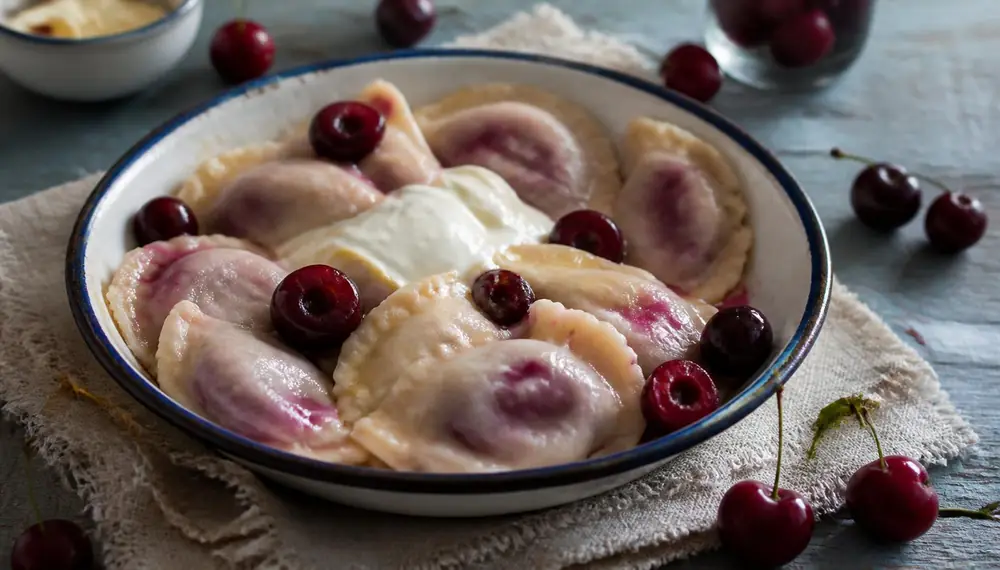
There is a particular moment in a bowl of cherry varenikes that no other dessert quite reproduces. You cut into a pale, slippery dumpling, and dark cherry juice runs out and swirls into the melting butter and the cold sour cream. It is sweet and sharp at once, hot and cold at once, and it tastes like a Ukrainian summer kitchen in July.
Varenikes (vareniki in Russian and Ukrainian, varenyky in transliterated Ukrainian) are boiled dumplings that Jewish families across Eastern Europe adopted, adapted, and made unmistakably their own. Savory versions filled with potato, cheese, or kasha show up all year. The sweet cherry ones belong to summer, and above all to Shavuot, the dairy holiday that lands right when sour cherries ripen. This guide walks through where they come from, why they are having a moment again, and exactly how to make a batch that does not leak, split, or turn gluey.
Table of Contents
- What Cherry Varenikes Are
- Historical and Cultural Context
- Why Cherry Varenikes Are Trending Again
- Ingredients and What Each One Does
- Step-by-Step: Making Cherry Varenikes
- Expert Tips from the Dumpling Table
- Common Mistakes to Avoid
- Serving, Freezing, and Storage
- Frequently Asked Questions
- Key Takeaways
- Conclusion
What Cherry Varenikes Are
A varenik is a circle of soft, unleavened dough folded over a filling and sealed into a half-moon, then dropped into boiling water. That is the whole architecture. What separates a great one from a forgettable one is the dough: thin enough to see the filling blush through it, elastic enough to survive the pot, tender enough that it never feels like pasta.
The classic Jewish sweet filling is sour cherries — morello or Montmorency, not the sweet Bing cherries sold for snacking. Sour cherries hold their shape, keep their acidity through cooking, and produce that startling ruby juice. They are dressed with a little sugar and a starch to bind the syrup, and that is it. No spice blend, no extract, nothing that competes.
Because the dough is made with egg and often a splash of milk or sour cream, and because the finished dumplings are drowned in butter and cream, cherry varenikes are firmly a dairy dish. That kosher classification is not a footnote — it is the reason they occupy the place they do in the Jewish calendar.
Historical and Cultural Context
Boiled filled dumplings traveled west along trade routes and settled across Central and Eastern Europe centuries ago, taking a different name in every kitchen: pierogi in Poland, varenyky in Ukraine, kolduny in Belarus and Lithuania. Jewish communities living in those same towns cooked them too, with one crucial adjustment. Kosher law separates meat from dairy, so a Jewish cook could not build a dumpling on lard or serve a cheese filling next to a meat course. That constraint pushed Jewish dumpling-making in two directions at once.
On the meat side you get kreplach, filled with beef or chicken and floated in broth for Rosh Hashanah, Yom Kippur eve, and Purim. On the dairy side you get varenikes: potato and fried onion, farmer cheese, blueberries, plums, and — the best of them — sour cherries. Same technique, two entirely separate lives, dictated by the kitchen's dividing line.
Sour cherry trees grew in nearly every courtyard in Podolia, Galicia, and Bessarabia, and they all ripen at once. A family could not eat that much fruit fresh, so cherries were dried, turned into varenye preserves, pressed into cordials, and, in the two weeks when they were perfect, folded by the hundred into dough. It was seasonal cooking born of abundance rather than principle.
The Shavuot connection sealed the tradition. The holiday is customarily marked with dairy foods, an old practice explained variously as a nod to a land flowing with milk and honey or to the moment Israel received the laws of kashrut and had no kosher meat prepared. Ashkenazi tables answered with blintzes, cheesecake, and varenikes. If you are building that menu, our cheese blintzes guide and our Shavuot cheesecake recipe cover the other two pillars.
Kreplach are for the solemn holidays; cherry varenikes are for the long summer afternoon when the cherry tree has given you more than you can carry.
Why Cherry Varenikes Are Trending Again
Interest in Ukrainian and Eastern European cooking has climbed sharply over the past few years, and Jewish home cooks have joined it from a slightly different angle — looking for the specific dishes their grandmothers made before the family left. Cherry varenikes sit right at that intersection, claimed with equal affection by Ukrainian and Ashkenazi Jewish kitchens.
There is a practical driver too. Sour cherries have become far easier to find outside their three-week season. Frozen pitted morellos, jarred cherries in light syrup, and canned tart cherries are stocked year-round in most large supermarkets and every Eastern European grocery. A dish that was once locked to July is now a Sunday project in February.
And dumpling-making itself has become a social activity again. Rolling, filling, and crimping is slow work that goes fast with company, which is exactly the kind of cooking people are drawn to right now. A tray of varenikes is also endlessly photogenic, which has not hurt its spread.
Ingredients and What Each One Does
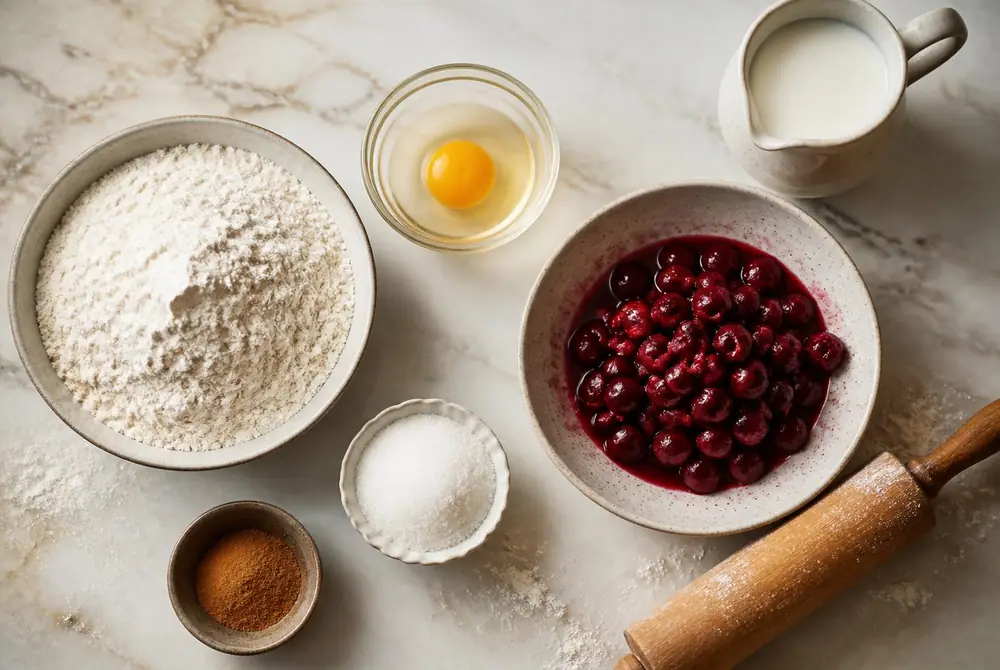
For the dough (makes about 40 dumplings)
- 3 cups (390 g) all-purpose flour, plus more for rolling — the structure; bread flour makes the dough too tough
- 1 large egg — adds richness and helps the seams hold
- 3/4 cup (180 ml) warm water or whole milk — milk gives a softer, paler dough; water gives a slightly chewier one
- 2 tablespoons sour cream — the quiet trick; its fat and acid relax the gluten and keep the dough supple
- 1 teaspoon neutral oil — elasticity insurance
- 1/2 teaspoon fine salt — flavor, even in a sweet dumpling
For the filling
- 4 cups (about 600 g) pitted sour cherries, fresh, frozen and thawed, or jarred and drained
- 1/3 to 1/2 cup (65–100 g) granulated sugar, depending on how tart the fruit is
- 2 tablespoons potato starch or cornstarch — binds the juice so it does not blow out the seams
- Pinch of salt, and a small pinch of cinnamon if you like it (optional and slightly controversial)
To serve
- 4 tablespoons unsalted butter, melted
- Full-fat sour cream, cold
- Reserved cherry juice cooked down to a syrup, or a spoonful of cherry preserves
One note on the fruit: drain it well and save the liquid. That drained juice, simmered with a spoon of sugar until it coats a spoon, becomes the sauce. Leaving the juice in the filling is the single most common cause of split dumplings.
Step-by-Step: Making Cherry Varenikes
1. Mix and rest the dough
Whisk the flour and salt in a wide bowl. Beat the egg with the warm water or milk, the sour cream, and the oil, then pour it into the flour. Stir with a fork until it comes together in shaggy clumps, then turn it onto the counter and knead for 6 to 8 minutes. It will feel stiff and uncooperative at first and then, quite suddenly, go smooth and soft like an earlobe.
Wrap it tightly and rest it at room temperature for at least 30 minutes, up to an hour. This is not optional. Unrested dough springs back the moment you roll it, and you will fight it for the rest of the afternoon.
2. Prepare the cherries
Pit the cherries if you are using fresh ones — a cherry pitter, a sturdy hairpin, or the flat of a chef's knife all work. Toss the pitted fruit with the sugar and let it sit 15 minutes, then drain thoroughly in a sieve, catching the juice in a bowl below. Return the drained cherries to the bowl, sprinkle over the potato starch and salt, and toss until every cherry is dulled with a fine coating.
3. Roll and cut
Work with a quarter of the dough at a time and keep the rest wrapped. Roll it out on a lightly floured counter to about 1/16 inch — thin enough that you can just make out the grain of the wood beneath it. Cut circles roughly 3 inches across with a glass or a cutter. Gather the scraps, knead them briefly, and rest them under the bowl before rerolling; if you reroll immediately they shrink.
4. Fill and seal
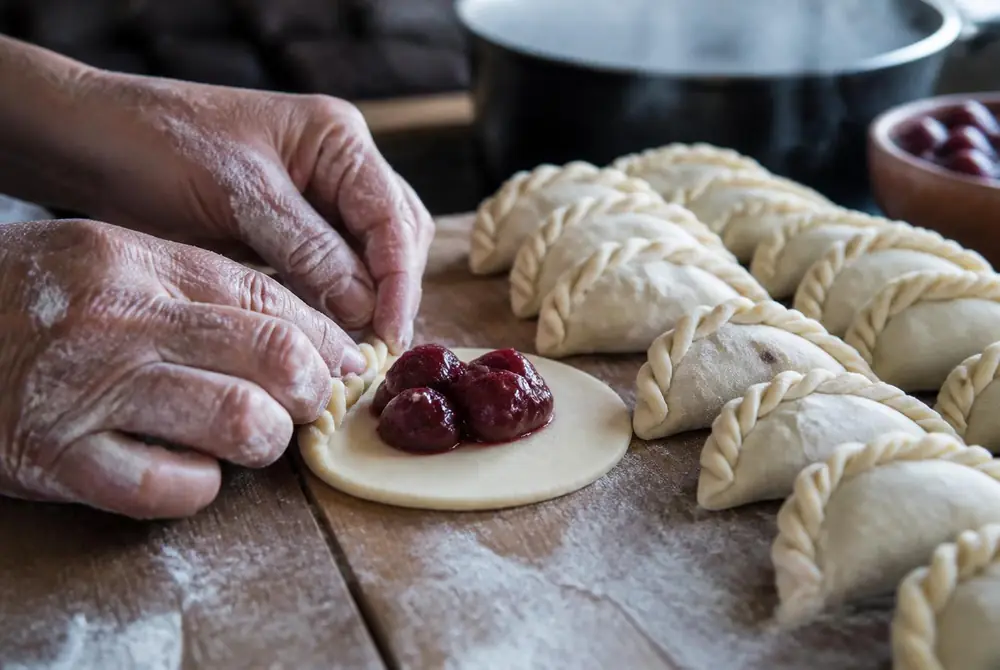
Place 3 or 4 cherries just off-center on each round. Fold into a half-moon and press the edges together firmly with dry fingers, starting at the center and working outward to push air toward the open ends before you close them. Trapped air expands in the pot and pops the seam. Once sealed, pinch a rope of small pleats along the curve, or crimp with the tines of a fork. Set each finished dumpling on a well-floured tray, not touching its neighbors.
5. Boil
Bring a wide pot of water to a rolling boil and salt it lightly. Lower in the varenikes in batches of eight to ten — crowding drops the temperature and makes them stick. Stir once, gently, to free them from the bottom. They will sink, then rise. Once they float, give them 2 to 3 more minutes so the dough at the sealed seam, which is double thickness, cooks through.
6. Butter and serve
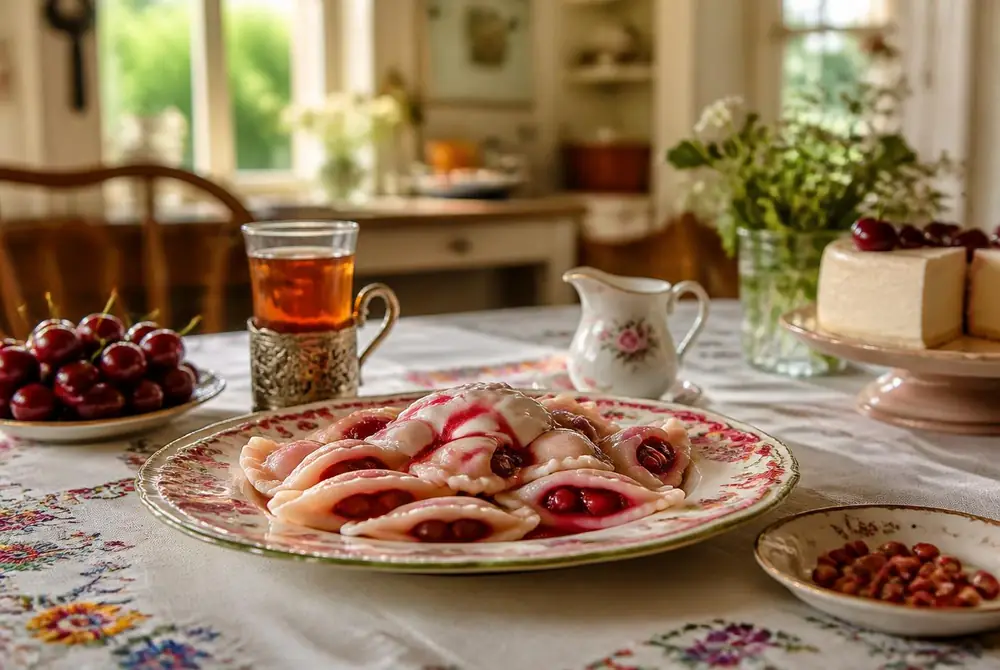
Lift them out with a slotted spoon, letting them drain for a second, and slide them straight into a warm bowl with melted butter. Toss gently so every dumpling is coated — this is what keeps them from gluing themselves together. Serve immediately with cold sour cream and the reduced cherry syrup.
Expert Tips from the Dumpling Table
- Test one first. Boil a single dumpling before committing the batch. If it leaks, add another teaspoon of starch to the filling and press the seams harder.
- Roll thinner than feels safe. Beginners leave the dough too thick and end up with a doughy rim at the seam. Thin dough plus a firm seal beats thick dough every time.
- Keep the tray floured and the dumplings separated. A varenik that sticks to the tray tears when you lift it, and a torn one empties into the pot.
- Butter the bowl, not just the dumplings. A film of butter waiting in the serving bowl prevents the first arrivals from bonding while the rest boil.
- Taste the fruit before sugaring. Jarred cherries in syrup are already sweet and need barely any sugar; fresh morellos in early season can be startlingly sharp.
- Work in company. Two people — one rolling and cutting, one filling and crimping — finish 40 dumplings in about half an hour.
Common Mistakes to Avoid
- Using sweet cherries. Bing and Rainier cherries turn mushy and flat-tasting when boiled. Sour cherries are the whole point.
- Skipping the starch. Juice released inside the dumpling has to go somewhere. Starch turns it into a thick pocket of sauce instead of a pressure hose.
- Sealing with wet fingers. Water on the outside of the dough makes it slick, not sticky. Two clean, dry dough surfaces pressed together bond far better.
- Boiling too hard or too crowded. A violent boil batters the seams; a crowded pot cools the water and leaves the dough gummy. Use a wide pot and a steady, lively simmer.
- Rerolling scraps right away. Dough that has just been stretched fights back. Let scraps rest ten minutes and they roll out like new.
- Letting them sit naked after boiling. Undressed dumplings fuse into a single mass within a minute. Butter them the moment they leave the water.
Serving, Freezing, and Storage
Varenikes are best minutes out of the pot, but they freeze better than almost any other homemade dish. Arrange the uncooked dumplings in a single layer on a floured baking sheet, freeze until solid, then transfer to a bag. They keep for about three months. Cook them straight from frozen, adding a minute or two after they float — never thaw them first, or you will be scraping cherry paste off the tray.
Cooked leftovers keep two days covered in the refrigerator. Reheat them in a skillet with butter until the flat sides blister and turn golden; a lot of families quietly prefer this pan-fried second act to the first serving. The United States Department of Agriculture advises refrigerating cooked leftovers within two hours, and that applies here as much as to anything else.
Nutritionally, this is a dessert, but it is a fairly honest one: flour, fruit, a little sugar, and dairy. Tart cherries are a genuinely interesting fruit, studied for their anthocyanin content and for possible effects on exercise recovery and sleep, though boiling them in a dumpling is not a health intervention. If you want more of the fruit and less of the sugar, cut the sugar to a third of a cup and lean harder on the sour cream.
For a full dairy holiday spread, set the varenikes between a platter of blintzes and a cheesecake, with a fresh challah on the side for the blessing.
Conclusion
Cherry varenikes are a small argument for slow cooking. Nothing in them is expensive, nothing is difficult, and nothing can be rushed — the dough needs its rest, the cherries need their draining, the seams need your attention. What you get back is a dish that has traveled from courtyard cherry trees in Ukraine to Shavuot tables everywhere, still tasting exactly like itself.
Make a double batch. Boil half tonight, freeze the rest on a tray, and in December, when the light is short and the cherry trees are bare, you will pull out a bag of summer.
Key Takeaways
- Cherry varenikes are sweet Ashkenazi boiled dumplings filled with sour cherries — the dairy counterpart to meat-filled kreplach.
- They belong to Shavuot, the dairy holiday that arrives exactly when sour cherries ripen in Eastern Europe.
- Use sour cherries (morello or Montmorency), never sweet ones; drain them well and bind with potato starch.
- Rest the dough at least 30 minutes, roll it to about 1/16 inch, and seal with dry fingers, pushing out trapped air.
- Boil in batches in a wide pot, give them 2 to 3 minutes after they float, and toss in melted butter immediately.
- Freeze uncooked on a floured tray and boil straight from frozen; they keep about three months.
Frequently Asked Questions
Can I use sweet cherries instead of sour cherries?
You can, but the result is noticeably flatter. Sweet varieties like Bing lose their structure in boiling water and their sugar has nothing to push against. If sweet cherries are all you have, cut the added sugar to two tablespoons and add a teaspoon of lemon juice to bring back some acidity.
What is the difference between varenikes and pierogi?
They are close cousins with different names and slightly different habits. Pierogi is the Polish term and leans savory, often pan-fried after boiling. Varenyky is the Ukrainian term, and the Jewish varenikes tradition that grew alongside it embraces sweet fruit fillings, especially cherries, and is always boiled first.
Why do my varenikes burst open in the pot?
Almost always one of three causes: too much loose juice in the filling, air trapped inside the dumpling, or a seam sealed with wet fingers. Drain the fruit thoroughly, toss it with potato starch, press the air out toward the open edge before closing, and seal dry dough to dry dough.
Can cherry varenikes be made in advance?
Yes, and freezing is better than refrigerating. Freeze them uncooked in a single layer on a floured tray until firm, then bag them for up to three months and cook from frozen. Assembled dumplings left in the fridge overnight go soggy where the fruit touches the dough.
Are cherry varenikes kosher for Passover?
No. The dough is made from wheat flour and is chametz. Passover dumplings in the Ashkenazi kitchen are built from matzo meal instead, which produces a completely different, softer dumpling. Save varenikes for Shavuot and the summer months.
Loved this recipe?
Share it with your family, leave a comment, and explore more traditional and modern Jewish dishes on JewishCuisine.
Explore more Desserts recipes