Kreplach: The Soul-Warming Jewish Dumpling Making a Big Comeback
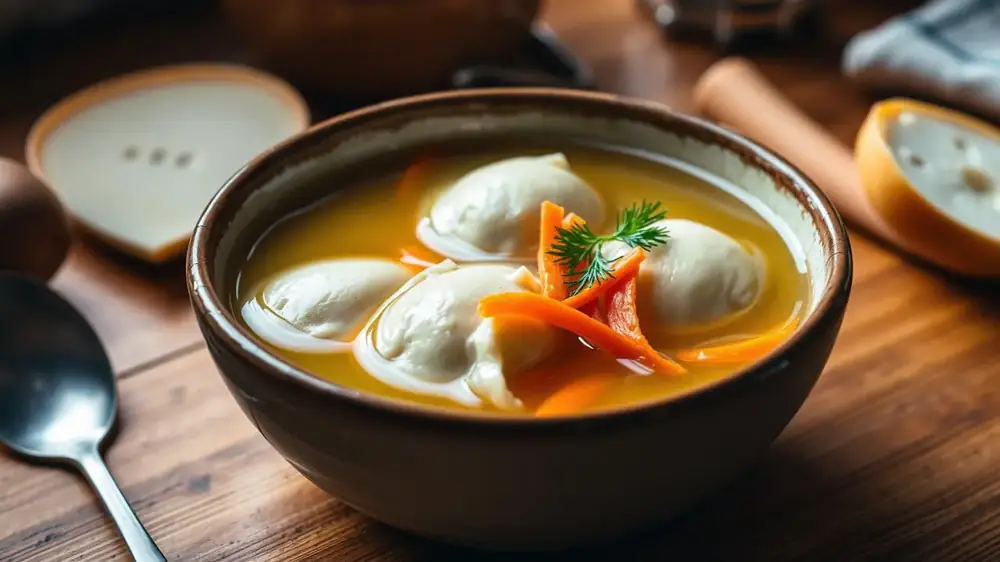
Some dishes taste like a memory before you've even finished the first bite. Kreplach — little dumplings of thin, silky dough wrapped around a savory filling — are exactly that kind of food. Floated in a bowl of golden chicken soup, they carry the comfort of generations of Jewish kitchens, where they were folded by hand on the eves of holidays and passed down like a family heirloom.
After years in the shadow of flashier Jewish foods, kreplach are quietly having a moment again. Home cooks rediscovering slow, hands-on cooking have fallen in love with the rhythm of rolling, filling, and pinching these tender pockets. They're often called “Jewish wontons” or “Jewish ravioli,” and once you taste a freshly made one, you understand why they've never really gone out of style.
This guide walks you through everything: the history behind kreplach, why they're trending, a foolproof dough, a richly seasoned filling, and the exact folding technique that keeps them from bursting open in the pot. Whether you serve them in soup or pan-fried until golden, you'll come away with a recipe worth keeping.
Table of Contents
- What Makes This Recipe Special?
- A Little Kreplach History & Culture
- Why Kreplach Are Trending Again
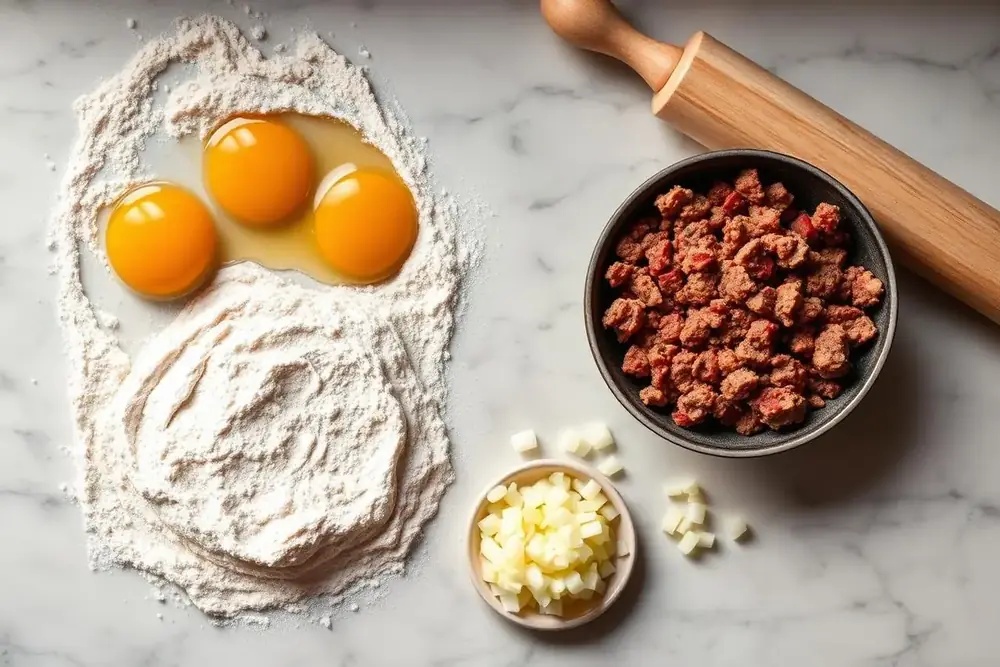
- Ingredients You'll Need
- Step-by-Step Instructions
- Expert Tips for Perfect Kreplach
- Common Mistakes to Avoid
- Frequently Asked Questions
- Key Takeaways
- Conclusion
What Makes This Recipe Special?
Great kreplach come down to balance: a dough thin enough to turn tender but strong enough to hold its filling, and a filling moist and seasoned enough to stay flavorful after simmering. This recipe gives you both, with clear cues so you never have to guess.
- A simple egg dough that rolls out thin without tearing.
- A juicy, well-seasoned meat filling that won't dry out in the broth.
- A reliable triangle fold that seals tight and looks beautiful in the bowl.
- Make-ahead and freezer-friendly — perfect for holidays and busy weeks.
A Little Kreplach History & Culture
Kreplach are a cornerstone of Ashkenazi Jewish cooking, with roots stretching back centuries in Eastern Europe. The name comes from the Yiddish, and the dish likely shares a distant family tree with other filled dumplings found across Europe and Asia, from Italian ravioli to Chinese wontons — evidence of just how universal the idea of dough wrapped around something delicious truly is.
In Jewish tradition, kreplach are deeply tied to the calendar. They appear on the table before Yom Kippur, on Hoshana Rabbah, and at Purim, with a common thread of symbolism: the filling is “hidden” inside the dough, echoing themes of concealment and mercy. Eating meat wrapped in dough was also a thrifty way to stretch precious ingredients in lean times — a practical wisdom that defined so much of traditional Jewish home cooking.
Why Kreplach Are Trending Again
There's a broad revival of slow, tactile cooking — sourdough, hand-rolled pasta, and dumplings of every culture have all surged in popularity. Kreplach fit that craving perfectly: they're a hands-on project that rewards patience and turns an ordinary afternoon into something meaningful. Folding a tray of dumplings is the kind of cooking people now seek out, not avoid.
There's also a renewed interest in heritage Jewish foods beyond the usual headliners. As cooks dig into their grandparents' recipes, kreplach — humble, soulful, and endlessly shareable on social media — have found a whole new audience hungry for the real thing.
Ingredients You'll Need
For the Dough
- 2 cups all-purpose flour, plus more for dusting
- 2 large eggs
- 1 tablespoon vegetable oil
- ½ teaspoon kosher salt
- 3 to 4 tablespoons water, as needed
For the Meat Filling
- 1 tablespoon oil or schmaltz (rendered chicken fat)
- 1 medium onion, finely diced
- ¾ pound cooked beef or chicken, finely chopped or ground
- 1 egg yolk, to bind
- 1 teaspoon kosher salt
- ½ teaspoon black pepper
- 2 tablespoons fresh parsley, chopped (optional)
Step-by-Step Instructions
Step 1: Make the Dough
- Mound the flour and salt, make a well, and add eggs and oil.
- Mix with a fork, adding water a tablespoon at a time, until a shaggy dough forms.
- Knead 5 to 8 minutes until smooth and elastic, then wrap and rest 30 minutes.
Step 2: Prepare the Filling
- Sauté the onion in oil or schmaltz over medium heat until deep golden and sweet.
- Combine the cooked meat, onion, egg yolk, salt, pepper, and parsley.
- Pulse in a food processor or chop finely until cohesive but not pasty. Cool completely.
Step 3: Roll, Fill & Fold
- Roll the dough very thin on a floured surface, about 1/16 inch.
- Cut into 2.5 to 3 inch squares or rounds.
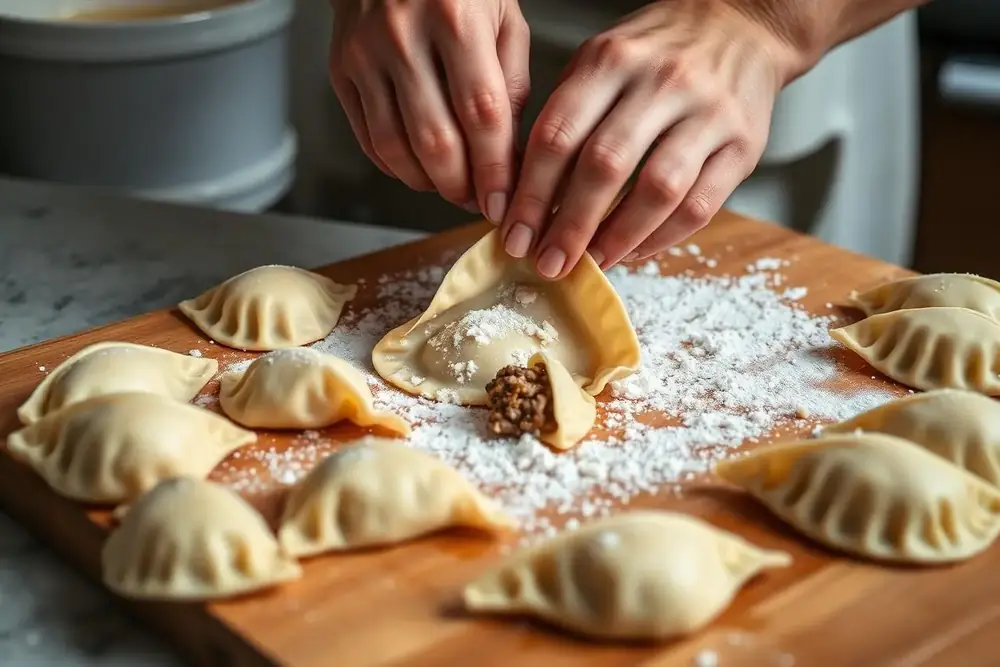
- Place a teaspoon of filling in the center; brush the edges lightly with water.
- Fold into a triangle (or half-moon), pressing out air and pinching edges to seal tightly.
- For the classic look, bring the two bottom corners together and pinch.
Step 4: Cook the Kreplach
- Bring a large pot of salted water to a gentle boil.
- Drop in the kreplach in batches and simmer 12 to 15 minutes until the dough is tender.
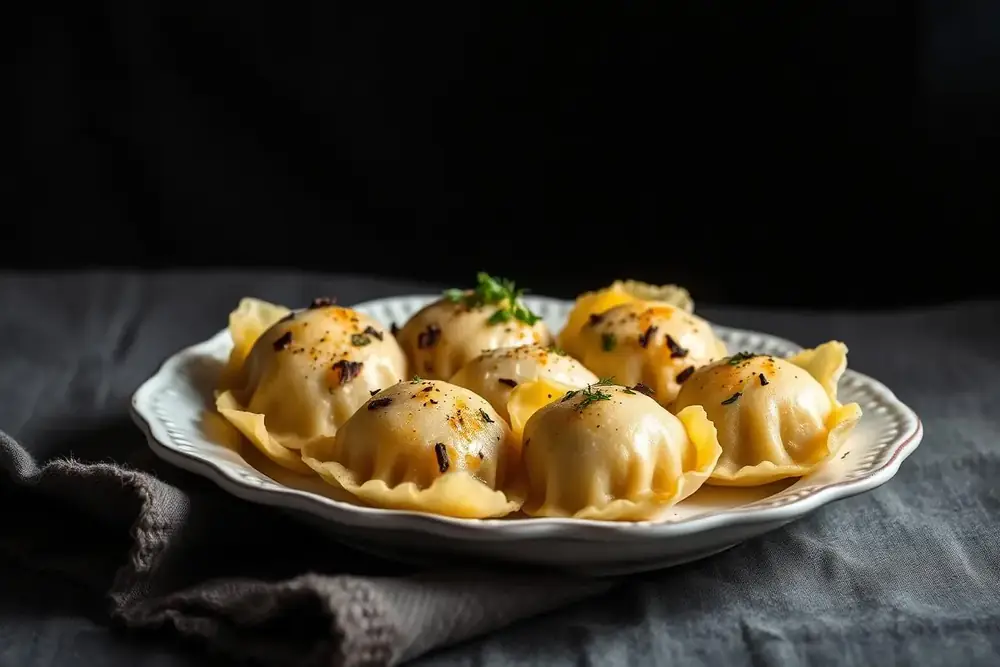
- Lift out with a slotted spoon. Serve in hot chicken soup, or pan-fry in a little oil until golden.
Roll thin, seal tight, and simmer gently. Thin dough turns silky, a firm seal keeps the filling in, and a soft boil keeps them whole.
Expert Tips for Perfect Kreplach
- Let the dough rest — it relaxes the gluten so you can roll it paper-thin.
- Cool the filling fully before folding; warm filling steams and weakens the seal.
- Don't overfill; a teaspoon is plenty, and too much filling forces seams open.
- Press out trapped air before sealing so they don't burst in the pot.
- Work with a little flour, but brush a touch of water on the edges to glue them shut.
Common Mistakes to Avoid
- Rolling the dough too thick, which leaves the kreplach doughy and heavy.
- Overfilling, the number-one cause of dumplings splitting open.
- Boiling too aggressively, which tears the delicate dough.
- Using a dry, under-seasoned filling that tastes bland after cooking.
- Skipping the rest time and fighting springy, tearing dough.
Key Takeaways
- Kreplach are traditional Ashkenazi dumplings of thin dough wrapped around a savory meat filling.
- They're tied to Jewish holidays like Yom Kippur, Hoshana Rabbah, and Purim, often symbolizing hidden mercy.
- The keys are thin rested dough, a moist seasoned filling, and a tight, air-free seal.
- Simmer gently in soup or pan-fry until golden, and freeze extras for an easy make-ahead meal.
Frequently Asked Questions
What exactly are kreplach?
Kreplach are small Jewish dumplings made of thin egg dough filled with seasoned meat (or potato or cheese). They're typically boiled and served in chicken soup, or pan-fried, and are often described as Jewish wontons or ravioli.
When are kreplach traditionally eaten?
They're customarily served before Yom Kippur, on Hoshana Rabbah, and at Purim. The hidden filling carries symbolism around concealment and mercy, though kreplach are delicious enough to enjoy any time of year.
Can I make kreplach ahead and freeze them?
Yes. Freeze uncooked kreplach in a single layer on a tray, then transfer to a bag. Boil them straight from frozen, adding a few extra minutes. This makes them ideal for holiday prep.
How do I keep kreplach from bursting open?
Roll the dough thin but not paper-fragile, avoid overfilling, press out trapped air, brush the edges with water, and pinch firmly. Cook at a gentle simmer rather than a hard boil.
Can kreplach be vegetarian or dairy?
Absolutely. Mashed potato with caramelized onion makes a popular pareve filling, while a sweet farmer's cheese filling creates dairy kreplach perfect for non-meat meals. Just keep meat and dairy versions separate to stay kosher.
Loved this recipe?
Share it with your family, leave a comment, and explore more traditional and modern Jewish dishes on JewishCuisine.
Explore more Holidays recipes