Kasha Varnishkes: The Toasted Buckwheat and Bowtie Comfort Dish of the Jewish Kitchen
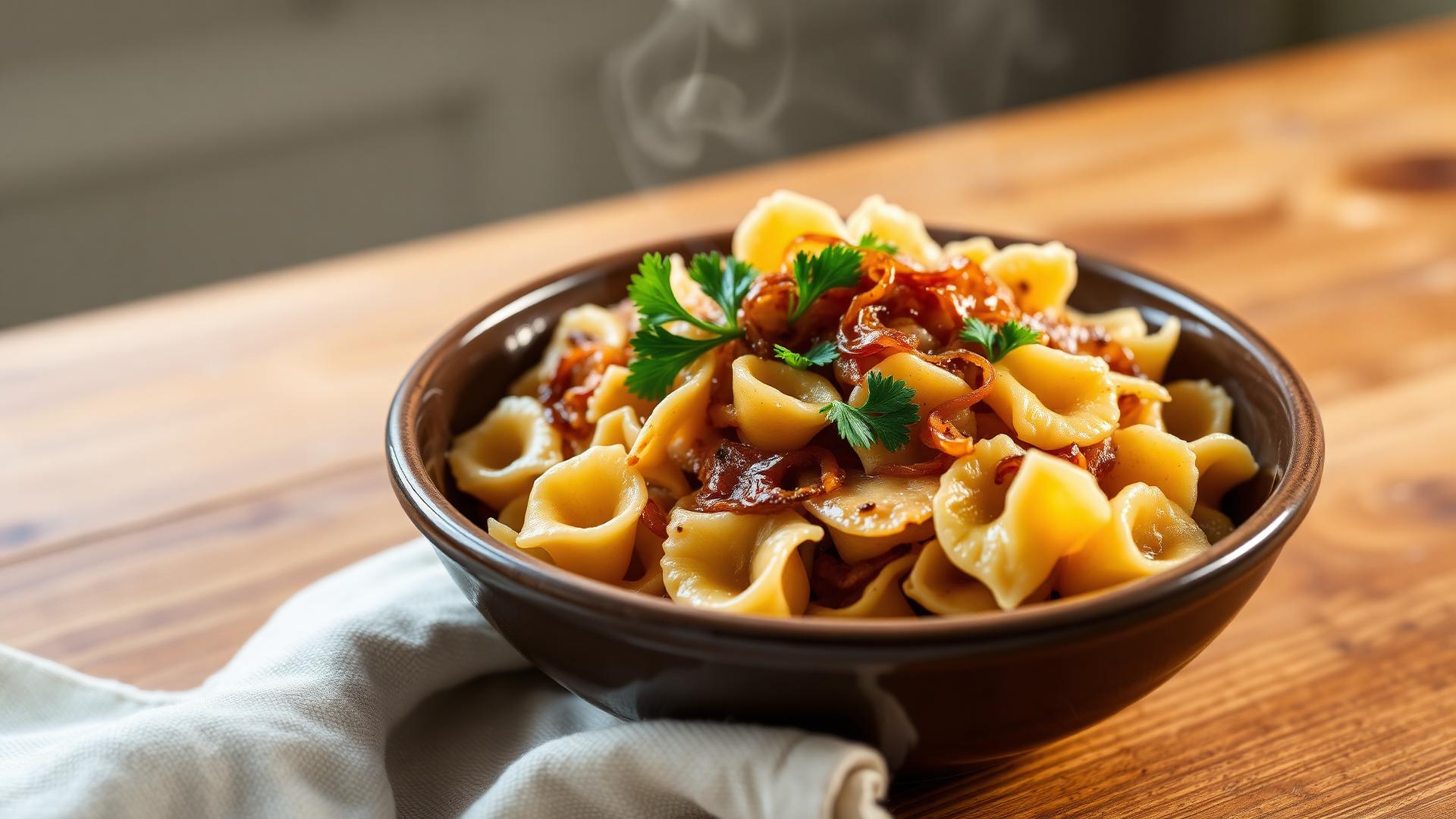
Some dishes earn their place on the Jewish table through drama — a golden braided challah, a towering brisket, a tray of jewel-bright sufganiyot. Kasha varnishkes is not one of them. It is brown, humble, and unfussy, the kind of side dish that sits quietly next to the showstoppers. And yet, for millions of Ashkenazi families, it is the plate that gets scraped clean first. The nutty perfume of toasted buckwheat, the slip of tender bowtie pasta, and the deep sweetness of slow-cooked onions add up to something far greater than its plain appearance suggests.
If you grew up in a Jewish household, kasha varnishkes probably tastes like a specific memory: a grandmother's stovetop, a Friday afternoon, the smell filling a small kitchen. If you did not, you are in for a quiet revelation. This is comfort food in its truest sense — inexpensive, filling, and rooted in centuries of Eastern European cooking. It rewards patience and a heavy hand with the onions, and it asks almost nothing of you in return.
In this guide we will trace where kasha varnishkes comes from, why the dish is finding a new audience today, the handful of ingredients that make it sing, and a clear step-by-step method that guarantees separate, fluffy grains every time. By the end, you will understand why a bowl of toasted buckwheat and bowties has outlasted fads, famines, and several thousand miles of migration.
Table of Contents
- What Kasha Varnishkes Actually Is
- Historical and Cultural Context
- Why Kasha Varnishkes Is Trending Again
- Ingredients and Key Concepts
- Step-by-Step Insights
- Expert Tips
- Common Mistakes to Avoid
- Frequently Asked Questions
- Key Takeaways
- Conclusion
What Kasha Varnishkes Actually Is
The name itself tells the whole story once you decode it. Kasha is the Eastern European word for cooked buckwheat groats — the hulled, roasted seeds of the buckwheat plant, which despite the name is not a wheat or even a grain but a fruit seed related to rhubarb. Varnishkes (also spelled varnishkas or varnitchkes) refers to the pasta, traditionally small egg noodle squares or, in the American version that took hold in the twentieth century, bowtie pasta known as farfalle.
Put the two together with a generous amount of caramelized onions and a little fat, and you have the dish. There is no cream, no cheese, no long ingredient list — just toasted buckwheat, pasta, onions, and seasoning. The magic is entirely in technique: toasting the groats with egg so they stay separate, cooking them gently so they fluff rather than turn to mush, and giving the onions enough time to turn sweet and bronze.
- Kasha = roasted buckwheat groats, nutty and earthy in flavor.
- Varnishkes = the pasta, almost always bowties (farfalle) in the American tradition.
- Caramelized onions are non-negotiable — they carry most of the flavor.
- The dish is naturally pareve when made with oil, so it suits both meat and dairy meals.
Historical and Cultural Context
Buckwheat has been a staple across Eastern Europe and Russia for centuries, prized because it grows quickly in poor soil and harsh climates where wheat struggles. For the Jewish communities of the Pale of Settlement — the region of the Russian Empire where Jews were permitted to live — buckwheat was affordable, filling, and reliable. Kasha became everyday sustenance, eaten as porridge, stuffed into knishes and blintzes, and stretched into countless humble meals.
The marriage of kasha with pasta likely came together as cooks looked for ways to make a modest grain feel more like a feast. Adding noodles turned a plain bowl of groats into something heartier and more satisfying, fit for Shabbat or a holiday table. When Eastern European Jews emigrated to the United States in great waves around the turn of the twentieth century, they brought the dish with them, and it became a fixture of Jewish-American delis, Friday night dinners, and Rosh Hashanah menus.
It was in America that the small noodle squares of the old country were widely swapped for mass-produced bowtie pasta, giving the dish its now-familiar look. The bowtie shape stuck not only because it was easy to buy but because its folds catch the buckwheat and onions beautifully, so each forkful carries a bit of everything.
Kasha varnishkes is proof that the most enduring Jewish foods were born of thrift — a way to turn pennies' worth of grain and onion into something a family would remember for a lifetime.
Why Kasha Varnishkes Is Trending Again
A dish this old does not usually make a comeback, yet kasha varnishkes is quietly having a moment. Part of it is the broader revival of Ashkenazi cooking, as a new generation of cooks and writers reclaims the unglamorous foods their grandparents ate and puts them back on restaurant menus and social feeds. Heritage cooking is fashionable again, and few dishes feel as authentically old-world as toasted buckwheat and bows.
Nutrition is the other driver. Buckwheat is naturally gluten-free, high in fiber and plant protein, and rich in minerals like manganese and magnesium. As interest in whole grains, plant-forward eating, and gluten-free alternatives has grown, buckwheat has been rediscovered by people who never grew up with it. Made with a gluten-free pasta, kasha varnishkes can even fit a gluten-free diet entirely — something its inventors never imagined but modern cooks appreciate.
Finally, there is the appeal of cheap, sustainable comfort food. In an era of rising grocery prices, a deeply satisfying dish built on buckwheat, onions, and a box of pasta is exactly the kind of frugal cooking people are gravitating toward. It is vegetarian-friendly, freezer-friendly, and endlessly forgiving.
Ingredients and Key Concepts
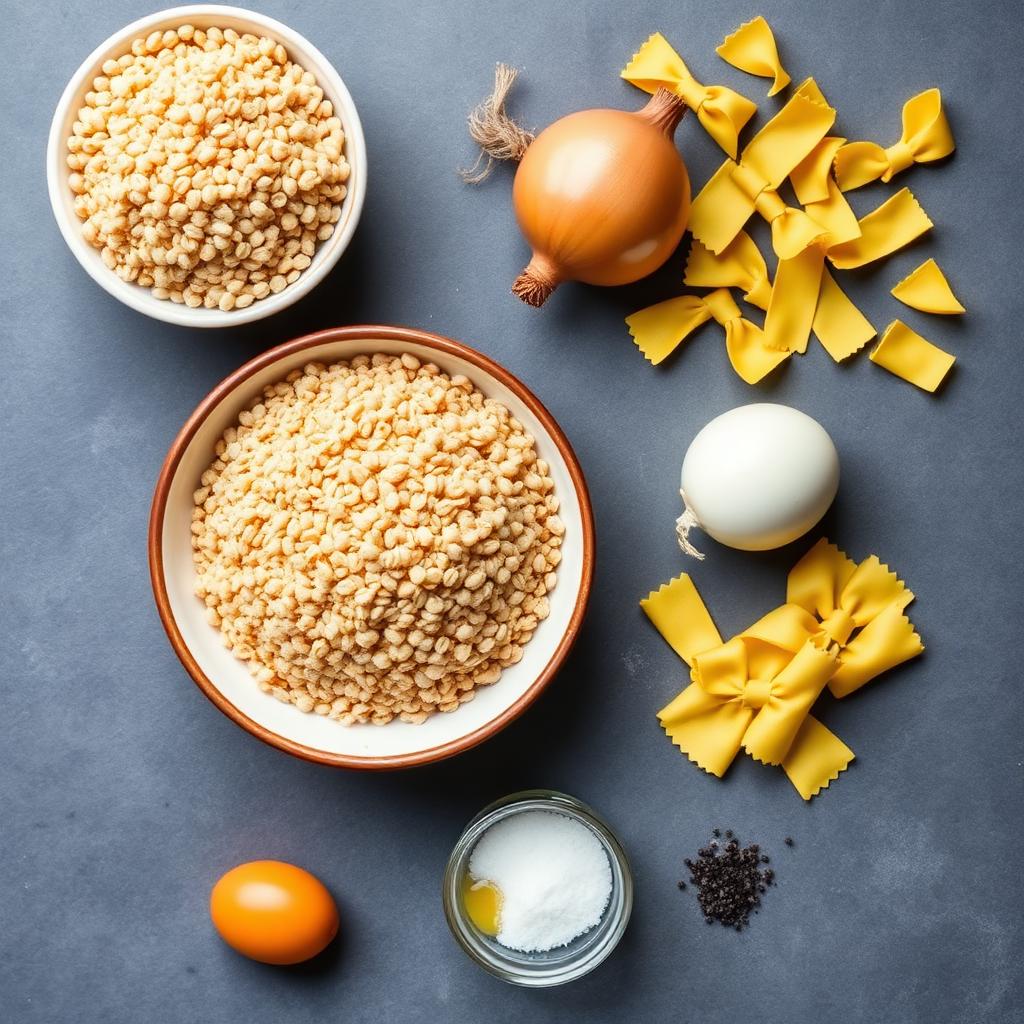
The beauty of kasha varnishkes is how little it asks for. Quality matters more than quantity here, so buy fresh buckwheat (it can go rancid) and give yourself enough onions — most people use too few.
- Buckwheat groats (kasha): about 1 cup. Whole or coarse granulation holds its shape best; medium works well for a softer result.
- Bowtie pasta (farfalle): about 8 ounces, cooked until just tender.
- Onions: 2 to 3 large yellow onions, thinly sliced — do not skimp.
- Egg: 1 large, beaten, to coat the groats and keep them separate.
- Fat: schmaltz (rendered chicken fat) for a traditional flavor, or a neutral oil to keep it pareve and vegetarian.
- Broth or water: about 2 cups, hot, to cook the kasha.
- Salt and freshly ground black pepper to taste.
Step-by-Step Insights
The method has three parts that can overlap: caramelizing the onions, toasting and cooking the kasha, and boiling the pasta. Read through once before you start so the timing flows.
- Caramelize the onions: Heat your fat in a wide skillet over medium-low and add the sliced onions with a pinch of salt. Cook slowly, stirring often, for 25 to 40 minutes until deeply golden and sweet. This is the flavor base — be patient.
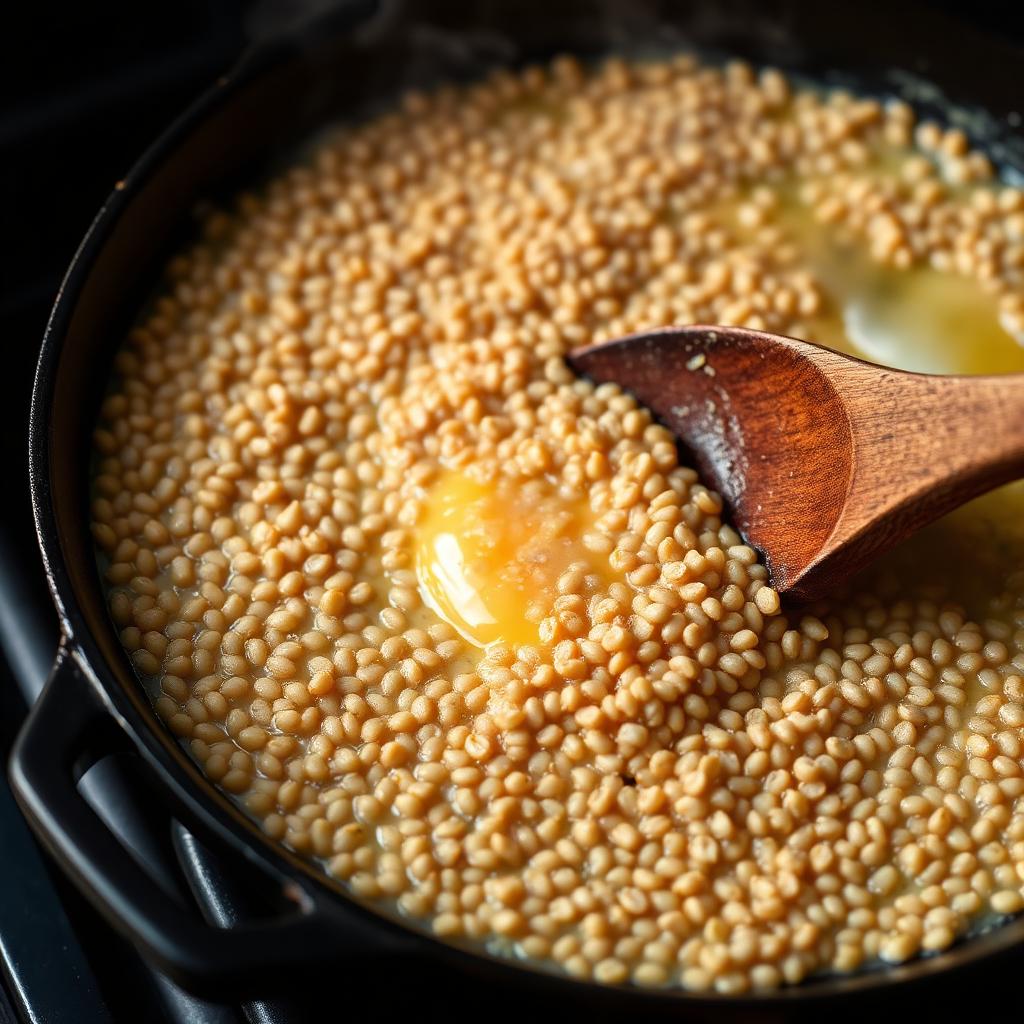
- Prepare the kasha: In a bowl, stir the raw buckwheat groats with the beaten egg until every grain is coated. Pour into a separate hot, dry skillet over medium heat and stir constantly for 2 to 4 minutes until the egg dries, the grains smell toasty, and they separate.
- Cook the kasha: Carefully pour in the hot broth or water (it will steam aggressively), add a little salt, cover, and reduce the heat to low. Simmer 8 to 12 minutes until the liquid is absorbed and the groats are tender. Remove from heat and let it sit, covered, for a few minutes.
- Boil the pasta: While the kasha cooks, boil the bowties in salted water until just tender. Drain, reserving a splash of the pasta water.
- Combine: Fold the cooked kasha, drained bowties, and caramelized onions together in the big skillet. Add a little reserved pasta water or broth if it seems dry. Taste and adjust salt and pepper generously.
- Serve warm, ideally with extra caramelized onions on top.
Expert Tips
- Use more onions than you think you need. As they cook down, three large onions become a modest amount — they are the soul of the dish.
- Toast the kasha in a separate dry pan from the onions so the egg coating sets cleanly without burning the onions.
- Cook the pasta a touch firmer than usual; it softens slightly when folded with the warm kasha.
- For richer flavor, cook the buckwheat in good chicken or mushroom broth instead of water.
- A spoonful of schmaltz at the end adds unmistakable old-world depth, but quality olive oil keeps it vegetarian and pareve.
- Leftovers reheat beautifully with a splash of broth; the flavor deepens overnight.
Common Mistakes to Avoid
- Skipping the egg coating — this is the number one cause of mushy, clumped kasha.
- Rushing the onions. Onions cooked fast turn out sharp and pale instead of sweet and bronze.
- Using too much liquid for the buckwheat, which leaves it soggy. Stick close to a 2-to-1 liquid-to-kasha ratio.
- Lifting the lid and stirring the kasha while it simmers, which breaks the grains and releases starch.
- Underseasoning. Buckwheat is earthy and needs a confident amount of salt and pepper to come alive.
- Buying old buckwheat. Rancid groats taste bitter — smell them and buy from a busy store.
Frequently Asked Questions
A few questions come up again and again when people make kasha varnishkes for the first time. Here are the answers that matter most.
Key Takeaways
- Kasha varnishkes combines toasted buckwheat groats with bowtie pasta and caramelized onions.
- Coating the raw groats in beaten egg before toasting keeps them separate and fluffy.
- Caramelized onions and a confident hand with salt carry most of the dish's flavor.
- Buckwheat is naturally gluten-free and rich in fiber, protein, and minerals.
- The dish is frugal, pareve when made with oil, and a beloved Ashkenazi comfort food.
Frequently Asked Questions
What is kasha varnishkes made of?
It is made of kasha (toasted buckwheat groats) and varnishkes (bowtie pasta), tossed with plenty of caramelized onions, fat such as schmaltz or oil, and seasoning. That short list is the entire dish.
Is kasha varnishkes gluten-free?
Buckwheat itself is naturally gluten-free, but traditional bowtie pasta is made from wheat. Use a certified gluten-free pasta and broth, and the whole dish becomes gluten-free.
Why do you coat the buckwheat in egg?
The beaten egg dries onto each grain as it toasts in the hot pan, forming a coating that keeps the groats separate. Without it, the buckwheat tends to clump and turn into porridge.
Can I make kasha varnishkes vegetarian or vegan?
Yes. Use oil instead of schmaltz and water or vegetable broth instead of chicken broth to keep it vegetarian and pareve. For a vegan version, skip the egg coating and toast the dry groats carefully, accepting a slightly softer texture.
What do you serve with kasha varnishkes?
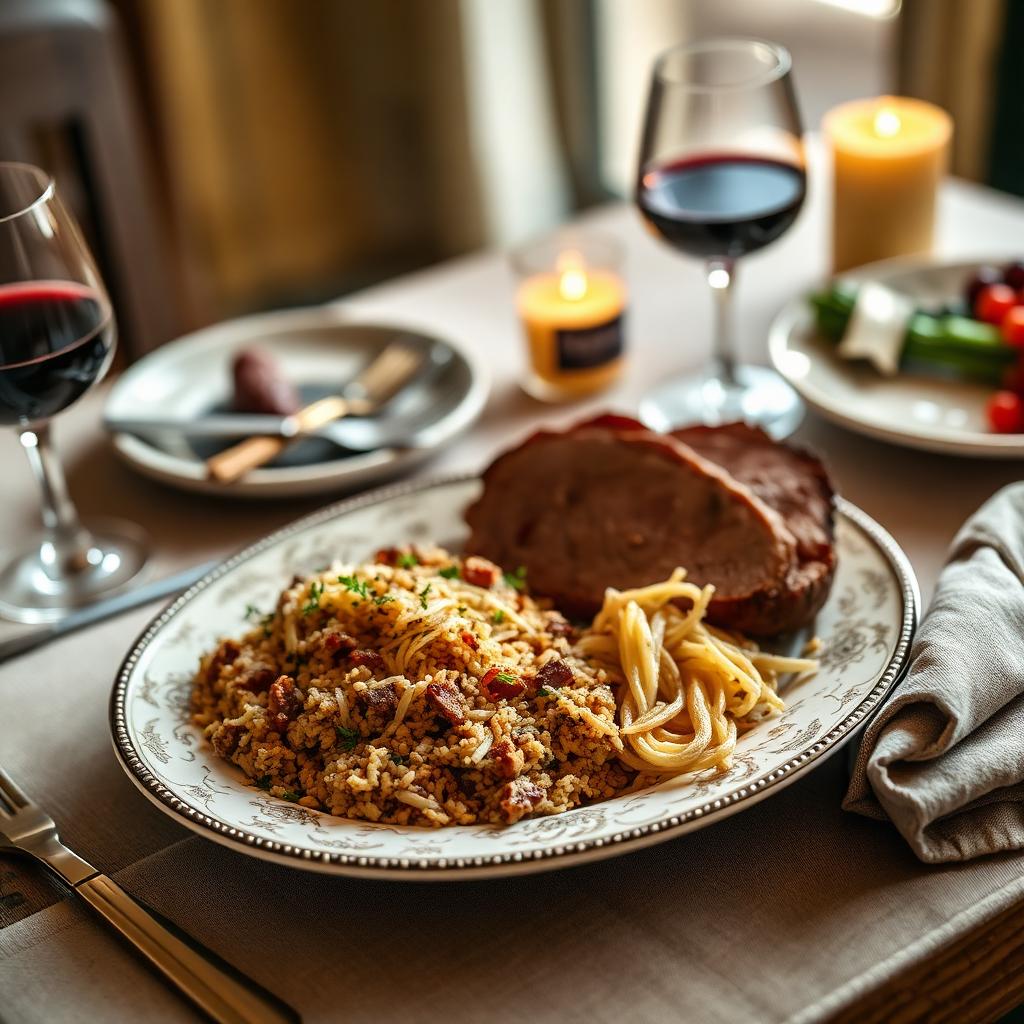
It is a classic side for brisket, roast chicken, or stuffed cabbage, and it shines on Shabbat and Rosh Hashanah tables. It is hearty enough to be a vegetarian main on its own with a salad.
Loved this recipe?
Share it with your family, leave a comment, and explore more traditional and modern Jewish dishes on JewishCuisine.
Explore more Traditional recipes