Schug: The Fiery Yemenite Green Sauce Taking Over Kitchens
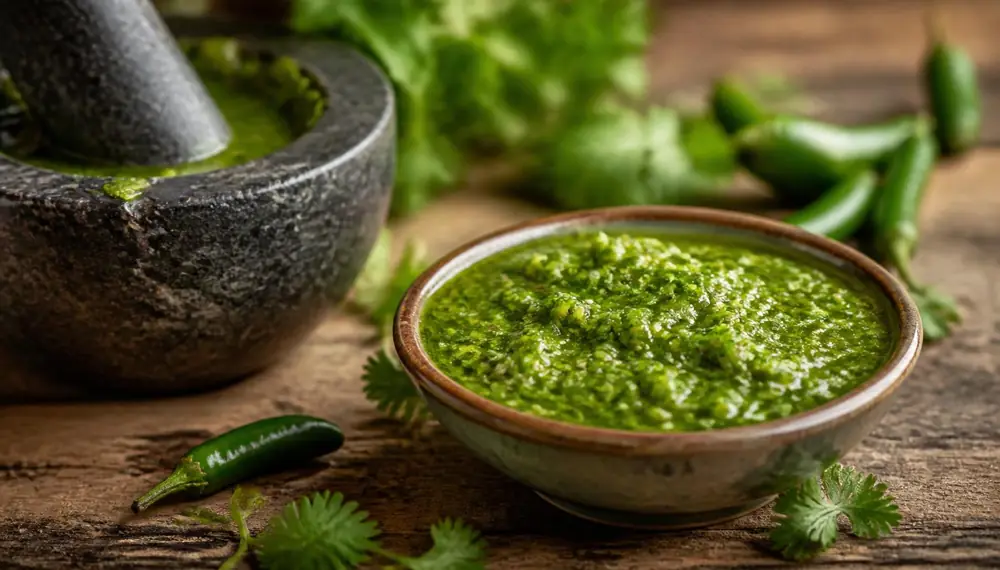
Some sauces sit politely on the side of the plate. Schug is not one of them. Spoon a little of this electric-green Yemenite chili paste onto warm bread, into a bowl of soup, or over a sandwich, and it takes over — flooding everything with the green heat of fresh chili, the punch of raw garlic, and the unmistakable perfume of cilantro and cardamom. It is loud, it is bracing, and across Israel it has become as essential to the table as salt and olive oil.
Brought from Yemen by Jewish immigrants and embraced by nearly every community in Israel, schug (also spelled zhug, z'hug, or skhug) has gone from a regional specialty to a near-universal condiment. You will find it squeezed into falafel and shawarma, stirred into hummus, spooned over eggs, and set out in little bowls at Shabbat dinner. And because it is raw, it comes together in about five minutes with a food processor and a handful of ingredients.
In this guide we will look at where schug comes from, why it is having such a moment far beyond Israel, exactly what goes into an authentic batch, and how to make green schug at home with the right texture and heat. Along the way we will cover the small choices — how much stem to keep, when to add the oil, how to control the burn — that separate a muddy, bitter paste from a bright, balanced sauce you will want on everything.
Table of Contents
- What Schug Actually Is
- Historical and Cultural Context
- Why Schug Is Trending Right Now
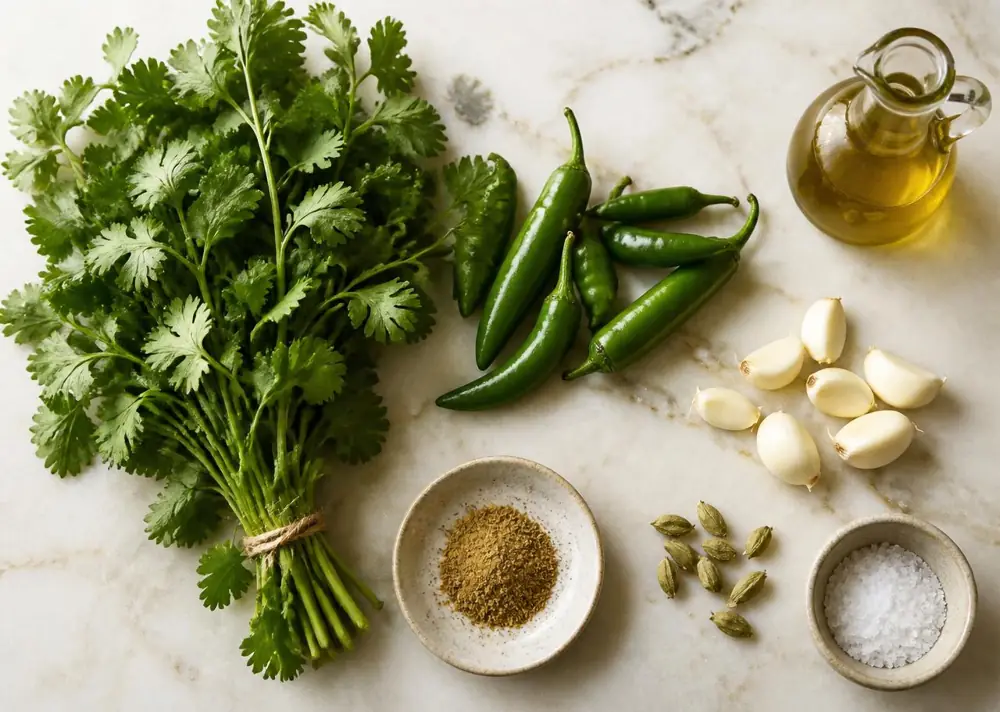
- Ingredients and Key Concepts
- Step-by-Step Insights
- Expert Tips
- Common Mistakes to Avoid
- Frequently Asked Questions
- Key Takeaways
- Conclusion
What Schug Actually Is
Schug is a raw Yemenite hot sauce built from a short list of fresh, assertive ingredients: green chili peppers, a generous bunch of cilantro, plenty of garlic, warm spices led by cumin and cardamom, salt, and enough olive oil to bind it into a coarse paste. Nothing is cooked. The ingredients are simply pounded or pulsed together until they form a vivid, spoonable sauce that tastes as alive as it looks.
There are three main styles. Green schug, the most common, gets its color from cilantro and green chilies. Red schug swaps in ripe red chilies for a deeper, slightly sweeter heat. A brown or rust-colored version folds in tomato and sometimes additional warm spices. All share the same backbone of chili, garlic, and cardamom, and all are meant to be used in small, potent spoonfuls rather than ladled on like a mild salsa.
- A raw, uncooked sauce — the fresh flavors are the whole point.
- Built on green chili, cilantro, garlic, cumin, and cardamom.
- Comes in green, red, and brown (tomato) variations.
- Used in small amounts as a condiment, not a main dip.
Historical and Cultural Context
Schug is the signature condiment of Yemenite Jewish cuisine, a tradition shaped over centuries in the highlands and port cities of Yemen. In a culture where bread is central and meals often revolve around flatbreads, stews, and slow-baked Shabbat dishes, a punchy chili sauce served alongside was both a flavor booster and, in a warm climate, a way to stimulate the appetite. Schug was a daily staple long before it ever reached the Mediterranean.
When the great majority of Yemen's Jewish community immigrated to Israel in the late 1940s and early 1950s — most famously during Operation Magic Carpet — they carried their food traditions with them. Alongside breads like jachnun and malawach and the warming spice blend hawaij, schug quickly found an audience far beyond Yemenite homes. Israelis of every background adopted it, and over the decades it became one of the defining flavors of the country's street food and home cooking alike.
As with so many traditional foods, every family has its own version and its own line on how hot is too hot. Some keep schug fiercely simple — chili, cilantro, garlic, salt — while others build in cardamom, cumin, caraway, or a little parsley. The spelling wanders too, from schug to zhug to skhug, a reminder that the word traveled by mouth long before it landed in cookbooks. What stays constant is its role: the small green jolt that wakes up the whole plate.
Schug is the taste of a Yemenite kitchen distilled into a single spoonful — fierce, fragrant, and impossible to imagine the table without.
Why Schug Is Trending Right Now
Schug is everywhere lately, and the reasons line up neatly with how people want to eat today. The biggest driver is the global appetite for bold condiments and chili sauces. As hot sauce has gone from niche to mainstream, cooks are looking past the familiar bottles for something fresher and more complex. Schug, with its raw herbs and warm spices, offers heat with real depth — and it photographs beautifully, which never hurts in a world of food feeds.
The rise of Mizrahi and Yemenite Jewish cooking is the second factor. For years, mainstream Jewish food meant Ashkenazi classics, but chefs and writers are now giving Yemenite, North African, and broader Middle Eastern Jewish traditions their due. Schug rides that wave as one of the most approachable entry points — a single, transformative sauce that introduces a whole cuisine's flavor profile in one bite.
Finally, schug is wildly practical. It is raw, fast, naturally vegan, and gluten-free, and it keeps for a week or more in the fridge. A single batch upgrades dozens of meals: eggs, grain bowls, roasted vegetables, grilled meats, sandwiches, soups. In an era of busy weeknights and flavor-forward home cooking, a five-minute sauce that makes plain food exciting is exactly the kind of thing that spreads from kitchen to kitchen.
Ingredients and Key Concepts
What makes schug special is the quality and freshness of a very short ingredient list. There is nowhere to hide in a raw sauce, so each component matters. Here is what goes into a classic green schug and why.
- Green chili peppers: the heart of the heat. Serrano or green jalapeño are common; hotter cooks use Thai or other small green chilies. Remove seeds and membranes for less burn.
- Fresh cilantro: a big, generous bunch, stems included. The stems carry flavor and help the texture, so don't discard them.
- Garlic: several raw cloves for sharp, pungent backbone. Adjust to taste, as raw garlic intensifies over time.
- Cardamom: the signature Yemenite note. Freshly ground green cardamom gives schug its distinctive perfume.
- Cumin: earthy warmth that grounds the bright herbs and chili.
- Salt: essential for balance and to draw out the other flavors.
- Olive oil: binds the paste and mellows the raw edges; add gradually to control texture.
- Optional extras: a little parsley, ground caraway, black pepper, or a squeeze of lemon for brightness.
Step-by-Step Insights
Schug could not be simpler to make, but a few smart moves make the difference between a bright, balanced sauce and a dull, bitter one. Here is how to approach it.
- Prep the aromatics: Rinse and roughly dry the cilantro, trim only the very bottom of the stems, peel the garlic, and stem the chilies (seed them if you want it milder).
- Grind the spices: For the best flavor, lightly toast whole cumin and crack open cardamom pods, then grind the seeds fresh. Pre-ground works, but fresh is noticeably more fragrant.
- Pulse, don't puree: Add chilies, garlic, and spices to a food processor and pulse until coarsely chopped before adding the cilantro. This keeps the garlic and chili evenly distributed.
- Add the herbs: Add the cilantro (stems and leaves) and salt, then pulse in short bursts, scraping down the sides, until you have a coarse, uniform paste — not a smooth puree.
- Stream in the oil: With the motor running or between pulses, drizzle in olive oil until the sauce just comes together into a spoonable, glistening paste.
- Taste and adjust: Check for salt, heat, and acidity. Add more salt, a little lemon, or extra chili as needed, then let it rest 15–20 minutes so the flavors marry before serving.
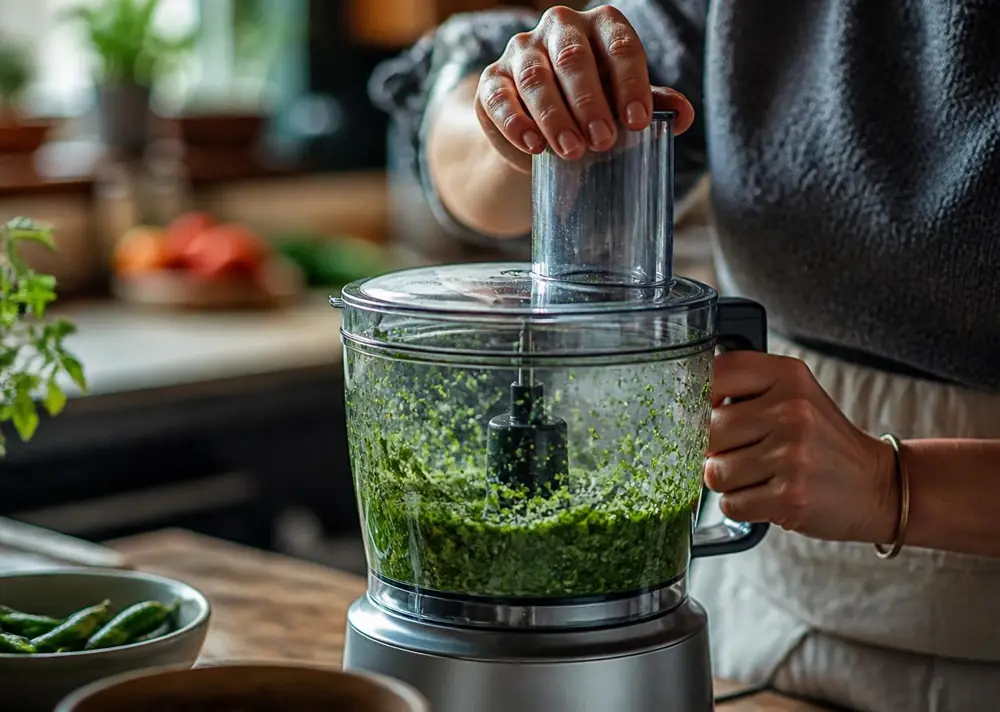
If you want to be truly traditional, skip the machine and use a heavy mortar and pestle. Pounding the ingredients by hand releases the oils differently and gives a more rustic, layered texture. It takes more effort, but many Yemenite cooks insist the result is worth it — and it lets you build the sauce gradually, tasting as the flavors deepen.
Expert Tips
- Keep the stems: Cilantro stems carry intense flavor and help the texture. Removing them wastes both.
- Toast and grind whole spices: Freshly ground toasted cumin and cardamom transform schug from good to unforgettable.
- Build heat gradually: Start with fewer chilies than you think you need. You can always pulse in more, but you can't take it out.
- Let it rest: Schug's flavors meld and round out after 15–30 minutes. Raw garlic in particular settles from harsh to deeply savory.
- Top with oil for storage: A thin layer of olive oil over the surface in the jar helps preserve the green color and freshness.
- Make it your own: Add lemon for brightness, parsley for a softer herb note, or a touch of caraway for a more complex, traditional profile.
Common Mistakes to Avoid
Schug is forgiving, but a handful of missteps can flatten its bright character. Watch out for these.
- Over-processing: Blending to a smooth puree makes schug watery and dulls the texture. Stop while it's still coarse.
- Wet cilantro: Excess water from rinsing thins the sauce and shortens its shelf life. Dry the herbs well before blending.
- Skimping on salt: Under-salted schug tastes muddy and flat. Salt is what makes the chili and herbs pop.
- Using stale spices: Old, pre-ground cardamom and cumin lose their magic fast. Fresh spices are non-negotiable for great schug.
- Too much oil too fast: Dumping in oil all at once can make the sauce greasy or loose. Add it gradually until the texture is right.
- Serving it cold from the fridge: Cold mutes the aromatics. Let schug come to room temperature before serving for full flavor.
Conclusion
Few sauces deliver as much impact for as little effort as schug. In the time it takes to wash a bunch of cilantro and pulse a food processor, you get a vibrant, fiery condiment that can transform almost anything on your plate. It is a direct taste of Yemenite Jewish tradition — carried across the world and now beloved well beyond it.
Make a batch this week and keep it in the fridge. Spoon it over eggs at breakfast, stir it into your hummus and soups, brush it onto grilled vegetables and meats, and tuck it into sandwiches. Once you've cooked with schug a few times, you'll understand exactly why so many Israeli kitchens consider it indispensable — and why yours might soon, too.
Key Takeaways
- Schug (zhug) is a raw Yemenite hot sauce of green chili, cilantro, garlic, cumin, and cardamom.
- It comes together in about five minutes and is naturally vegan and gluten-free.
- Pulse to a coarse paste rather than a smooth puree, and add olive oil gradually.
- Control the heat by seeding the chilies, and let the sauce rest before serving.
- Use it in small spoonfuls on eggs, hummus, soups, grilled meats, and sandwiches.
Frequently Asked Questions
What is schug made of?
Classic green schug is made from fresh green chilies, a generous bunch of cilantro (stems included), garlic, ground cumin and cardamom, salt, and olive oil. Some versions add parsley, caraway, lemon, or tomato.
How spicy is schug?
Schug is genuinely hot, but you control the heat by your choice of chili and whether you keep the seeds and membranes. Seed the peppers and use a milder variety for a gentler sauce, or leave everything in for serious fire.
How long does schug last in the fridge?
Stored in an airtight jar with a thin layer of olive oil on top, schug keeps about one to two weeks in the refrigerator. It also freezes well in small portions or ice cube trays for several months.
What's the difference between green and red schug?
Green schug uses green chilies and cilantro for a bright, grassy heat, while red schug uses ripe red chilies for a deeper, slightly sweeter flavor. A brown version adds tomato and extra warm spices.
What do you eat schug with?
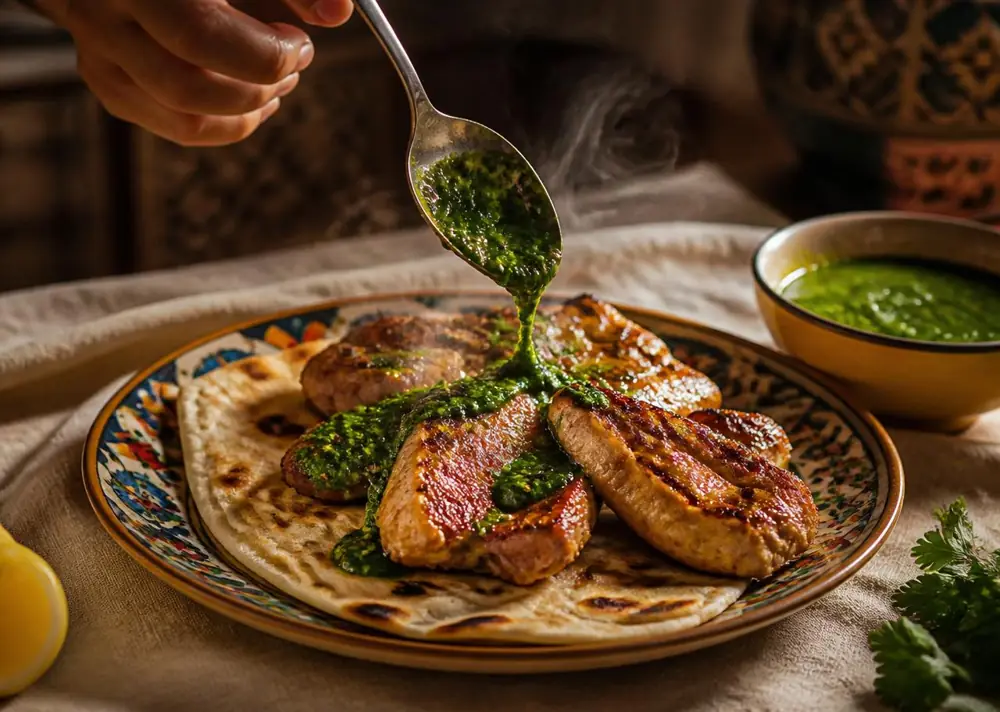
Schug is a versatile condiment used in small amounts. It's classic with falafel, shawarma, and flatbreads like malawach, and it's wonderful stirred into hummus or soup, spooned over eggs, or brushed onto grilled meats and vegetables.
Loved this recipe?
Share it with your family, leave a comment, and explore more traditional and modern Jewish dishes on JewishCuisine.
Explore more Traditional recipes