Malawach: The Flaky Yemenite-Jewish Pastry Taking Over Shabbat Brunch
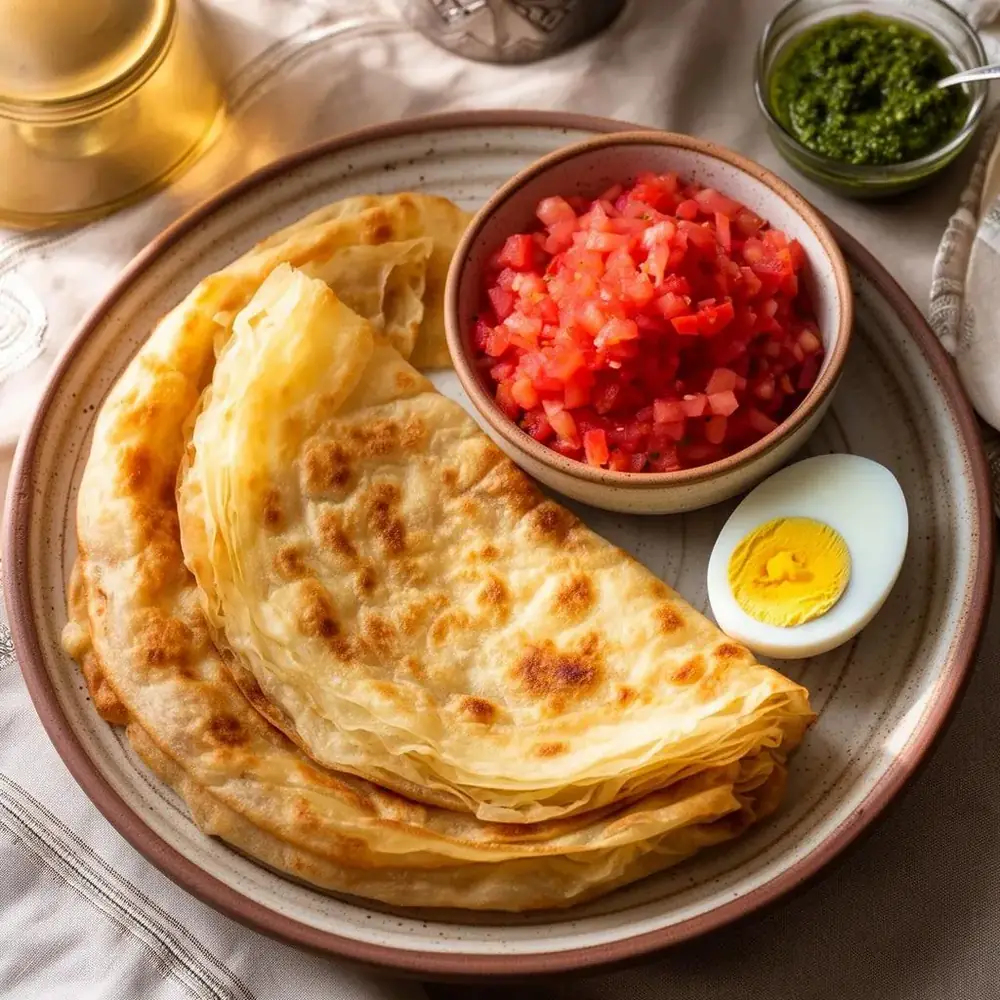
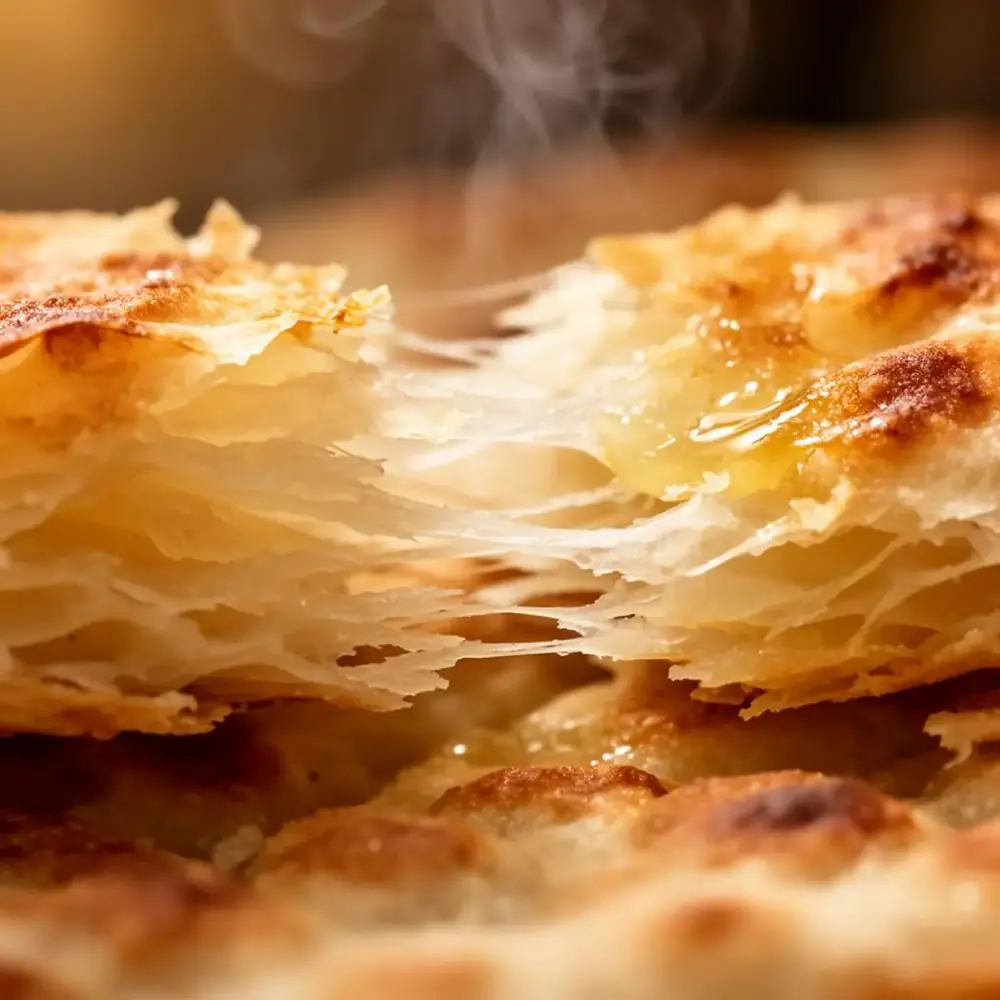
Some breads are made to be sliced. Malawach is made to shatter. Pull a piece off a fresh, pan-fried round and the layers crackle apart in your fingers — dozens of paper-thin sheets, each one fried golden and slicked with butter, releasing a little cloud of steam. It is the kind of food that makes a quiet table go silent for a moment, then erupt into reaching hands.
For generations malawach (sometimes spelled malawah or melawah) was a closely held Yemenite-Jewish treasure, made at home for Shabbat and special mornings. Today it is having a full-blown moment. Search interest for malawach and Yemenite Jewish food keeps climbing, frozen rounds fly off the shelves of Israeli grocery stores, and it has become the unofficial centerpiece of the modern Shabbat brunch — served the traditional way with grated tomato, a hard-boiled egg, and fiery zhug.
The good news: while malawach looks like a project for trained pastry chefs, the technique is forgiving once you understand the rhythm of it. This guide breaks down the dough, the folding, the freezing trick, and the frying so you can make restaurant-quality malawach in your own kitchen.
What Makes This Recipe Special?
Malawach belongs to the same family as flaky laminated breads found across the Middle East, but the Yemenite-Jewish version has its own soul: more butter, more layers, and a pan-fried finish that crisps the outside while keeping the inside tender and chewy.
- Genuinely flaky, shatteringly crisp layers from a simple lamination technique — no special equipment needed.
- A soft, stretchy dough that's forgiving for beginners and improves with rest.
- A make-ahead, freezer-friendly format — shape now, fry whenever you want fresh malawach.
- Naturally pareve, so it fits beautifully into a dairy or meat Shabbat meal.
Ingredients
For the Malawach Dough
- 4 cups (500g) all-purpose flour, plus more for rolling
- 1½ cups warm water
- 1 tablespoon sugar
- 2 teaspoons kosher salt
- 1 teaspoon baking powder
- 2 tablespoons neutral oil (for the dough)
- About ¾ to 1 cup softened butter or clarified butter (samneh), for laminating
For Serving (the Classic Trio)
- 3 ripe tomatoes, grated on the large holes of a box grater (skins discarded)
- 1 clove garlic, grated, plus salt to taste
- Hard-boiled eggs, one per person
- Zhug (Yemenite green or red hot sauce), to taste
Step-by-Step Instructions
Step 1: Make the Dough
- In a large bowl, whisk together flour, sugar, salt, and baking powder.
- Add the warm water and 2 tablespoons of oil. Mix until a shaggy dough forms.
- Knead on a lightly floured surface for 8–10 minutes until smooth, soft, and elastic. The dough should be supple, not stiff.
- Divide into 6–8 equal balls, coat lightly in oil, cover, and rest at least 1 hour at room temperature (or overnight in the fridge). Resting is what makes the dough stretchy enough to laminate.
Step 2: Stretch & Laminate
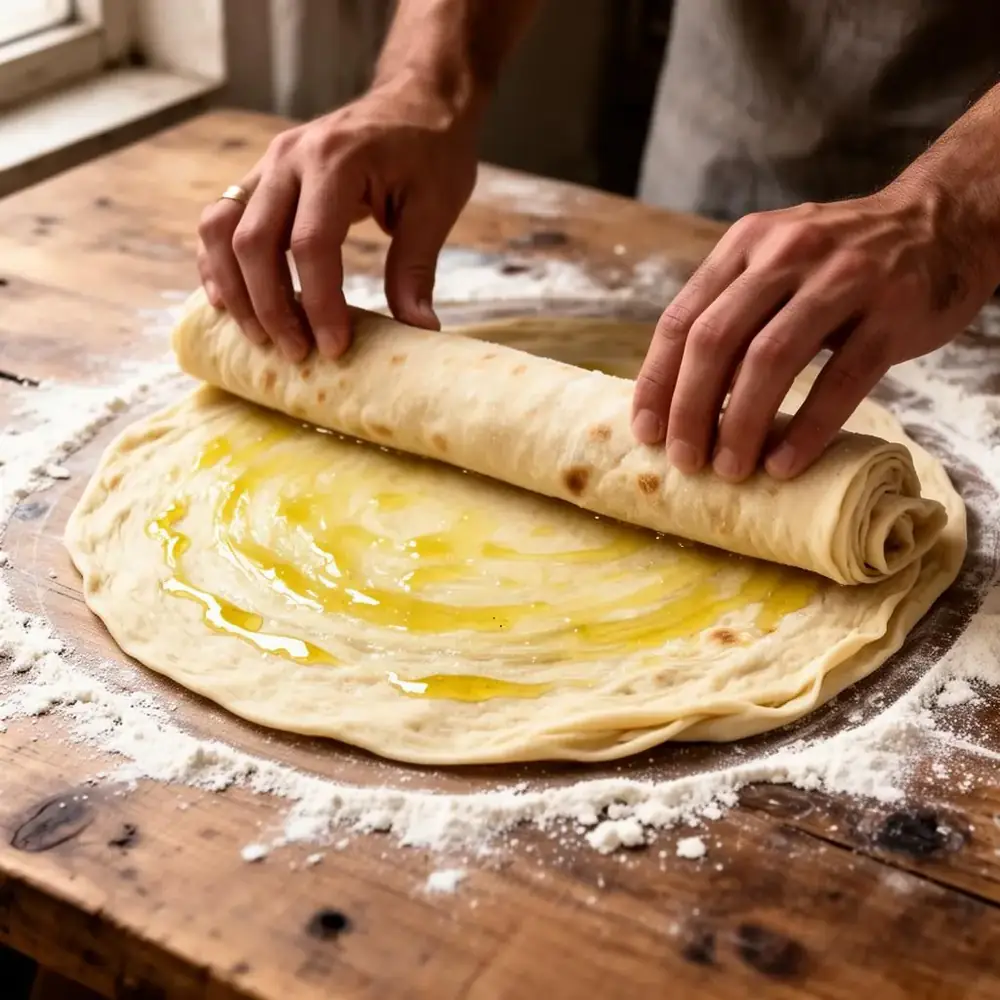
- On a well-oiled surface, press and stretch one ball into the thinnest possible sheet — almost translucent. Don't worry about small tears.
- Spread a thin, even layer of softened butter or samneh across the entire surface.
- Fold the sheet into a tight roll or fold it inward like a letter, then coil it into a spiral. These folds create the flaky layers.
- Repeat with each ball, then rest the coiled pieces 30 minutes (or freeze at this stage).
Step 3: Roll & Pan-Fry
- Flatten each coil and roll it gently into a round about 8 inches wide and ¼ inch thick.
- Heat a dry or lightly oiled heavy skillet over medium heat.
- Fry each round 3–4 minutes per side, until deeply golden with crisp, blistered layers. Add a little butter to the pan for extra richness.
- Serve immediately with grated tomato, a hard-boiled egg, and zhug.
Stretch the dough until you can almost see through it, butter every inch, and don't rush the rest. Thin sheets, generous fat, and patience are the whole secret.
A Little Yemenite-Jewish History
Malawach comes from the rich culinary tradition of Yemenite Jews, one of the oldest Jewish communities in the world. For centuries, families in Yemen prepared laminated breads enriched with clarified butter for Shabbat and festive mornings, when cooking restrictions made make-ahead, slow-warmed foods especially valuable. When the vast majority of Yemen's Jews emigrated to Israel in the mid-20th century — most famously during Operation Magic Carpet in 1949–50 — they carried malawach, jachnun, and zhug with them.
In Israel, these once-regional dishes became national favorites. Malawach moved from family kitchens to bustling food stalls and frozen-food aisles, and from there to Jewish tables around the world. Today it represents both deep tradition and the way Mizrahi and Yemenite flavors have reshaped modern Israeli and Jewish-American cuisine.
Cooking Tips From the Experts
- Work on an oiled surface instead of a floured one — oil helps you stretch the dough ultra-thin without tearing.
- Use softened, spreadable fat; cold butter rips the delicate sheets.
- Fry over steady medium heat — too hot burns the outside before the layers cook through.
- Let the dough rest fully; rushed dough springs back and won't stretch.
Make-Ahead & Freezing
Malawach is built for the freezer, which is exactly why it's so popular for Shabbat. After shaping the rounds, stack them with parchment between each, wrap tightly, and freeze for up to three months. Fry straight from frozen over medium-low heat, adding a couple of extra minutes per side. Fresh, hot, flaky malawach with zero morning effort is the dream of every Shabbat host.
Common Mistakes to Avoid
- Rolling the dough too thick — thin sheets are what create the layers.
- Skimping on butter between folds, which leaves the bread dense instead of flaky.
- Frying on high heat and scorching the outside.
- Not resting the dough, so it tears and snaps back during stretching.
Key Takeaways
- Malawach is a flaky, pan-fried Yemenite-Jewish pastry built from thin, buttered, folded dough.
- The keys are stretching the dough ultra-thin, laminating with plenty of fat, and resting it well.
- It's traditionally served with grated tomato, a hard-boiled egg, and spicy zhug.
- Shaped malawach freezes beautifully, making it perfect for stress-free Shabbat brunch.
Frequently Asked Questions
What is malawach made of?
Malawach is made from a simple dough of flour, water, salt, sugar, and a little oil, which is stretched thin, layered with butter or clarified butter (samneh), folded, and pan-fried until golden and flaky. It contains no eggs or yeast in the dough itself.
How is malawach traditionally served?
The classic Yemenite-Jewish way is with grated fresh tomato seasoned with garlic and salt, a hard-boiled egg, and zhug (a fiery green or red Yemenite hot sauce). Some people also enjoy it with honey for a sweet version.
Can I make malawach ahead and freeze it?
Yes — malawach is ideal for freezing. Shape the rounds, stack them with parchment between each, wrap well, and freeze for up to three months. Fry them straight from frozen over medium-low heat for fresh, flaky results any morning.
Is malawach dairy or pareve?
It depends on the fat you laminate with. Traditional malawach uses samneh (clarified butter), making it dairy. To keep it pareve for a meat meal, laminate with margarine or a neutral solid shortening instead.
Loved this recipe?
Share it with your family, leave a comment, and explore more traditional and modern Jewish dishes on JewishCuisine.
Explore more Holidays recipes