Bialys: The Onion-Filled Roll That Time Almost Forgot
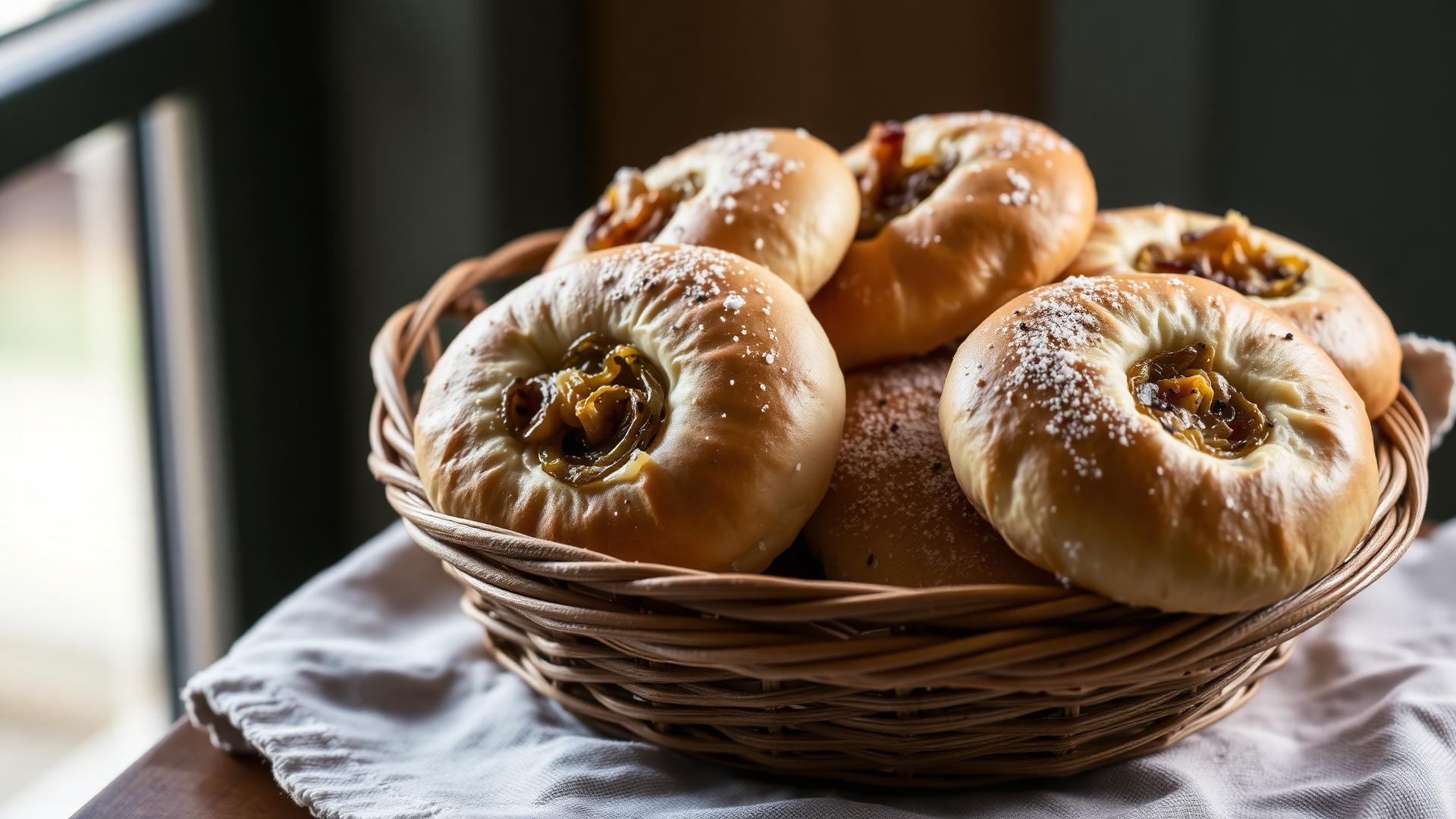
Ask most people to name a Jewish bread roll and they will say bagel without a second of hesitation. Ask them about the bialy, and you are likely to get a puzzled look. That is a quiet shame, because the bialy is one of the most soulful baked goods the Jewish kitchen ever produced — a soft, chewy roll with a shallow well in the center filled with caramelized onions and a scattering of poppy seeds. No boiling, no shine, no hole all the way through. Just bread and onion, doing a great deal with very little.
For generations the bialy was an everyday staple in Jewish neighborhoods, eaten warm in the morning, split and spread with butter or cream cheese, or simply torn apart and enjoyed plain. Then it slipped to the edges of memory while its glossier cousin took over the world. Today, as bakers rediscover heritage breads and slow fermentation, the bialy is finding a new audience that values its tender crumb and its honest, oniony depth.
In this guide we will look at where the bialy comes from, why it nearly disappeared, what sets it apart from the bagel, and exactly how to make a batch in your own kitchen. The dough is forgiving and the ingredient list is short, but a few small techniques make the difference between a flat roll and a proper bialy with a soft, flour-dusted crust and a savory center.
Table of Contents
- What a Bialy Actually Is
- Historical and Cultural Context
- Why Bialys Are Trending Again
- Ingredients and Key Concepts
- Step-by-Step Insights
- Expert Tips
- Common Mistakes to Avoid
- Frequently Asked Questions
- Key Takeaways
- Conclusion
What a Bialy Actually Is
A bialy is a round yeasted roll, roughly the size of a bagel, with a soft and chewy interior and a tender, matte crust rather than a shiny one. Its defining feature is the center: instead of a hole punched all the way through, a bialy has a depressed well pressed into the middle and filled with a mixture of finely chopped, slowly cooked onions and poppy seeds. As it bakes, that filling concentrates into something sweet, savory, and lightly toasted.
The contrast with the bagel is the easiest way to understand it. A bagel is boiled before baking, which gives it a dense, glossy, springy chew. A bialy is never boiled — it goes straight from proof to oven, so it stays lighter, softer, and more bread-like. A bagel keeps for a day; a bialy is at its absolute best within hours of leaving the oven, which is part of its old-world charm and part of why it never traveled as far.
- Shape: a round roll with a pressed center well, not a hole.
- Filling: finely chopped caramelized or softened onions plus poppy seeds.
- Texture: soft and chewy, with a matte floury crust — never boiled.
- Best eaten fresh and warm, the same day it is baked.
Historical and Cultural Context
The bialy takes its name from Bialystok, a city in northeastern Poland that was home to a large and vibrant Jewish community before World War II. There the roll was known as the bialystoker kuchen, and it was a point of local pride — bakeries turned them out by the thousands, and they were as ordinary and beloved to the people of Bialystok as a morning roll could be. The bialy was working-class food: cheap, filling, and made from ingredients any household could afford.
When Jews from Bialystok emigrated, especially to New York's Lower East Side in the early twentieth century, they brought the recipe with them. For decades the bialy thrived in Jewish New York, with dedicated bialy bakeries supplying neighborhoods that knew exactly what they wanted. The food writer Mimi Sheraton chronicled this history in her book The Bialy Eaters, tracing the roll back to a community that was largely destroyed in the Holocaust and documenting how the bread outlived the city that created it.
That history gives the bialy a weight beyond its size. It is one of the few edible links to the Jewish Bialystok that no longer exists, a recipe carried in memory and muscle across an ocean. Every time someone presses a well into a round of dough and fills it with onion, they are repeating a gesture that traveled from a Polish bakery to a New York counter to, now, kitchens around the world.
The bialy is a small, soft monument — a roll that carries the memory of a city and a community within its oniony center.
Why Bialys Are Trending Again
After years in the bagel's shadow, the bialy is having a genuine revival. The broader renaissance in Ashkenazi and heritage Jewish cooking has sent bakers digging into the dishes their grandparents knew, and the bialy is a natural rediscovery — distinctive, historic, and almost forgotten enough to feel new. Artisan bakeries in major cities have started featuring them again, and home bakers are sharing their results online.
The home-baking boom is the other engine. As more people grew comfortable making bread from scratch, the bialy emerged as an approachable next step: it uses a simple lean dough, requires no special equipment, and skips the intimidating boiling step that scares some people away from bagels. For anyone who can make a basic roll, the bialy is well within reach, and the payoff — that warm, savory onion center — is immediate and memorable.
There is also a flavor argument. As diners tire of overly sweet or heavily topped breads, the bialy's restraint feels modern. It is essentially good dough and onions, a savory minimalism that suits the way many people want to eat now. Pair that with its compelling backstory, and you have a food perfectly suited to a moment that prizes both authenticity and simplicity.
Ingredients and Key Concepts
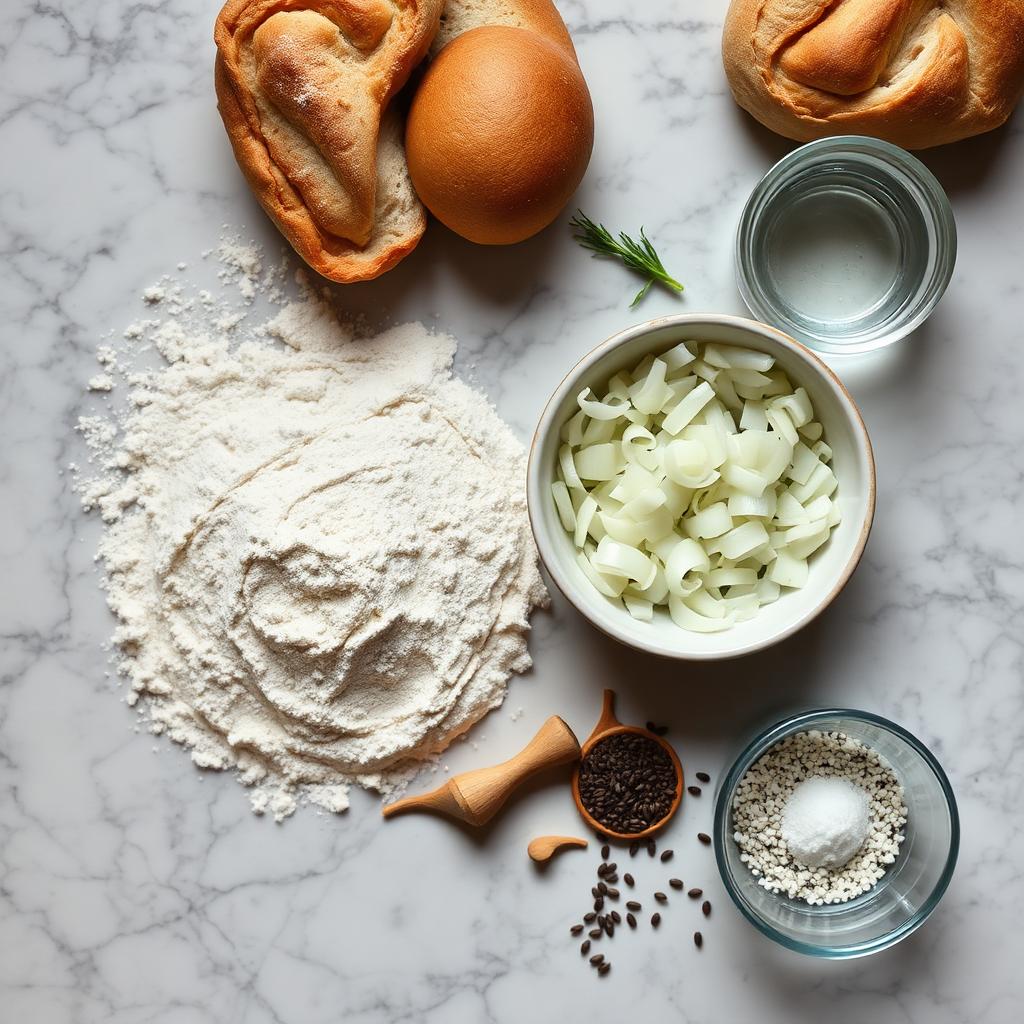
The beauty of the bialy is how few ingredients it asks for. You need bread flour for structure and chew, water, yeast, and salt for the dough, and onions and poppy seeds for the filling. A pinch of sugar helps the yeast along, but the dough is otherwise lean — no eggs, no butter, no oil in the traditional version, which keeps it naturally pareve and suitable alongside both meat and dairy meals.
- Bread flour: its higher protein gives the chewy, sturdy crumb a bialy needs.
- Instant or active dry yeast: for a steady, reliable rise.
- Water: lukewarm, to wake the yeast without killing it.
- Salt: for flavor and to control fermentation.
- Onions: finely chopped and gently cooked until soft and golden, not raw.
- Poppy seeds: a small handful stirred into the onions for the classic finish.
The most important concept to understand is the filling. Raw onion in the center will burn and turn acrid in the oven's heat, so the onions are cooked first — softened slowly in a little oil until sweet and lightly golden, then cooled and mixed with poppy seeds. This pre-cooking is what gives an authentic bialy its mellow, caramel-edged center instead of a harsh, scorched one.
Step-by-Step Insights
Making bialys spans an afternoon, but most of that time is hands-off while the dough rises. The active work is simple: mix, knead, shape, fill, and bake. Here is the method broken into clear stages.
- Make the dough: Combine bread flour, salt, and yeast, then add lukewarm water and mix until a shaggy dough forms. Knead by hand or mixer for about 8 to 10 minutes until smooth and elastic.
- First rise: Place the dough in a lightly oiled bowl, cover, and let it rise until roughly doubled, about 1 to 1.5 hours in a warm spot.
- Cook the filling: While the dough rises, gently cook the finely chopped onions in a little oil over low heat until soft and golden, 12 to 15 minutes. Cool, then stir in the poppy seeds and a pinch of salt.
- Divide and shape: Punch down the dough and divide it into 8 to 10 even pieces. Roll each into a tight ball, then let them rest, covered, for 15 to 20 minutes so the gluten relaxes.
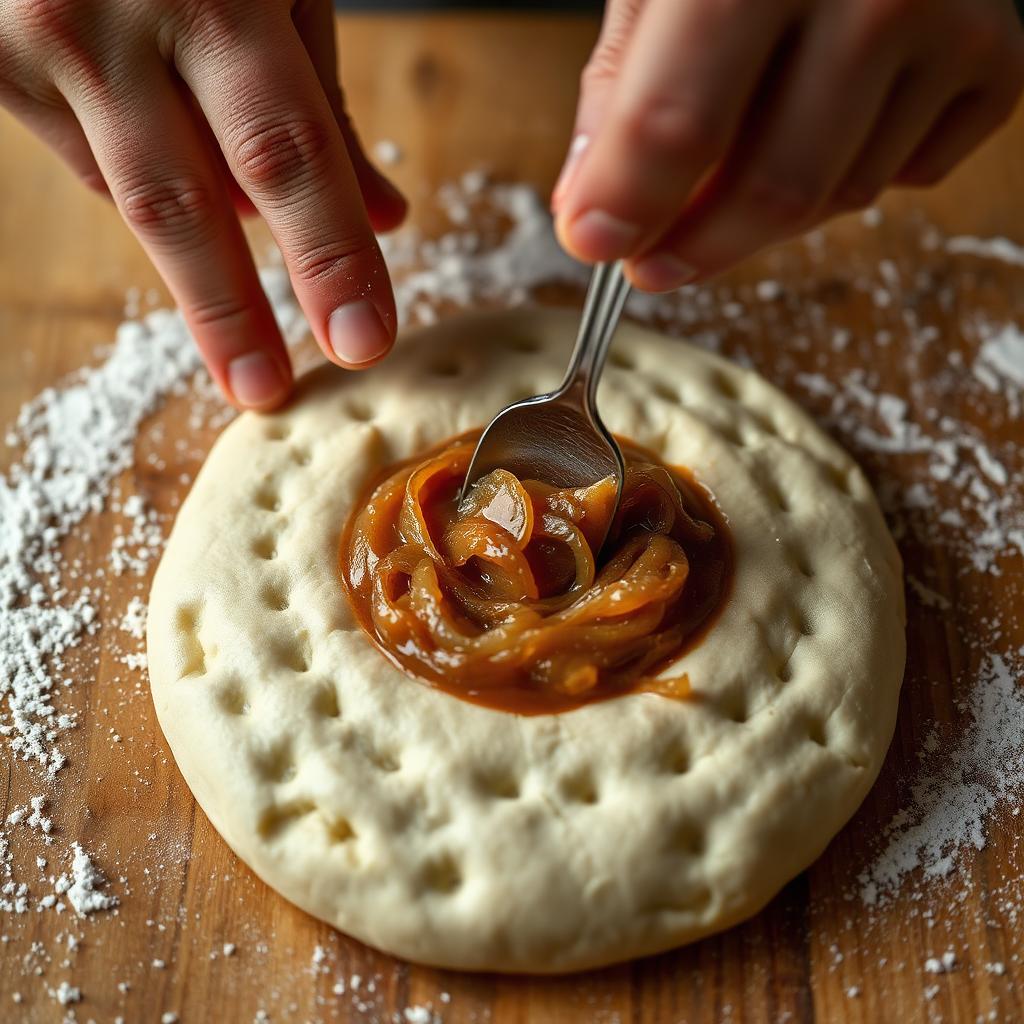
- Form the wells: Flatten each ball into a round about 4 inches wide, then press a deep well into the center with your fingertips, leaving a raised rim. Keep the center thin so the filling sits in a defined hollow.
- Fill and proof: Spoon a generous teaspoon of the onion mixture into each well. Cover loosely and let the shaped bialys proof for another 20 to 30 minutes until puffy.
- Bake hot: Bake in a fully preheated oven at around 475°F (245°C) for 10 to 15 minutes, until the rims are set and just touched with golden color. The crust should stay pale and matte, not deeply browned.
Expert Tips
A few details separate a good bialy from a great one. None are difficult, but together they make the roll taste like it came from an old neighborhood bakery.
- Press the wells deeper than you think — they shrink during proofing and baking, and a shallow dent disappears entirely.
- Cook the onions low and slow. Rushing them over high heat scorches the edges and loses the gentle sweetness that defines the filling.
- Use a very hot oven and a preheated baking stone or steel if you have one, for the best lift and a properly chewy crumb.
- Dust the tops lightly with flour before baking for the traditional matte, old-world look.
- Eat them the day they are baked. To revive day-old bialys, sprinkle with water and warm them in a hot oven for a few minutes.
Common Mistakes to Avoid
Bialys are forgiving, but a handful of missteps come up again and again. Knowing them in advance saves a batch.
- Using raw onions in the well — they burn and turn bitter; always cook them first.
- Making the center too thick, so the well puffs closed and you lose the signature hollow.
- Under-proofing the shaped rolls, which yields dense, tight bialys instead of light ones.
- Baking at too low a temperature, producing a pale, doughy roll with no chew.
- Over-browning the crust — a bialy is meant to stay soft and matte, not crisp and dark like a bagel.
Frequently Asked Questions
Below are the questions home bakers most often ask when making bialys for the first time.
Key Takeaways
The bialy may live in the bagel's shadow, but it deserves a spot of its own on the table. It is simpler to make than its boiled cousin, deeply tied to the lost Jewish world of Bialystok, and built around one of the kitchen's greatest flavors: slow-cooked onion. Master the deep well and the pre-cooked filling, bake it hot, and eat it warm.
Conclusion
There is something quietly moving about baking a bialy. It is a small, soft roll that carries an enormous amount of history — a recipe that outlived the city that gave it its name and crossed an ocean in the memories of the people who loved it. Making a batch at home is not just a baking project; it is a way of keeping that history alive, one floury, oniony round at a time.
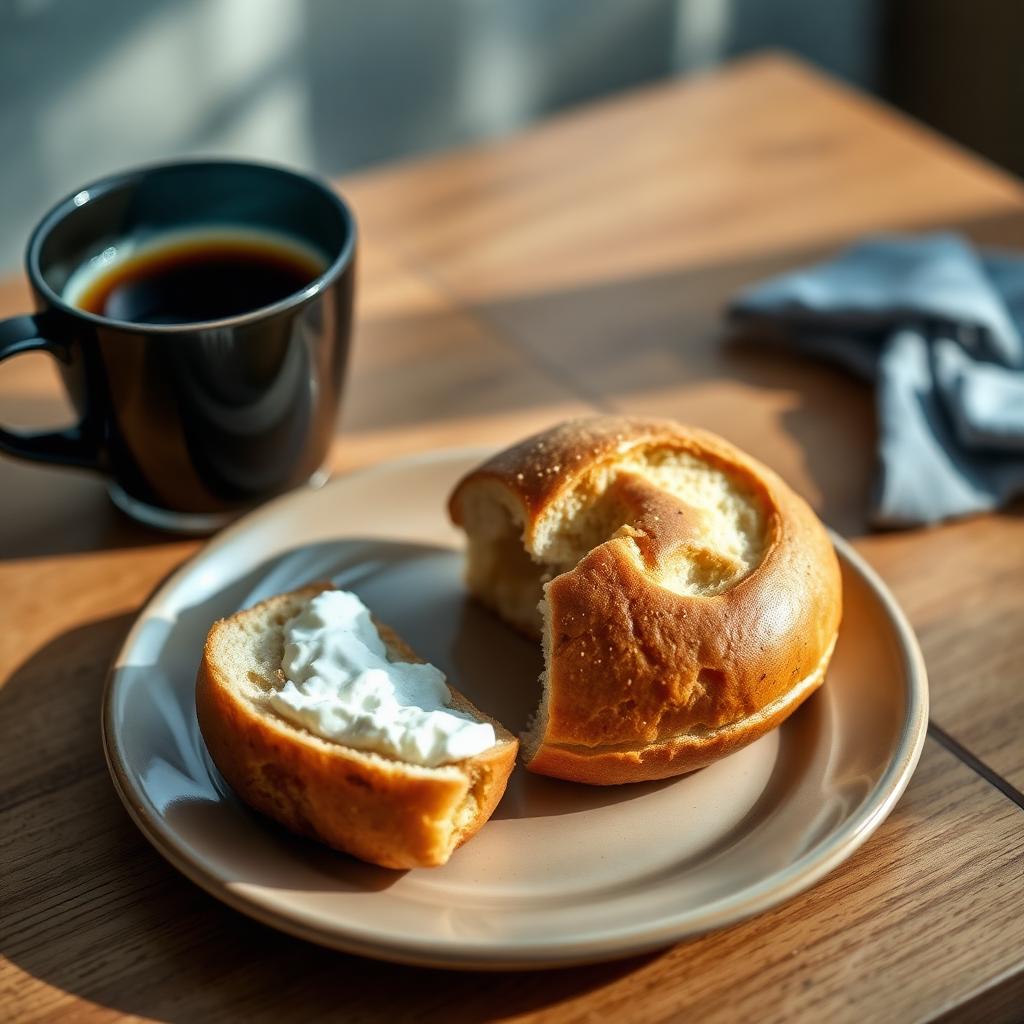
So press a generous well, fill it with golden onions and poppy seeds, and bake them hot. Pull a warm bialy from the oven, split it, spread it with cream cheese, and you will understand at once why this humble roll was worth remembering. Once you taste a fresh one, you may find that the bagel has some serious competition in your kitchen.
Key Takeaways
- A bialy is a soft, chewy roll with a caramelized onion and poppy seed well — never boiled like a bagel.
- It originated as the bialystoker kuchen in Bialystok, Poland, and traveled to New York with Jewish immigrants.
- Always pre-cook the onions so the filling turns sweet and golden instead of burning in the oven.
- Press the center well deeper than you expect and bake in a very hot oven for the right texture.
- Bialys are best eaten warm the same day they are baked.
Frequently Asked Questions
What is the difference between a bialy and a bagel?
A bagel is boiled before baking, giving it a dense, shiny, springy chew and a hole through the middle. A bialy is never boiled, so it is softer and more bread-like, with a matte crust and a pressed center well filled with onions instead of a hole.
Why are my bialy centers puffing closed?
The well was either too shallow or the center too thick. Press the well deep and keep the middle thin so it stays as a defined hollow through proofing and baking.
Can I make bialys ahead of time?
Bialys are best the day they are baked. You can freeze them once cooled and reheat in a hot oven, or refresh day-old ones by sprinkling with water and warming them through.
Are bialys kosher and pareve?
A traditional bialy made with just flour, water, yeast, salt, onions, and poppy seeds is pareve, so it can be served with both meat and dairy meals. Always check your specific ingredients for kosher certification.
Do I have to use poppy seeds?
Poppy seeds are traditional, but the onion filling is the essential part. You can leave the poppy seeds out or substitute a little extra onion if you prefer.
Loved this recipe?
Share it with your family, leave a comment, and explore more traditional and modern Jewish dishes on JewishCuisine.
Explore more Traditional recipes