Crispy Homemade Falafel: The Crunchy Chickpea Classic Taking Over Kitchens
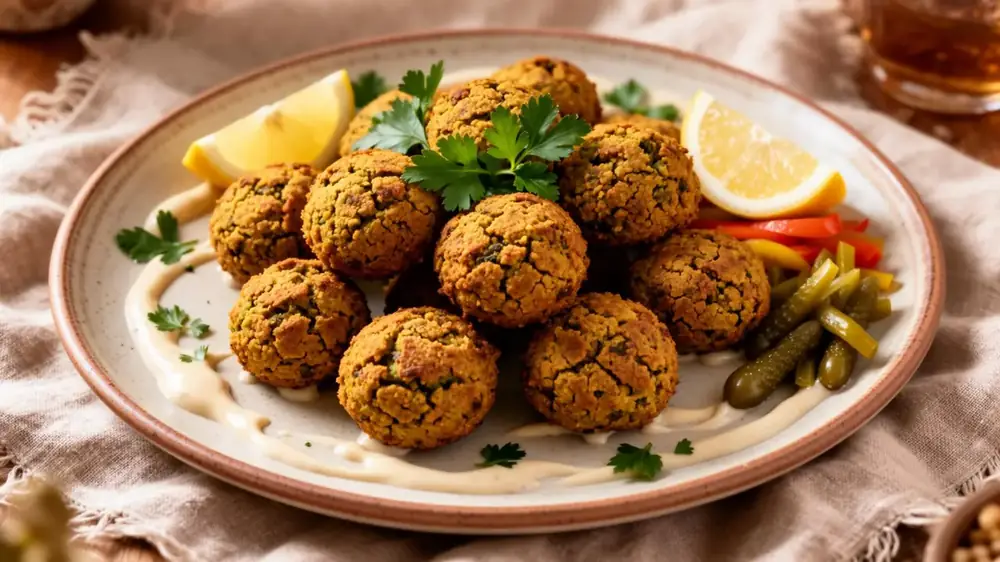
There is a specific kind of joy in biting into a perfect falafel. The outside shatters with a deep golden crunch, and the inside opens up to reveal a warm, herb-flecked green center that smells like garlic, cumin, and fresh parsley. It is humble, plant-based street food at its finest — and right now, it is everywhere.
Falafel has quietly become one of the most-searched foods in America. As more people lean into plant-forward eating, naturally vegan and budget-friendly dishes are having a serious moment, and few deliver as much flavor per dollar as a batch of homemade falafel. It is filling, protein-rich, endlessly customizable, and deeply rooted in Middle Eastern and Jewish food culture.
But here is the part most recipes skip: real falafel is never made from canned chickpeas. The secret to that signature crispy-outside, fluffy-inside texture starts the night before, with a bowl of dried chickpeas and cold water. This guide walks you through every step so your falafel comes out restaurant-quality on the very first try.
Table of Contents
- What Makes This Recipe Special?
- A Little Falafel History & Culture
- Why Falafel Is Trending Right Now
- Ingredients You'll Need
- Step-by-Step Instructions
- Expert Tips for Perfect Falafel
- Common Mistakes to Avoid
- Frequently Asked Questions
- Key Takeaways
- Conclusion
What Makes This Recipe Special?
Plenty of falafel recipes promise crunch and deliver a dense, dry hockey puck. This version focuses on the few details that actually matter: soaked (never cooked) chickpeas, a generous hand with fresh herbs, and the right frying temperature.
- Built on dried chickpeas soaked overnight — the only way to get a light, craggy, crispy result.
- Loaded with fresh parsley and cilantro for that unmistakable green interior.
- Naturally vegan, dairy-free, and kosher — pareve and welcome at any table.
- Beginner-friendly, with frying cues so you always know when they're done.
A Little Falafel History & Culture
Falafel's exact origins are debated, with several countries across the Middle East claiming it as their own. Many food historians trace early versions to Egypt, where fava beans were the base, while the chickpea version spread through the Levant. What is certain is that falafel became a beloved, affordable street food across the region long before it reached global fame.
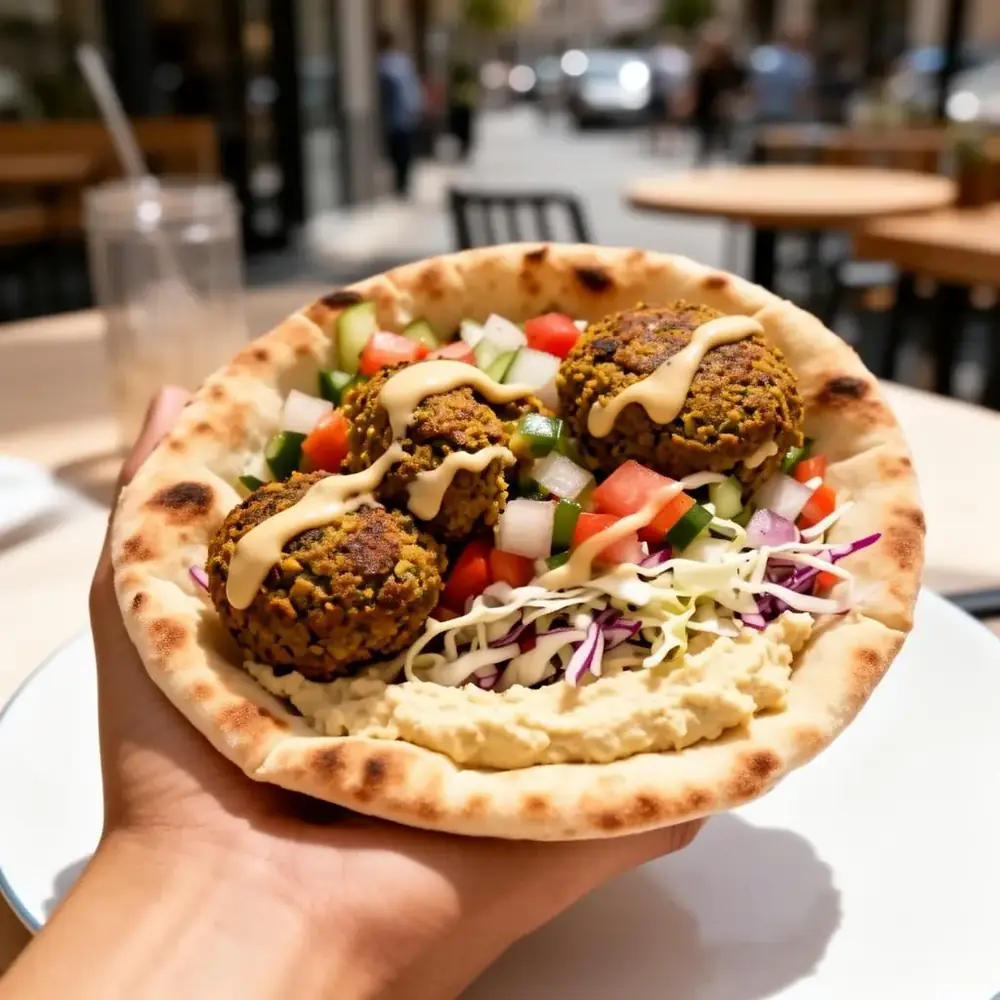
For Jewish cuisine, falafel holds a special place. When waves of immigrants arrived in the land of Israel, falafel — cheap, filling, vegetarian, and pareve — became a national staple, tucked into pita with hummus, tahini, and chopped salad. Today it is so closely tied to Israeli food culture that it is often called the unofficial national snack, sold from street carts from Tel Aviv to Jerusalem and exported to delis and food trucks worldwide.
Why Falafel Is Trending Right Now
Falafel sits at the intersection of three big food movements. First, the plant-based wave: as more Americans cut back on meat, naturally vegan classics with real history feel far more satisfying than processed substitutes. Second, the rising love for Middle Eastern flavors — tahini, za'atar, sumac, and harissa have all jumped from specialty shelves to mainstream pantries. Third, the cost-of-groceries reality, where a bag of dried chickpeas stretches into dozens of crispy, protein-rich bites for just a few dollars.
Add the social-media factor — that golden-crunch close-up is irresistible — and falafel has become a home-cooking project people are genuinely excited to master.
Ingredients You'll Need
For the Falafel
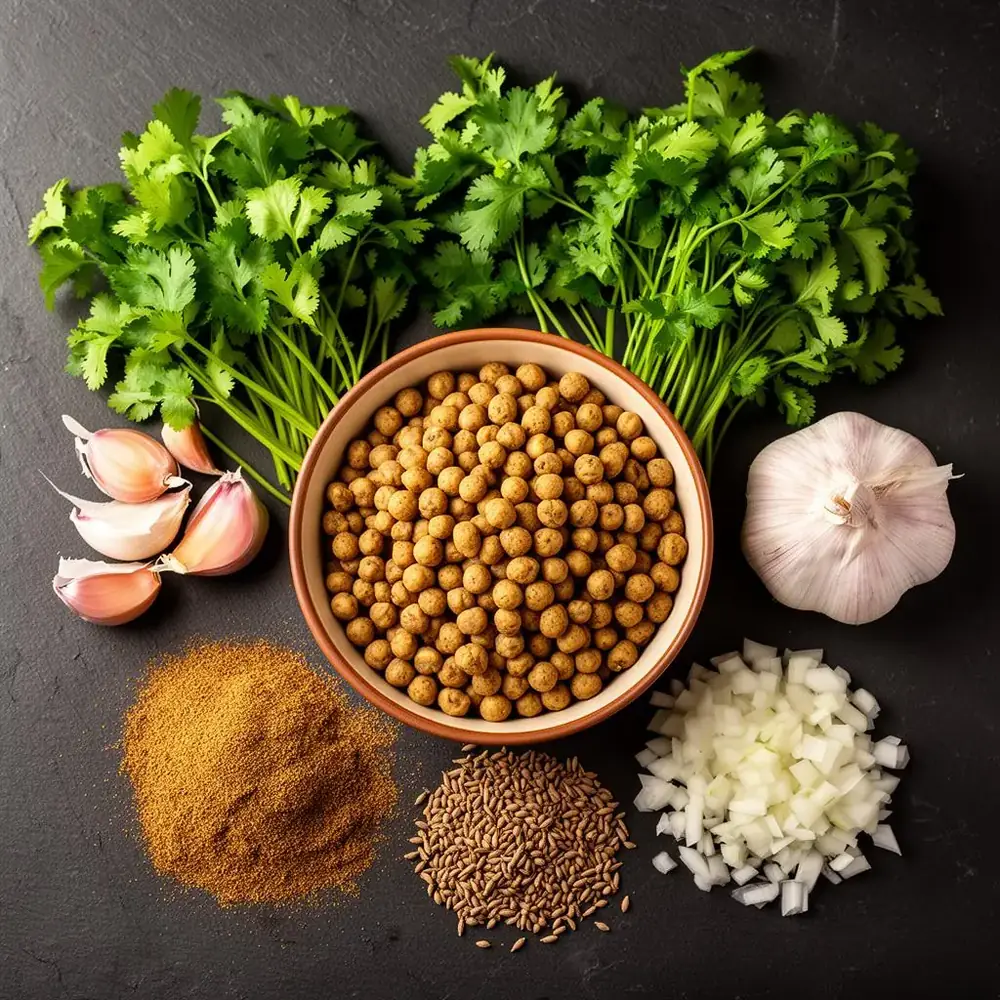
- 1 cup dried chickpeas (do NOT use canned), soaked overnight
- 1 small yellow onion, roughly chopped
- 4 garlic cloves
- 1 cup fresh parsley leaves, packed
- 1 cup fresh cilantro leaves, packed
- 1 ½ teaspoons ground cumin
- 1 teaspoon ground coriander
- 1 teaspoon kosher salt
- ¼ teaspoon cayenne or black pepper, to taste
- 1 teaspoon baking powder (added just before frying)
- 2 tablespoons chickpea flour or all-purpose flour, if needed to bind
- Neutral oil for frying (such as canola or sunflower)
For Serving
- Warm pita or laffa bread
- Tahini sauce (tahini, lemon, garlic, water)
- Hummus and chopped Israeli salad
- Pickles, shredded cabbage, and hot sauce
Step-by-Step Instructions
Step 1: Soak the Chickpeas
- Place dried chickpeas in a large bowl and cover with at least 3 inches of cold water.
- Soak for 18 to 24 hours, adding more water if needed — they will nearly triple in size.
- Drain thoroughly and pat dry. The chickpeas stay raw; they cook inside the oil.
Step 2: Blend the Mixture
- Add chickpeas, onion, garlic, parsley, cilantro, and spices to a food processor.
- Pulse — don't puree — until you get a coarse, couscous-like texture that holds together when pressed.
- Scrape down the sides and pulse again. Taste a pinch for salt and spice.
- Cover and chill the mixture for at least 30 minutes (or up to overnight) so it firms up.
Step 3: Shape & Fry
- Stir baking powder (and flour, if the mix feels loose) into the chilled mixture.
- Heat 2 inches of oil to 350°F (175°C). A pinch of mixture should sizzle steadily.
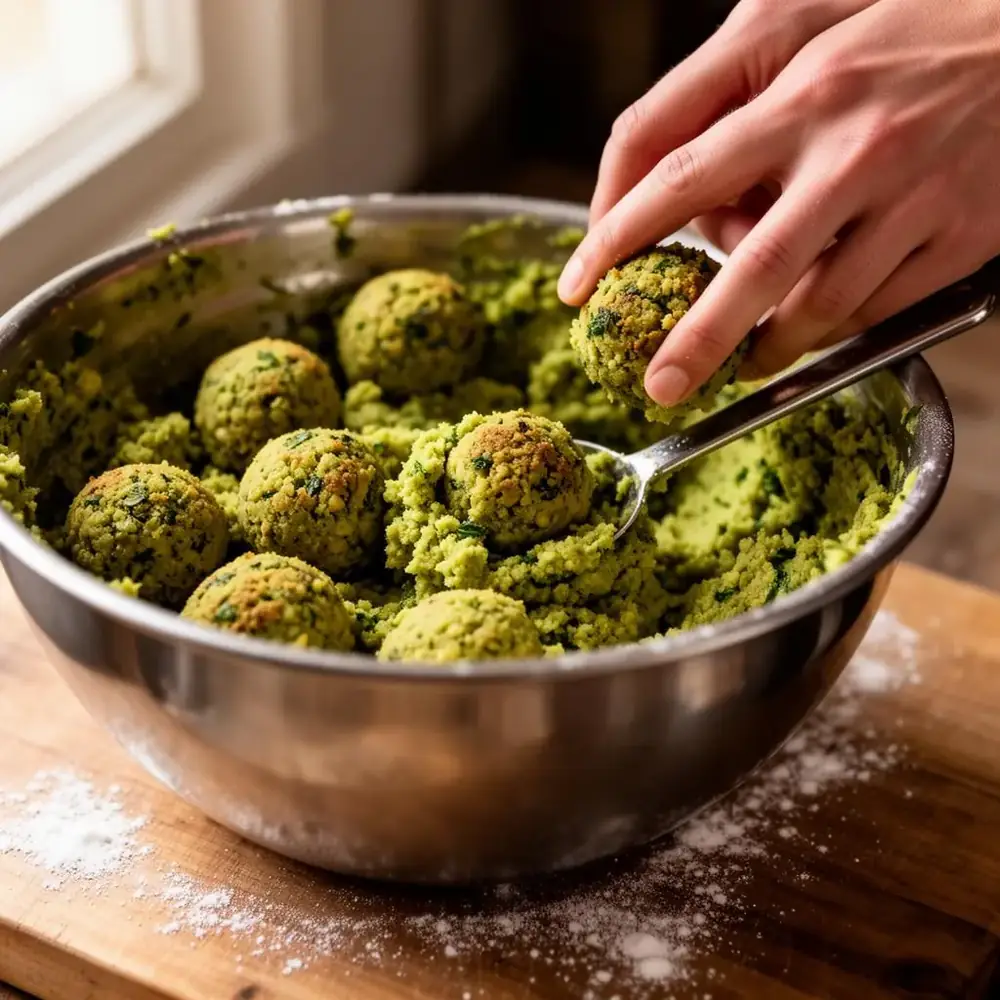
- Scoop and gently shape into balls or small patties; don't pack them too tight.
- Fry in batches for 3 to 4 minutes, turning, until deep golden brown all over.
- Drain on a wire rack (not paper towels, which trap steam) and serve hot.
Soak, don't cook. Pulse, don't puree. Fry hot, don't crowd the pan. Get those three right and your falafel will be impossibly crisp every time.
Expert Tips for Perfect Falafel
- Use dried chickpeas only — this single rule matters more than anything else.
- Dry the soaked chickpeas well so the mixture isn't watery.
- Add baking powder right before frying for the lightest, airiest interior.
- Keep oil between 340°F and 360°F; too cool and they soak up grease, too hot and they brown before cooking through.
- Fry a test ball first to check binding and seasoning before committing the batch.
Common Mistakes to Avoid
- Using canned or cooked chickpeas (the mixture disintegrates in the oil).
- Over-processing into a smooth paste, which makes them dense and gummy.
- Skipping the chill time, so they fall apart while shaping.
- Crowding the pot, which drops the oil temperature and yields greasy falafel.
- Salting too little — under-seasoned falafel tastes flat.
Key Takeaways
- Authentic falafel is made from dried chickpeas soaked overnight — never canned or cooked.
- Pulse the mixture to a coarse texture and chill it so the falafel hold together.
- Fry at 350°F in batches for a shattering golden crust and a fluffy green center.
- Falafel is naturally vegan and pareve, making it a versatile, budget-friendly staple.
Frequently Asked Questions
Can I make falafel with canned chickpeas?
It's strongly discouraged. Canned chickpeas are already cooked and hold too much moisture, so the mixture turns mushy and breaks apart in the oil. For crispy, authentic falafel, always start with dried chickpeas soaked overnight.
Can I bake or air-fry falafel instead of deep-frying?
Yes. Brush shaped falafel with oil and bake at 375°F for about 25 minutes, flipping halfway, or air-fry at 375°F for 12 to 15 minutes. They'll be a bit drier than fried but still delicious and lighter.
Why is my falafel falling apart?
The most common causes are using canned chickpeas, a too-wet mixture, or skipping the chill step. Make sure the chickpeas are well drained, pulse to a mixture that holds when pressed, chill it, and add a little chickpea flour if needed.
Is falafel healthy?
Chickpeas are rich in plant protein and fiber, so falafel can be a nutritious choice, especially baked or air-fried. Deep-fried falafel is still wholesome in moderation — keep the oil hot so it absorbs less grease.
Can I freeze falafel?
Absolutely. Freeze the shaped raw balls on a tray, then transfer to a bag and fry straight from frozen, adding a minute or two. Cooked falafel also freezes well and reheats crisp in the oven or air fryer.
Loved this recipe?
Share it with your family, leave a comment, and explore more traditional and modern Jewish dishes on JewishCuisine.
Explore more Traditional recipes