Melt-in-Your-Mouth Jewish Braised Brisket: The Holiday Centerpiece Worth the Wait
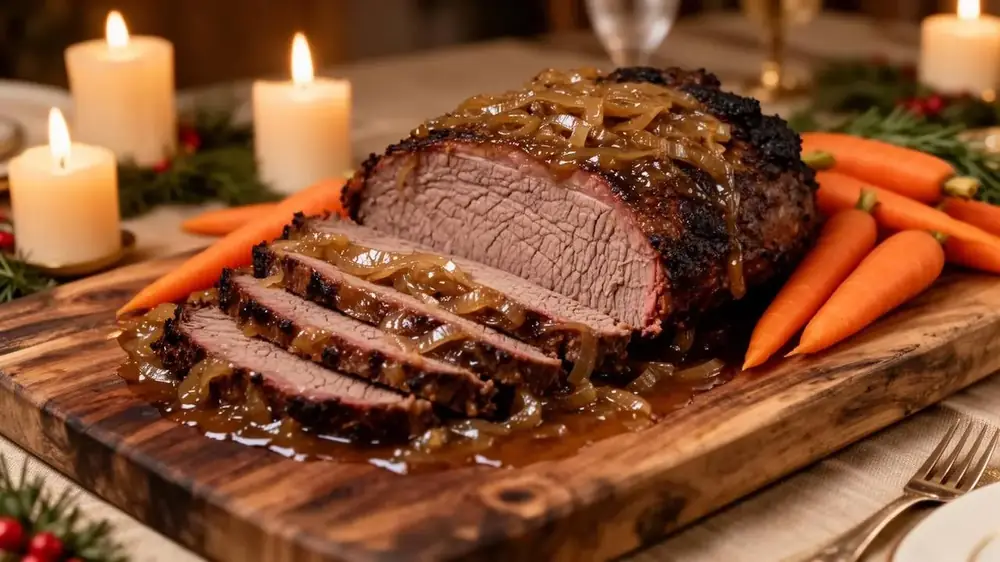
If there is one dish that anchors the Jewish holiday table from Rosh Hashanah to Passover, it is brisket. Not a fast cut, not a fancy one — just a humble, hardworking slab of beef that, given enough time and a low oven, transforms into something tender enough to cut with the side of a fork. Every family has a version, scrawled on an index card and guarded like a secret, and every version is somehow the best one. This is the brisket I make: slow-braised in a deep tangle of caramelized onions until the meat soaks up all that sweet, savory gravy and the whole house smells like a holiday.
What makes Jewish brisket special isn't a single ingredient — it's patience. There are no shortcuts that taste as good as time, and the beauty of this dish is that it actually gets better the day after you make it. That makes it the ultimate stress-free centerpiece: cook it ahead, chill it overnight, slice it cold, and reheat it gently in its own gravy. Below you'll find everything you need, from choosing the right cut to slicing it the right way, plus the history behind why this dish became a Jewish icon.
Choosing the Right Brisket
Brisket comes from the breast of the cow and has two parts: the leaner 'first cut' (also called the flat) and the fattier, more marbled 'second cut' (the point or deckle). For holiday slicing, the first cut gives you neat, even slices. For maximum flavor and forgiveness, the second cut stays juicier. A whole brisket — both cuts together — gives you the best of both worlds if you can find one. Look for a piece with a decent fat cap; that fat renders during the long braise and bastes the meat from the outside.
- First cut (flat): leaner, slices beautifully — ideal for an elegant holiday platter.
- Second cut (point/deckle): fattier and richer — the most forgiving and flavorful choice.
- Plan on about 1/2 to 3/4 pound per person, since brisket shrinks as it cooks.
- Buy kosher brisket from a kosher butcher if you keep kosher; it's already salted and trimmed.
Ingredients You'll Need
- 1 whole beef brisket (about 5–6 lbs), fat cap left on
- 3 large yellow onions, thinly sliced
- 6 cloves garlic, smashed
- 3 large carrots, cut into chunks
- 2 tablespoons neutral oil (or schmaltz)
- 2 cups beef stock (or water)
- 1 cup dry red wine (or more stock)
- 1/4 cup tomato paste
- 2 tablespoons brown sugar or honey
- 2 bay leaves and a few sprigs of fresh thyme
- Kosher salt and freshly ground black pepper
- Smoked paprika and a pinch of cinnamon (optional, for warmth)
How to Make Jewish Braised Brisket
Step 1: Season and Sear
- Pat the brisket completely dry and season generously all over with salt and pepper (and paprika, if using).
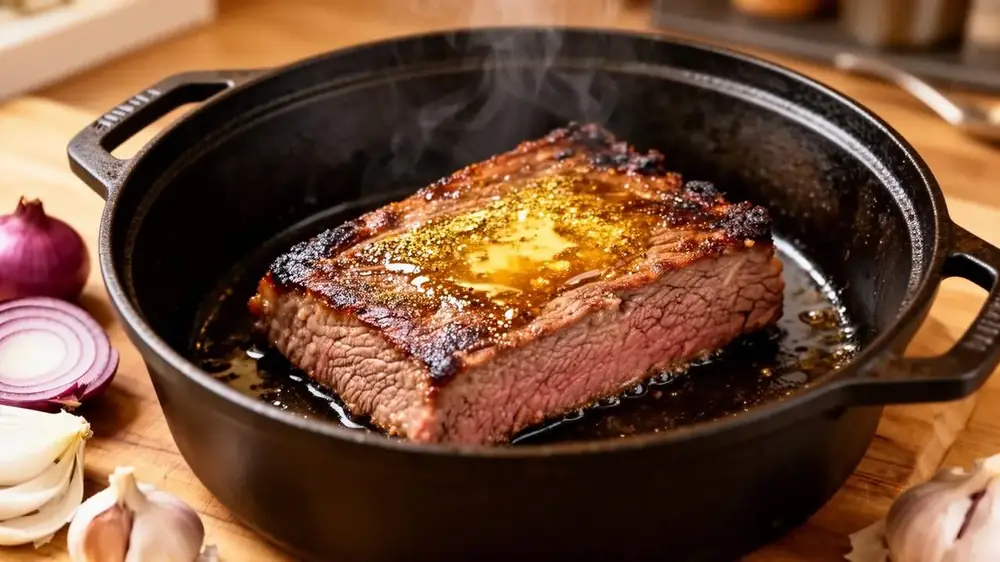
- Heat the oil in a large Dutch oven over medium-high heat until shimmering.
- Sear the brisket fat-side down first, 4–5 minutes per side, until deeply browned. Don't move it too early — a hard crust means deep flavor.
- Transfer the brisket to a plate and set aside.
Step 2: Build the Onion Base
- Lower the heat to medium and add the sliced onions to the same pot, scraping up the browned bits.
- Cook the onions slowly, stirring often, for 15–20 minutes until soft, golden, and jammy.
- Stir in the garlic, tomato paste, and brown sugar; cook 2 minutes until the paste darkens slightly.
- Pour in the red wine and let it bubble for 2–3 minutes to cook off the raw alcohol.
Step 3: The Long, Slow Braise
- Nestle the brisket back into the pot, fat-side up, along with any juices. Add the stock, carrots, bay leaves, and thyme.
- The liquid should come about halfway up the meat; add a splash more stock or water if needed.
- Bring to a gentle simmer, cover tightly, and transfer to a 325°F (160°C) oven.
- Braise for 3 to 3 1/2 hours, basting once or twice, until a fork slides in with almost no resistance.
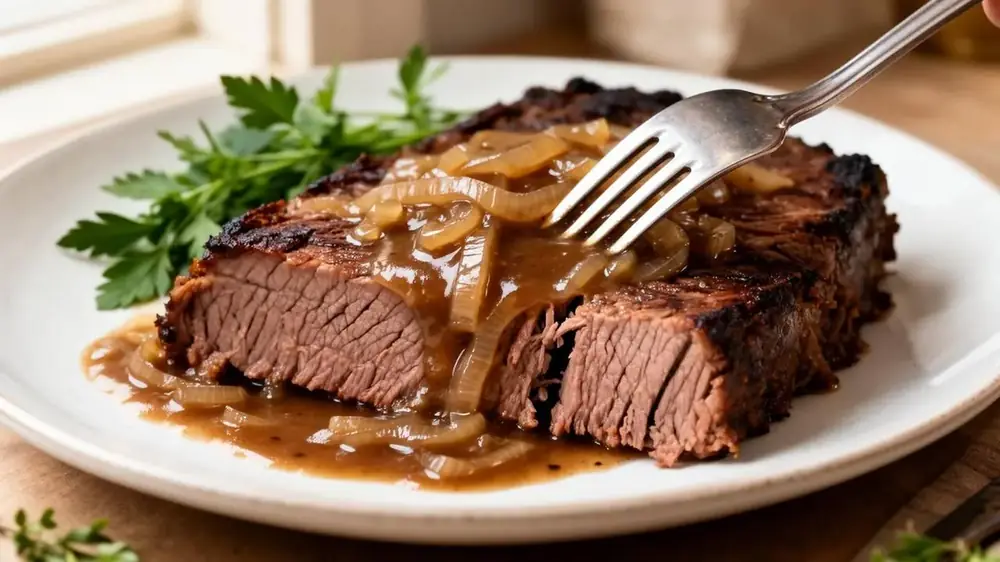
Step 4: Rest, Chill, and Slice
- Let the brisket cool in its gravy, then refrigerate the whole pot overnight — this is the secret to clean slices and deeper flavor.
- The next day, lift off any solidified fat from the surface of the gravy.
- Remove the cold brisket and slice it against the grain into 1/4-inch slices.
- Return the slices to the gravy and reheat, covered, at 325°F for 30–40 minutes until hot and glossy.
Always slice brisket against the grain. Cut with the grain and even a perfectly braised brisket will feel stringy and tough; cut across it and every slice is tender.
A Little Jewish Culinary History
Brisket became a Jewish staple out of both tradition and thrift. As one of the kosher cuts from the forequarter of the animal, and an inexpensive, tough one at that, brisket was within reach for Ashkenazi families in Central and Eastern Europe. The long, slow, moist cooking it demanded was perfectly suited to a cut full of connective tissue — and to homes where the oven was already warm for Shabbat. When Jewish immigrants arrived in America, brisket followed, evolving with new pantry staples like ketchup, onion soup mix, and brown sugar. Today it remains the definitive holiday main for Rosh Hashanah, Hanukkah, and Passover tables across the diaspora.
Cooking Tips From the Experts
- Make it a day ahead — brisket genuinely tastes better after resting overnight in its gravy.
- Don't skip the sear; it's the single biggest contributor to deep, roasted flavor.
- Keep the pot tightly covered so the braise stays moist and the meat doesn't dry out.
- Blend a ladle of the onion gravy if you prefer a smoother, restaurant-style sauce.
Common Mistakes to Avoid
- Slicing with the grain instead of against it — the most common reason brisket turns out tough.
- Pulling it from the oven too early; brisket needs to pass through 'tough' to reach 'tender.'
- Trimming off all the fat before cooking — the fat cap keeps the meat moist during the braise.
- Letting the liquid run dry; check halfway and add stock if the pot looks low.
Serve your brisket alongside other Jewish holiday classics for a table that feels both festive and familiar. It's wonderful with a fluffy bowl of soup to start, a sweet kugel on the side, and something braided and golden for the blessing over bread.
Key Takeaways
- Jewish brisket is a slow-braised holiday centerpiece built on caramelized onions and patience.
- A hard sear plus a low 325°F braise turns a tough cut fork-tender.
- Make it a day ahead and reheat in its gravy for the best flavor and cleanest slices.
- Always slice against the grain, and keep it pareve-friendly by serving with no dairy.
Frequently Asked Questions
Why is my brisket tough even after hours of cooking?
It almost certainly needs more time, not less. Brisket gets tougher before it gets tender as the connective tissue breaks down. Keep braising, covered, until a fork slides in easily — and always slice against the grain.
Can I make Jewish brisket ahead of time?
Yes, and you should. Braise it a day or two ahead, refrigerate it whole in its gravy, then lift off the fat, slice cold, and reheat the slices in the gravy. It tastes even better and slices far more cleanly.
Is brisket kosher and what should I serve with it?
Brisket is a meat (fleishig) dish, so keep everything dairy-free. Use oil or schmaltz, certified kosher wine and stock, and serve it with pareve or meat sides like kugel, roasted vegetables, or challah.
Loved this recipe?
Share it with your family, leave a comment, and explore more traditional and modern Jewish dishes on JewishCuisine.
Explore more Holidays recipes