Sambusak: The Iraqi Jewish Chickpea Pastry Beloved on the Shabbat Table
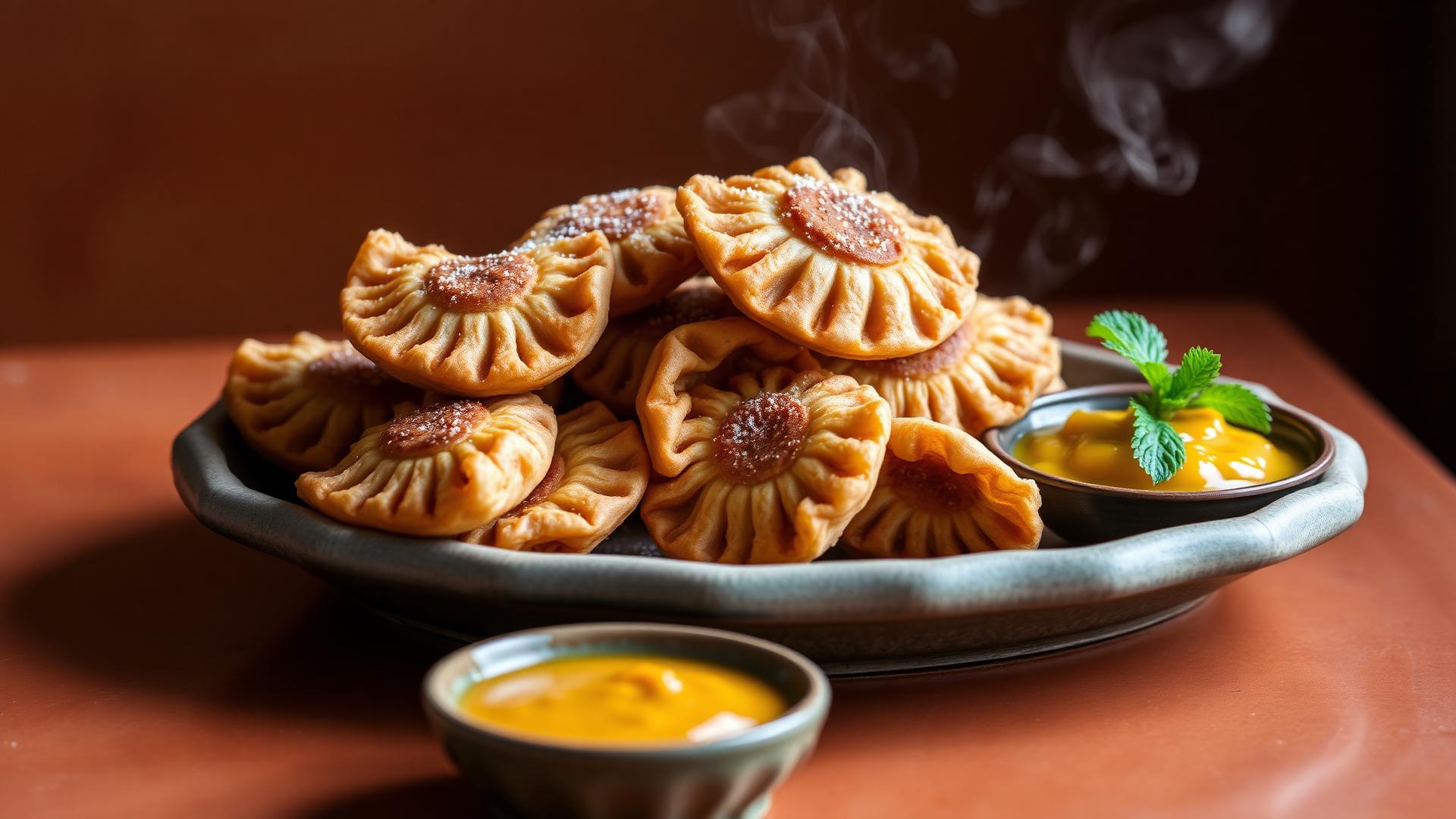
In the Jewish homes of Baghdad, Friday afternoons had a rhythm you could taste. Someone was always at the counter pressing rounds of dough, spooning in a fragrant chickpea filling, and crimping the edges into neat little half-moons. By the time the sun set, the table held a mountain of golden sambusak, ready for the Shabbat meal and the guests who would inevitably arrive. For Iraqi Jews, this humble stuffed pastry is not a snack; it is a memory of home.
Sambusak (also spelled sambousek) has traveled farther than almost any dish in the Mizrahi repertoire. It followed Jewish communities out of Iraq, Syria, and across the region, landing in kitchens from Jerusalem to New York without ever losing its comforting shape. Bite into one and you get a shell that shatters gently over a warm, cumin-scented chickpea heart — proof that the simplest food can carry the deepest history.
This guide covers sambusak from every angle: what it is, where it comes from, why it is finding a new audience today, the ingredients that define it, and a clear step-by-step method — along with the expert tips and common mistakes that turn a leaky, doughy pastry into a crisp, golden one worth the effort.
Table of Contents
- What Sambusak Actually Is
- Historical and Cultural Context
- Why Sambusak Is Trending
- Ingredients and Key Concepts
- Step-by-Step Insights
- Expert Tips
- Common Mistakes to Avoid
- Frequently Asked Questions
- Key Takeaways
- Conclusion
What Sambusak Actually Is
Sambusak is a small, half-moon-shaped pastry made from a tender, oil-based dough folded around a savory filling and then either fried or baked until golden. Among Iraqi and Syrian Jews, the most iconic version is stuffed with mashed spiced chickpeas, though fillings of white cheese or ground meat are equally traditional depending on the family and the occasion. The edges are pinched or twisted into a rope-like seal that keeps the filling snug inside.
The dough is what sets a great sambusak apart. Unlike flaky, laminated pastries, sambusak dough is soft and short — enriched with oil so it fries up crisp yet stays tender enough to bite through cleanly. Because the classic chickpea and cheese versions contain no meat, they slot neatly into a dairy or pareve meal, which is one reason the pastry became a staple of the Shabbat table and holiday spreads alike.
Historical and Cultural Context
The Jewish community of Iraq is one of the oldest in the world, tracing its roots to the Babylonian exile more than 2,500 years ago. Over those long centuries, Iraqi Jews developed a distinctive cuisine built on rice, legumes, fresh herbs, and warm spices — and sambusak became one of its signature foods. The stuffed pastry appears across the wider Middle East, but the chickpea filling is closely associated with the Jewish kitchens of Iraq and Syria.
The word sambusak shares a root with samosa and the Persian sanbosag, pointing to a family of stuffed pastries that spread along medieval trade routes from Central Asia to the Mediterranean. As the shape and technique moved, each community made it their own. Iraqi Jews leaned into chickpeas and cumin; others favored cheese or meat. What stayed constant was the pastry's role as a food of hospitality and celebration.
When the vast majority of Iraq's Jews left in the mid-twentieth century, they carried their recipes with them to Israel and beyond. Sambusak crossed borders in handwritten notebooks and family memory, and today it is a beloved fixture of Israeli bakeries and Shabbat tables. For descendants of Iraqi and Syrian Jews, making sambusak is a way of keeping a nearly three-millennia-old culinary thread unbroken.
A tray of sambusak is a small act of remembering — the taste of Baghdad folded, sealed, and passed down one crimped edge at a time.
Why Sambusak Is Trending
Interest in Mizrahi and Sephardic Jewish cooking has grown sharply as home cooks look beyond the familiar Ashkenazi classics. Sambusak sits right in that current: it is deeply traditional, endlessly shareable, and photogenic in a way that suits both a holiday platter and a social feed. Cookbook authors and chefs championing the food of Iraqi and Syrian Jews have pushed it into the spotlight.
The chickpea filling gives sambusak a second tailwind. As plant-forward eating becomes mainstream, a naturally vegetarian, protein-rich hand pie feels both ancient and perfectly on-trend. The pastry is easy to make in big batches, freezes beautifully, and works as an appetizer, a lunchbox filler, or party food — versatility that keeps it in heavy rotation.
There is also a preservation impulse at work. As the living memory of Jewish life in Iraq fades, families and food historians are racing to record dishes like sambusak before they disappear. Every cook who rolls out a fresh batch becomes part of that effort, which gives the recipe a resonance far beyond its ingredients.
Ingredients and Key Concepts
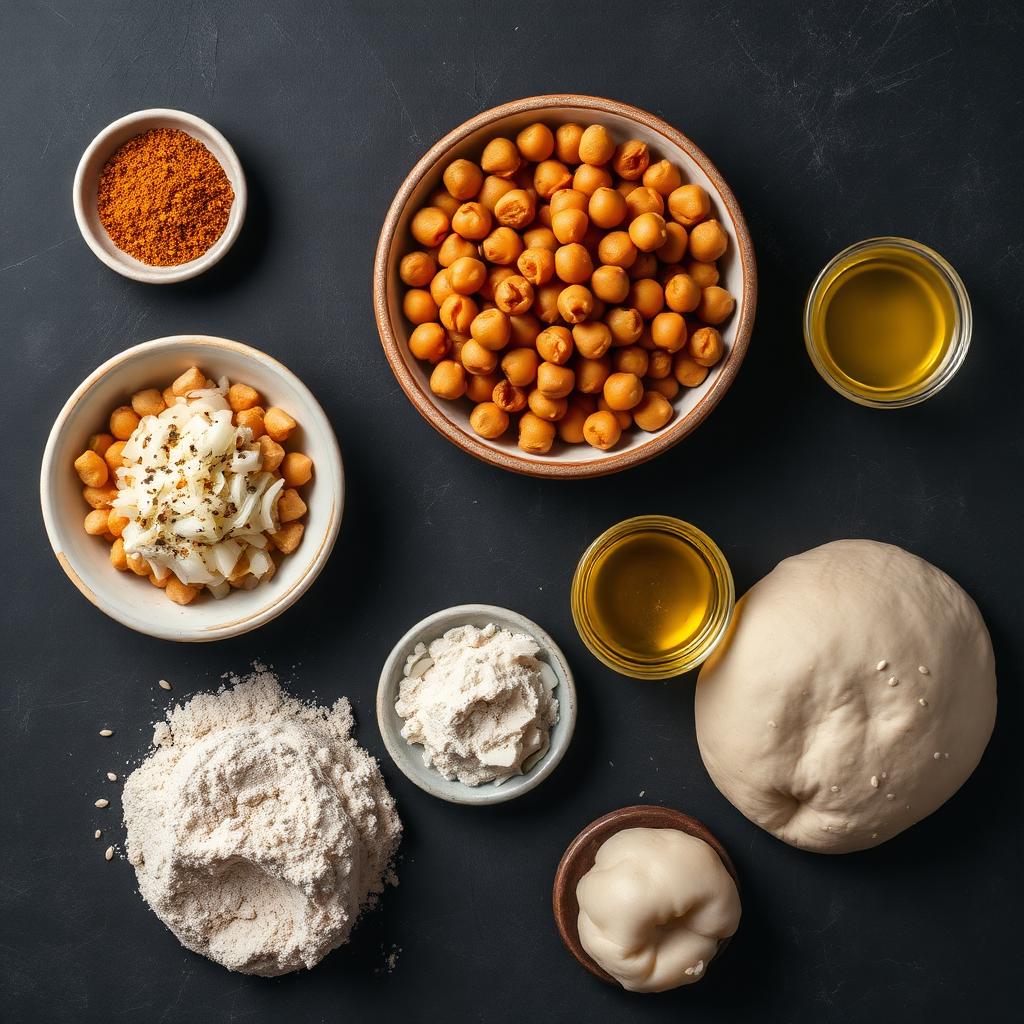
Sambusak has two parts to master: a soft, workable dough and a well-seasoned filling. Neither is difficult, but a few choices make a real difference. Here is what you need and why it matters.
For the Dough
- All-purpose flour: The base of a tender, short pastry that fries or bakes to a clean crisp.
- Neutral oil: Worked into the dough for richness and that signature short, crumbly bite.
- Warm water: Brings the dough together into a smooth, pliable ball.
- Salt and a pinch of sugar: Season the dough and help it brown evenly.
- Sesame seeds (optional): Pressed onto baked versions for a nutty crust.
For the Chickpea Filling
- Cooked chickpeas: The heart of the classic Iraqi Jewish version, coarsely mashed for texture.
- Onion: Sauteed until soft and golden for a sweet, savory base.
- Ground cumin: The defining spice; it gives sambusak its warm, unmistakable aroma.
- Turmeric, black pepper, and salt: Round out the seasoning and add color.
- Olive oil and fresh herbs: Bind the filling and add brightness.
Step-by-Step Insights
Sambusak comes together in three stages: make the dough, prepare the filling, then shape and cook. None of it is hard, but working in an unhurried rhythm — the way Iraqi grandmothers always did — gives the best results.
1. Make the Dough
Combine flour, salt, and a little sugar, then work in the oil until the mixture looks like coarse crumbs. Add warm water gradually and knead into a smooth, soft dough. Cover and let it rest at least 30 minutes; this relaxes the gluten so the dough rolls out easily without springing back.
2. Prepare the Chickpea Filling
Saute the onion in olive oil until soft and lightly golden. Add the drained chickpeas, cumin, turmeric, salt, and pepper, and cook a few minutes to bloom the spices. Mash the mixture coarsely — you want texture, not a smooth paste — and stir in fresh herbs. Let it cool before filling, or it will make the dough soggy.
3. Shape the Pastries
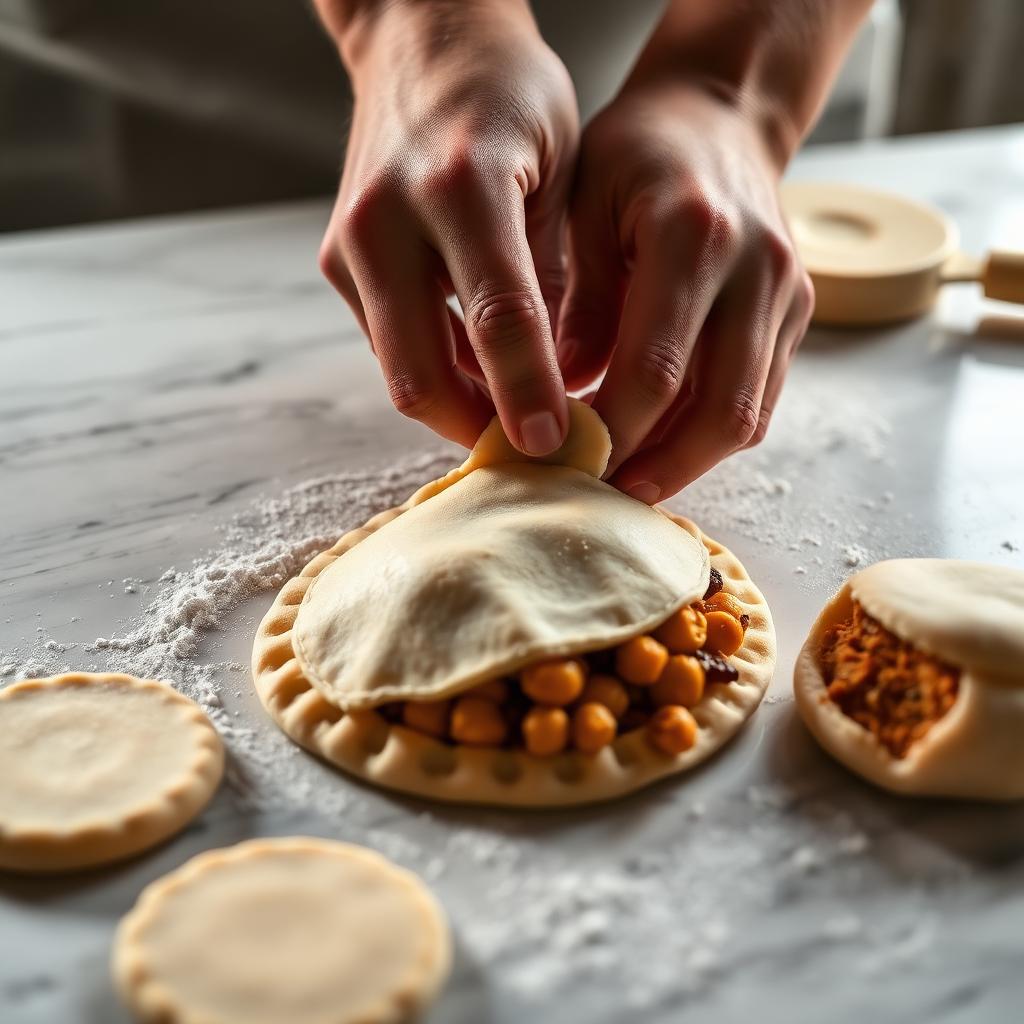
Roll the dough thin and cut out rounds about the size of your palm. Place a spoonful of filling slightly off-center on each round, fold the dough over into a half-moon, and press the edges firmly. Seal with a fork or twist a decorative rope crimp along the curved edge to lock the filling in.
4. Fry or Bake
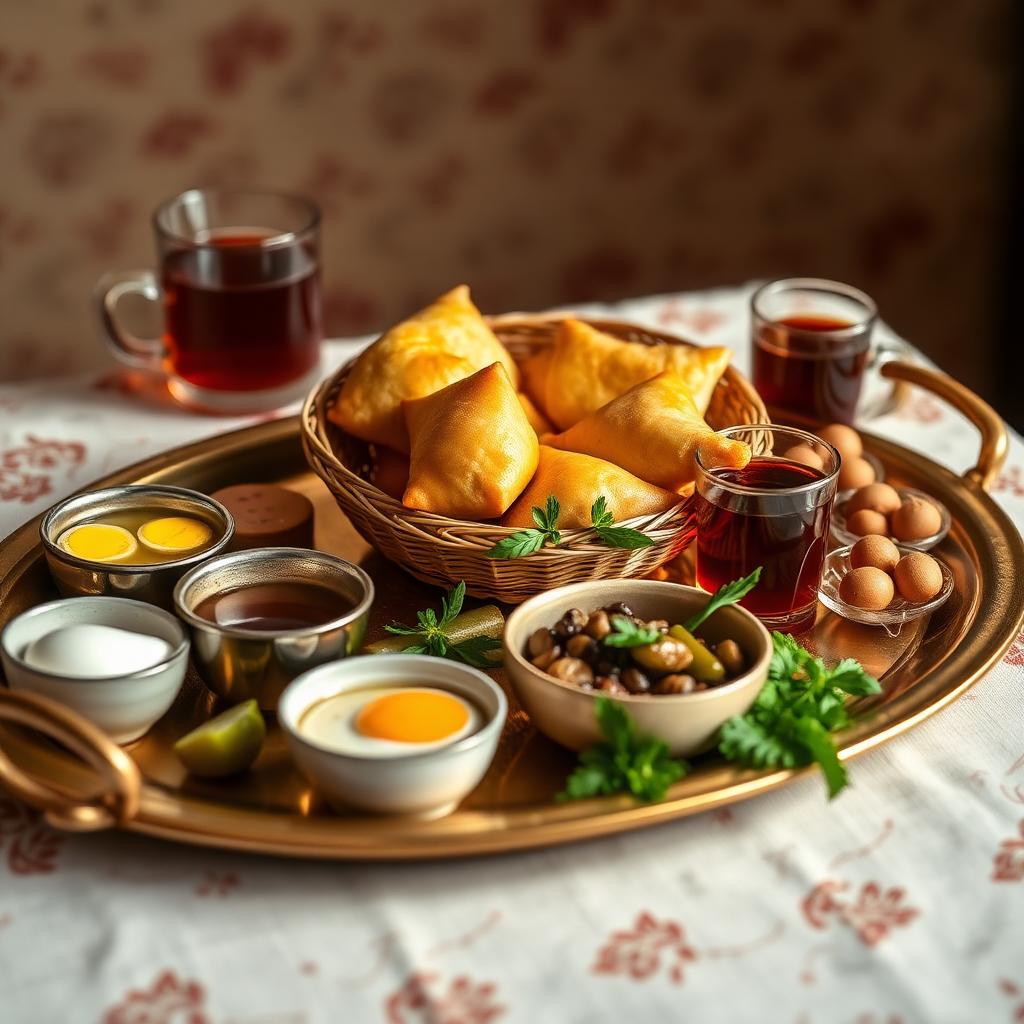
For the traditional finish, fry in a few inches of hot oil until deep golden, turning once, then drain on paper towels. To bake, brush with egg, sprinkle with sesame seeds, and bake in a hot oven until crisp and browned. Serve warm, ideally with a squeeze of lemon or a bowl of amba on the side.
Expert Tips
- Let the filling cool completely before shaping; warm filling steams the dough and causes tears and leaks.
- Do not overfill. A modest spoonful seals cleanly, while too much filling splits the pastry as it cooks.
- Press the edges firmly and check for gaps; a well-sealed sambusak will not open in the oil.
- Keep frying oil at a steady medium-high; too cool and the pastry absorbs grease, too hot and it browns before the dough cooks.
- Sambusak freezes well unbaked. Freeze on a tray, then bag, and fry or bake straight from frozen.
Common Mistakes to Avoid
- Rolling the dough too thick, which leaves the pastry doughy and heavy instead of crisp.
- Skipping the dough rest, so it shrinks back and tears when you fill it.
- Under-seasoning the chickpeas; the filling needs enough cumin and salt to carry the whole bite.
- Sealing carelessly, which lets filling escape and oil seep in during frying.
- Serving them cold and stale — sambusak is at its best warm and fresh from the pan or oven.
Master those few details and sambusak becomes one of the most rewarding things you can make ahead for a crowd. It is generous, portable, and built for sharing — the very qualities that carried it out of Baghdad and onto Jewish tables around the world.
Key Takeaways
- Sambusak is a half-moon pastry filled with spiced chickpeas, a signature dish of Iraqi and Syrian Jews.
- Cumin defines the classic chickpea filling; cheese and meat versions are also traditional.
- The oil-based dough should be soft and rested so it rolls thin and fries or bakes crisp.
- Chickpea and cheese fillings are pareve or dairy, making sambusak perfect for the Shabbat table.
- The pastries freeze beautifully unbaked, so you can prepare big batches ahead of a holiday.
Frequently Asked Questions
What is sambusak made of?
Sambusak is made from a soft, oil-based dough folded around a savory filling. The classic Iraqi Jewish version is stuffed with mashed chickpeas seasoned with cumin and sauteed onion, though cheese and ground meat fillings are also traditional.
Is sambusak fried or baked?
Both methods are traditional. Frying gives the crispest, most golden shell, while baking with an egg wash and sesame seeds is a lighter option. Either way, serve them warm for the best texture.
Can I make sambusak ahead of time?
Yes. Sambusak freezes very well unbaked. Shape the pastries, freeze them on a tray until firm, then transfer to a bag. Fry or bake straight from frozen, adding a couple of extra minutes of cooking time.
Is sambusak kosher and pareve?
The chickpea filling is naturally pareve, and the cheese version is dairy, so both fit easily into a kosher meal. Use a meat filling only when serving with other meat dishes, keeping utensils and preparation separate.
Why does my sambusak filling leak out during cooking?
Leaks usually come from overfilling, weak seals, or warm filling that steams the dough. Use a modest amount of cooled filling, press the edges firmly, and crimp with a fork or rope fold to lock everything inside.
Loved this recipe?
Share it with your family, leave a comment, and explore more traditional and modern Jewish dishes on JewishCuisine.
Explore more Traditional recipes