Schmaltz and Gribenes: The Ashkenazi Gold Making a Delicious Comeback
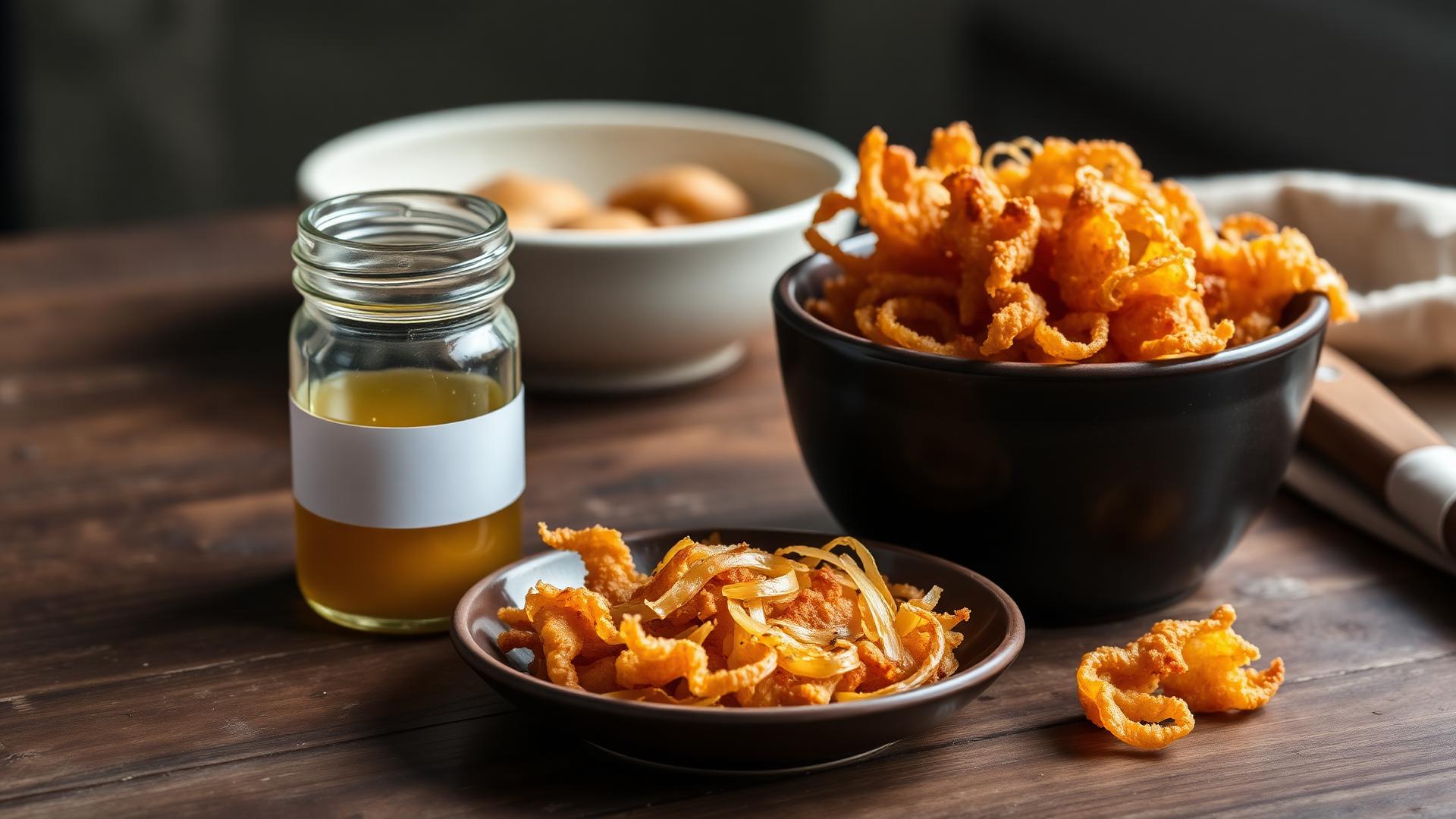
There is a smell that lives in the memory of almost anyone who grew up in an Ashkenazi kitchen: onions and chicken skin, slowly turning golden in a heavy pan, filling the whole house with something warm and savory and impossible to ignore. That smell is schmaltz in the making — and the crunchy little treasures left behind when it is done are gribenes. For generations these two by-products of the humble chicken were the backbone of Jewish home cooking. Today, after decades in the shadow of butter and olive oil, they are quietly returning to serious kitchens.
Schmaltz is rendered poultry fat, usually chicken or goose. Gribenes (also spelled grieven or greaves) are the crackling bits of skin and onion that crisp up during the rendering process. Together they represent one of the oldest lessons in Jewish cooking: waste nothing, and turn what you have into something delicious. This guide walks through their history, why they are trending again, exactly how to make both at home, and the mistakes that trip up first-timers.
Table of Contents
- Historical and Cultural Context
- Why Schmaltz and Gribenes Are Trending Again
- Ingredients and Key Concepts
- Step-by-Step: How to Render Schmaltz and Make Gribenes
- Expert Tips
- Common Mistakes to Avoid
- How to Use Schmaltz and Gribenes
- Frequently Asked Questions
- Key Takeaways
Historical and Cultural Context
To understand schmaltz, you have to understand the world it came from. For Jews in Central and Eastern Europe, butter and lard were off the table for daily cooking. The laws of kashrut forbid mixing meat and dairy, which ruled out butter alongside a chicken dinner, and pork fat was never an option. Olive oil, so central to Mediterranean and Sephardic kitchens, was expensive and hard to come by in the cold north. What was available, again and again, was chicken.
So Ashkenazi cooks did what resourceful cooks everywhere do: they used every part of the bird. The fat under the skin and around the cavity was carefully saved, rendered down, and stored to cook with all week. The skin and stray bits, fried until crisp, became a snack and a garnish. Schmaltz seasoned potatoes, enriched matzo balls, fried onions, and got spread on bread when there was little else. It was, quite literally, the flavor of Jewish home cooking for centuries.
In the shtetl kitchen, schmaltz was not a luxury or a trend — it was survival, thrift, and comfort rendered into one golden jar.
The word itself, schmaltz, comes from the German and Yiddish for melted fat. Over time it took on a second, affectionate meaning in English: something overly sentimental, or laid on thick. That double life tells you how deeply the food was woven into Jewish culture. Gribenes, meanwhile, were the cook's reward — the crunchy scraps you nibbled at the stove, or the topping that made a bowl of mashed potatoes or chopped liver feel like a feast.
Why Schmaltz and Gribenes Are Trending Again
For much of the late twentieth century, schmaltz fell out of favor. The low-fat era treated animal fat as the enemy, and a generation of home cooks reached for vegetable oil and margarine instead. But food moves in cycles, and several currents have pushed schmaltz and gribenes back into the spotlight.
The first is the nose-to-tail movement. Chefs and home cooks alike have embraced whole-animal cooking and the idea that using every part of an ingredient is both ethical and delicious. Schmaltz, the original zero-waste fat, fits that ethos perfectly. The second is a broader reappraisal of traditional fats. As ultra-processed seed oils and trans-fat-laden margarines have come under scrutiny, naturally rendered animal fats have looked a lot more appealing by comparison.
There is also a wave of interest in ancestral and heritage cooking. A younger generation of Jewish cooks is reclaiming grandmother recipes and Old World techniques, often documenting them online. Schmaltz has become a symbol of that revival: a link to the shtetl kitchen that anyone can recreate with a bag of chicken skin. Add the simple fact that fat carries flavor, and it is no surprise that jars of homemade schmaltz are showing up in home refrigerators again.
Ingredients and Key Concepts
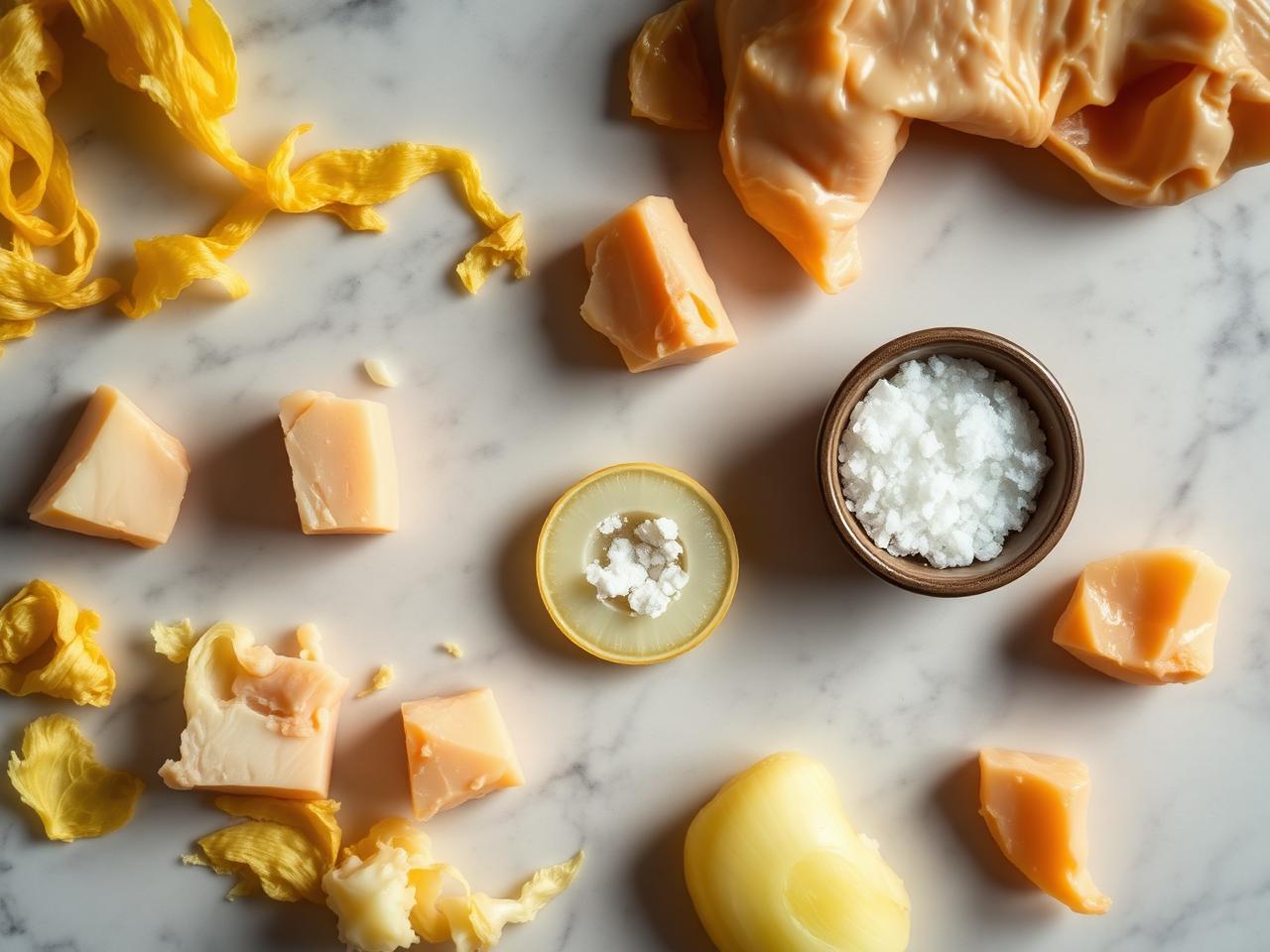
The beauty of schmaltz is how little it requires. You do not buy schmaltz-making ingredients so much as save them. Here is everything you need for a modest batch that yields roughly a cup of schmaltz plus a generous handful of gribenes.
- About 1 pound (450 g) of chicken skin and fat, trimmed from raw chicken or saved over time in the freezer
- 1 medium yellow onion, peeled and thinly sliced
- 2 to 3 tablespoons water, to start the rendering gently
- A pinch of kosher salt, to taste
That is the entire list. The onion is not strictly required for the fat itself, but it is essential for good gribenes and it perfumes the schmaltz with a deep, savory sweetness. Many cooks consider onion-scented schmaltz the only kind worth making.
Where to Get the Fat
The easiest source is your own cooking. Every time you break down a whole chicken or trim skin from thighs and breasts, tuck the scraps into a zip-top bag in the freezer. Once you have accumulated a pound or so, you are ready to render. You can also ask a kosher butcher or a good poultry counter for chicken skin and fat directly — they often sell it cheaply or set it aside on request.
Step-by-Step: How to Render Schmaltz and Make Gribenes
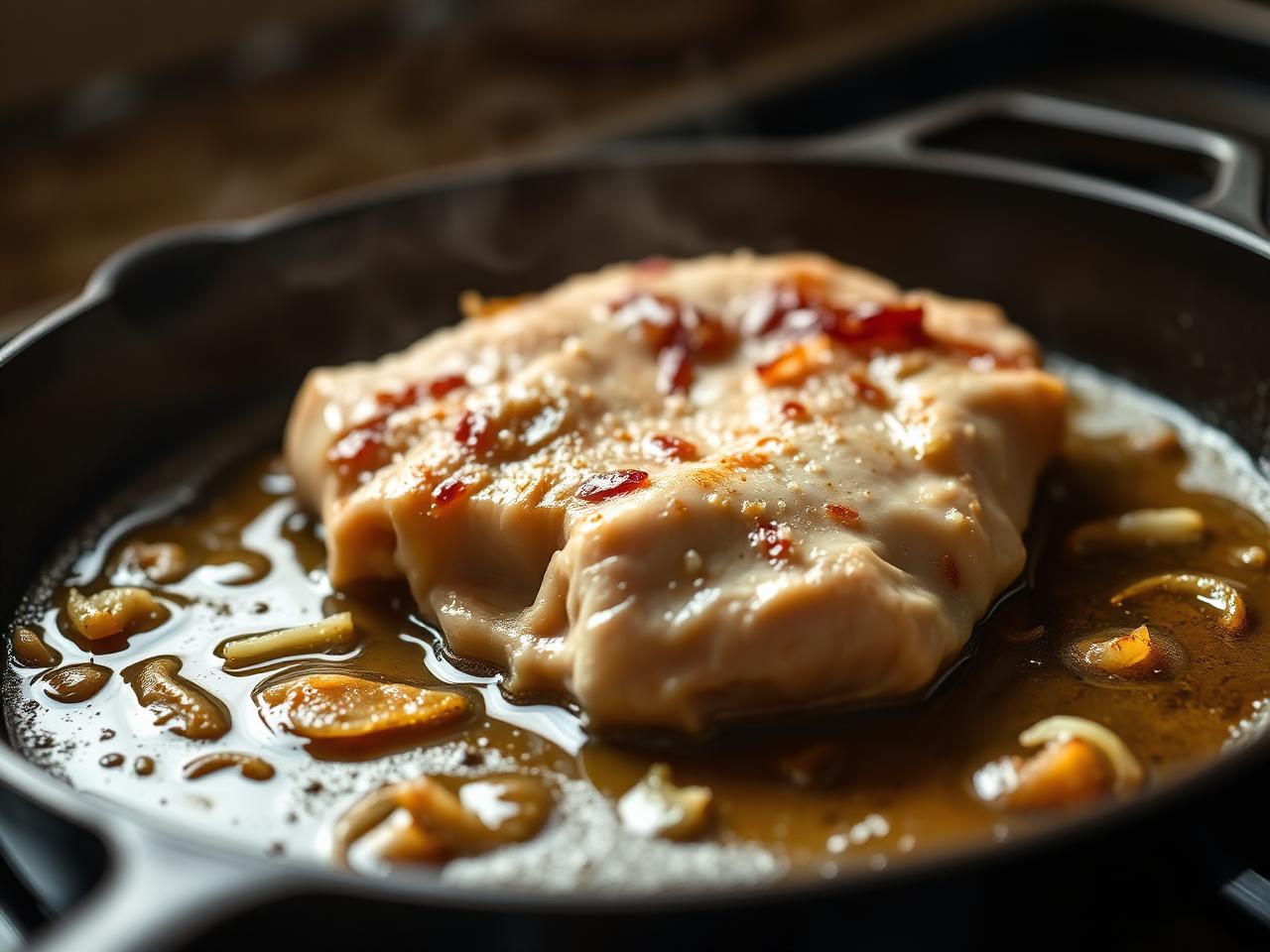
Rendering schmaltz is more about patience than skill. There is no dough to knead and no timing to fret over — you simply coax the fat out of the skin over low heat and let the onions do their magic. Give it your attention toward the end, when the difference between golden gribenes and burnt ones is only a few minutes.
Step 1: Prep the Skin and Fat
- If your chicken skin and fat are frozen, thaw them completely and pat dry.
- Chop everything into small, roughly half-inch pieces. Smaller pieces render faster and crisp more evenly.
- Slice the onion thin so it cooks down at about the same pace as the skin crisps.
Step 2: Start Low with a Splash of Water
- Add the chopped skin and fat to a heavy skillet or saucepan along with the water.
- Set the heat to low. The water keeps the temperature gentle at the start so the fat melts out slowly instead of scorching.
- Let it cook undisturbed for the first several minutes as the water evaporates and the fat begins to pool.
Step 3: Render Slowly
- Once the water has cooked off, the skin will begin to sizzle in its own fat. Keep the heat low to medium-low.
- Stir occasionally so nothing sticks. Over 20 to 40 minutes the fat will turn clear and golden and the skin will start to shrink and color.
- Resist the urge to rush it with high heat, which burns the fat and gives it a bitter taste.
Step 4: Add the Onion
- When the skin is partway crisp, stir in the sliced onion.
- Cook together until the onion is deep golden brown and the skin bits are crackly and crisp, another 10 to 20 minutes.
- Watch closely at the end — onions go from golden to burnt quickly, and burnt onion ruins the whole batch.
Step 5: Strain and Store
- Set a fine strainer over a heatproof jar and pour the contents through it.
- The golden liquid that collects is your schmaltz. The crispy solids left in the strainer are your gribenes.
- Sprinkle the gribenes with a little salt while warm. Let the schmaltz cool, then cover and refrigerate.
Expert Tips
- Save fat over time. Keep a dedicated freezer bag for skin and trimmings so you always have material for the next batch.
- Keep the heat low. Low and slow yields clear, sweet-tasting schmaltz; high heat yields dark, bitter fat and burnt gribenes.
- Salt the gribenes right out of the pan, while they are hot and can grab the seasoning.
- Do not toss the onion. Onion-scented schmaltz is far more flavorful than plain, and the fried onion becomes part of the gribenes.
- Store smart. Schmaltz keeps for several weeks in the fridge and months in the freezer; portion it into small containers so you can grab just what you need.
Common Mistakes to Avoid
- Cranking the heat to speed things up, which scorches the fat and leaves a bitter, acrid taste.
- Adding the onion too early, so it burns long before the skin finishes crisping.
- Skipping the initial splash of water, which makes early scorching much more likely.
- Walking away during the final minutes, when gribenes and onion can go from perfect to burnt in a flash.
- Storing warm schmaltz in a sealed container, which traps condensation and shortens its shelf life; always cool it first.
How to Use Schmaltz and Gribenes
Once you have a jar of schmaltz and a bowl of gribenes, the fun begins. Use schmaltz anywhere you would use butter or oil in savory cooking: fry potatoes or latkes in it, stir a spoonful into matzo ball batter, sauté vegetables, or start a pot of soup with it. It brings a rounded, savory depth that oil simply cannot match.
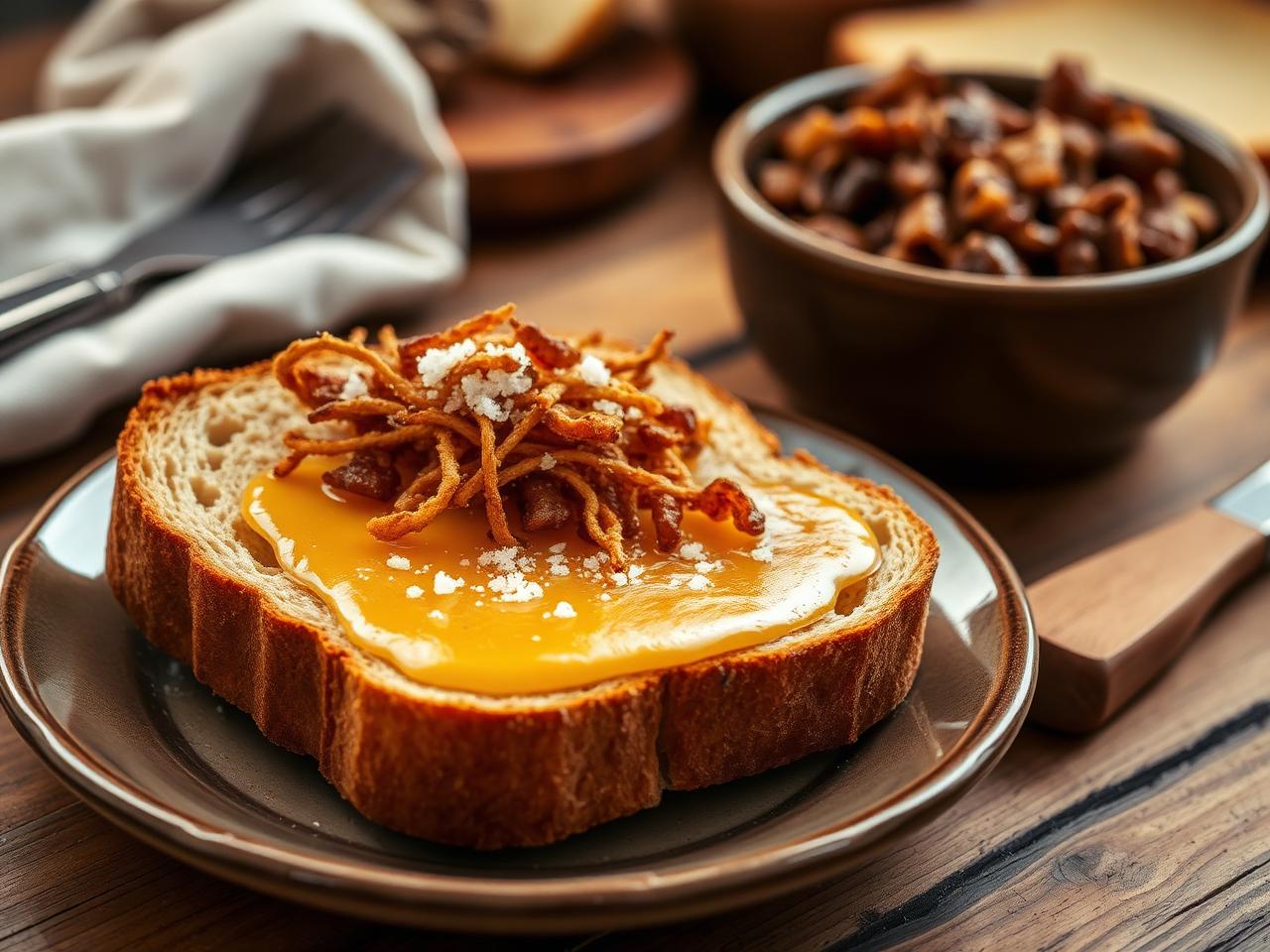
Gribenes are more of a finishing flourish. Fold them into chopped liver, scatter them over mashed potatoes or kugel, top a bowl of soup, or simply pile them on a slice of good rye bread smeared with schmaltz and finished with flaky salt. They are also excellent stirred into egg dishes or sprinkled over roasted vegetables for a crunchy, savory hit. However you use them, a little goes a long way.
If you enjoy this kind of old-world cooking, schmaltz pairs naturally with the classics of the Ashkenazi table. It is the traditional fat for tender matzo balls, the secret to a rich pot of cholent, and a natural partner for crispy potato latkes and a savory potato kugel. Making your own schmaltz is a small step that quietly upgrades all of them.
Conclusion
Schmaltz and gribenes are proof that the most humble ingredients often carry the deepest flavor and the richest history. Born of thrift and necessity, they became the soul of Ashkenazi cooking, and their comeback is a fitting tribute to the resourceful kitchens that invented them. All it takes is a pound of chicken skin, an onion, and a little patience to bring that golden tradition back to life on your own stove. Render a batch, spread some on warm rye, and taste why generations refused to let this one go.
Key Takeaways
- Schmaltz is rendered chicken (or goose) fat; gribenes are the crispy skin-and-onion cracklings left behind.
- Both were staples of Ashkenazi cooking, born of kashrut and thrift when butter and lard were unavailable.
- They are trending again thanks to nose-to-tail cooking, a rethink of traditional fats, and heritage-recipe revival.
- The method is simple: render chopped chicken skin low and slow, add onion near the end, then strain.
- Use schmaltz like butter in savory dishes and gribenes as a crunchy garnish — a little goes a long way.
Frequently Asked Questions
What is the difference between schmaltz and gribenes?
Schmaltz is the rendered liquid fat you collect when you melt down chicken skin and fat. Gribenes are the crispy solid bits of skin and fried onion that are left behind after the fat has rendered out. You make both in the same pan at the same time.
Can I make schmaltz without the onion?
Yes, you can render plain schmaltz using only chicken skin and fat. However, the onion adds a deep, savory-sweet flavor that most cooks prefer, and it is what turns the leftover skin into proper gribenes. Adding it is highly recommended.
How long does homemade schmaltz last?
Stored in a sealed container in the refrigerator, schmaltz keeps for several weeks. For longer storage, freeze it for several months. Always let it cool fully before sealing to avoid trapping condensation, and use clean utensils to keep it fresh.
Is schmaltz healthy?
Schmaltz is a rich source of saturated fat, so it is best used in moderation as a flavor enhancer rather than an everyday cooking base. Compared with heavily processed margarines, many people prefer it as a natural, traditional fat, but portion size matters.
Is schmaltz kosher and pareve?
Schmaltz made from kosher chicken or goose fat is kosher, but it is a meat product, not pareve. That means it cannot be used with or alongside dairy in the same meal under the laws of kashrut, and it should be handled with meat dishes and utensils.
Loved this recipe?
Share it with your family, leave a comment, and explore more traditional and modern Jewish dishes on JewishCuisine.
Explore more Traditional recipes