Homemade Lox: The Classic Jewish Deli Cured Salmon You Can Make at Home
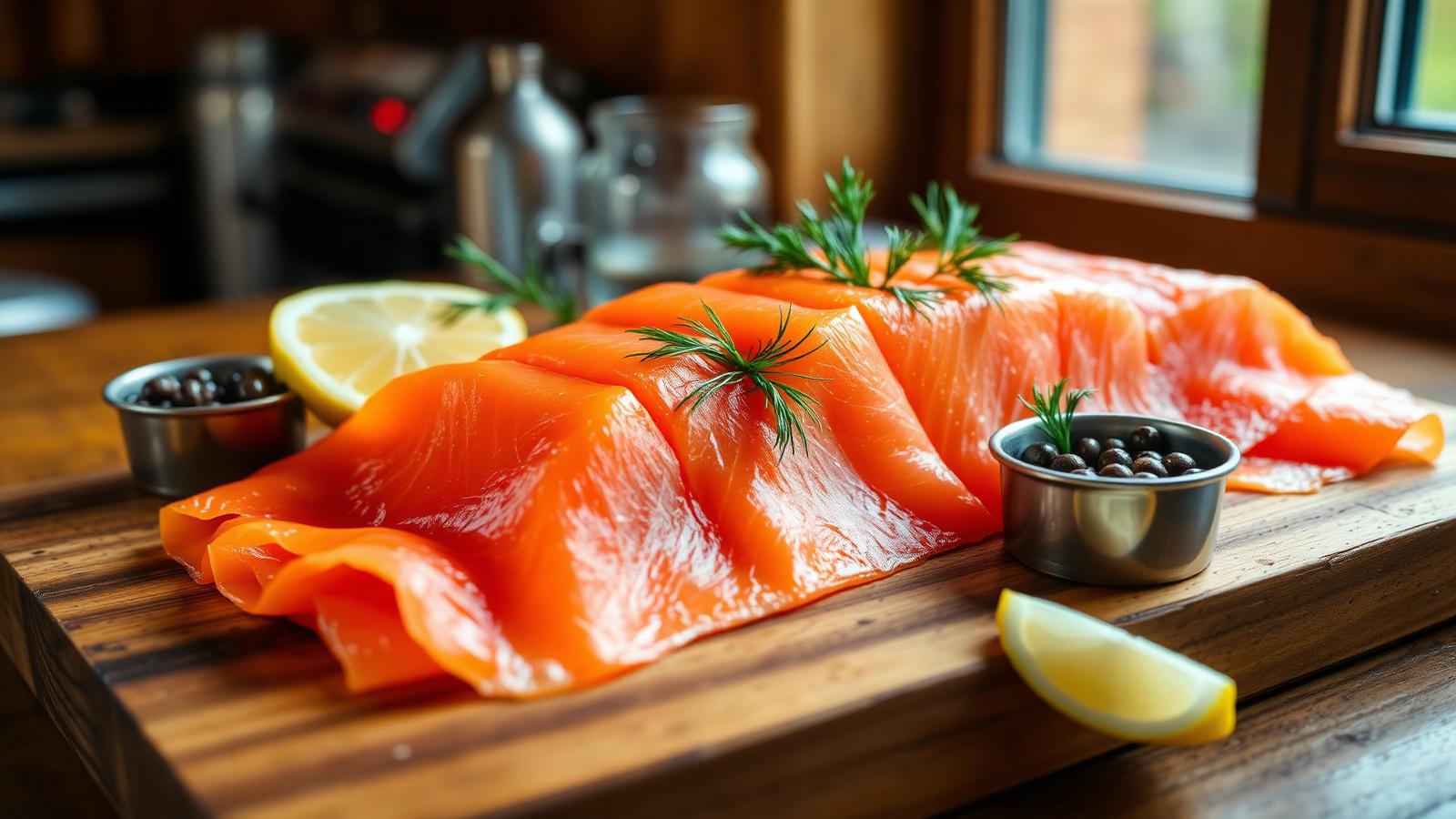
There is a specific kind of quiet luxury that arrives with a plate of lox. Translucent coral ribbons, a whisper of salt, the perfume of fresh dill, and the satisfying chew of just-toasted bagel underneath. For generations of Jewish families in New York, Chicago, and beyond, this was Sunday morning. Now, more and more home cooks are discovering that the appetizing counter's most iconic offering is something you can make yourself, in your own refrigerator, with almost nothing but salt and time.
Homemade lox is one of the most rewarding projects in Jewish cooking. It is simple, cheaper than the deli case, and produces a result that tastes cleaner and more delicate than most anything you can buy shrink-wrapped. This guide will walk you through the history, the science, the technique, and the little details that separate an average cure from a truly great one.
Table of Contents
- A Short History of Lox in Jewish Life
- Why Home-Cured Lox Is Trending Again
- Lox vs. Gravlax vs. Nova: What's the Difference?
- Ingredients You'll Need
- Step-by-Step: How to Cure Lox at Home
- Expert Tips for Perfect Lox
- Common Mistakes to Avoid
- How to Serve Lox the Right Way
- Frequently Asked Questions
- Key Takeaways
- Conclusion
A Short History of Lox in Jewish Life
The word lox comes from the Yiddish laks, itself borrowed from the German lachs, meaning salmon. Long before refrigeration, Jewish communities across Northern and Eastern Europe preserved fatty fish in heavy brines so it could survive long winters and even longer journeys. When waves of Ashkenazi immigrants arrived in the United States in the late 19th and early 20th centuries, they brought that tradition with them and adapted it to what the new world had to offer.
The great meeting of lox and the bagel happened in New York's Lower East Side, where dairy-focused "appetizing" stores like Russ & Daughters, Barney Greengrass, and Zabar's turned smoked and cured fish into an art form. Because Jewish dietary laws separate meat and dairy, appetizing shops filled the gap for a proper dairy breakfast: cured fish, cream cheese, whitefish salad, herring, and bagels. Lox on a bagel with a schmear became so iconic that today it is often mistaken as an American invention rather than a distinctly Jewish one.
Why Home-Cured Lox Is Trending Again
Search interest in "how to cure salmon at home" has climbed sharply in the past year, and it is not hard to see why. The price of quality smoked salmon has jumped, home fermentation and curing projects have gone mainstream, and a new generation of Jewish home cooks is reconnecting with the deli and appetizing traditions their grandparents grew up on.
There is also something quietly satisfying about a two-ingredient cure that produces something so refined. You are not simmering, whisking, or fussing. You are just letting salt and time do what they have always done. For anyone who loved making sourdough during pandemic years, homemade lox is the natural next step — low effort, high drama, and endlessly impressive on a brunch board.
Lox vs. Gravlax vs. Nova: What's the Difference?
These three often get confused, and clearing that up will help you understand exactly what you are making at home.
- Traditional lox is salt-cured salmon belly, unsmoked, and quite salty. This is the original Jewish deli style, sometimes called "belly lox."
- Nova (short for Nova Scotia salmon) is cold-smoked after a lighter cure. It is milder, silkier, and what most people picture today when they hear "lox on a bagel."
- Gravlax is the Scandinavian cousin, cured with salt, sugar, and dill, and often finished with a splash of aquavit or vodka. It is not smoked.
Ingredients You'll Need
Serves 10 to 12 as an appetizer. Cure time is 2 to 3 days.
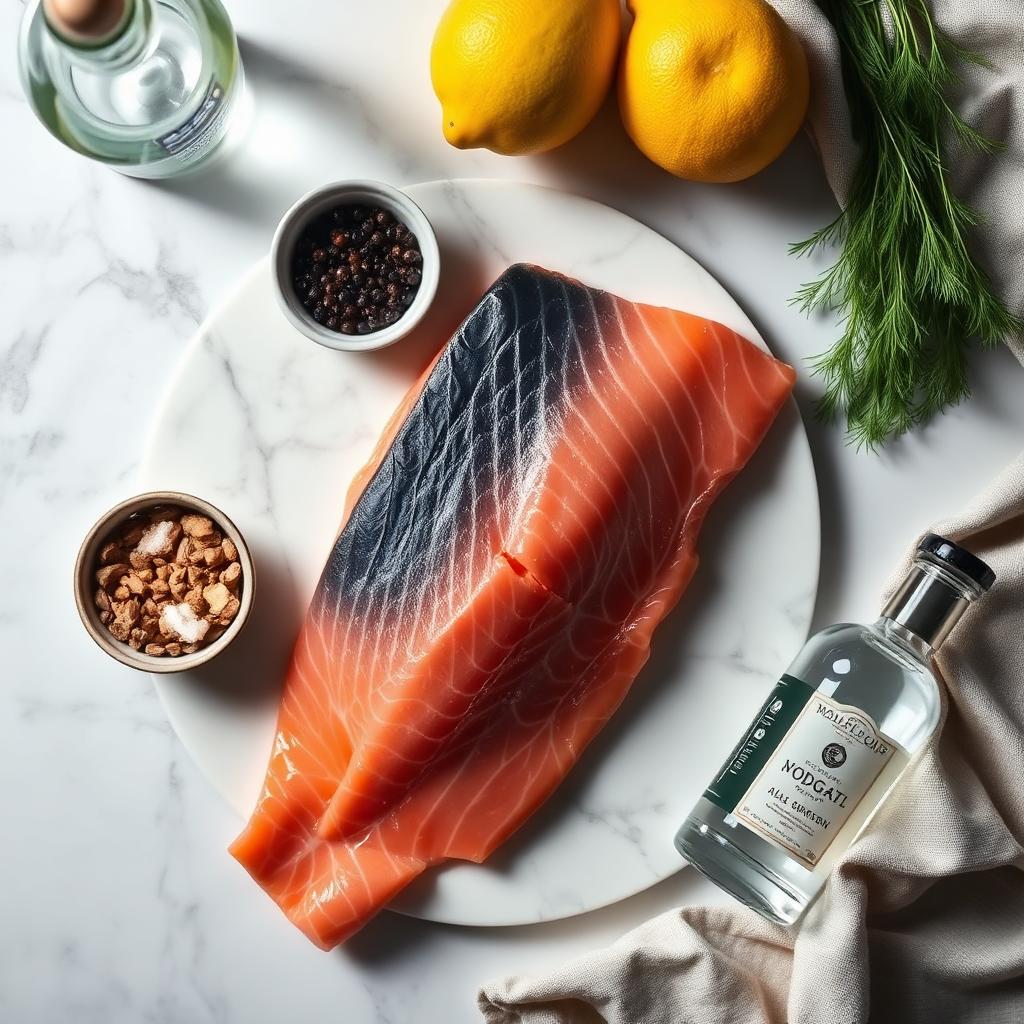
- 1 side of fresh salmon, skin on, about 2 to 2.5 pounds (pin bones removed)
- 1 cup coarse kosher salt (not fine table salt)
- 1 cup granulated sugar (or a mix of white and brown)
- 1 large bunch fresh dill, roughly chopped, stems and all
- 2 tablespoons cracked black peppercorns
- Zest of 1 lemon
- 2 tablespoons vodka, gin, or aquavit (optional but recommended)
A Note on Salmon Quality
Because the salmon is never cooked, quality matters. Buy the freshest fish you can find from a trusted source. Ask specifically for previously frozen sushi-grade or sashimi-grade salmon; commercial freezing kills parasites that a home freezer cannot always reliably eliminate. Wild sockeye gives a firmer, leaner lox with deep red color, while farmed Atlantic salmon produces a softer, richer, more traditionally "buttery" bite.
Step-by-Step: How to Cure Lox at Home
Step 1: Prep the Fish
- Pat the salmon completely dry with paper towels.
- Run your fingers along the flesh side and pull any remaining pin bones out with clean tweezers or needle-nose pliers.
- Trim off any thin belly flap that is much thinner than the rest of the fillet; those parts over-cure and turn mushy.
Step 2: Mix the Cure
- In a bowl, combine the salt, sugar, cracked pepper, and lemon zest.
- Stir until evenly mixed. This is your cure.
- The classic ratio is equal parts salt and sugar by volume — enough salt to preserve, enough sugar to soften the bite.
Step 3: Pack and Wrap
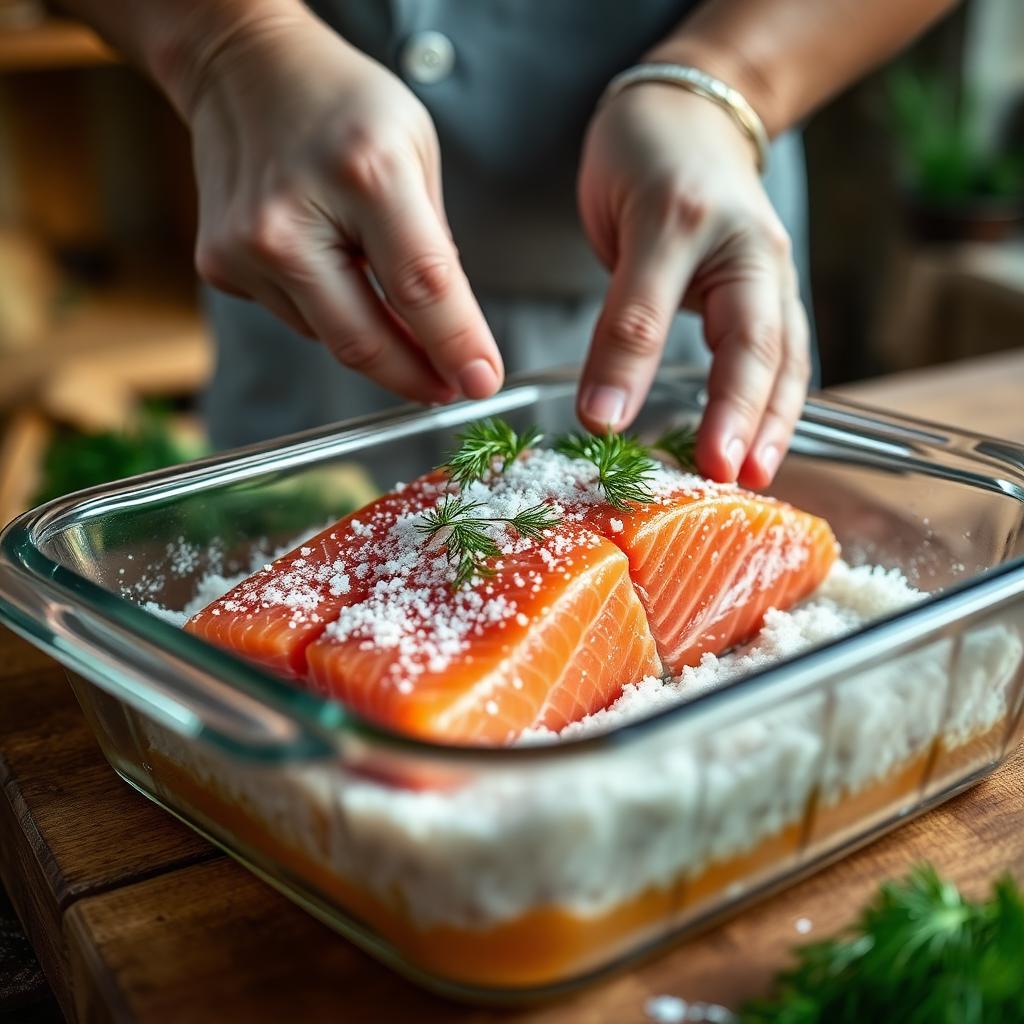
- Line a glass baking dish with two large sheets of plastic wrap, leaving plenty of overhang.
- Sprinkle a thin layer of cure on the plastic where the fish will sit.
- Lay the salmon skin-side down on top.
- If using, brush the flesh with vodka or gin — this helps the cure adhere and adds a subtle clean botanical note.
- Pack the rest of the cure firmly over the top and sides of the fish so no flesh is exposed.
- Blanket the fish generously with chopped dill.
- Wrap the plastic tightly around the salmon, then wrap the whole thing again with a second layer.
Step 4: Weight and Wait
- Place the wrapped fish back in the baking dish (there will be liquid, so a rimmed dish is essential).
- Set another dish on top and weight it with a couple of cans, a wrapped brick, or a heavy skillet.
- Refrigerate for 48 to 72 hours, flipping the wrapped fish once every 12 hours or so.
- Thicker cuts (over 1 inch at the thickest point) need the full 72 hours; thinner cuts finish closer to 36 to 48.
The cure is doing two things at once: pulling moisture out and letting salt, sugar, and aromatics migrate in. Time, not heat, is what transforms it.
Step 5: Rinse, Dry, and Slice
- Unwrap the salmon and rinse it briefly but thoroughly under cold water to remove excess cure.
- Pat it very dry with paper towels — this is important for clean slices.
- Optional but excellent: rewrap loosely and let it sit uncovered in the fridge for another 12 hours. This dry-refrigerator rest firms the surface and deepens the flavor.
- Using a long, thin, sharp knife, slice the salmon on a very shallow angle, almost parallel to the board, working from the tail toward the head. Aim for translucent, paper-thin sheets.
- Slice only as much as you plan to serve; the rest stays fresher unsliced.
Expert Tips for Perfect Lox
- Use coarse kosher or sea salt only. Fine table salt is too dense and will over-salt the fish quickly.
- Weight matters. Even light pressure helps compact the flesh and gives lox its signature silky texture.
- Always cure skin-on. The skin protects the underside from over-curing and makes slicing dramatically easier.
- For a smokier note without a smoker, add 1 teaspoon of smoked paprika or a few drops of natural liquid smoke to the cure.
- A long, flexible slicing knife (or a very sharp chef's knife) is worth the investment; it is the difference between deli-thin and thick, chewy slabs.
Common Mistakes to Avoid
- Using low-quality or old salmon. If it doesn't smell clean and oceanic before curing, do not cure it.
- Skimping on cure. The fish must be completely blanketed, not just dusted; exposed flesh spoils rather than cures.
- Forgetting to weight the fish. Without pressure, the texture stays loose and watery.
- Slicing too thick. Thin, translucent slices are what make lox feel luxurious; thick chunks feel raw.
- Cutting through the skin. Slice above it so the skin acts as a natural cutting board.
How to Serve Lox the Right Way
The classic Jewish deli plate is nearly non-negotiable: a fresh bagel (an everything, if you know what's good for you), a thick schmear of full-fat cream cheese, a few generous ribbons of lox, thinly sliced red onion, a slice of tomato, capers, and a sprig of dill. A wedge of lemon on the side and, ideally, a strong cup of coffee.

That said, homemade lox goes far beyond the bagel. Try it draped over softly scrambled eggs, folded into an omelet with chives, layered on cucumber rounds for a light hors d'oeuvre, or scattered over a grain bowl with avocado, radish, and lemon. It also makes a stunning centerpiece for a Shabbat brunch board with cream cheese, pickled onions, olives, sliced tomato, and toasted challah.
Storage and Food Safety
- Wrap cured, un-sliced lox tightly in parchment then plastic and store in the coldest part of your fridge for up to 7 days.
- Once sliced, plan to eat within 3 to 4 days for best flavor and texture.
- You can also portion and vacuum-seal cured lox, then freeze for up to 2 months. Thaw slowly in the fridge overnight.
- If the fish ever smells sour, ammonia-like, or off, discard it. Properly cured lox should smell clean, briny, and faintly sweet.
Frequently Asked Questions
See the FAQ section below for quick answers to the most common questions about curing lox at home.
Once you make lox once, you will understand why generations of Jewish families made it a weekly ritual. It is patient food — the kind that asks for nothing but time and rewards you with something quietly spectacular. Set your fish in the fridge on a Friday and by Sunday brunch, you will have a centerpiece worthy of the best appetizing counter in the city.
Key Takeaways
- Lox is salt-cured salmon rooted in Ashkenazi Jewish preservation traditions and made famous by New York's appetizing stores.
- This home recipe uses equal parts salt and sugar plus dill, pepper, and lemon zest to produce a silky, Nova-style cured salmon without any smoker.
- Use the freshest, previously frozen sushi-grade salmon you can find; quality of fish is the single biggest factor in the final result.
- Cure for 48 to 72 hours under light weight, flipping periodically, then rinse, dry, and slice paper-thin on a shallow angle.
- Serve on bagels with cream cheese, onion, and capers — or use as a centerpiece for a Jewish brunch board.
Frequently Asked Questions
Is homemade lox safe to eat since it isn't cooked?
Yes, when done properly. Salt curing dramatically lowers the water activity in the fish, making it inhospitable to most bacteria. For extra safety, always start with previously frozen sushi- or sashimi-grade salmon, since commercial freezing at very low temperatures kills parasites that a home freezer may not.
What is the difference between lox and smoked salmon?
Traditional lox is only salt-cured and not smoked, while smoked salmon (like Nova) is lightly cured and then cold-smoked. This home recipe is an unsmoked, salt-and-sugar cure that tastes very close to Nova-style smoked salmon without any smoking equipment.
How long does homemade lox last in the refrigerator?
Unsliced and tightly wrapped, homemade lox keeps in the coldest part of the fridge for up to 7 days. Once sliced, it is best eaten within 3 to 4 days. It also freezes well for up to 2 months when vacuum-sealed.
Do I have to add alcohol to the cure?
No. A splash of vodka, gin, or aquavit adds a clean botanical note and helps the cure adhere to the fish, but it is optional. You can leave it out entirely and still get excellent results.
Why is my homemade lox too salty?
The most common causes are using fine table salt instead of coarse kosher salt, curing for too long, or not rinsing thoroughly after the cure. Stick to kosher salt, rinse the finished lox well under cold water, pat dry, and rest it uncovered in the fridge to balance the flavor.
Loved this recipe?
Share it with your family, leave a comment, and explore more traditional and modern Jewish dishes on JewishCuisine.
Explore more Traditional recipes