Gefilte Fish: How a Humble Shabbat Classic Got Cool Again
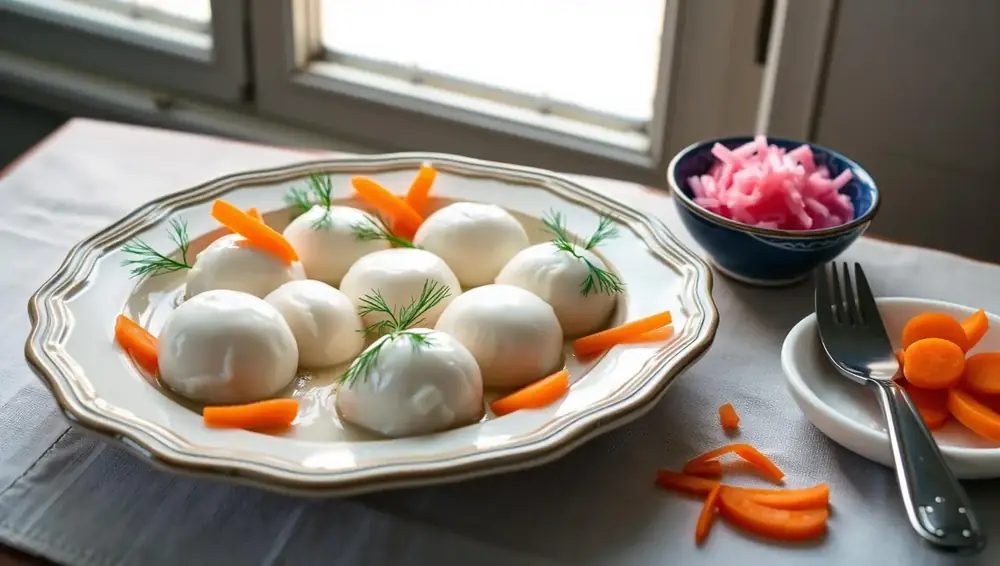
Few dishes inspire as much affection and as many jokes as gefilte fish. For generations of American Jews, it arrived at the Passover and Shabbat table as a pale oval lifted from a jar of cloudy jelly, slid onto a lettuce leaf, and crowned with a fierce stripe of horseradish. It was the food you teased grandma about — and then, quietly, asked for seconds of. But something has shifted. A new generation of cooks has rediscovered gefilte fish made the old way, from fresh fish, gently poached, and the results are genuinely delicious.
Strip away the jar and the jokes and what remains is a deeply clever dish: a light, savory fish dumpling, poached in a fragrant broth until tender, served cold with sweet poached carrots and a hit of horseradish. It's frugal, elegant, and rooted in centuries of Jewish ingenuity. This guide tells the real story of gefilte fish, explains why it's suddenly cool again, and walks you through making your own from scratch.
Whether you grew up with the stuff or have only ever heard it mocked, making gefilte fish by hand is a revelation. Here's everything you need — the history, the technique, the expert tips, and the mistakes to avoid.
Table of Contents
- What Is Gefilte Fish?
- A Short History of Gefilte Fish
- Why Gefilte Fish Is Trending Again
- What You'll Need: Ingredients
- Step-by-Step Instructions
- The Secret to Light, Tender Gefilte Fish
- How to Serve Gefilte Fish
- Expert Tips
- Common Mistakes to Avoid
- Make-Ahead and Storage
- Frequently Asked Questions
- Key Takeaways
- Conclusion
What Is Gefilte Fish?
Gefilte fish is a traditional Ashkenazi Jewish dish of ground freshwater fish — most often a blend of carp, whitefish, and pike — mixed with eggs, onion, matzo meal, and seasoning, then formed into ovals or patties and gently poached in a light fish broth. It is almost always served cold or at room temperature, sliced and garnished with a glazed slice of poached carrot, and accompanied by sharp prepared horseradish, known in Yiddish as chrein.
The name comes from the Yiddish and German word for 'stuffed,' a clue to the dish's original form: the seasoned fish mixture was once packed back into the skin of the fish before poaching. Over time, cooks dropped the labor-intensive stuffing step and simply shaped the mixture into individual dumplings — the form nearly everyone knows today.
A Short History of Gefilte Fish
Gefilte fish was born from a beautiful collision of religious law and resourcefulness. Jewish law prohibits 'borer' — separating, in this case picking bones from food — on the Sabbath. Grinding the fish and removing the bones in advance let observant families enjoy fish on Shabbat without breaking that rule. At the same time, fish was expensive, so stretching a small amount with eggs, onion, and matzo meal turned a costly ingredient into a dish that could feed a whole table.
The dish took root among the Jews of Central and Eastern Europe, where freshwater carp and pike were plentiful. A famous regional divide emerged: Polish Jews tended to sweeten their gefilte fish with sugar, while Lithuanian (Litvak) Jews kept theirs peppery and savory. That 'sweet versus savory' debate still sparks friendly arguments at Seder tables today. When Ashkenazi Jews immigrated to America, jarred commercial gefilte fish made the dish convenient — and, for many, became the only version they ever tasted.
Gefilte fish is what happens when religious devotion, thrift, and grandmotherly skill all land in the same pot — a humble dish carrying centuries of ingenuity.
Why Gefilte Fish Is Trending Again
After decades as the butt of holiday jokes, gefilte fish is enjoying an unlikely comeback — and several trends explain it. The first is the broad revival of heritage and 'grandmother' cooking. As home cooks reconnect with the foods of their ancestors, dishes once dismissed as old-fashioned are being made from scratch with fresh ingredients and real pride.
The second is a wave of artisanal and chef-driven gefilte fish. Boutique brands and restaurant kitchens have reimagined the dish with sustainable fish, lighter textures, and creative garnishes, proving the jarred version was never the ceiling. The third is the rise of nose-to-tail, low-waste cooking: gefilte fish, which traditionally used the whole fish and stretched it economically, fits perfectly into today's sustainability-minded kitchen. Add a generation curious about Ashkenazi food beyond bagels and brisket, and the comeback makes sense.
What You'll Need: Ingredients
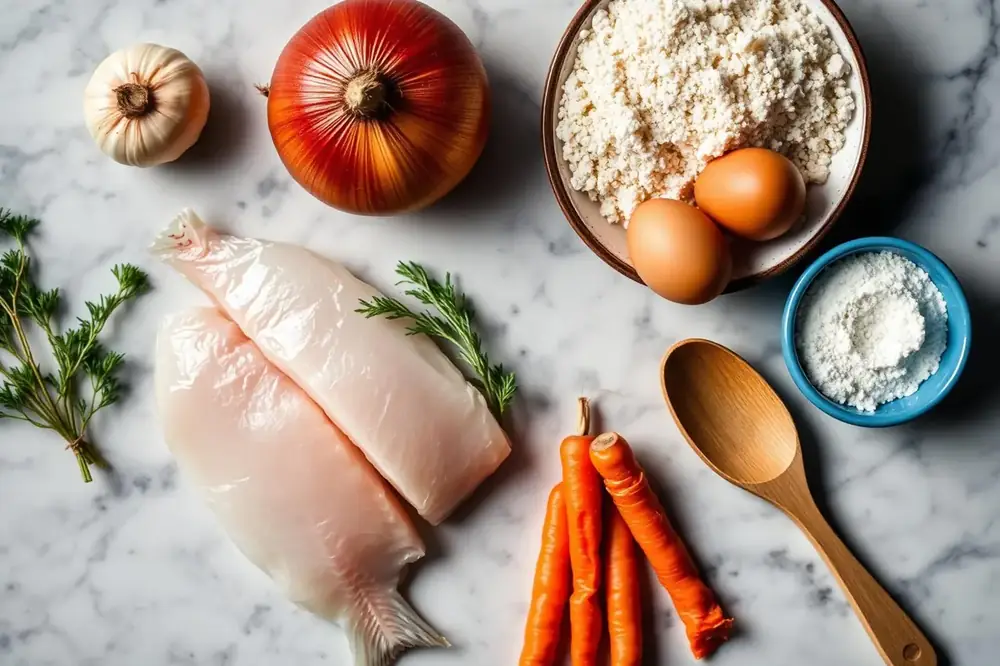
The classic blend is carp, whitefish, and pike, but a mix of any mild, firm freshwater or white fish works beautifully. Many fishmongers will grind a gefilte fish blend for you — just ask. This recipe makes about 12 pieces.
For the Fish Mixture
- 2 lbs (about 900g) ground fish blend (whitefish, pike, and carp, or any mild white fish)
- 2 large eggs
- 1 large onion, grated or finely minced
- 3 to 4 tbsp matzo meal (plus a little more if needed)
- 1 to 2 tsp salt, to taste
- ½ tsp white or black pepper
- 1 to 2 tsp sugar (Polish-style) — omit or reduce for Litvak-style savory
- 2 to 3 tbsp cold water or ice water, to keep the mixture light
For the Poaching Broth
- Fish bones, heads, and skin (ask your fishmonger to save them) for the richest broth
- 1 large onion, sliced
- 2 to 3 carrots, sliced into coins
- 1 tsp salt and a pinch of pepper
- 8 to 10 cups water, enough to cover
- Optional: a bay leaf and a few peppercorns
For Serving
- Prepared horseradish (chrein) — white, or red with beets
- The poached carrot coins, for garnish
- Fresh dill or parsley
Step-by-Step Instructions
Step 1: Build the Broth
In a wide, heavy pot, combine the fish bones, heads, and skin (if using) with the sliced onion, carrot coins, salt, pepper, and optional bay leaf. Add the water, bring to a boil, then reduce to a gentle simmer. Let it cook for 20 to 30 minutes to develop a flavorful poaching liquid. The carrots will soften and sweeten — fish them out and reserve them for garnish.
Step 2: Mix the Fish
In a large bowl, combine the ground fish, eggs, grated onion, matzo meal, salt, pepper, and sugar if using. Mix thoroughly, then add the cold water a tablespoon at a time, beating the mixture until it becomes light, smooth, and slightly fluffy. The cold water and good mixing are what give gefilte fish its tender texture. If the mixture feels too loose to shape, add a little more matzo meal; if too stiff, add a touch more water.
Step 3: Shape the Dumplings
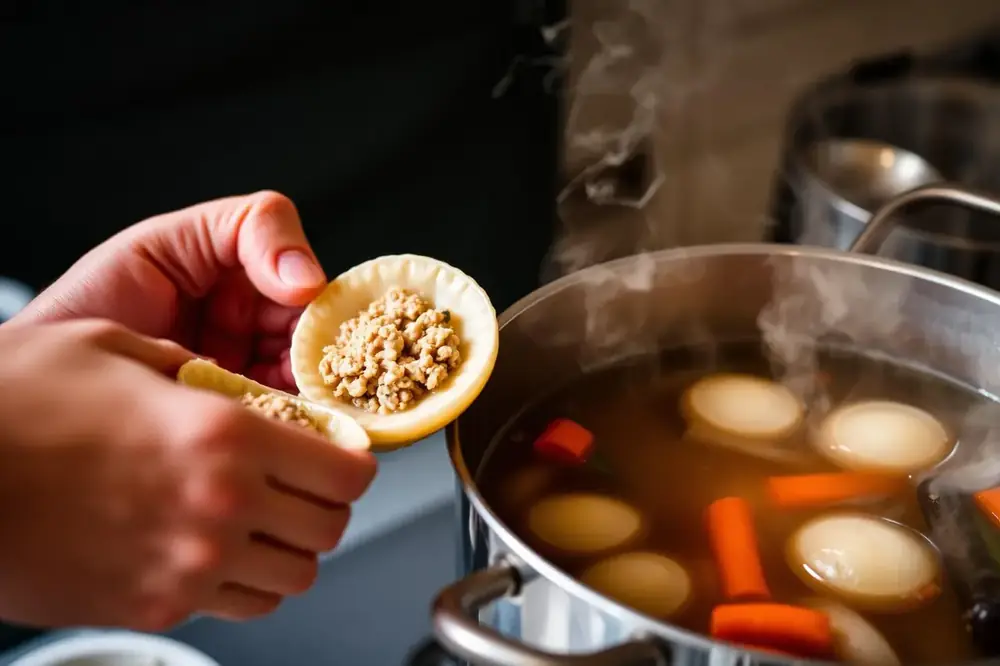
Wet your hands with cold water to keep the mixture from sticking. Scoop up about a third of a cup of the fish mixture and gently form it into a smooth oval or quenelle, roughly the size of an egg. Set the shaped pieces on a wet plate as you go. Keeping your hands damp the whole time makes for clean, smooth dumplings.
Step 4: Poach Gently
Bring the broth to a bare simmer — you want lazy bubbles, never a hard boil, which can break the dumplings apart. Carefully lower the gefilte fish into the liquid, working in batches if needed so they aren't crowded. Cover partially and poach gently for about 1 to 1½ hours, keeping the heat low and steady. The fish is done when it is firm, cooked through, and floats.
Step 5: Cool in the Broth
Turn off the heat and let the gefilte fish cool in its broth — this keeps it moist and lets it absorb flavor. Once cool enough to handle, transfer the pieces to a container, top each with a reserved carrot coin, and strain some of the broth over them. Refrigerate for at least a few hours or overnight; as it chills, the broth often sets into a light, savory jelly, the natural ancestor of that jarred aspic.
The Secret to Light, Tender Gefilte Fish
Two things separate silky, tender gefilte fish from dense, rubbery pucks. The first is cold water and thorough mixing: beating a little ice water into the fish mixture aerates it and keeps it light, the same principle behind a good quenelle or fish mousse. The second is gentle heat. Gefilte fish must be coaxed to doneness at a bare simmer — a rolling boil toughens the protein and can shatter the dumplings. Low, slow, and patient wins every time.
How to Serve Gefilte Fish
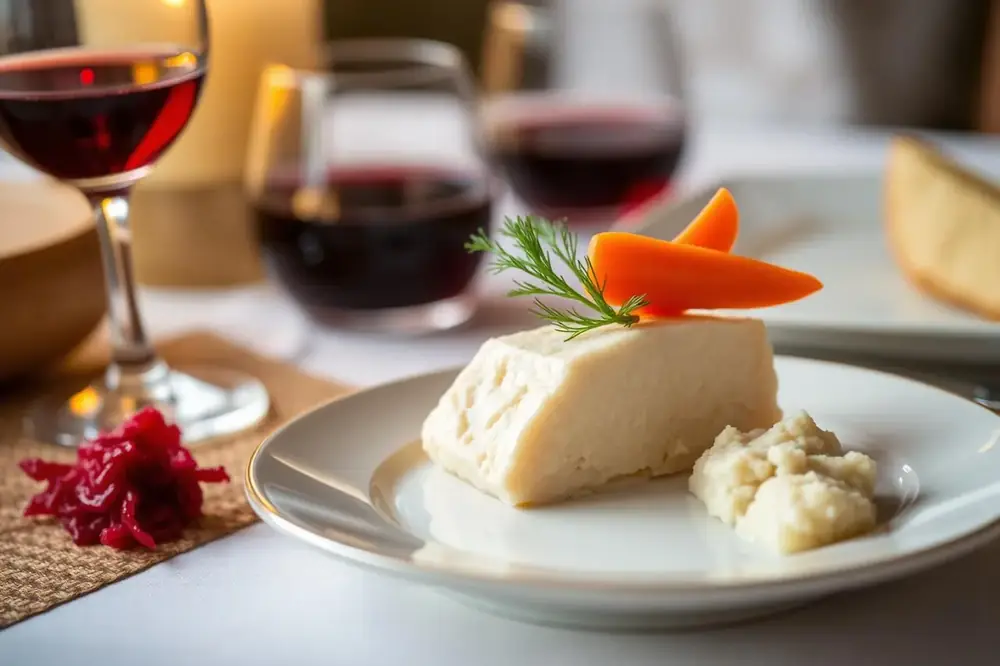
Serve gefilte fish cold or at cool room temperature, one piece per person as an appetizer. Set each oval on a small plate or a bed of greens, top with its glossy carrot coin and a sprig of dill, and serve with plenty of horseradish on the side. White horseradish is classic and bracing; beet-red chrein adds color and a touch of sweetness. A glass of wine and a piece of challah or matzo complete the traditional Shabbat or Seder starter.
Expert Tips
- Use a blend of fish — whitefish for flavor, pike for structure, and carp for richness — for the most balanced, traditional taste.
- Keep everything cold: chilled fish, cold water, and damp hands give you the lightest texture and the cleanest shapes.
- Taste and adjust before poaching by frying a tiny test patty, so you can correct the salt, pepper, or sugar.
- Save the bones, heads, and skin for the broth — they make the poaching liquid rich and help it set into a natural jelly.
- Always cool the fish in its broth; pulling it out too soon dries it out.
Common Mistakes to Avoid
- Boiling instead of poaching — hard heat toughens the fish and breaks the dumplings apart.
- Over-adding matzo meal, which makes the texture heavy and bready rather than light.
- Skipping the cold water and proper mixing, the key to a tender, fluffy result.
- Under-seasoning — fish served cold needs assertive salt and pepper to taste right at the table.
- Serving it without horseradish; chrein isn't a garnish, it's an essential part of the dish.
Make-Ahead and Storage
Gefilte fish is a dream make-ahead dish — in fact, it's better made a day or two in advance so the flavors meld and the jelly sets. Store the poached pieces submerged in their strained broth in an airtight container in the fridge for up to 4 to 5 days. You can also freeze cooked gefilte fish for up to 2 to 3 months; thaw overnight in the refrigerator. Make the horseradish ahead too — it keeps for weeks in the fridge.
Conclusion
Gefilte fish deserves better than its reputation. Made from scratch with fresh fish, gently poached, and served cold with sweet carrots and sharp horseradish, it's a light, elegant, deeply traditional starter that connects every bite to centuries of Jewish ingenuity. Skip the jar this year, ask your fishmonger for a good blend, and make a batch by hand. You may finally understand why grandma was so proud of it — and why a whole new generation is bringing it back.
Key Takeaways
- Gefilte fish is a traditional Ashkenazi dish of ground fish poached into tender dumplings, served cold with horseradish.
- It originated from Sabbath law (avoiding bone-picking) and the thrifty need to stretch expensive fish.
- A new generation is reviving from-scratch gefilte fish, driven by heritage cooking and sustainability trends.
- Cold water, thorough mixing, and a gentle poach — never a boil — are the keys to a light, tender texture.
- Make it a day or two ahead and serve cold with carrot coins and chrein for the authentic experience.
Frequently Asked Questions
What is gefilte fish made of?
Gefilte fish is made from ground freshwater fish — traditionally a blend of carp, whitefish, and pike — mixed with eggs, grated onion, matzo meal, and seasoning, then shaped into ovals and poached in a light fish broth. It's served cold with horseradish.
Why is it called gefilte fish?
The name comes from the Yiddish and German word for 'stuffed.' Originally, the seasoned ground fish was packed back into the fish's skin before poaching. Over time, cooks simplified the process by shaping the mixture into individual dumplings instead.
Is gefilte fish sweet or savory?
It depends on tradition. Polish-style gefilte fish is sweetened with sugar, while Lithuanian (Litvak) style is peppery and savory. Both are authentic, and the sweet-versus-savory debate is a beloved part of Jewish food culture. You can adjust the sugar in any recipe to taste.
How do you keep gefilte fish from falling apart?
Poach it gently at a bare simmer rather than a hard boil, which can break the dumplings. Make sure the mixture has enough matzo meal and egg to bind, shape the pieces with wet hands, and avoid crowding the pot. Letting them cool in the broth also helps them firm up.
Can you make gefilte fish ahead of time?
Yes — it's actually better made one to two days in advance, so the flavors meld and the broth sets into a light jelly. Store the pieces submerged in their strained broth in the fridge for up to 4 to 5 days, or freeze cooked gefilte fish for 2 to 3 months.
Loved this recipe?
Share it with your family, leave a comment, and explore more traditional and modern Jewish dishes on JewishCuisine.
Explore more Holidays recipes