Homemade New York Bagels: The Chewy, Boiled-and-Baked Classic Worth the Effort
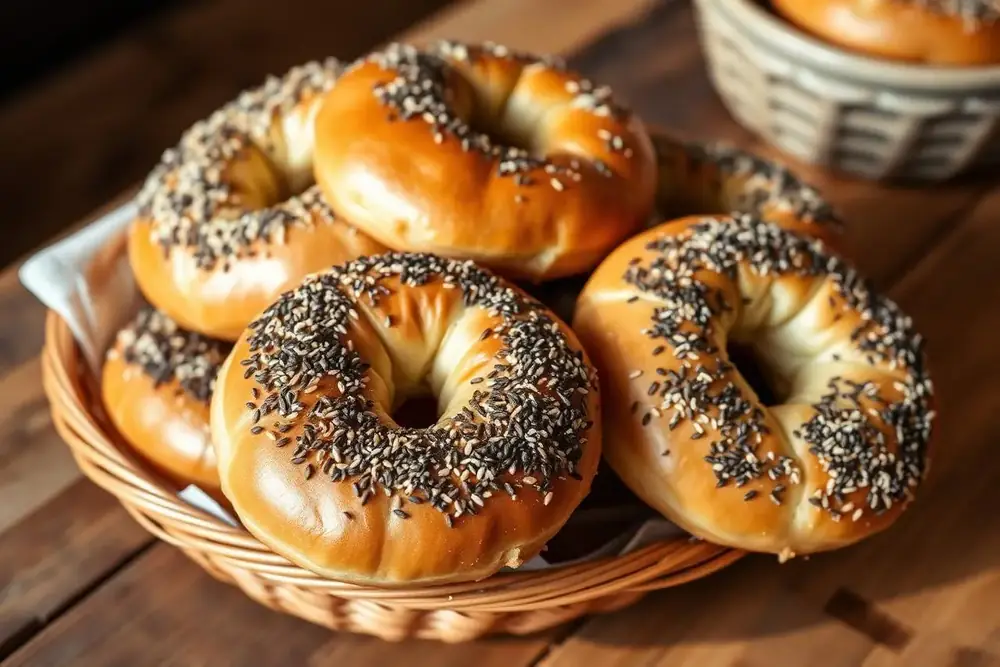
Few foods carry as much cultural weight as the bagel. To bite into a proper New York-style bagel — that glossy, blistered crust giving way to a chewy, dense, faintly sweet interior — is to taste more than a hundred years of Jewish-American history. It is breakfast, it is comfort, it is the centerpiece of a Sunday spread of cream cheese and lox. And while a good bagel can be hard to find outside a handful of cities, the truth is you can make a genuinely excellent one in your own kitchen.
In 2026, homemade bagels are everywhere. As home bakers chase the satisfaction of sourdough and artisan bread, the humble bagel has stepped into the spotlight — and the hashtag #HomemadeBagels has racked up millions of views from bakers showing off their golden, hand-rolled rings. The appeal is obvious: with a few pantry staples, a pot of boiling water, and a little patience, you can produce bagels that rival the best delis.
This guide walks you through everything: the fascinating history of the bagel, why the boiling step is non-negotiable, a foolproof recipe, the science behind the chew, classic toppings, and the expert tips that separate a great bagel from a dense hockey puck.
A Short History of the Bagel
The bagel's origins trace back to the Jewish communities of Poland in the 16th and 17th centuries. The word itself comes from the Yiddish beygl, derived from a German root meaning "to bend" or "ring." These ring-shaped rolls were prized because they were boiled before baking, which gave them a durable, portable shape and a distinctive chew.
When waves of Eastern European Jewish immigrants arrived in New York City in the late 19th and early 20th centuries, they brought the bagel with them. By the 1900s, bagels were so central to the immigrant economy that a powerful bakers' union — Bagel Bakers Local 338 — controlled production across the city, with recipes and rolling techniques passed down by hand. The bagel became woven into the fabric of New York life, eventually spreading across America and the world.
What makes a New York bagel specifically "New York" is debated endlessly. Some credit the mineral content of the city's water; others point to high-gluten flour, barley malt, and the traditional two-step boil-and-bake method. The water myth is mostly that — a myth — but the technique is real, and it is entirely reproducible at home.
Why This Recipe Works
Many home bagel recipes fail in predictable ways: the dough is too soft, the bagels are too bready, or they come out pale and dull. This recipe is engineered to deliver authentic results by respecting the three things that define a real bagel — a stiff dough, a malty boil, and a hot bake.
- High-gluten or bread flour creates the strong, elastic dough that gives bagels their signature chew.
- A stiff, low-hydration dough holds its shape and produces a dense rather than airy crumb.
- An overnight cold proof develops deep flavor and that subtle tang found in great deli bagels.
- Barley malt syrup in both the dough and the boiling water builds color, sweetness, and that glossy crust.
- Boiling before baking gelatinizes the starches on the surface, sealing in moisture and creating the chewy skin.
Ingredients
This recipe makes 8 generous bagels. The ingredient list is short, but quality and accuracy matter — weigh your flour if you can, because a cup of packed flour can throw off the hydration significantly.
For the Dough
- 4 cups (560g) high-gluten or bread flour, plus more for dusting
- 2 tsp (10g) kosher salt
- 1 tbsp (15g) barley malt syrup (or honey as a substitute)
- 1¼ tsp (4g) instant yeast
- 1¼ cups (300ml) warm water (about 100°F / 38°C)
For the Boil
- 3 quarts (about 3 liters) water
- 2 tbsp barley malt syrup (or honey, or 1 tbsp baking soda for a darker crust)
- 1 tbsp granulated sugar (optional, for extra shine)
For Topping
- Sesame seeds
- Poppy seeds
- Everything bagel seasoning (sesame, poppy, dried garlic, dried onion, flaky salt)
- Coarse salt, dried onion, or caraway — your choice
- 1 egg beaten with 1 tbsp water, for an egg wash (optional, helps toppings stick)
Equipment You'll Need
- A stand mixer with a dough hook (or strong hands and patience for kneading)
- A large, wide pot for boiling
- A slotted spoon or spider strainer
- Two baking sheets lined with parchment
- A clean kitchen towel and a digital scale
Step-by-Step Instructions
Step 1: Make the Dough
In the bowl of a stand mixer, dissolve the barley malt syrup and yeast in the warm water and let it sit for 5 minutes until slightly foamy. Add the flour and salt. Using the dough hook, mix on low speed until a shaggy dough forms, then knead on medium-low for 8 to 10 minutes. The dough should be very stiff and firm — much firmer than typical bread dough. If it is too dry to come together, add water one teaspoon at a time.
Step 2: First Rise
Turn the dough onto a lightly floured surface and knead by hand for a minute to form a smooth, tight ball. Place it in a lightly oiled bowl, cover with a damp towel, and let it rise at room temperature for about 1 to 1½ hours, until noticeably puffed but not doubled. Because this is a stiff dough, the rise will be slower and less dramatic than soft bread dough.
Step 3: Divide and Shape
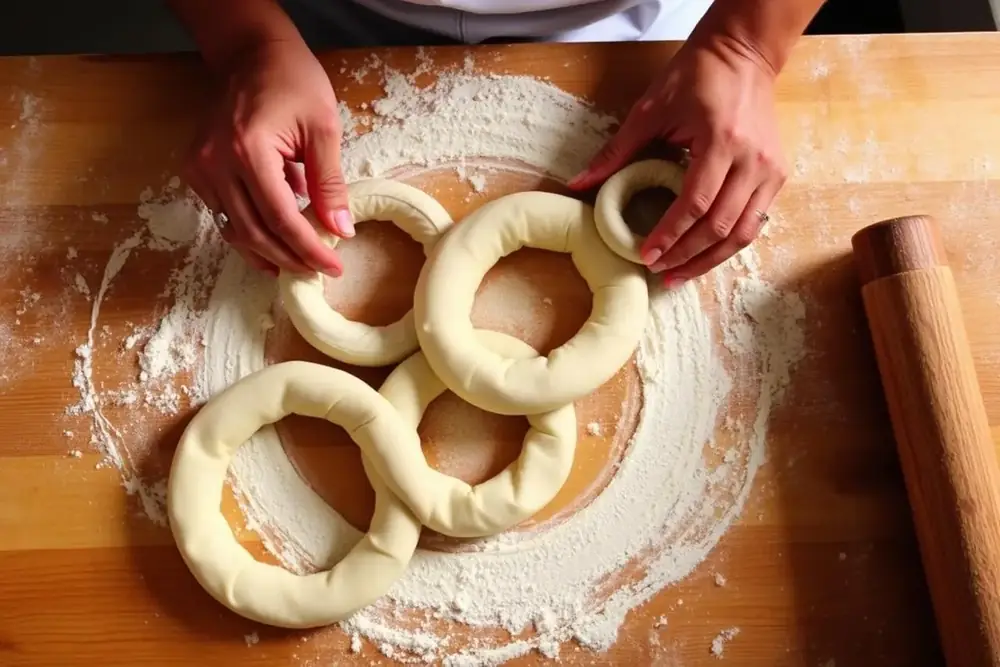
Punch down the dough and divide it into 8 equal pieces (about 110g each if weighing). Roll each piece into a smooth ball. To shape, use one of two methods: poke a hole through the center with your thumb and gently stretch it to about 1.5 inches wide, or roll each ball into a 9-inch rope and pinch the ends together into a ring. The hole will shrink during boiling and baking, so make it larger than you think you need.
Step 4: Overnight Cold Proof
Place the shaped bagels on a parchment-lined, lightly oiled baking sheet, cover loosely, and refrigerate overnight (8 to 24 hours). This slow, cold fermentation is the secret to authentic flavor and a blistered crust. If you are short on time, you can let them proof at room temperature for 20 minutes and bake the same day, but the flavor will be noticeably milder.
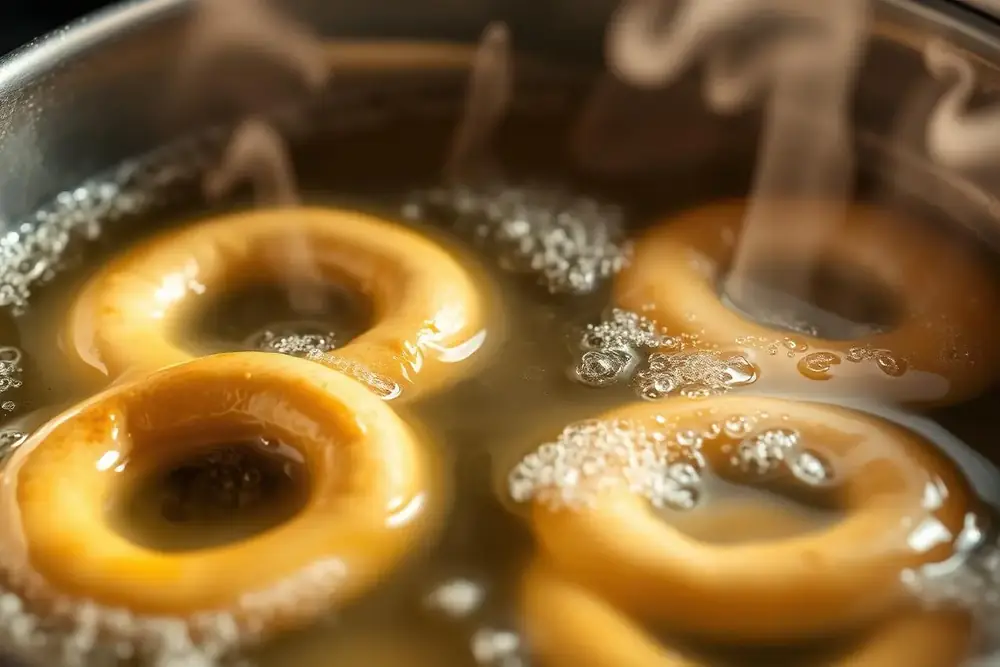
Step 5: Boil the Bagels
Preheat your oven to 450°F (230°C). Bring the boiling water to a rolling boil and stir in the barley malt syrup and sugar. Working in batches of 2 to 3 so you don't crowd the pot, gently lower the bagels into the water. Boil for 60 seconds on the first side, then flip and boil 60 seconds on the second. A longer boil gives a thicker, chewier crust; a shorter boil gives a lighter one. Remove with a slotted spoon and let drain briefly.
Step 6: Top and Bake
If using an egg wash, brush each boiled bagel lightly, then dip the top into your seeds or seasoning while still wet. Place them topping-side up on the parchment-lined sheets. Bake for 20 to 25 minutes, rotating the pan halfway through, until deeply golden brown. For an extra-crisp crust, flip the bagels over for the final 5 minutes of baking.
Step 7: Cool Before Eating
Transfer the bagels to a wire rack and let them cool for at least 20 minutes before slicing. As tempting as it is to tear into a hot bagel, the crumb is still setting as it cools — slicing too early leaves the interior gummy. This brief patience is the final step to bagel perfection.
Classic Toppings and How to Serve
A bagel is a canvas. Here are the most beloved ways to top and enjoy your homemade batch.
- The classic: Toasted bagel with a thick schmear of cream cheese, lox (cured salmon), thinly sliced red onion, capers, and tomato.
- Everything bagel with scallion cream cheese — the deli standard for good reason.
- Plain bagel with butter, toasted until the edges crisp — simple and perfect.
- Bagel and egg sandwich: split, toast, and fill with scrambled eggs and melted cheese.
- Sweet route: cinnamon-raisin dough topped with honey butter or a fruit preserve.
Variations Worth Trying
- Cinnamon-Raisin: Knead ½ cup raisins and 2 tsp cinnamon into the dough before the first rise.
- Whole Wheat: Replace up to half the bread flour with whole wheat flour and add 2 extra tablespoons of water.
- Sourdough Bagels: Replace the instant yeast with ¾ cup active sourdough starter and extend the proofing times.
- Pumpernickel: Add 2 tbsp cocoa powder, 1 tbsp molasses, and a portion of rye flour for a dark, malty bagel.
- Cheese Bagels: Press shredded aged cheddar or asiago onto the tops in the final 5 minutes of baking.
Expert Tips for Perfect Bagels
- Use the stiffest dough you can manage — bagel dough should feel dense and almost dry. Resist the urge to add water.
- Don't skip the cold overnight proof; it is the single biggest factor in deli-quality flavor.
- Keep the boil at a rolling boil, not a simmer. Gentle water won't gelatinize the crust properly.
- Barley malt syrup is worth seeking out — it gives the authentic malty sweetness and color that honey only approximates.
- If your bagels deflate when boiling, they over-proofed. Shorten the rise or boil them straight from the fridge while still cold and firm.
The Boiling Step, Explained
Boiling is what separates a bagel from a roll. When the shaped dough hits the hot water, the starches on the surface rapidly gelatinize, forming a sealed skin. This skin sets the shape, prevents the bagel from expanding too much in the oven, and creates the chewy, slightly glossy crust. The malt in the water adds flavor and helps the surface brown deeply during baking.
A bagel without a boil is just a round roll. The minute in the water is the minute that makes it a bagel.
Common Mistakes to Avoid
- Using all-purpose flour, which lacks the protein for proper chew — reach for bread or high-gluten flour.
- Making the dough too soft and wet, resulting in puffy, bread-like bagels.
- Boiling at a weak simmer instead of a rolling boil.
- Skipping the cold proof and wondering why the flavor is flat.
- Slicing the bagels while hot, which leaves the inside gummy and dense.
Storage and Freezing
Homemade bagels are best eaten the day they are baked, when the crust is at its peak. They stay good at room temperature in a paper bag for about a day. After that, the crust softens, but toasting revives them beautifully.
For longer storage, freeze them. Let the bagels cool completely, slice them in half (this is the trick — pre-slicing means you can toast straight from frozen), then wrap individually and freeze for up to 3 months. Pop a frozen half straight into the toaster whenever the craving strikes.
Key Takeaways
- Authentic New York bagels are made from a stiff, high-gluten dough that is boiled before baking.
- An overnight cold proof develops the deep flavor and blistered crust of deli-quality bagels.
- Barley malt syrup in both the dough and boiling water creates the signature color, shine, and malty sweetness.
- Boiling gelatinizes the surface starches, sealing in moisture and producing the chewy crust.
- Slice and freeze extras so you can toast a fresh-tasting bagel straight from the freezer anytime.
Frequently Asked Questions
Why do you boil bagels before baking?
Boiling gelatinizes the starches on the surface of the dough, forming a sealed skin that sets the shape, locks in moisture, and creates the chewy, glossy crust that defines a real bagel. Without boiling, you get a round bread roll rather than a bagel.
What flour is best for homemade bagels?
High-gluten flour is ideal because its high protein content produces the strong, elastic dough needed for a chewy texture. Bread flour is an excellent and widely available substitute. Avoid all-purpose flour, which makes softer, more bread-like bagels.
What is barley malt syrup and can I substitute it?
Barley malt syrup is a thick, dark sweetener made from sprouted barley that gives bagels their characteristic malty flavor and deep color. If you can't find it, honey works as a substitute, and adding a tablespoon of baking soda to the boiling water helps achieve a darker crust.
Do I really need to refrigerate the bagels overnight?
It is highly recommended. The cold overnight proof slows fermentation, which develops a deeper, tangier flavor and helps create the blistered crust of authentic deli bagels. You can bake the same day, but the flavor will be noticeably milder.
Why did my bagels turn out flat or dense?
Flat bagels usually mean the dough over-proofed and deflated, or the dough was too wet. Use a stiff, low-hydration dough and boil the bagels while they are still cold and firm. Dense, gummy bagels often result from slicing them before they have fully cooled.
How do I store and freeze homemade bagels?
Eat them the day they are baked for the best crust, or keep them in a paper bag at room temperature for about a day. For longer storage, slice each bagel in half, wrap individually, and freeze for up to 3 months — then toast straight from frozen.
Loved this recipe?
Share it with your family, leave a comment, and explore more traditional and modern Jewish dishes on JewishCuisine.
Explore more Traditional recipes