Carciofi alla Giudia: The Roman Jewish Fried Artichokes That Bloom Like Golden Flowers
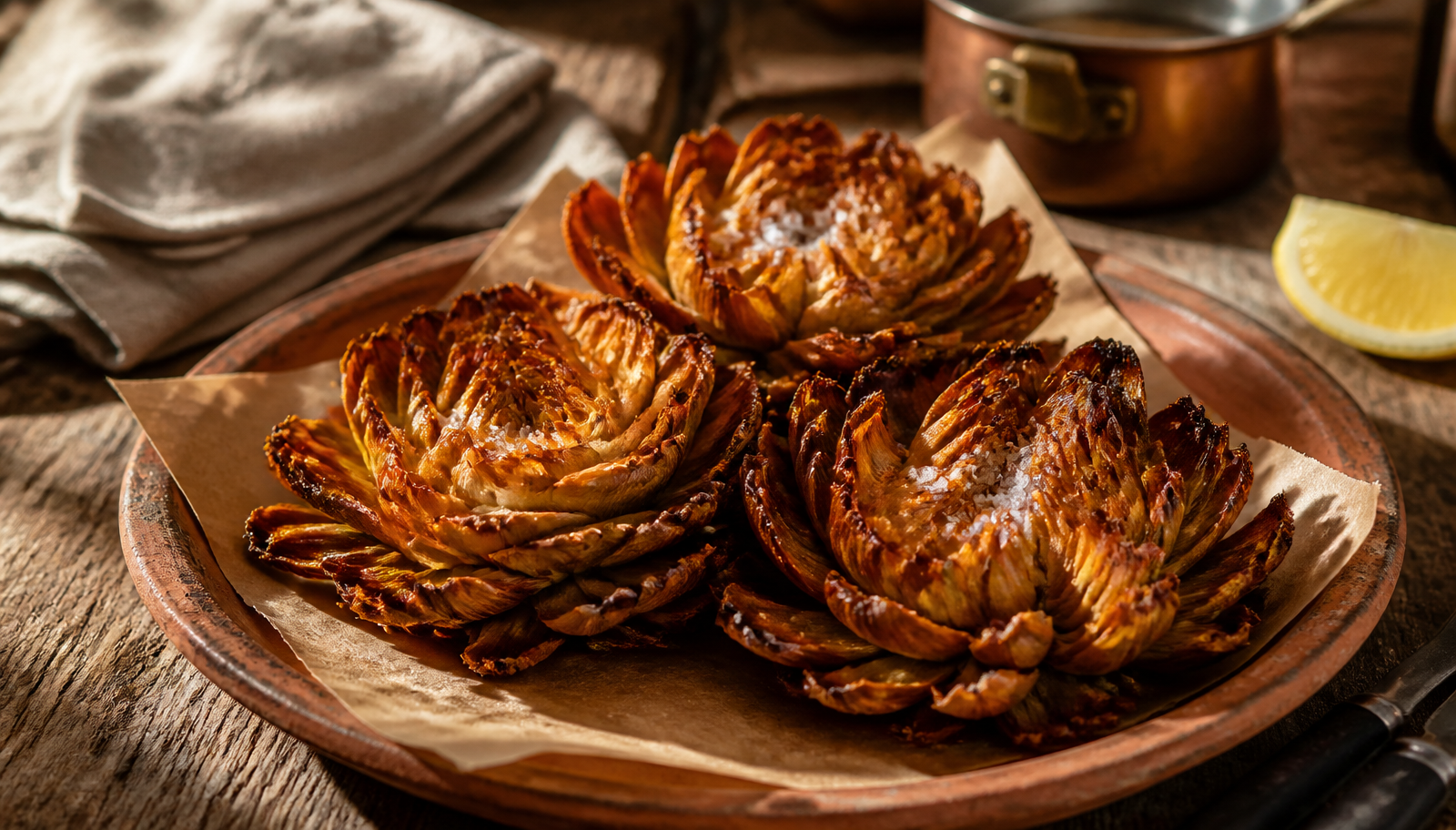
Walk into Rome's old Jewish Ghetto on a spring evening and you will smell them before you see them: the deep, nutty perfume of artichokes frying in olive oil, hissing in copper pots outside trattorias that have been serving the same dish for four hundred years. Carciofi alla giudia — literally 'Jewish-style artichokes' — is the single most famous dish of Italy's oldest continuous Jewish community, and it has quietly become one of the most searched Jewish recipes of the last twelve months on both sides of the Atlantic.
The dish is disarmingly simple on paper: one artichoke, olive oil, salt, pepper. The magic lives in the technique. Trimmed to a bare, edible core, the artichoke is fried twice — first gently to cook it through, then a second time at a higher temperature that forces the petals to splay open like a bronze chrysanthemum with shatter-crisp leaves and a creamy, tender heart. This guide walks through the story behind the plate, the exact steps that turn a globe of thistle into something edible from petal to stem, and the small mistakes that keep home cooks from getting it right the first time.
Table of Contents
- A Short History of Carciofi alla Giudia
- Why This Dish Is Trending Right Now
- Choosing the Right Artichoke
- Ingredients You Actually Need
- Step-by-Step: Trimming and Frying
- Expert Tips from Roman Kitchens
- Common Mistakes to Avoid
- How to Serve Carciofi alla Giudia
- Frequently Asked Questions
- Key Takeaways
- Conclusion
A Short History of Carciofi alla Giudia
Rome's Jewish community is the oldest in Europe, unbroken since the second century BCE. When Pope Paul IV walled the community into the Ghetto in 1555, kosher-keeping cooks were forced to build an entire cuisine from what the surrounding Roman markets threw away cheaply: offal, salt cod, day-old bread, and the fat, thorny purple artichokes that grew in the marshes of Lazio. These 'cucina povera' constraints, applied under strict kashrut, produced what culinary historians now call Cucina Ebraico-Romanesca — the Jewish-Roman kitchen — and carciofi alla giudia is its unquestioned masterpiece.
The dish is documented in Roman cookbooks by the 1600s, but the technique of frying vegetables whole is much older, likely arriving with Sephardic Jews who fled the Spanish expulsion of 1492 and joined the existing Roman community. Today the recipe is protected by tradition: the trattorias of Via del Portico d'Ottavia serve the same version their grandparents did, and no modern Roman Jewish wedding is considered complete without a platter of them on the table.
Why This Dish Is Trending Right Now
Three forces have pushed carciofi alla giudia into home kitchens far from Rome in the last two years. First, the wave of interest in Italian Jewish and Sephardic regional cooking — a corrective to decades of Ashkenazi-dominant coverage — has put Roman Jewish food on English-language cooking sites and Netflix travel shows for the first time. Second, the artichoke itself is trending: search interest in artichoke recipes on Google spikes every spring, and readers looking for something beyond a steamed artichoke find their way to this dish. Third, it fits a modern moment perfectly — it is vegetarian, pareve, naturally gluten-free, showstopping, and photographs like nothing else on the internet. A well-fried carciofo alla giudia is genuinely beautiful, and beauty travels far on social feeds.
Choosing the Right Artichoke
In Rome, cooks use the Romanesco or 'mammola' — a fat, round, thornless purple-green variety with a broad heart and tightly packed petals that fry into distinct crisp layers. Outside Italy, the closest match is a large globe artichoke, ideally with the stem still attached and long. Look for artichokes that feel heavy for their size, with tight leaves that squeak audibly when you squeeze them. Loose, dry, or blackened leaves mean the artichoke is past its prime and will fry into something tough and papery.
Baby artichokes are a fine home-kitchen alternative and are far easier to trim, but they do not produce the dramatic bloom of a full-sized carciofo. If you can find true Romanesco at a specialty market in spring, buy every one they have.
Ingredients You Actually Need
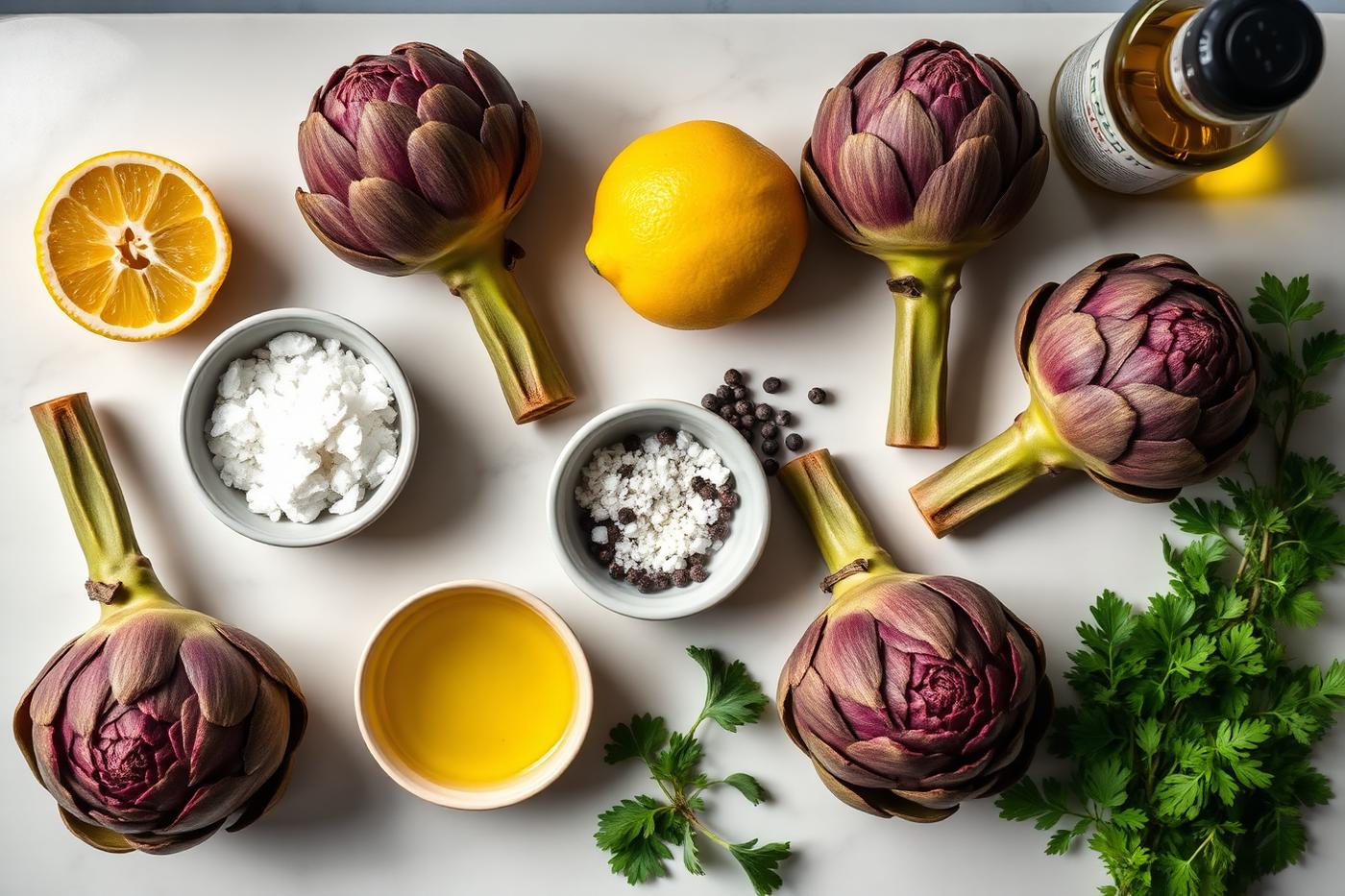
- 6 large globe artichokes, stems intact
- 3 lemons — 2 halved for the acidulated soaking water, 1 cut into wedges to serve
- About 2 quarts good extra virgin olive oil (do not substitute — the flavor is the dish)
- Flaky sea salt to finish
- Freshly cracked black pepper
- Optional: a splash of ice water for the theatrical final crackle
That is genuinely the entire list. No batter, no flour, no herbs in the oil. Every attempt to embellish the dish is an attempt to fix something that is not broken, and Roman cooks will tell you as much.
Step-by-Step: Trimming and Frying
The intimidating part of this recipe is the trim, not the fry. Wear an apron — artichoke sap stains — and rub your hands with a cut lemon before you start to keep them from turning black.
- Fill a large bowl with cold water and squeeze in the juice of two lemons; drop the spent halves in too.
- Working one artichoke at a time, snap off the small tough outer leaves at the base until you reach the paler, tender inner leaves.
- With a sharp paring knife, peel the stem, removing the dark green outer layer to reveal the pale core. Do not cut the stem off — it is the best part.
- Using a serrated knife, slice off the top third of the artichoke to remove the pointed thorny tips.
- Trim the remaining leaves in a spiral motion, following the natural curve, so what remains looks like a compact, pale rosebud on a stem.
- Open the leaves gently with your thumbs and scoop out any purple, hairy choke in the center with the tip of a spoon or a melon baller.
- Drop the trimmed artichoke into the lemon water and continue with the rest.
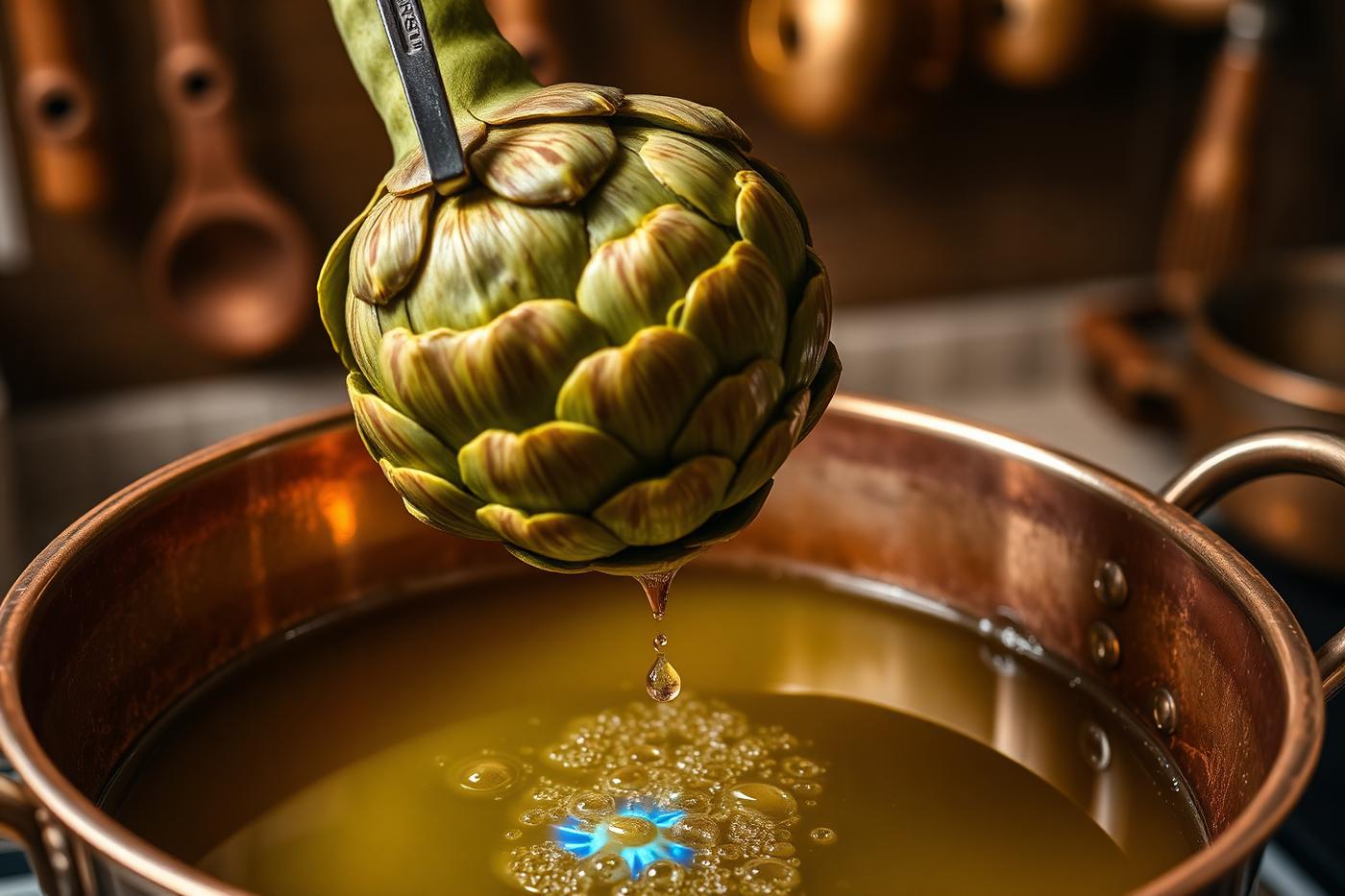
- First fry: heat olive oil in a heavy, tall pot to 275°F. Drain the artichokes upside down on a towel, then submerge them stem-up in the oil and fry for about 10 minutes, until a paring knife slides easily into the heart. Lift out and drain, cut side down, on paper towels.
- Rest at least 15 minutes and up to a few hours — this pause is essential; it lets the artichoke cool and firm.
- Second fry: bring the oil up to 350°F. Working one or two at a time, press the artichoke gently on the board to open the petals, then lower it into the hot oil head-down.
- For the classic theatrical crackle, dip your fingers in ice water and flick a few drops into the oil around the artichoke — carefully, and standing back. The steam blast opens the petals dramatically.
- Fry 1–2 minutes until the petals are deep gold and shatter-crisp. Lift out, drain briefly, salt immediately, and serve within five minutes.
Expert Tips from Roman Kitchens
- Use good olive oil. Cheap oils fry acceptably but the finished dish tastes flat. Roman trattorias use a workable extra virgin — nothing precious, but nothing bland.
- Fry stem-up in the first stage, head-down in the second. The first fry cooks the heart; the second crisps the petals. Swapping the orientation is a common mistake.
- Trim generously. Beginners leave too many outer leaves on out of thrift and end up with something inedibly fibrous. Almost half the raw weight of the artichoke ends up in the compost — that is normal.
- Salt immediately after the second fry, while the surface is still glistening with oil. Salt applied a minute later slides off.
- The ice-water trick is optional but authentic. It genuinely opens the petals more dramatically. Keep the flick tiny and the pot deep to avoid a splatter.
Common Mistakes to Avoid
- Skipping the rest between fries. Without it, the artichoke stays limp and never crisps properly on the second pass.
- Frying at guessed temperatures. A thermometer is not optional — 275°F and 350°F are the numbers, and getting them wrong by 50 degrees ruins the dish.
- Using a battered or coated artichoke. Traditional carciofi alla giudia are naked — no flour, no egg, no seasoning beyond salt and pepper. Anything else is a different dish.
- Overcrowding the pot. Two large artichokes at most per batch, or the oil temperature crashes and the artichokes stew rather than fry.
- Serving them lukewarm. This is a dish that must be eaten within minutes of leaving the oil. If you cannot serve immediately, do the first fry ahead and finish the second only when guests are seated.
How to Serve Carciofi alla Giudia
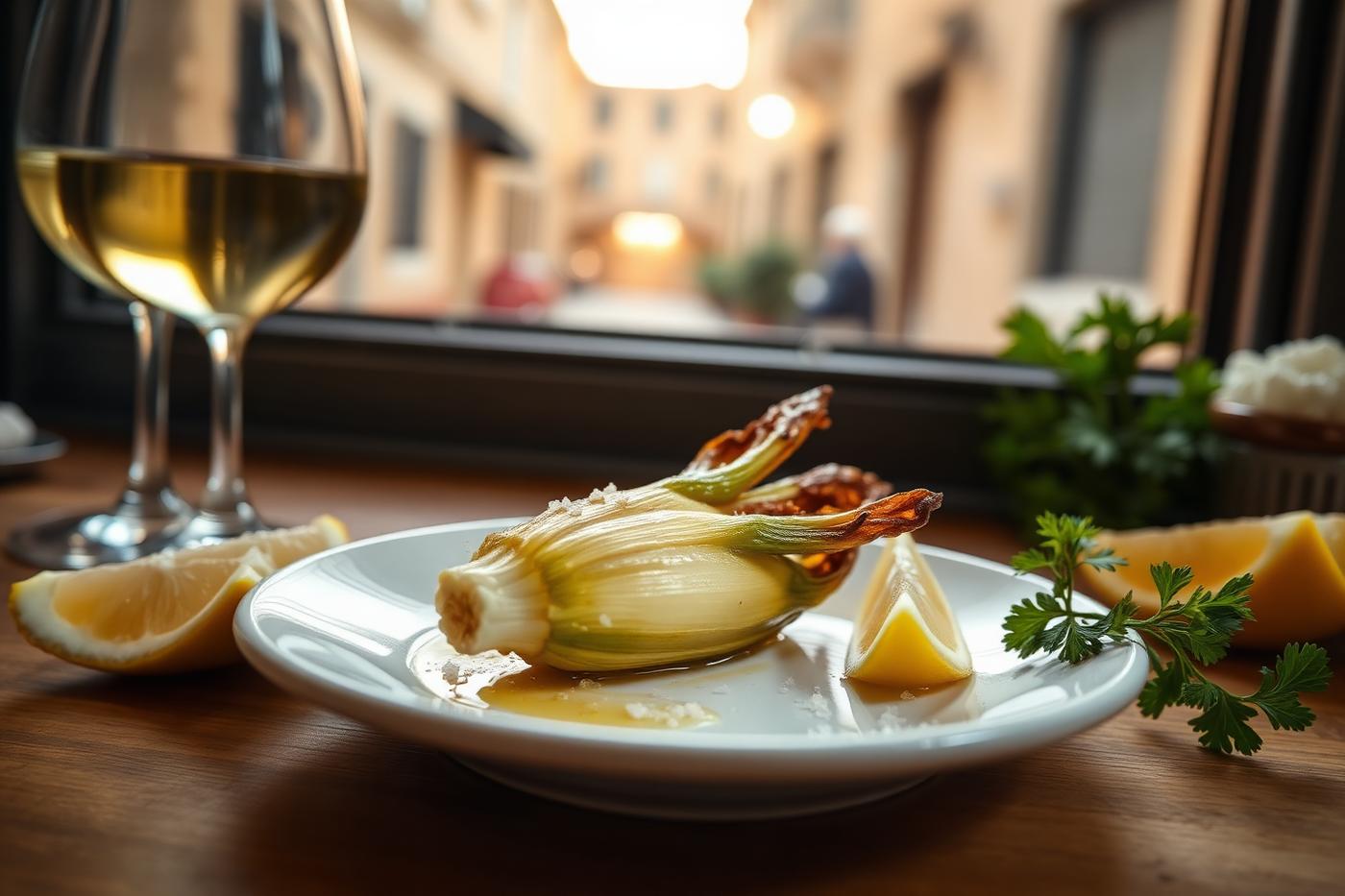
In Rome the artichoke is a course of its own — one per person, served upright on a small white plate with only a lemon wedge, eaten with the fingers by pulling the crisp petals free and then tackling the tender heart and stem with a knife and fork. It is traditionally paired with a glass of cold Frascati or a light Roman white. On a Jewish holiday table, it slots naturally into the appetizer course before a fish or brisket main, and it is a beloved starter at Passover Seders in Italian Jewish households because it contains no chametz.
Frequently Asked Questions
Is carciofi alla giudia kosher for Passover?
Yes. The traditional recipe contains only artichokes, olive oil, salt, and pepper — all Passover-friendly ingredients for both Ashkenazi and Sephardi traditions. It has been an Italian Jewish Seder classic for centuries and is a welcome break from matzo-heavy menus.
Can I use baby artichokes?
You can, and they are much easier to trim, but the visual drama of the bloomed petals belongs to full-sized globe or Romanesco artichokes. If you are using baby artichokes, halve them lengthwise and shorten both fry times by about a third.
Can I fry them in a different oil?
You can, but you will lose the flavor that defines the dish. Roman cooks use olive oil for a reason — its fruitiness is a core ingredient, not a cooking medium. If the cost of two quarts of extra virgin is prohibitive, blend half olive oil with half a neutral high-heat oil like avocado, but do not go fully neutral.
How do I reuse the frying oil?
Strain the cooled oil through cheesecloth and refrigerate in a sealed jar for up to two weeks. It is superb for sautéing vegetables afterward and carries a beautiful artichoke perfume. Do not reuse it for a second batch of carciofi alla giudia — the water content from the artichokes shortens its second life dramatically.
Why won't my artichoke petals open?
Almost always one of three reasons: the oil is not hot enough on the second fry (below 340°F, the petals steam instead of crisping), the artichoke was not pressed open on the board before frying, or you skipped the rest between fries and the artichoke is still too soft to hold its shape.
Key Takeaways
- Carciofi alla giudia is the signature dish of Rome's Jewish community, unchanged for centuries.
- The two-fry method — low first, high second, with a rest in between — is what produces the crisp bloomed petals.
- Ingredients are minimal by design: artichoke, good olive oil, salt, pepper. Anything else is not the dish.
- Use full-sized globe or Romanesco artichokes for the classic visual, or baby artichokes for an easier weeknight version.
- It is naturally pareve, gluten-free, and Passover-friendly — a rare Jewish showpiece that fits every dietary lane.
Conclusion
There are dishes that survive because they are practical, and there are dishes that survive because they are astonishing. Carciofi alla giudia is the second kind. Four hundred years after Roman Jewish cooks first figured out how to turn a spiky, half-inedible thistle into a bronze flower, the recipe has spread nowhere and improved not at all — because it did not need to. Give it an afternoon, a good bottle of olive oil, and one intimidating pile of artichokes, and you will understand why every Italian Jewish grandmother in Rome still guards her fryer like a family heirloom. Serve them the moment they come out of the oil, with a lemon wedge and a cold glass of white, and watch a whole table go quiet.
Key Takeaways
- Carciofi alla giudia is the four-century-old signature of Rome's Jewish Ghetto.
- The two-fry technique — low, rest, high — is what makes the petals bloom crisp.
- Only four ingredients: artichoke, olive oil, salt, pepper. No batter, ever.
- Naturally pareve, gluten-free, and kosher for Passover across traditions.
- Serve within minutes of the second fry — the dish does not wait.
Frequently Asked Questions
Is carciofi alla giudia kosher for Passover?
Yes — only artichokes, olive oil, salt, and pepper, all Passover-friendly for Ashkenazi and Sephardi households.
Can I use baby artichokes?
Yes, halve them lengthwise and cut fry times by about a third, though you lose the dramatic bloom.
Can I fry them in a different oil?
Olive oil is a core flavor, not just a medium. Blend with a neutral oil if needed, but never go fully neutral.
How do I reuse the frying oil?
Strain, refrigerate, and use within two weeks for sautéing — but not for a second batch of carciofi.
Why won't my petals open?
Usually oil not hot enough on the second fry, no press-open before frying, or you skipped the rest between fries.
Loved this recipe?
Share it with your family, leave a comment, and explore more traditional and modern Jewish dishes on JewishCuisine.
Explore more Traditional recipes