Tunisian Fricassée: The Spicy Fried Sandwich Jewish Tunisia Gave the World
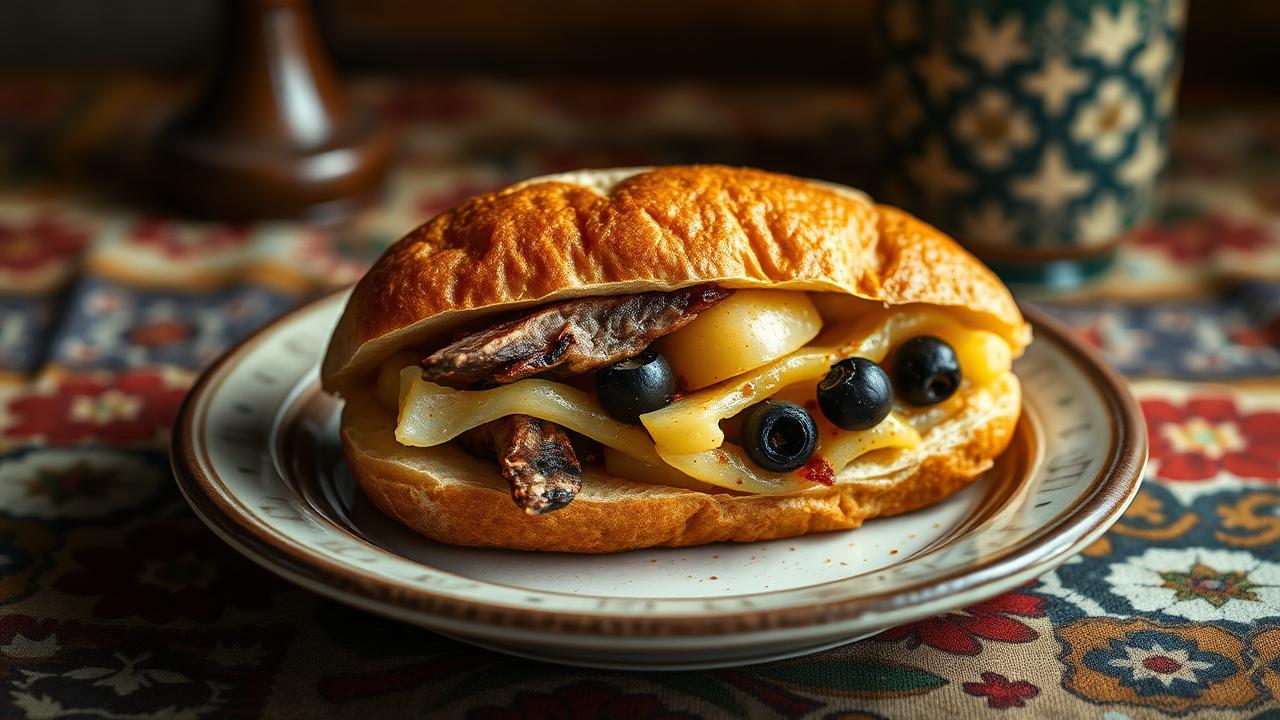
There is a particular kind of sandwich that ruins you for ordinary sandwiches. You bite in, the fried bread shatters just slightly, and then everything happens at once: flaky tuna, creamy potato, the cool slip of boiled egg, the salty pop of olives, the sour brightness of preserved lemon, and underneath it all a slow, building heat from harissa. That sandwich is the Tunisian fricassée, and once you have eaten a good one, you start looking for it everywhere.
Despite the French-sounding name, this is not a creamy stew. The Tunisian fricassée is a small, deep-fried bread roll — soft and rich inside, crisp and golden outside — split open and loaded with a very specific lineup of fillings. It is one of the proudest creations of Tunisia's Jewish community, a handheld feast that traveled with families from the alleys of Tunis to Paris, Marseille, and the markets of Israel.
In this guide we will trace where the fricassée comes from, why it is suddenly showing up on menus and feeds far beyond North Africa, the handful of ingredients that define it, and exactly how to build one at home — fried bread and all. By the end you will be able to assemble a sandwich that tastes like a Tunisian Jewish kitchen on a Friday afternoon.
Table of Contents
- What Makes Fricassée Special
- Historical and Cultural Context
- Why Tunisian Fricassée Is Trending
- Ingredients and Key Concepts
- Step-by-Step Insights
- Expert Tips
- Common Mistakes to Avoid
- Frequently Asked Questions
- Key Takeaways
- Conclusion
What Makes Fricassée Special
Most great sandwiches are about a single star ingredient. The fricassée is the opposite — it is a study in balance, where no one element is allowed to take over. The fried roll provides richness and crunch, the tuna and egg bring protein and comfort, the potato adds body, and then a series of sharp, briny, spicy accents cut straight through all of that softness. It is salty, sour, spicy, and savory in a single handful.
- The bread is fried, not toasted, giving a uniquely tender-yet-crisp shell.
- Every filling is chosen for contrast: creamy against briny, mild against fiery.
- Harissa and preserved lemon give it a distinctly North African backbone.
- It is a complete, satisfying meal that you can hold in one hand.
Historical and Cultural Context
Tunisia is home to one of the oldest Jewish communities in the world, with a presence on the island of Djerba and in cities like Tunis stretching back more than two thousand years. Over centuries that community developed a rich, distinctive cuisine that blended Berber, Arab, Mediterranean, and later French and Italian influences with the rhythms of kosher cooking and the Jewish calendar.
The fricassée is one of the brightest jewels of that tradition. The name almost certainly comes from French, which left a deep mark on Tunisian food during the colonial era, but the sandwich itself is wholly local in spirit. It became a beloved street food and home staple in Jewish Tunisia — affordable, portable, naturally pareve when made without dairy, and easy to scale up for a crowd. When much of Tunisia's Jewish population emigrated in the mid-twentieth century, the fricassée went with them.
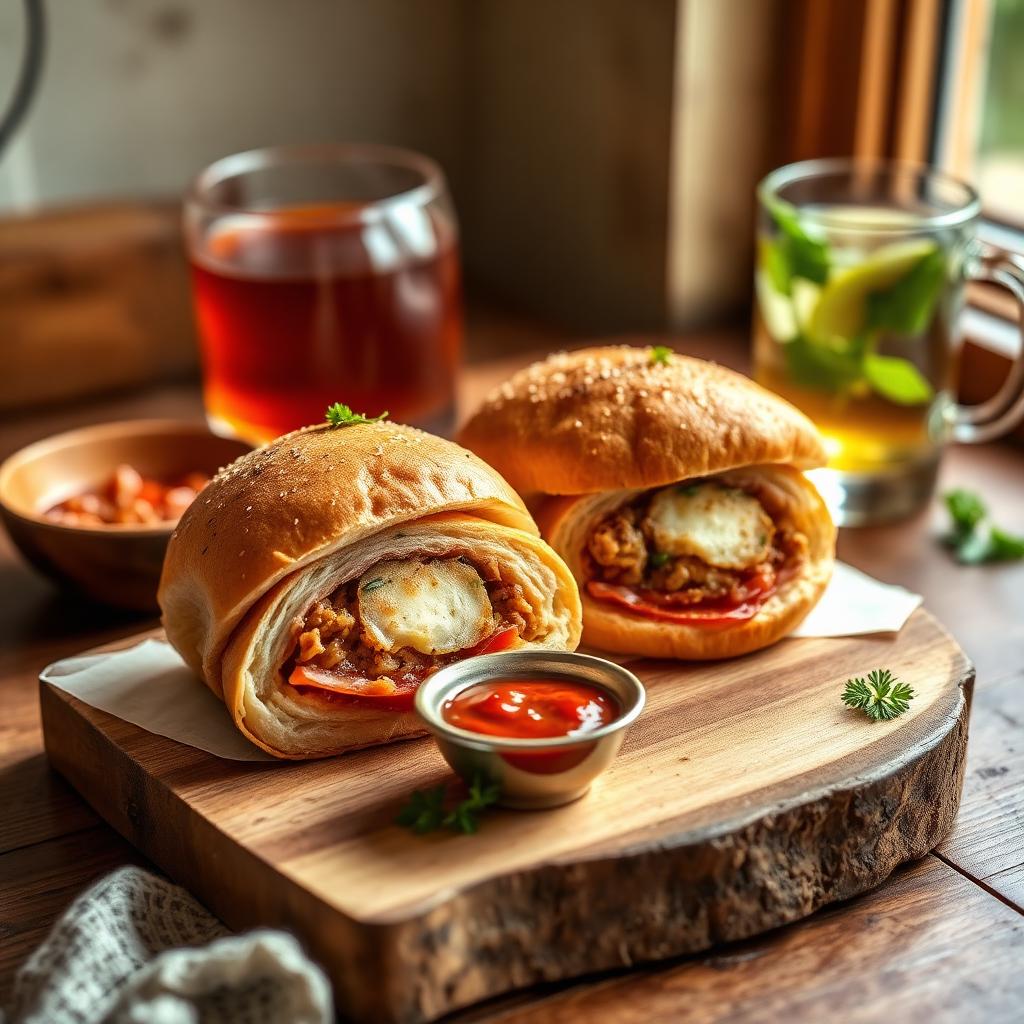
Today you will find fricassée in Tunisian Jewish homes from Paris to Tel Aviv, often made in big batches for Shabbat lunch, holidays, or family gatherings. For many families it is pure nostalgia — the smell of frying dough is the smell of a grandmother's kitchen. It is a dish that carries an entire community's story in a single bite.
Why Tunisian Fricassée Is Trending
Two big food movements are pushing fricassée into the spotlight. The first is the surging American and global interest in North African and Sephardic cooking — harissa is now on supermarket shelves, preserved lemon shows up in recipe columns, and diners are hungry for the regional Jewish foods that long stayed inside family kitchens. The fricassée rides that wave perfectly.
The second is the broader obsession with elevated street food and craveable, photogenic sandwiches. The fricassée is endlessly shareable: the golden fried roll, the layered fillings, the swipe of red harissa all make for irresistible video and photos. As cooks rediscover their heritage and food media looks beyond the usual suspects, this once-overlooked Tunisian classic is finally getting its moment.
Ingredients and Key Concepts
There are two parts to a fricassée: the little fried rolls and the fillings that go inside. The dough is an enriched bread dough that fries up soft and golden, and the filling is a build-your-own assembly of classic components. The quantities below make about 10 to 12 small sandwiches.
For the Fried Rolls
- 3 ½ cups (450 g) all-purpose or bread flour
- 2 ¼ teaspoons (1 packet) active dry yeast
- 1 teaspoon sugar
- 1 ½ teaspoons salt
- 2 tablespoons olive oil, plus neutral oil for deep-frying
- About 1 ¼ cups (300 ml) warm water
For the Fillings
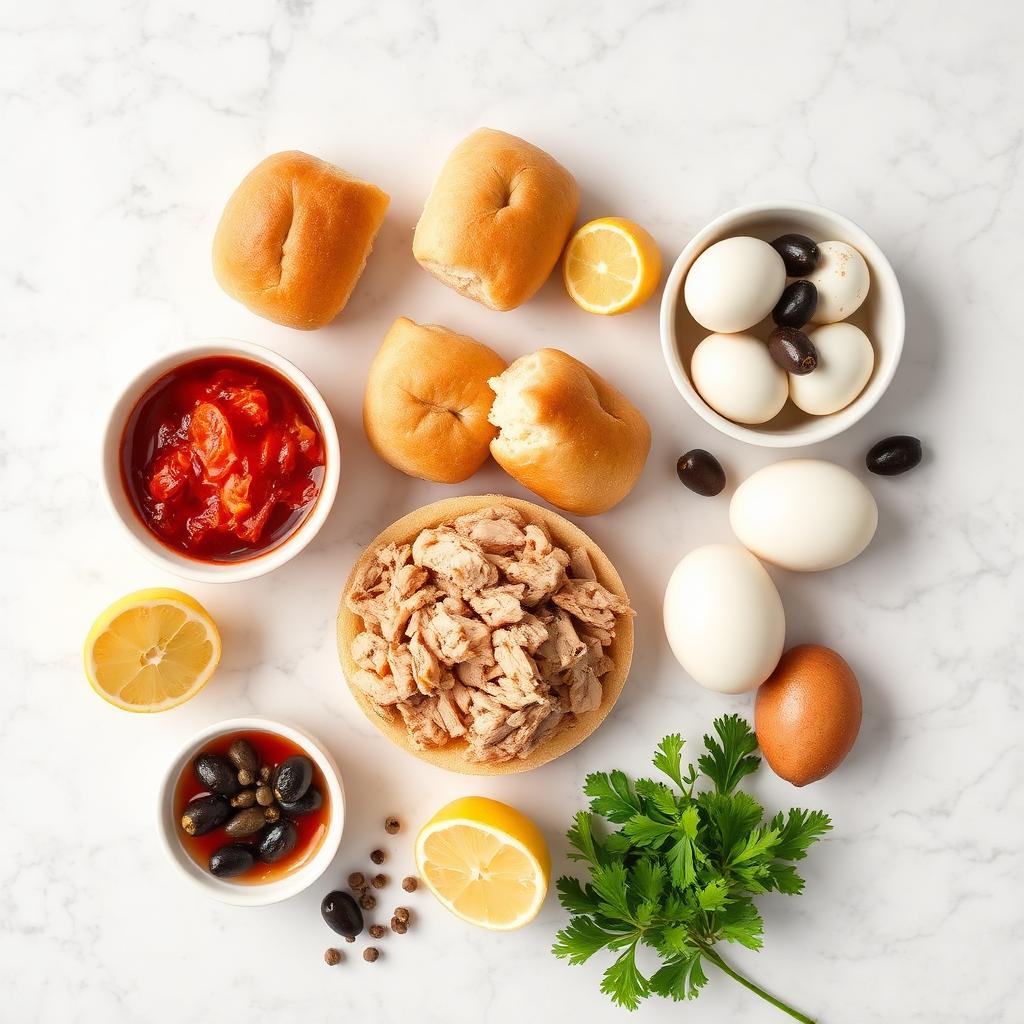
- 2 cans good-quality tuna in olive oil, drained
- 4 to 6 eggs, hard-boiled and sliced
- 3 medium potatoes, boiled and sliced or lightly mashed
- Black olives (oil-cured or brined), pitted
- Preserved lemon, finely chopped, or a squeeze of fresh lemon
- Harissa, to taste
- Optional: capers, sliced pickles, or a little tomato
Step-by-Step Insights
The fricassée comes together in three stages: make and fry the rolls, prep the fillings, then assemble. The dough does most of the work for you while it rises, so plan for a couple of hours from start to finish. Everything except the frying can be done ahead.
Step 1: Make the Dough
- Dissolve the yeast and sugar in the warm water and let it sit for 5 to 10 minutes until foamy.
- Mix the flour and salt, then add the yeast mixture and olive oil and bring it together into a soft dough.
- Knead for about 8 minutes until smooth and elastic, then cover and let rise until doubled, roughly 1 to 1 ½ hours.
Step 2: Shape and Fry the Rolls
- Punch down the dough and divide it into 10 to 12 small pieces, shaping each into a smooth oval or round.
- Let the shaped rolls rest, covered, for about 20 to 30 minutes until puffy.
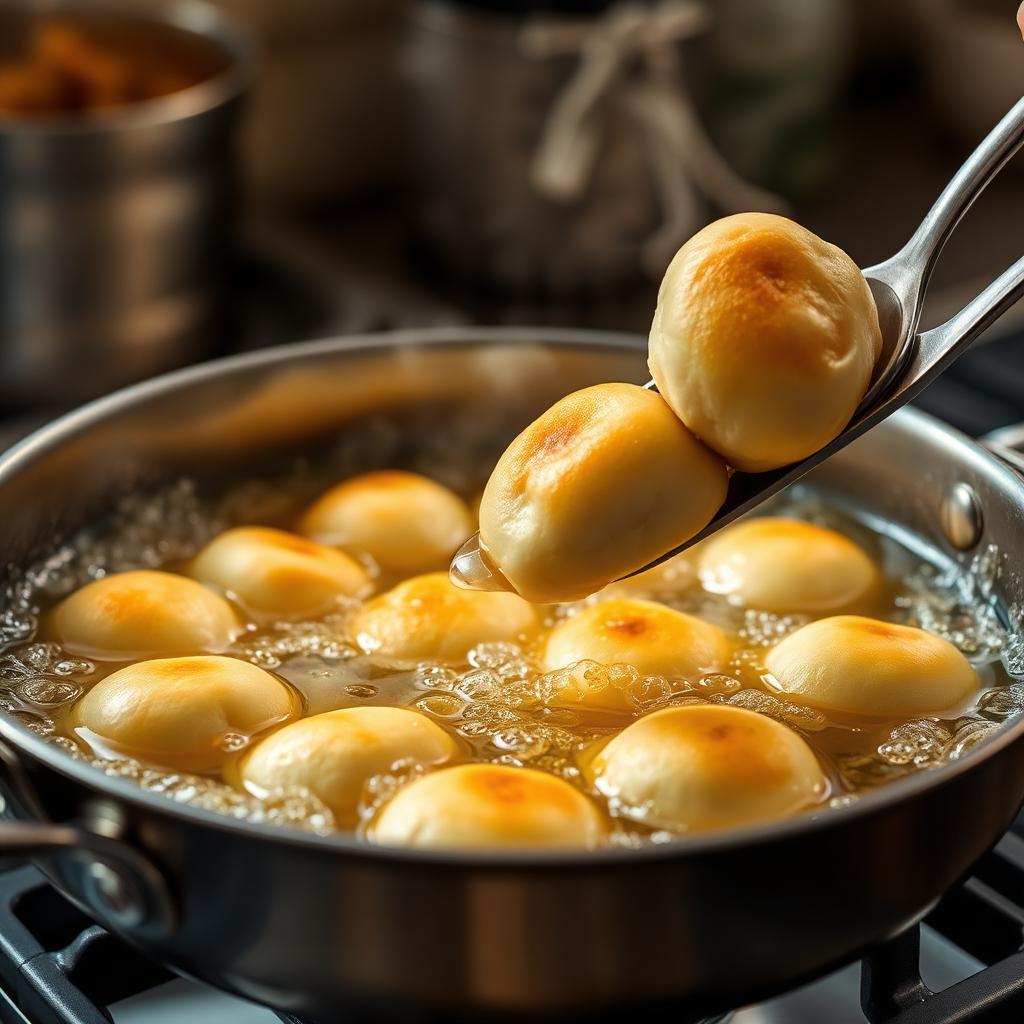
- Heat neutral oil to about 340°F (170°C) and fry the rolls a few at a time, turning, until deep golden on all sides.
- Drain on a rack or paper towels; they should sound hollow and feel light.
Step 3: Assemble the Fricassée
- Split each roll most of the way open, leaving a hinge so the fillings stay put.
- Spread a thin swipe of harissa inside, adjusting to your heat tolerance.
- Layer in potato, then tuna, then slices of egg.
- Finish with olives, a little preserved lemon, and any optional extras, then serve right away.
Expert Tips
- Fry the rolls just before serving for the best texture; reheated fried bread loses its magic.
- Mash the potato lightly with a little olive oil and salt so it acts as a creamy base that holds everything together.
- Build the harissa heat in layers — start mild, taste, and add more rather than overwhelming the sandwich at once.
- Use tuna packed in olive oil for richer flavor, and don't over-drain it.
- A little preserved lemon goes a long way; finely mince it so the brightness is in every bite.
A fricassée is judged in the first bite — crisp bread, then a rush of salt, heat, and acid. Get that opening right and the rest takes care of itself.
Common Mistakes to Avoid
- Frying too hot: the rolls brown before the inside cooks, leaving a doughy center.
- Skipping the acid: without preserved lemon or a squeeze of fresh lemon, the sandwich tastes flat and heavy.
- Going overboard on harissa: too much heat buries the other flavors instead of lifting them.
- Overstuffing: pack in too much and the roll falls apart in your hands.
- Assembling too early: the bread softens and the textures blur, so build each sandwich close to serving.
Conclusion
The Tunisian fricassée is proof that humble ingredients, assembled with care, can tell an entire cultural story. It is street food and heritage food at the same time — a sandwich that carries the warmth of Tunisian Jewish kitchens wherever it goes. Make a batch for Shabbat lunch or a casual gathering, set the fillings out, and let everyone build their own. Once that fried bread crackles and the harissa hits, you will understand why this little sandwich inspires such fierce devotion.
Key Takeaways
- Tunisian fricassée is a deep-fried bread roll stuffed with tuna, egg, potato, olives, preserved lemon, and harissa.
- It is a signature dish of Tunisia's ancient Jewish community and a staple of its diaspora.
- The sandwich is built on contrast: rich fried bread balanced by briny, sour, and spicy accents.
- Made without meat or dairy, the classic version is naturally pareve and pairs with any meal.
- Fry the rolls fresh and assemble just before serving for the best crisp-to-creamy texture.
Frequently Asked Questions
Is Tunisian fricassée the same as the French dish?
No. Despite sharing a French-derived name, the Tunisian fricassée is a deep-fried bread sandwich, not a creamy stew. The name reflects France's historical influence on Tunisian food, but the dish itself is a distinct North African Jewish creation.
Is fricassée kosher and pareve?
The classic fricassée is made with tuna, egg, potato, and vegetables, so it contains neither meat nor dairy and is naturally pareve. Use ingredients with reliable kosher certification and fresh frying oil to keep it fully kosher.
Can I bake the rolls instead of frying them?
You can bake them for a lighter version, but the signature texture of fricassée comes from frying, which gives the bread its tender inside and crisp, golden shell. Baked rolls make a fine sandwich but taste noticeably different.
What can I use instead of harissa?
Harissa is central to the flavor, but if you can't find it, a mix of chili paste with garlic, cumin, and caraway approximates it. Adjust the heat to taste and add a little tomato paste for body.
Can I make fricassée ahead of time?
Prep the fillings and fry the rolls in advance, but assemble each sandwich just before serving. Pre-built fricassée goes soft as the bread absorbs moisture, so last-minute assembly keeps the textures sharp.
Loved this recipe?
Share it with your family, leave a comment, and explore more traditional and modern Jewish dishes on JewishCuisine.
Explore more Traditional recipes