The Jerusalem Bagel (Ka'ak al-Quds): The Soft, Sesame-Crusted Bread of the Old City
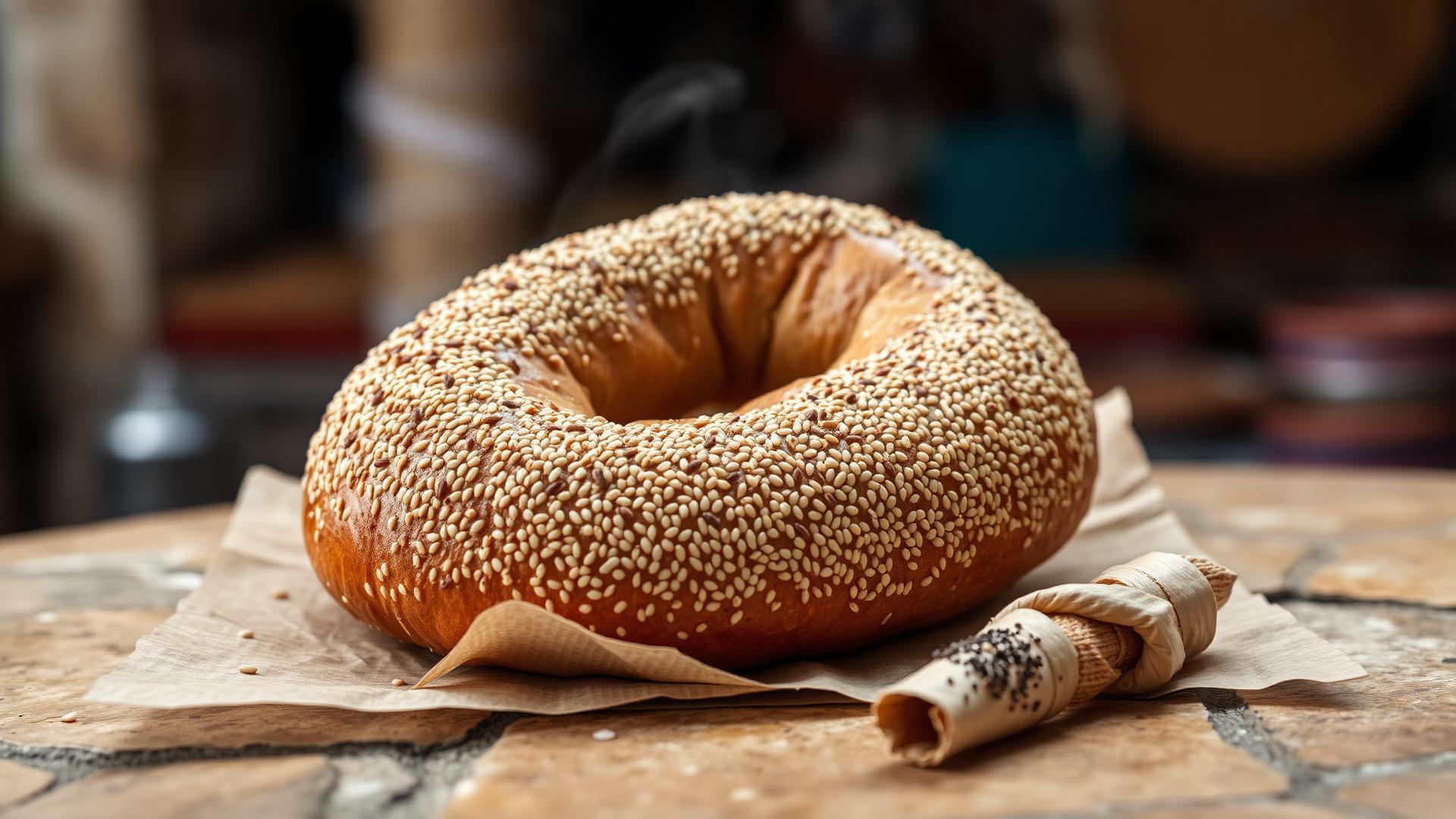
If your idea of a bagel is a dense, chewy New York ring, the first Jerusalem bagel you eat will rearrange your expectations. It is enormous and oval, almost like a stretched hoop, its surface so thickly coated in toasted sesame that it crackles when you tear it. Inside, the crumb is soft, airy, and faintly sweet — closer to a pillowy bread than to anything boiled and bakery-dense. Vendors hand it to you in a sheet of paper with a little twist of za'atar tucked alongside, and you eat it walking, still warm.
Known in Arabic as ka'ak al-Quds — literally the ka'ak of Jerusalem — this bread is one of the defining street foods of the Old City. For generations it has been sold from wooden carts near the Damascus Gate and along the narrow market lanes, stacked into tall golden towers and called out to passersby. It belongs to everyone in the city: Muslim, Christian, and Jewish families alike have grown up on it, and in Jewish households it shows up at breakfast, after synagogue, and at any moment a craving for warm sesame bread strikes.
In this guide we will look at where the Jerusalem bagel comes from, why it is suddenly appearing in bakeries and feeds far from the Old City, the short list of ingredients that make it work, and exactly how to shape and bake one at home. By the end you will be able to pull a tray of warm, sesame-shaggy ka'ak from your own oven.
Table of Contents
- What Makes the Jerusalem Bagel Special
- Historical and Cultural Context
- Why the Jerusalem Bagel Is Trending
- Ingredients and Key Concepts
- Step-by-Step Insights
- Expert Tips
- Common Mistakes to Avoid
- Frequently Asked Questions
- Key Takeaways
- Conclusion
What Makes the Jerusalem Bagel Special
The Jerusalem bagel is defined as much by what it is not as by what it is. It is not boiled, so it never develops the tight, chewy skin of an American bagel. It is not small, often stretching eight to ten inches across. And it is not heavy — a good one is light enough that you can finish a whole loaf and still want another. What it is, instead, is a soft enriched bread shaped into a generous oval ring and pressed into so much sesame that the seeds become part of its identity.
- The dough is enriched with a touch of oil and sugar, giving a tender, slightly sweet crumb.
- It is baked, never boiled, so the texture stays soft and bread-like.
- A heavy sesame crust is essential — the seeds toast in the oven and become deeply nutty.
- Its oval, elongated shape sets it apart from every other bread called a bagel.
Historical and Cultural Context
Sesame-crusted ring breads have been baked across the eastern Mediterranean and the Levant for centuries, and the word ka'ak appears in countless regional variations — from the dry, biscuit-like ka'ak of some Arab kitchens to the soft Jerusalem version sold in the streets. The Jerusalem bagel as we know it grew up in the bakeries of the Old City, where bread vendors became fixtures of daily life, their carts a familiar sight near the gates and in the covered souks.
For Jewish residents of Jerusalem, the ka'ak has long been woven into ordinary routines. It is an affordable, satisfying bread that can be eaten on the go, broken and shared, or carried home for the family table. Because it contains no dairy in its basic form, it is naturally pareve, which means it can accompany either a meat or a milk meal — a quiet practicality that has helped keep it on Jewish tables for generations.
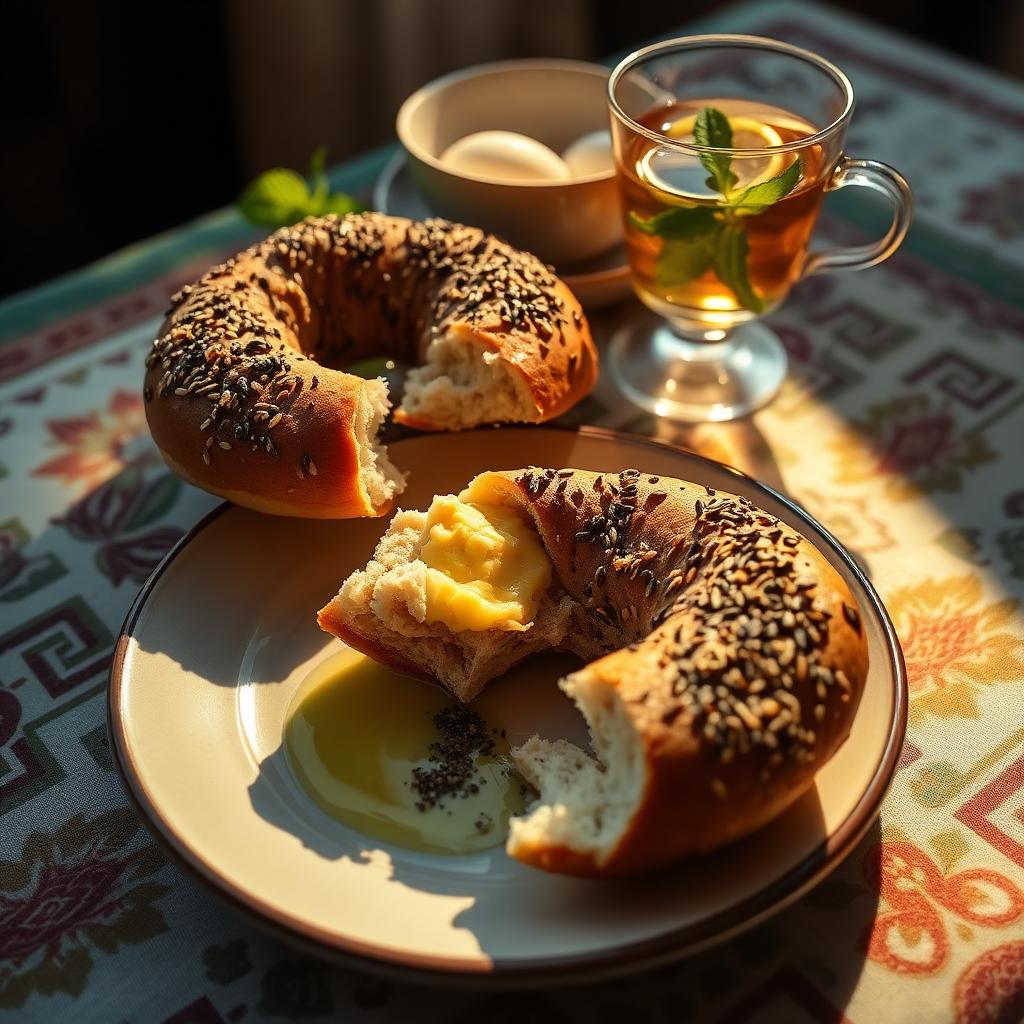
The bread is also a small, daily emblem of how intertwined the city's communities are. The same bread that a vendor sells outside the Damascus Gate appears at Jewish breakfast tables a few streets away. Few foods capture the shared, layered texture of Jerusalem life as simply as a tower of warm sesame bread sold to anyone who walks by.
Why the Jerusalem Bagel Is Trending
Several currents are carrying the Jerusalem bagel onto menus and screens far from the Old City. The biggest is the global rise of Israeli and Levantine baking. Cookbooks and bakeries built around the foods of Jerusalem have introduced international audiences to tahini, za'atar, and sesame breads, and the ka'ak is one of the most photogenic ambassadors of that world — long, golden, and dramatic on a board.
There is also the simple fact that it is a brilliant home-baking project. Unlike a boiled bagel, it requires no special equipment, no malt, and no fussy technique — just a soft dough, a generous bowl of sesame, and a hot oven. As home bakers look for impressive but achievable breads to share online, the Jerusalem bagel hits the sweet spot: striking to look at, forgiving to make, and instantly recognizable to anyone who has visited the city.
Ingredients and Key Concepts
The ingredient list is short and forgiving. The dough is a basic enriched bread dough; the magic is really in the shaping and the sesame. The quantities below make about 4 large Jerusalem bagels.
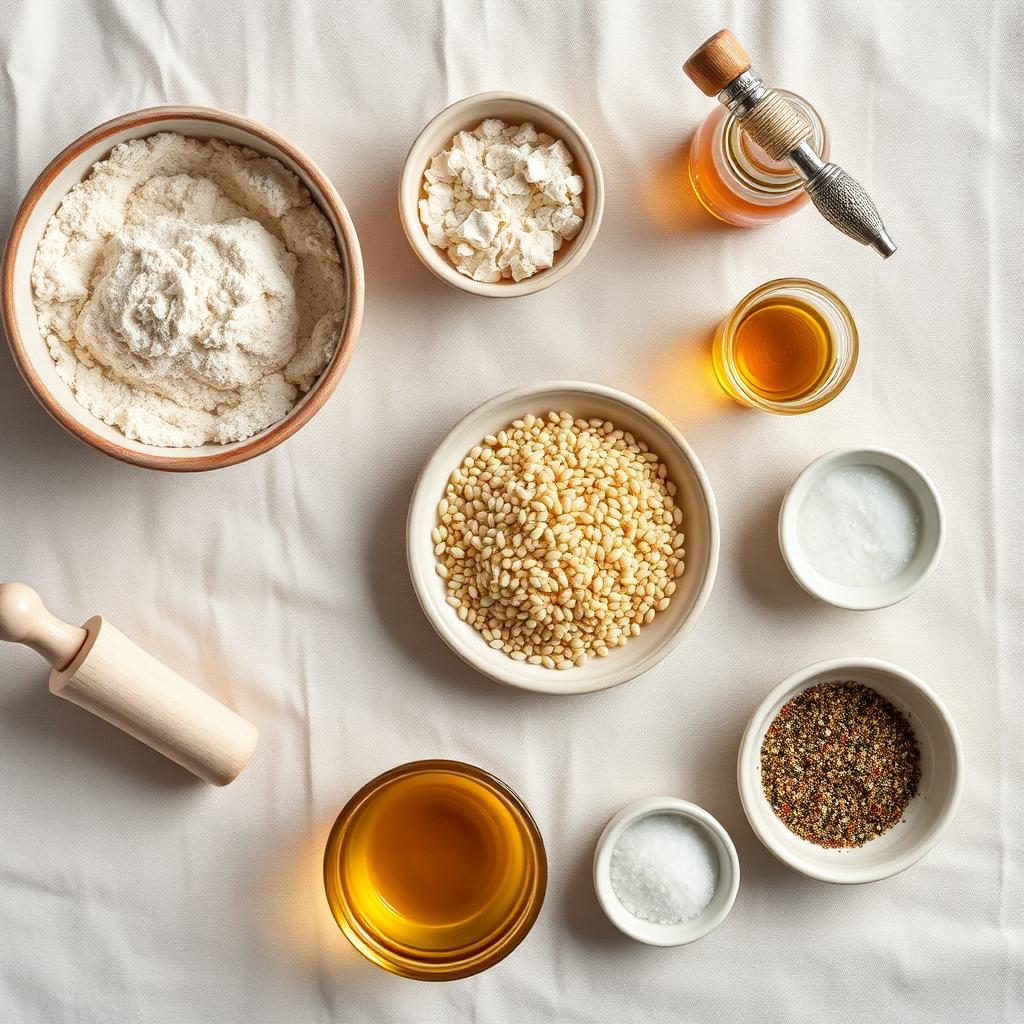
For the Dough
- 4 cups (500 g) all-purpose or bread flour
- 2 ¼ teaspoons (1 packet) active dry yeast
- 1 tablespoon sugar or honey
- 1 ½ teaspoons salt
- 3 tablespoons olive oil
- About 1 ¼ cups (300 ml) warm water
For the Sesame Crust
- 1 to 1 ½ cups (150–200 g) raw white sesame seeds
- 1 egg beaten with 1 tablespoon water, or a little milk or sugar water, for brushing
- Za'atar mixed with olive oil, for serving
Use plenty of sesame — far more than feels reasonable. The seeds should completely cover the top of each bagel, because they are the whole point. A wash of beaten egg helps them stick and gives the crust its glossy, deep-golden finish; a sugar-water wash keeps the bagel pareve if you are serving it with a meat meal.
Step-by-Step Insights
Making Jerusalem bagels is essentially making a soft bread dough, shaping it into big rings, dunking them in sesame, and baking hot. Here is how it comes together.
1. Make and Knead the Dough
Dissolve the yeast and sugar in the warm water and let it foam for a few minutes. Combine the flour and salt, then add the yeast mixture and olive oil. Mix until a shaggy dough forms, then knead for 8 to 10 minutes by hand or machine until smooth, soft, and slightly tacky. You want a supple dough that will stretch easily later.
2. First Rise
Place the dough in an oiled bowl, cover it, and let it rise in a warm spot until doubled, about 1 to 1 ½ hours. A full, relaxed rise makes the dough easier to stretch into the long oval shape without tearing or springing back.
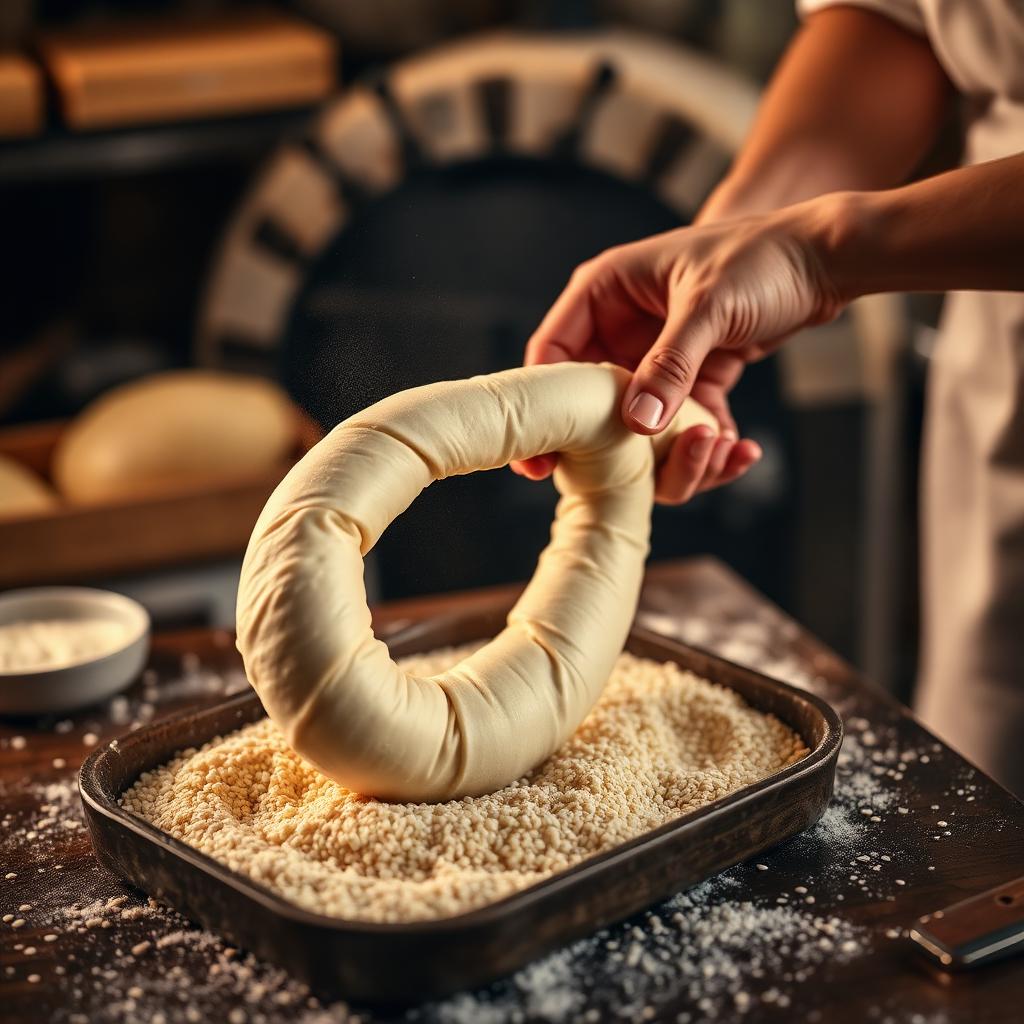
3. Shape the Bagels
Divide the dough into 4 pieces. Roll each into a thick rope about 16 inches long, then join the ends to form a large loop. Gently stretch and flatten the loop into the characteristic elongated oval, keeping the dough an even thickness. Don't make the ring too thin in the middle, or it will bake up dry.
4. Coat in Sesame
Brush the top and sides of each loop with the egg or sugar-water wash. Spread the sesame seeds in a shallow tray and press each bagel firmly, wash-side down, into the seeds so they cling in a thick layer. Lift carefully and place on a parchment-lined baking sheet, sesame-side up.
5. Short Proof and Bake
Let the shaped bagels rest for 15 to 20 minutes while the oven heats to 450°F (230°C). Bake for 15 to 18 minutes, until the sesame is deeply golden and the bread sounds hollow when tapped. For an extra-soft finish, you can mist the oven with a little water at the start. Cool just slightly and eat warm, torn open, with za'atar and olive oil.
Expert Tips
- Keep the dough soft and slightly tacky — a stiff dough will fight you when you try to stretch the long oval.
- Toast a few sesame seeds first to check freshness; stale, rancid sesame will ruin the whole crust.
- Bake hot and fast. A high oven gives a tender interior and a crisp, nutty sesame shell.
- Serve the same day. Jerusalem bagels are at their best within hours of baking, while still soft.
- If serving with a meat meal, use the sugar-water wash instead of egg to keep the bread pareve.
A Jerusalem bagel is meant to be eaten warm, in the street, with sesame on your fingers — speed and softness are the whole experience.
Common Mistakes to Avoid
- Expecting a chewy New York bagel. This bread is soft and light; judge it on its own terms.
- Skimping on sesame. A thin scatter of seeds leaves the bagel bland — coat it generously.
- Rolling the ring too thin in the center, which bakes into a dry, cracker-like band.
- Underbaking, so the sesame stays pale and tastes raw instead of toasty and nutty.
- Letting the loaves sit too long before serving — they firm up quickly once cool.
Frequently Asked Questions
A few questions come up again and again when people make Jerusalem bagels for the first time.
Conclusion
The Jerusalem bagel is proof that the simplest breads can carry the deepest sense of place. There is no boiling, no special flour, no obscure technique — just soft dough, a hot oven, and an unapologetic amount of toasted sesame. What you get in return is a loaf that tastes like the lanes of the Old City: warm, nutty, faintly sweet, and impossible to eat just one piece of.
Bake a batch on a slow morning, tear one open while it is still warm, and dip it into za'atar mixed with good olive oil. With or without a passport stamp, you will understand at once why this humble sesame bread has been a beloved fixture of Jerusalem life for generations. For more breads from the Jewish table, explore our other recipes and keep your oven busy.
Key Takeaways
- The Jerusalem bagel (ka'ak al-Quds) is a large, oval, sesame-crusted bread that is soft and faintly sweet — not a chewy boiled bagel.
- It is baked, never boiled, which gives it its light, pillowy crumb.
- A thick, generous sesame crust is essential to its flavor and identity.
- The basic dough is naturally pareve, so it suits both meat and dairy meals.
- It is best eaten warm and fresh, traditionally torn and dipped in za'atar and olive oil.
Frequently Asked Questions
What is a Jerusalem bagel?
A Jerusalem bagel, or ka'ak al-Quds, is a large oval ring of soft, lightly sweet bread covered in toasted sesame seeds. Unlike a New York bagel it is baked rather than boiled, so it is soft and pillowy rather than dense and chewy.
How is a Jerusalem bagel different from a New York bagel?
The main differences are shape, method, and texture. Jerusalem bagels are large and oval, baked (not boiled), and have a soft, airy crumb with a heavy sesame crust, while New York bagels are smaller, round, boiled, and dense and chewy.
Why is my Jerusalem bagel dry?
Dryness usually comes from rolling the ring too thin in the center or overbaking. Keep the dough an even, generous thickness and bake hot and fast just until the sesame is deeply golden, then serve the same day while it is still soft.
Is the Jerusalem bagel pareve?
The basic dough is pareve, made with flour, water, yeast, oil, and sugar. It stays pareve if you brush it with a sugar-water wash instead of egg, so it can be served alongside either a meat or a dairy meal.
How do you eat a Jerusalem bagel?
Traditionally it is eaten warm, torn into pieces and dipped in za'atar mixed with olive oil. It is also delicious with cheese, hummus, or a boiled egg, and is often enjoyed as a handheld street-food breakfast.
Loved this recipe?
Share it with your family, leave a comment, and explore more traditional and modern Jewish dishes on JewishCuisine.
Explore more Traditional recipes