Malabi: The Silky Rosewater Pudding Taking Over Jewish Dessert Tables
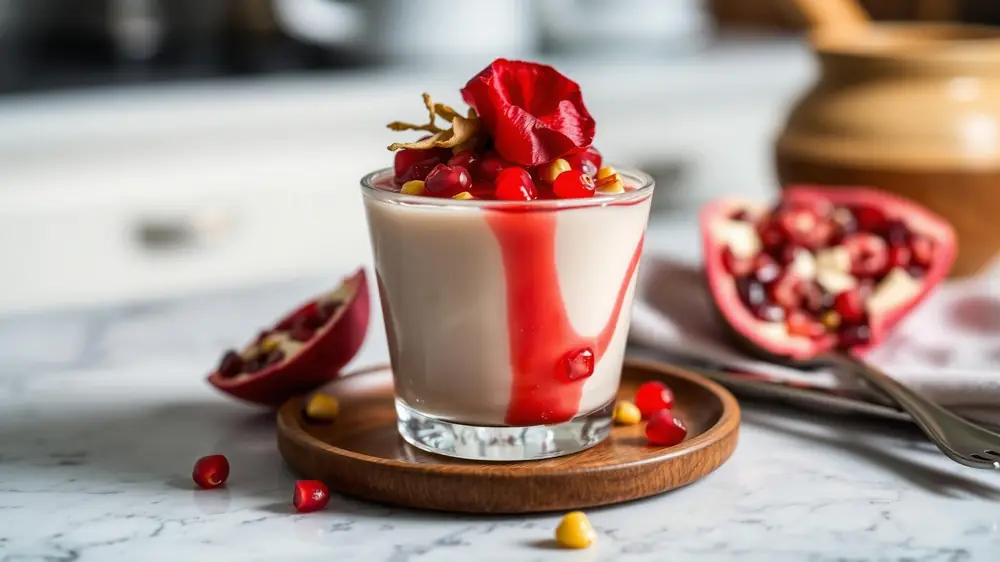
Some desserts shout for attention. Malabi whispers. Spoon into a chilled glass of this pale, trembling milk pudding and you get a cool rush of cream followed by the faint, floral lift of rosewater, a drizzle of ruby syrup, and the crunch of pistachios. It is the kind of dessert that makes a hot afternoon feel survivable, and it has quietly become one of the most beloved sweets in Israel.
Right now malabi is having a real moment far beyond the Middle East. Street stalls in Tel Aviv have turned it into a grab-and-go cup culture, food media keeps spotlighting it as the next panna cotta, and home cooks love that it comes together with pantry staples and zero baking. If you have made the leap into Israeli and Sephardic cooking, this is the dessert to add next.
The best part: malabi is genuinely easy. There are no eggs to temper, no water bath, and no oven. You whisk milk with a little cornstarch and sugar, perfume it with rosewater or orange blossom, chill it, and crown it with whatever toppings make you happy. This guide walks you through the technique, the history, and the small details that separate a silky malabi from a gluey one.
Table of Contents
- What Makes Malabi Special
- A Little Cultural History
- Why Malabi Is Trending
- Ingredients and Key Concepts
- Step-by-Step Instructions
- Topping Ideas
- Expert Tips
- Common Mistakes to Avoid
- FAQs
- Key Takeaways
What Makes Malabi Special?
Malabi sits in the same family as Italian panna cotta and French blancmange, but it has a personality all its own. Instead of gelatin, classic malabi leans on cornstarch (and sometimes a little rice flour) for a soft, spoonable set that wobbles rather than bounces. The flavor is delicate and aromatic rather than rich, which is exactly why it feels so refreshing.
- Naturally light — no eggs, no cream cheese, no heavy custard base.
- Easy to make pareve by swapping in a good plant milk, which makes it perfect after a meat meal.
- Endlessly customizable with syrups, nuts, coconut, and fresh fruit.
- Make-ahead friendly — it actually needs chilling time, so it suits entertaining.
A Little Cultural History
Malabi (also spelled malabia) descends from muhallabia, a milk pudding with deep roots across the Middle East, the Levant, and the Eastern Mediterranean. Versions of milk-and-starch puddings appear in medieval Arabic cookbooks, and the dish spread widely through the Ottoman world. Each region added its own signature: rosewater here, orange blossom there, mastic in Turkey and Greece, ground rice in the Levant.
Jewish communities from across the region — Iraqi, Syrian, Egyptian, Turkish, and Persian families among them — carried their own muhallabia traditions with them. When many of these communities settled in Israel, those puddings met, mingled, and evolved into the cup of rose-pink malabi now sold on Israeli streets. It is a small, sweet example of how Mizrahi and Sephardic kitchens shaped modern Israeli food.
Why Malabi Is Trending
A few forces are pushing malabi into the spotlight at once. Israeli cuisine has had a sustained global surge, and dessert is the natural next frontier after hummus, shakshuka, and tahini took over restaurant menus. Malabi also photographs beautifully — that pale pudding under a streak of red syrup and green pistachios is made for a phone camera.
There is a practical side, too. As more home cooks look for desserts that are lighter, naturally gluten-free, and easy to make dairy-free, malabi checks every box. It scratches the same itch as panna cotta and tres leches without the heaviness, and it can be assembled days ahead — a quiet win for anyone hosting Shabbat or a holiday crowd.
Ingredients and Key Concepts
For the Pudding
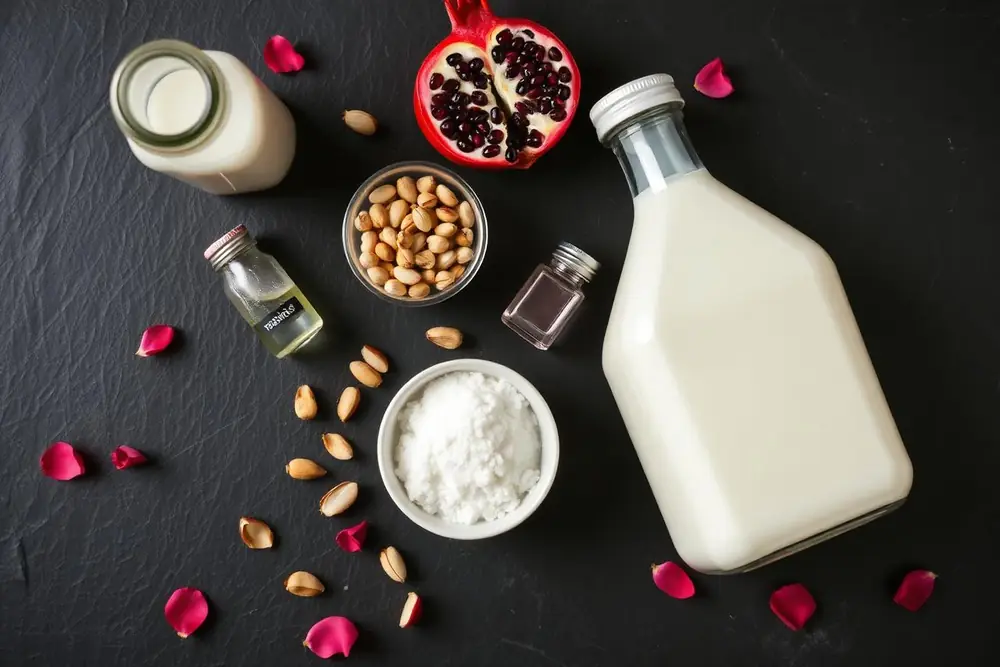
- 4 cups whole milk (or full-fat plant milk for a pareve version)
- ½ cup cornstarch
- ⅓ cup granulated sugar
- 1 to 2 teaspoons rosewater, to taste (start small — it's potent)
- ½ teaspoon orange blossom water (optional, for depth)
- Pinch of salt
For the Topping
- Pomegranate or raspberry syrup (or a quick syrup of sugar, water and grenadine)
- Chopped roasted pistachios
- Pomegranate seeds, shredded coconut, or crushed Lotus-style cookies
- A few dried rose petals for garnish (optional)
Step-by-Step Instructions
Step 1: Make the Slurry
- Whisk the cornstarch into about 1 cup of the cold milk until completely smooth, with no lumps.
- Set this slurry aside — adding cornstarch to hot milk directly is the fastest way to get clumps.
Step 2: Warm the Milk
- Pour the remaining 3 cups of milk into a saucepan with the sugar and salt.
- Warm over medium heat, stirring, until it is hot and steaming but not boiling.
Step 3: Thicken
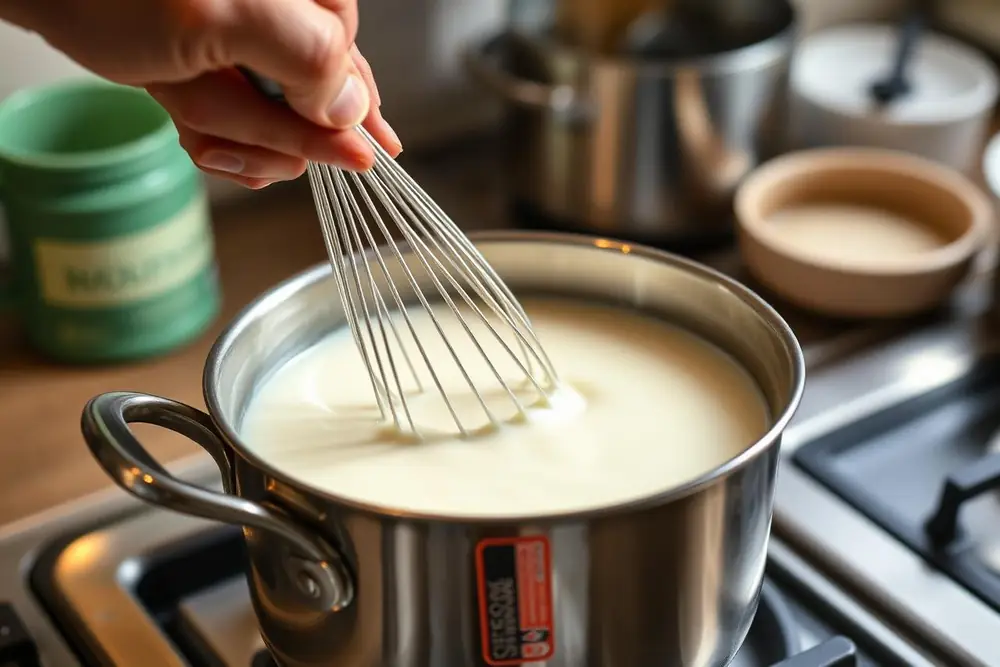
- Whisk the cold cornstarch slurry again, then stream it into the hot milk while whisking constantly.
- Keep whisking over medium heat for 4 to 6 minutes until the mixture thickens to a pourable custard that coats the back of a spoon.
- Remove from the heat the moment it thickens — overcooking makes it gummy.
Step 4: Perfume and Set
- Stir in the rosewater (and orange blossom water if using) off the heat. Taste and adjust — it should be subtle, not soapy.
- Pour into individual glasses or one large dish.
- Press plastic wrap directly onto the surface if you want to avoid a skin, then refrigerate at least 3 hours, or until fully set.
Step 5: Top and Serve
- Just before serving, drizzle generously with pomegranate or raspberry syrup.
- Scatter with pistachios and any other toppings you love.
- Serve cold, straight from the fridge.
Bloom the cornstarch in cold milk, whisk without stopping, and add the rosewater off the heat. Get those three right and your malabi will be silk in a glass.
Topping Ideas
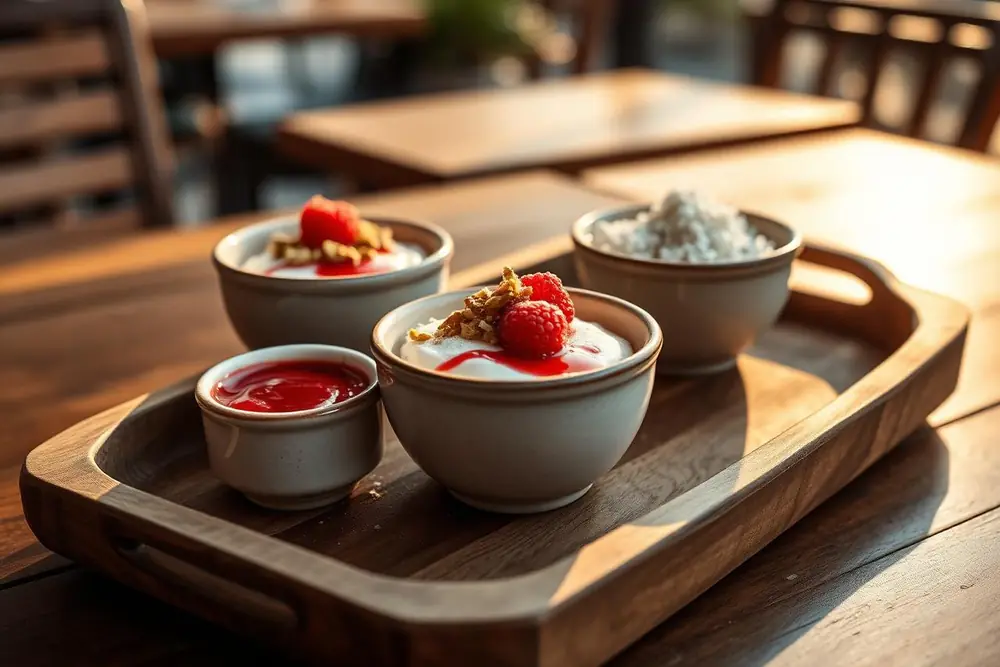
The classic street-cart version wears a slick of rose-red syrup, crushed peanuts or pistachios, and shredded coconut. But malabi is a blank canvas. Try a tart raspberry coulis, a spoon of date syrup (silan), fresh pomegranate seeds in winter, or stone fruit in summer. A few cooks even fold in a whisper of cardamom or saffron for a more Persian profile.
Expert Tips
- Add rosewater a little at a time — too much turns floral into perfume.
- Use full-fat milk (or full-fat plant milk) for the creamiest body.
- Whisk constantly while it thickens to keep the texture lump-free and glossy.
- Chill thoroughly; malabi served warm is loose and disappointing.
- Pour into clear glasses so the layers of pudding and syrup show off.
Common Mistakes to Avoid
- Adding cornstarch to hot milk instead of blooming it in cold milk first (hello, lumps).
- Overcooking the pudding, which makes it pasty rather than silky.
- Going heavy on the rosewater so it tastes like soap.
- Skimping on chilling time, leaving the malabi too soft to set.
- Forgetting the toppings — the syrup and nuts are half the experience.
Key Takeaways
- Malabi is a silky Middle Eastern milk pudding, thickened with cornstarch and perfumed with rosewater.
- It descends from muhallabia and became a street-food icon through Mizrahi and Sephardic Israeli cooking.
- It's egg-free and no-bake, and easily made pareve with full-fat plant milk for after-meat meals.
- The keys are blooming cornstarch in cold milk, whisking constantly, and chilling until fully set.
Frequently Asked Questions
What is malabi made of?
Malabi is a milk pudding made from milk thickened with cornstarch (sometimes a little rice flour), sweetened with sugar, and flavored with rosewater or orange blossom water. It's typically served cold with a fruit syrup, nuts, and coconut.
Is malabi the same as muhallabia?
They're closely related. Muhallabia is the broader Middle Eastern and Levantine milk pudding tradition, and malabi is the Israeli name and style — often set softer and finished with the signature rose-red syrup and pistachios.
Can I make malabi dairy-free or pareve?
Yes. Because it's set with cornstarch rather than gelatin or eggs, you can swap in a full-fat plant milk such as oat, soy, or almond and get a similar creamy result, making it pareve and suitable after a meat meal.
Why is my malabi lumpy or gummy?
Lumps usually come from adding cornstarch to hot milk instead of dissolving it in cold milk first. A gummy, pasty texture comes from overcooking — pull it off the heat as soon as it thickens.
How long does malabi keep?
Covered in the refrigerator, malabi keeps well for about 3 to 4 days. Add the syrup and toppings just before serving so they stay fresh and the pudding doesn't get watery.
Loved this recipe?
Share it with your family, leave a comment, and explore more traditional and modern Jewish dishes on JewishCuisine.
Explore more Desserts recipes