Kokosh Cake: The Hungarian Jewish Chocolate Roll Worth the Rise
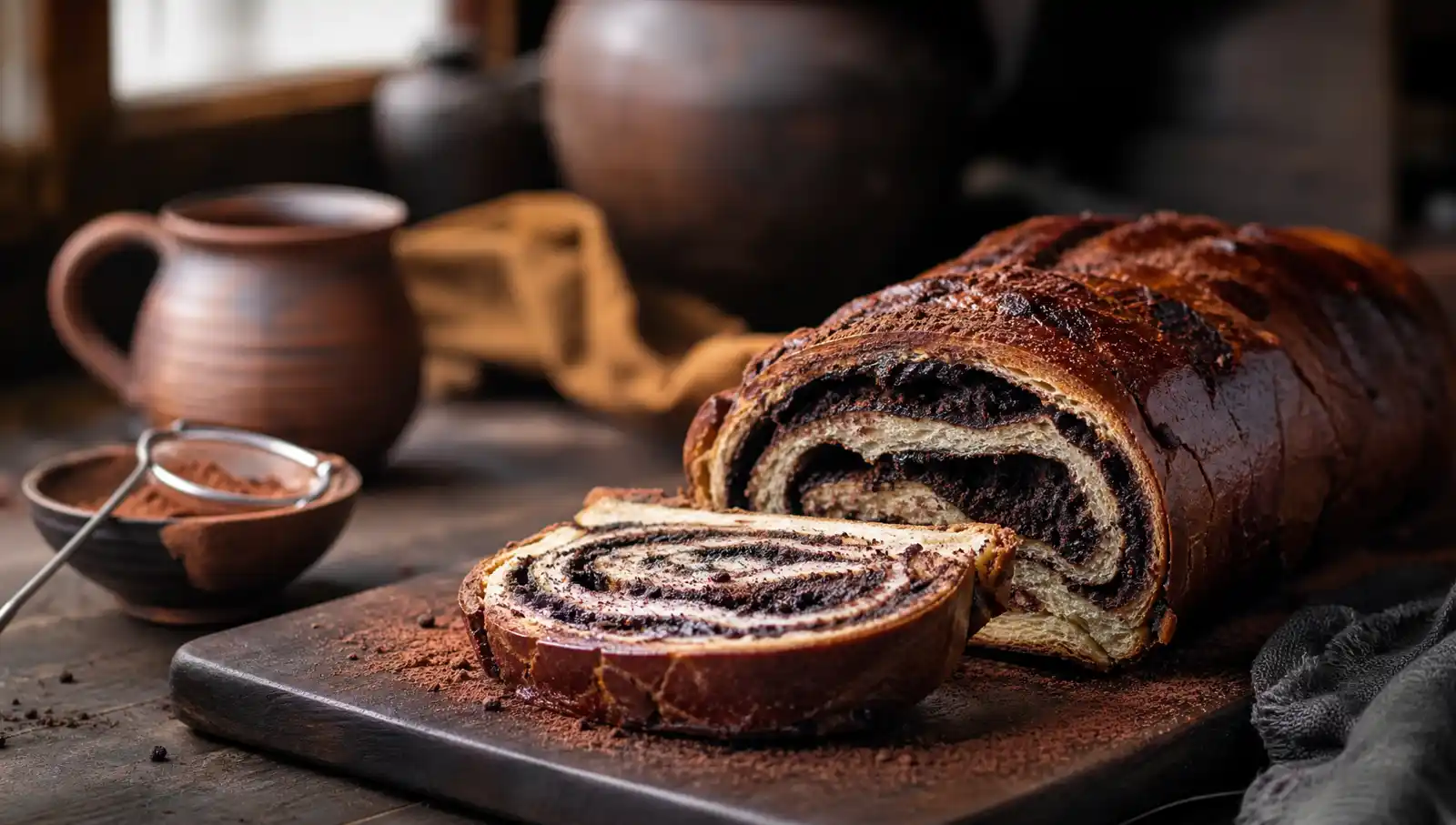
If you grew up in a Hungarian Jewish household, the smell of kokosh cake baking is pure memory — warm yeast, toasted cocoa, and a whisper of vanilla drifting out of the oven on a Sunday morning. Slice into the finished loaf and you find a tight coil of tender dough wound around a dark, almost fudgy ribbon of chocolate. It is not fancy, and it is not overly sweet. It is the kind of cake meant to be torn apart at the table and dunked into strong coffee or a glass of milk.
Americans often meet kokosh and immediately reach for a comparison to chocolate babka. The two are cousins, but they are not the same. Kokosh (from the Hungarian kakaós kalács, meaning cocoa cake) is flatter, denser, and drier, with a higher ratio of cocoa filling to dough and none of the syrup soak or streusel that make babka a rich dessert. Kokosh is an everyday cake — humble, sturdy, and endlessly satisfying.
In this guide we will trace where kokosh comes from, why it is suddenly showing up far beyond Hungarian and Hasidic bakeries, exactly what goes into an authentic loaf, and how to make chocolate kokosh cake at home. We will cover the details that matter most — the enriched dough, the thick cocoa paste, the tight rolling, and the bake — so your first loaf comes out with those unmistakable dark swirls.
Table of Contents
- What Kokosh Cake Actually Is
- Historical and Cultural Context
- Why Kokosh Cake Is Trending Right Now
- Ingredients and Key Concepts
- Step-by-Step Insights
- Expert Tips
- Common Mistakes to Avoid
- Frequently Asked Questions
- Key Takeaways
- Conclusion
What Kokosh Cake Actually Is
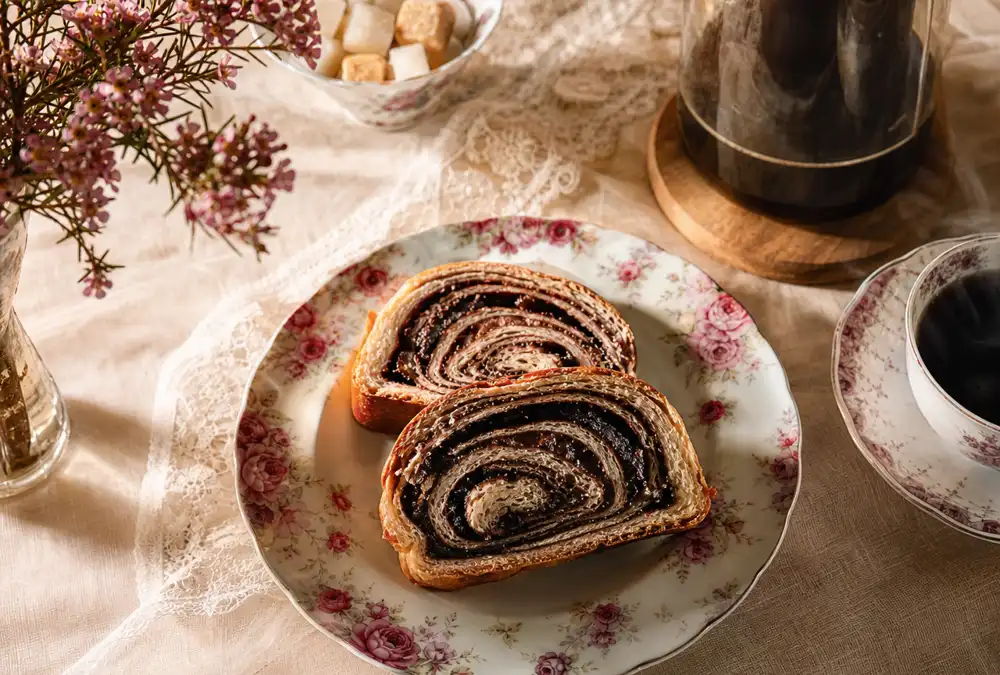
Kokosh cake is a rolled yeast cake filled with a dense cocoa paste. A soft, lightly enriched dough is rolled thin, spread generously with a spreadable chocolate filling, rolled up into a tight log, and baked until the outside is glossy and the inside reveals compact, dark swirls. Unlike a fluffy cinnamon roll or a lofty babka, kokosh is deliberately low and dense — the dough is there to carry the chocolate, not to steal the show.
The classic version is chocolate, but a nut-filled walnut kokosh (diós) and a poppy seed kokosh (mákos) are just as traditional in Hungarian baking. What ties them together is the format: a thin sheet of yeast dough wrapped around a bold, spreadable filling and baked into a long, sliceable loaf. Kokosh is typically parve (dairy-free) in Jewish bakeries so it can be served after a meat meal, which is part of why it became a fixture on the Jewish dessert table.
- A rolled yeast cake with a dense, dark cocoa filling.
- Flatter, denser, and less sweet than chocolate babka.
- Traditionally comes in chocolate, walnut, and poppy seed versions.
- Often made parve (dairy-free) so it can follow a meat meal.
Historical and Cultural Context
Kokosh belongs to the great tradition of Central European yeast cakes known as kalács in Hungary — enriched, braided or rolled breads that sit somewhere between bread and pastry. In the Jewish communities of Hungary, Slovakia, Romania, and surrounding regions, these cakes became part of Shabbat and holiday baking, adapted to the laws of kashrut and to the rhythms of a home where fresh baking marked the week.
As Hungarian and Central European Jews emigrated — many to New York before and after the Second World War — they brought kokosh with them. It found a durable home in the Hasidic bakeries of Brooklyn, where long, flat kokosh loaves in chocolate and cinnamon are still sold by the pound. For generations of Jewish New Yorkers, a slab of kokosh from the corner bakery has been the taste of Sunday morning, a bar mitzvah kiddush, or a package sent from a grandmother's kitchen.
Because it is sturdy and keeps well, kokosh also travels — it was, and still is, a classic cake to bring to someone's home or to pack for a journey. Every family guards its own preferences: some like the dough thinner and the loaf almost crisp, others prefer it softer and taller. What endures is the essential idea of a modest, chocolate-laced yeast cake that tastes best in company, torn and shared.
Babka is dessert; kokosh is breakfast, snack, and comfort all at once — the everyday chocolate cake of the Hungarian Jewish kitchen.
Why Kokosh Cake Is Trending Right Now
Chocolate babka spent the last decade as the darling of bakeries and social feeds, and that spotlight has finally swung toward its humbler relatives. As bakers and eaters look for the next authentic thing, kokosh has emerged as the knowing choice — the cake that people who grew up with it insist is better, or at least more honest, than the glossier babka.
There is also a broader hunger for less sugary, more old-fashioned baked goods. Kokosh fits the moment perfectly: it is chocolatey but restrained, satisfying without being cloying, and it pairs naturally with coffee rather than needing to be a showstopper on its own. In a food culture rediscovering the appeal of everyday, home-style baking, a dunk-worthy cocoa roll is exactly the kind of thing that spreads.
Finally, the renewed interest in documenting Jewish and Central European food heritage has put kokosh on the map for cooks who never grew up with it. Food writers, heritage bakers, and family cookbooks are all giving these regional cakes their due, and kokosh — approachable, freezer-friendly, and deeply nostalgic — is an easy one to fall for.
Ingredients and Key Concepts
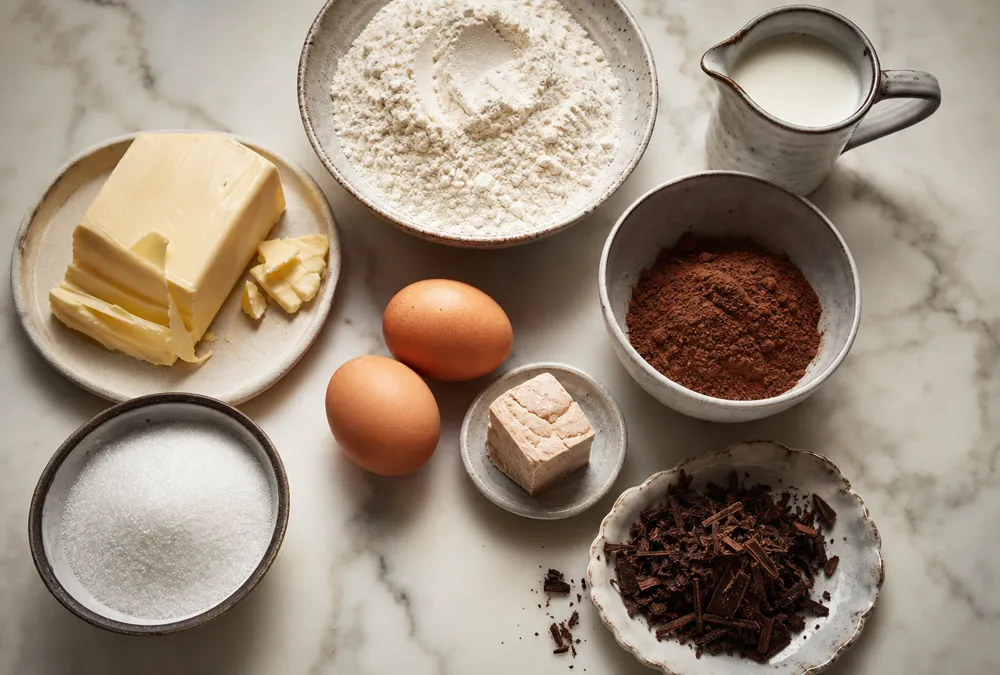
Kokosh has two parts: a soft enriched yeast dough and a thick, spreadable cocoa filling. Neither is complicated, but the balance between them is what defines the cake. Here is what you need and why each element matters.
- Flour: all-purpose or bread flour forms a soft but structured dough that rolls thin without tearing.
- Yeast: active dry, instant, or fresh yeast leavens the dough. Kokosh rises modestly — it is meant to be dense, not airy.
- Eggs and fat: eggs enrich the dough, while butter (for dairy) or oil/margarine (for parve) keeps it tender.
- Sugar and salt: a little sugar in the dough, balanced by salt, so the sweetness comes mainly from the filling.
- Milk or water: milk gives a richer crumb; water or plant milk keeps the loaf parve.
- Cocoa powder: the heart of the filling. Use a good unsweetened cocoa for deep, dark flavor.
- Filling fat and sugar: butter or oil plus sugar bind the cocoa into a spreadable paste; some bakers add a little melted chocolate for extra richness.
- Flavor boosters: vanilla, a pinch of salt, and sometimes cinnamon or ground walnuts deepen the filling.
Step-by-Step Insights
Kokosh rewards patience with the dough and generosity with the filling. Here is the arc of making a loaf from scratch.
- Make the dough: Warm the milk, dissolve the yeast with a pinch of sugar, then mix with flour, eggs, sugar, salt, and softened fat. Knead until smooth and elastic.
- First rise: Let the dough rise in a covered bowl until nearly doubled, about one to two hours depending on your kitchen's warmth.
- Mix the filling: Beat cocoa powder with softened butter or oil, sugar, vanilla, and a pinch of salt into a thick, spreadable paste. It should be dark and glossy, not dry or crumbly.
- Roll thin: On a floured surface, roll the dough into a large, thin rectangle. A thin sheet is key to getting those tight, numerous cocoa swirls.
- Spread and roll: Spread the cocoa filling evenly to the edges, then roll up snugly from a long side into a tight log, pinching the seam closed.
- Second rise and bake: Place seam-side down on a lined tray, let it rest briefly, brush with egg wash, and bake in a moderate oven until deep golden and set. Cool before slicing.
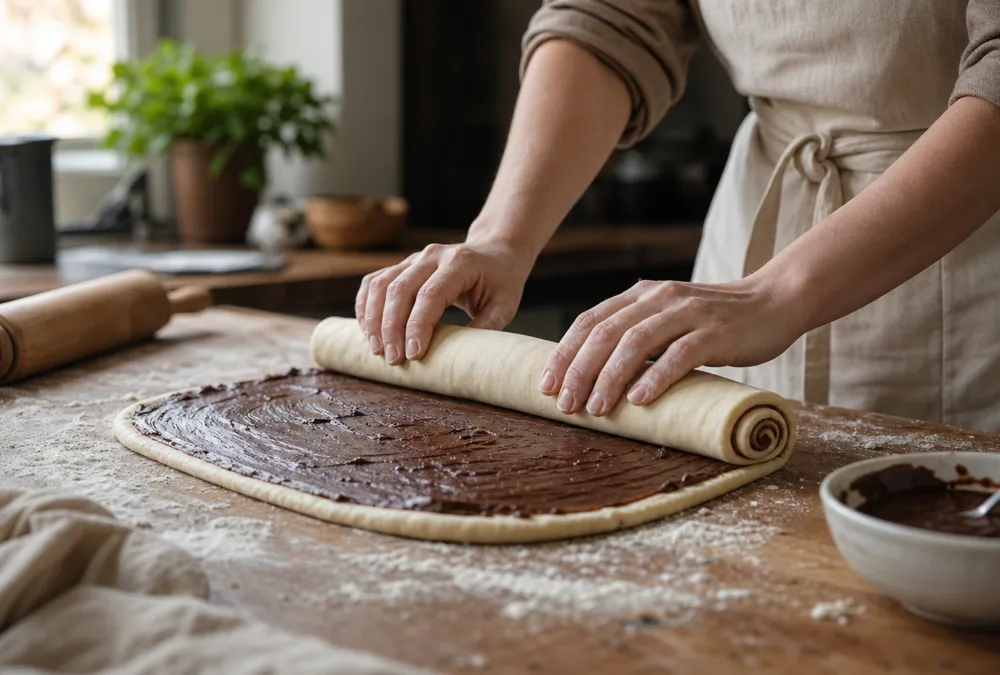
The single most important move is rolling the dough thin and the log tight. Because kokosh is defined by its dense spiral of chocolate, a thick sheet or a loose roll gives you a bready cake with too little filling and gaps where the swirls should be. Take the extra minute to roll the dough out generously and to keep tension as you coil it up.
Expert Tips
- Roll it thin: A thin dough sheet means more layers and more chocolate per slice — the hallmark of good kokosh.
- Make a spreadable filling: The cocoa paste should spread like a thick frosting. If it's stiff, warm it slightly or add a touch more fat.
- Keep it parve if needed: Swap butter and milk for oil or margarine and water so the cake can follow a meat meal.
- Don't over-proof: Kokosh should stay dense. A modest second rise keeps the swirls tight rather than blowing them apart.
- Egg wash for shine: A brush of beaten egg gives that classic glossy, deep-brown crust.
- Cool before slicing: Warm kokosh crumbles and smears; let it set so you get clean slices that show off the spiral.
Common Mistakes to Avoid
Kokosh is forgiving, but a few missteps will leave you with a bready, under-filled loaf. Watch for these.
- Rolling the dough too thick: This is the number one error. Thick dough means few swirls and a bread-like cake instead of a chocolate one.
- A dry, crumbly filling: If the cocoa paste won't spread, it tears the dough and leaves bald patches. Aim for a soft, glossy, frosting-like consistency.
- Skimping on filling: Kokosh should have more chocolate relative to dough than babka. Be generous, spreading right to the edges.
- Over-proofing: Letting the shaped loaf rise too long makes it puff and loosen, so the tight swirls separate during baking.
- Slicing while hot: Cutting too soon smears the filling and collapses the layers. Patience gives clean, defined slices.
- Under-baking the center: A dense loaf needs enough time for the middle to set. Bake until deeply colored and firm to a gentle press.
Conclusion
Kokosh cake is proof that the most beloved recipes are often the humblest. There is no syrup soak, no crown of streusel, no dramatic braid — just tender dough, a thick ribbon of dark cocoa, and the patience to roll it thin and tight. What you get in return is a cake that tastes like a Hungarian Jewish grandmother's kitchen: comforting, chocolatey, and made for sharing.
Bake a loaf this weekend and serve it the traditional way — sliced or torn, with strong coffee alongside for dunking. Once you've made your own, you'll understand why so many people who grew up on kokosh quietly prefer it to its flashier cousin, and why this modest chocolate roll has held its place on the Jewish table for generations.
Key Takeaways
- Kokosh cake is a Hungarian Jewish rolled yeast cake with a dense, dark cocoa filling.
- It is flatter, denser, and less sweet than chocolate babka, with more filling per slice.
- Rolling the dough thin and the log tight is the key to plentiful chocolate swirls.
- Make it parve by using oil or margarine and water so it can follow a meat meal.
- Cool the loaf fully before slicing, and serve it with coffee for dunking.
Frequently Asked Questions
What is the difference between kokosh and babka?
Both are rolled chocolate yeast cakes, but kokosh is flatter, denser, and less sweet, with a higher ratio of cocoa filling to dough. Babka uses more butter and sugar, is often twisted and baked tall, and is finished with a sugar syrup and sometimes streusel.
What does kokosh mean?
Kokosh comes from the Hungarian kakaós kalács, meaning cocoa cake. Kalács refers to the family of enriched Central European yeast cakes, and the kokosh version is defined by its dark cocoa filling.
Is kokosh cake dairy or parve?
It can be either. Jewish bakeries often make kokosh parve — using oil or margarine and water instead of butter and milk — so it can be served after a meat meal. A dairy version with butter and milk gives a slightly richer crumb.
Why is my kokosh cake bready instead of chocolatey?
Almost always because the dough was rolled too thick or the filling was too sparse. Roll the dough into a thin sheet, spread a generous, spreadable cocoa filling to the edges, and roll it into a tight log for many close-packed swirls.
How do you store kokosh cake?
Kokosh keeps well wrapped at room temperature for a few days and freezes beautifully for up to a couple of months. Wrap it tightly, and warm slices briefly or dunk them in coffee to refresh them.
Loved this recipe?
Share it with your family, leave a comment, and explore more traditional and modern Jewish dishes on JewishCuisine.
Explore more Desserts recipes