Knafeh: The Gooey Cheese Pastry Lighting Up Dessert Tables Everywhere
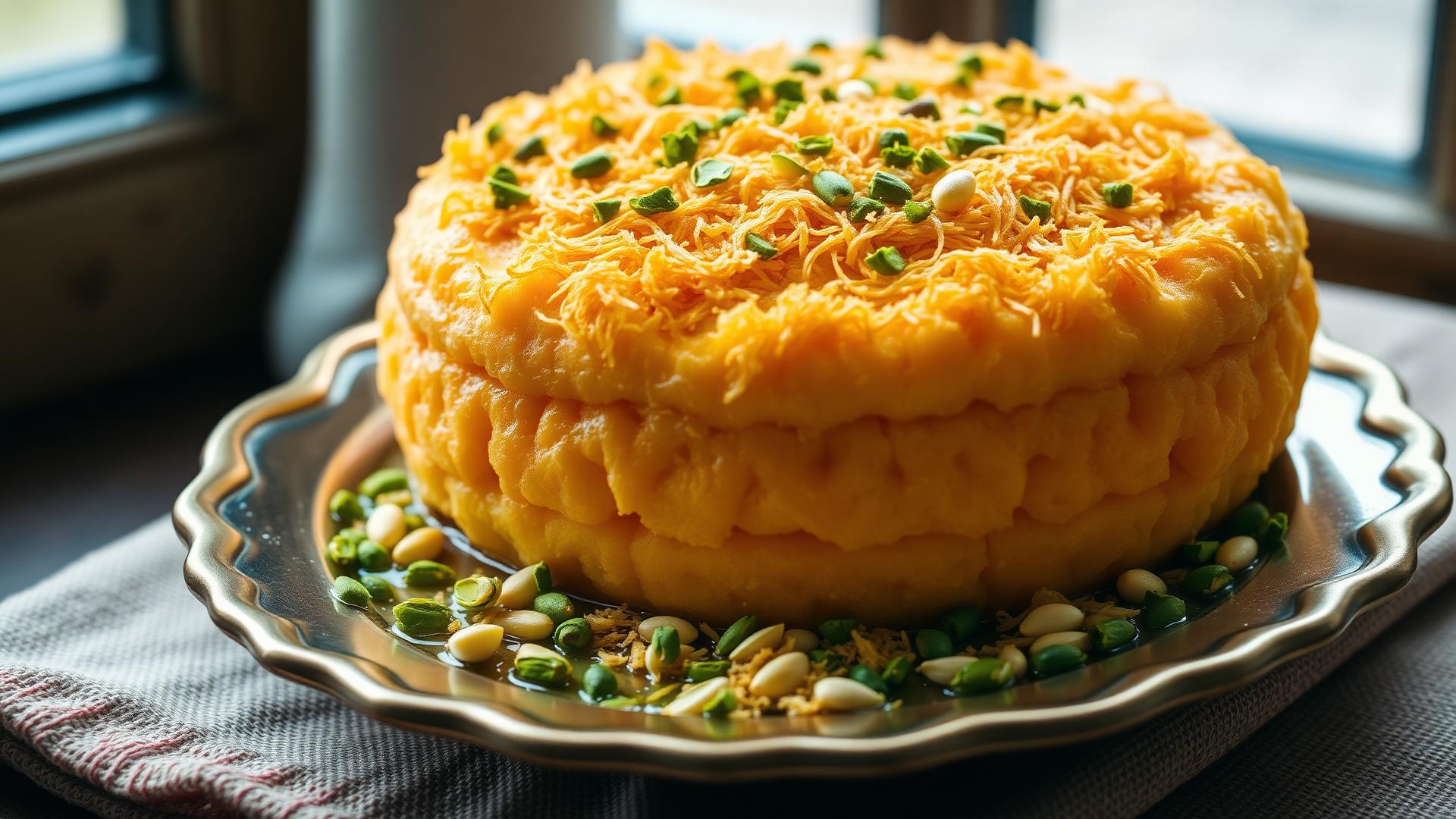
Some desserts whisper, and some put on a show. Knafeh belongs firmly in the second camp. Cut into a fresh round and the top shatters into crisp, golden threads while a slow tide of warm, stretchy cheese pulls upward behind your fork. A glossy rose-scented syrup soaks the base, and a snowfall of bright green pistachios crowns the whole thing. It is sweet, salty, crunchy, and molten all at once — a dessert engineered for drama.
For generations knafeh lived mostly in Middle Eastern bakeries and at celebrations across Sephardic, Mizrahi, and Levantine communities. Today it is everywhere: on dessert menus, in viral videos, even reimagined inside chocolate bars. And more home cooks than ever are deciding to skip the bakery line and build that cheese pull in their own kitchens.
This guide walks you through all of it — where knafeh comes from, why it is suddenly inescapable, the handful of ingredients that make or break it, the technique behind that signature crisp-and-gooey contrast, and the mistakes that turn a showstopper into a soggy disappointment. By the end you will understand not just how to make knafeh, but why each step matters.
Table of Contents
- What Makes Knafeh Special
- Historical and Cultural Context
- Why Knafeh Is Trending
- Ingredients and Key Concepts
- Step-by-Step Insights
- Expert Tips
- Common Mistakes to Avoid
- Frequently Asked Questions
- Key Takeaways
- Conclusion
What Makes Knafeh Special
Knafeh (also spelled kunafa, kanafeh, or knafe) is a warm cheese pastry built from a base of shredded phyllo-like dough called kataifi, a generous layer of soft, mild cheese, and a final bath of sweet, often floral syrup. What sets it apart from nearly every other dessert is the interplay of textures and the savory-sweet balance. The cheese is barely sweetened, so it tastes almost like a cheese course gone gloriously rogue.
- It delivers a rare contrast: shatter-crisp pastry over a soft, stretchy cheese center.
- The cheese is mild and salty, balancing the sweetness rather than competing with it.
- It is best served warm, making it a dramatic, fresh-from-the-pan centerpiece.
- It scales beautifully — bake it in one big round to share or in individual portions.
Historical and Cultural Context
Knafeh has deep roots across the eastern Mediterranean, with the city of Nablus often celebrated for its famous orange-tinted version made with a stretchy white cheese. From the Levant the dessert traveled across the Ottoman world, picking up regional names, cheeses, and flourishes along the way. Versions appear from Turkey to the Balkans to North Africa, each kitchen putting its own stamp on the pastry and the syrup.
Within Jewish communities, knafeh became cherished across Sephardic and Mizrahi tables, especially among families with roots in Syria, Iraq, North Africa, and the wider Levant. It is a beloved fixture at celebrations and is particularly associated with Shavuot, the holiday when dairy desserts take center stage. In Israel today, knafeh stalls and bakeries draw devoted crowds, and the dessert has become a shared point of culinary pride across the region's many communities.
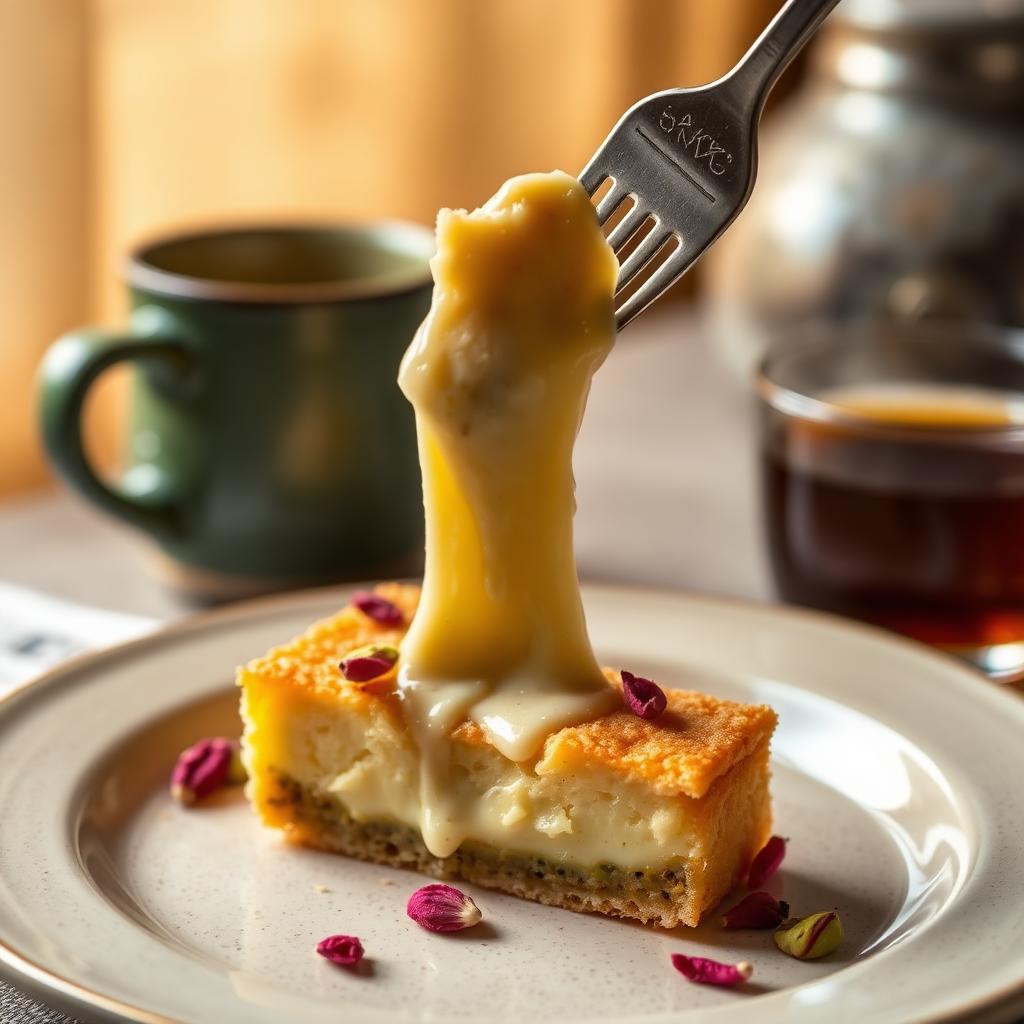
That layered heritage is part of what makes knafeh so meaningful. It carries memories of holiday tables and bustling markets, of grandmothers stretching cheese and of bakers spinning copper pans. It is a dessert that belongs to many cultures at once, a sweet thread woven through the broader story of Mediterranean and Middle Eastern food.
Why Knafeh Is Trending
Knafeh was practically built for the social-media era. The cheese pull is irresistible video — a slow, glossy stretch that begs to be watched on repeat. As short-form food content exploded, knafeh became a star, and the recent wave of pistachio-and-kataifi chocolate bars only amplified the obsession, sending curious eaters in search of the original dessert that inspired them.
There is also the broader rise of Mizrahi, Sephardic, and Levantine cuisine in American food media. Ingredients that once felt exotic — kataifi dough, rose water, orange-blossom syrup, pistachios — are now stocked in mainstream and specialty stores alike. Once those are within reach, knafeh stops being a restaurant-only treat and becomes a weekend project. Add the holiday connection to Shavuot and the general love of warm, shareable desserts, and the surge in search interest makes perfect sense.
Ingredients and Key Concepts
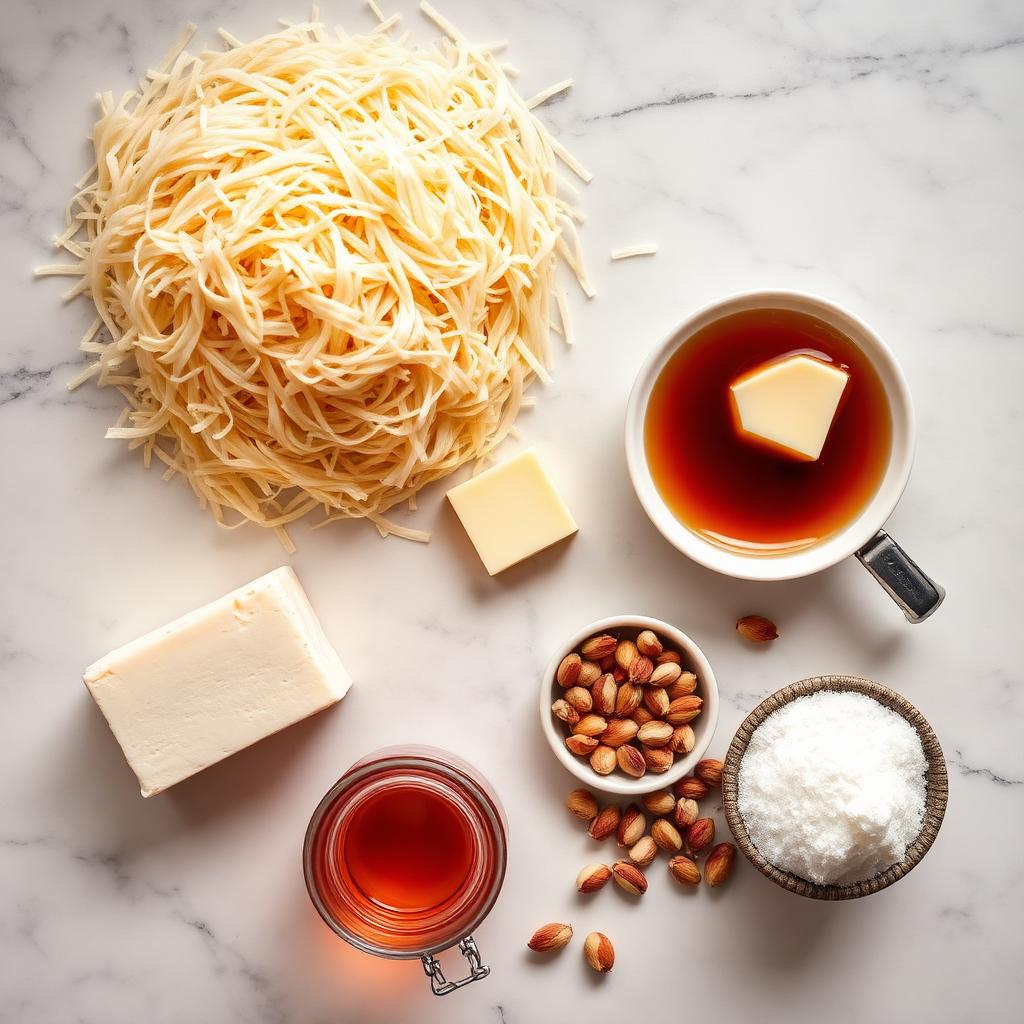
Knafeh has a short ingredient list, which means each component carries real weight. The two things to get right are the pastry, which must crisp deeply, and the cheese, which must melt into stretchy strands without turning rubbery. Here is what you need for one 10-inch round, roughly 10 to 12 servings.
Core Ingredients
- 1 pound (450 g) kataifi (shredded phyllo) dough, thawed if frozen
- 1 cup (225 g) unsalted butter or ghee, melted
- 1 pound (450 g) soft, low-salt melting cheese such as akkawi or fresh mozzarella, plus a little ricotta for creaminess
- A pinch of ground mastic or orange food coloring (optional, for the classic orange hue)
- ½ cup finely crushed pistachios, for garnish
For the Syrup (Attar)
- 1 ½ cups (300 g) granulated sugar
- ¾ cup (180 ml) water
- 1 tablespoon lemon juice
- 1 teaspoon rose water or orange-blossom water (or a little of both)
Step-by-Step Insights
The key to great knafeh is sequencing. You want the syrup made and fully cooled before the pastry comes out hot, because pouring cool syrup over warm knafeh is what keeps the base crisp while flavoring it through. Rushing that contrast is the number-one reason home versions turn soggy.
Step 1: Make the Syrup First
- Combine the sugar and water in a small saucepan over medium heat and stir until dissolved.
- Add the lemon juice, bring to a gentle simmer, and cook for 8 to 10 minutes until lightly syrupy.
- Stir in the rose or orange-blossom water, then remove from the heat and let it cool completely.
- Cool syrup over hot pastry is the secret to a crisp base — do not skip the cooling.
Step 2: Prepare the Kataifi
- Pull the kataifi apart and chop it into shorter pieces so it packs evenly.
- Drizzle the melted butter over the strands and toss thoroughly with your hands until every thread is coated.
- Even buttering is what turns the pastry deep golden and shatter-crisp instead of pale and chewy.
- Press a little over half the buttered kataifi firmly into a buttered round pan to form a solid base.
Step 3: Layer the Cheese
- If using akkawi, soak it first to remove salt, then grate or slice and pat dry.
- Spread the cheese in an even layer over the base, leaving a small border around the edge.
- Cover the cheese completely with the remaining buttered kataifi and press gently to seal.
- An even cheese layer ensures every slice delivers that signature stretch.
Step 4: Bake, Soak, and Serve
- Bake at 400°F (200°C) until the top and edges are deep golden, about 30 to 40 minutes.
- For the classic look, you can start it on the stovetop to color the base, then finish in the oven.
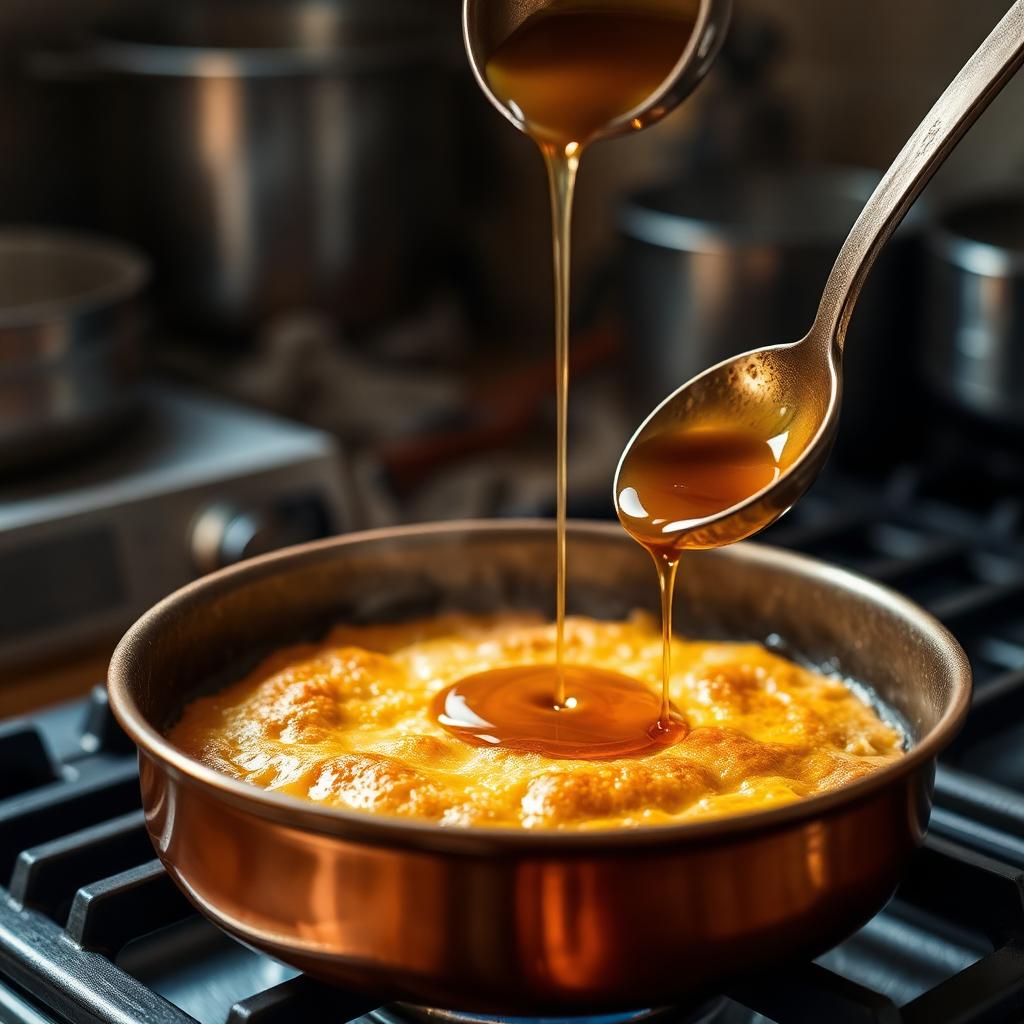
- The moment it comes out, pour the cool syrup evenly over the hot pastry — it will hiss and sizzle.
- Let it rest a few minutes, dust with crushed pistachios, and serve warm for the best cheese pull.
Timing is everything with knafeh. Serve it warm, soon after the syrup soak, and you get the full crisp-and-molten experience. Let it sit too long and the cheese firms up, so plan to bake it just before your guests are ready for dessert.
Expert Tips
- Make the syrup well ahead so it is fully cool when the hot knafeh comes out of the oven.
- Butter the kataifi generously and evenly — dry spots stay pale and never crisp up.
- Soak salty akkawi cheese before using, changing the water a few times to mellow it.
- Add a little ricotta or mozzarella to the cheese blend for a reliably stretchy melt.
- Serve knafeh warm and freshly soaked; reheat gently in the oven, never the microwave.
Common Mistakes to Avoid
- Pouring hot syrup over hot pastry, which steams the base and leaves it soggy instead of crisp.
- Under-buttering the kataifi, resulting in a pale, chewy crust with no shatter.
- Using a sharp, aged, or overly salty cheese that turns rubbery instead of stretchy.
- Skipping the cheese soak, leaving the dessert far too salty to enjoy.
- Letting it sit too long before serving, so the cheese sets and the famous pull disappears.
Respect the syrup timing, butter your pastry well, choose a mild melting cheese, and serve it warm — do those four things and you will pull a tray of knafeh from your own oven that rivals any bakery counter. It is one of the most rewarding and impressive desserts you can make at home.
Key Takeaways
- Knafeh is a warm Middle Eastern cheese pastry made from crisp kataifi dough, mild melting cheese, and fragrant syrup.
- Its appeal is the contrast: shatter-crisp pastry over soft, stretchy, lightly salted cheese.
- Pour cool syrup over hot pastry to keep the base crisp while flavoring it through.
- Use a mild, low-salt melting cheese such as soaked akkawi or mozzarella blended with ricotta.
- Serve knafeh warm and freshly soaked for the best texture and cheese pull; it is a dairy, pareve-free Shavuot favorite.
Frequently Asked Questions
What is knafeh made of?
Knafeh is made from shredded phyllo dough called kataifi, butter, a mild melting cheese such as akkawi or mozzarella, and a sweet syrup flavored with rose or orange-blossom water. It is usually finished with crushed pistachios.
What cheese is best for knafeh?
Traditional knafeh uses akkawi, a mild brined cheese that is soaked to reduce its saltiness. If you cannot find it, low-moisture mozzarella blended with a little ricotta gives an excellent stretch and melt. Avoid sharp or aged cheeses.
Why did my knafeh turn out soggy?
The most common cause is pouring hot syrup over hot pastry, which steams the base. Make the syrup ahead and let it cool completely, then pour it over the knafeh the moment it comes out of the oven so the contrast keeps the base crisp.
Is knafeh a Jewish dessert?
Knafeh is beloved across many Middle Eastern cultures, including Sephardic and Mizrahi Jewish communities with roots in the Levant and North Africa. As a dairy dessert, it is especially popular on Shavuot, when dairy foods are traditional.
Can I make knafeh ahead of time?
Knafeh is best served warm and fresh, soon after soaking, for the ideal cheese pull. You can assemble it ahead and bake just before serving. Leftovers reheat best in a warm oven to re-crisp the pastry rather than in a microwave.
Loved this recipe?
Share it with your family, leave a comment, and explore more traditional and modern Jewish dishes on JewishCuisine.
Explore more Desserts recipes