Tahini Halva: The Ancient Sesame Sweet Taking Over Modern Kitchens
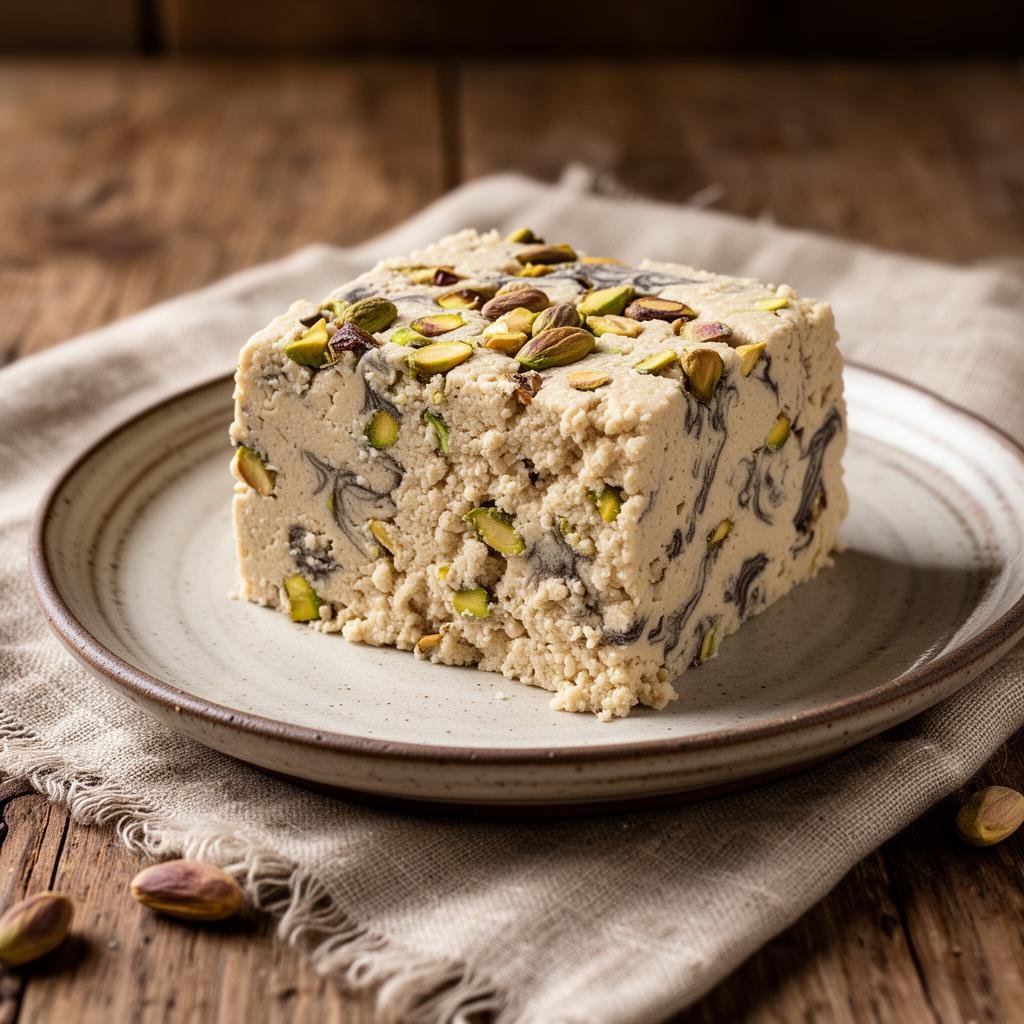
Few sweets manage to be ancient and trendy at the same time, but tahini halva pulls it off. One bite explains why: it is dense yet impossibly light, sweet but grounded by the deep, nutty bitterness of sesame, with a texture that flakes into fine, melting threads on your tongue. For generations it sat quietly behind glass at Middle Eastern grocers, sold by the slab. Now home cooks across America are pulling out candy thermometers and jars of tahini to make it themselves.
If you have only known halva as a crumbly afterthought near the register, the homemade version is a revelation. Made well, it has a clean sesame flavor, a satisfying snap that gives way to a sandy melt, and none of the waxy heaviness of mass-produced bars. And the ingredient list is shockingly short.
This guide covers everything you need: where halva comes from, why it is having a real moment online, the handful of ingredients that matter, the temperature science that makes or breaks the texture, and the small missteps that turn silky halva into a grainy, oily mess. By the end you will understand not just the recipe but the why behind every step.
Table of Contents
- What Makes Tahini Halva Special
- Historical and Cultural Context
- Why Tahini Halva Is Trending
- Ingredients and Key Concepts
- Step-by-Step Insights
- Expert Tips
- Common Mistakes to Avoid
- Frequently Asked Questions
- Key Takeaways
- Conclusion
What Makes Tahini Halva Special
Halva is really a family of sweets. Across the world the word can mean a soft, semolina-based pudding or a dense, fudge-like confection. The version beloved across Jewish, Israeli, and broader Middle Eastern tables is the second kind: tahini halva, built from sesame paste and a cooked sugar syrup. Its signature is the flaky, fibrous texture that forms when sugar crystallizes around strands of tahini.
- Just two core ingredients — tahini and sugar — create something complex and craveable.
- It is naturally dairy-free, egg-free, and pareve, making it endlessly useful for kosher kitchens.
- Sesame brings protein, healthy fats, and minerals, so it feels less empty than most candies.
- It keeps for weeks, travels well, and improves as the flavors settle, making it a perfect make-ahead gift.
Historical and Cultural Context
Halva is one of the oldest documented sweets on earth, with references stretching back well over a thousand years in Arabic culinary texts. The word itself comes from the Arabic root meaning “sweet.” Sesame-based halva spread through the Ottoman Empire, the Levant, the Balkans, North Africa, and Central Asia, with nearly every culture along the way claiming a version as its own.
For Jewish communities, halva became a fixture across both Ashkenazi and Sephardic worlds. Jewish immigrants brought it to the markets of New York's Lower East Side, where it became an iconic appetizing-counter staple sold alongside lox and pickles. In Israel, halva is practically a national obsession — vast, marbled wheels of it dominate market stalls in Jerusalem's Machane Yehuda and Tel Aviv's Carmel Market, studded with pistachios, chocolate, or coffee.
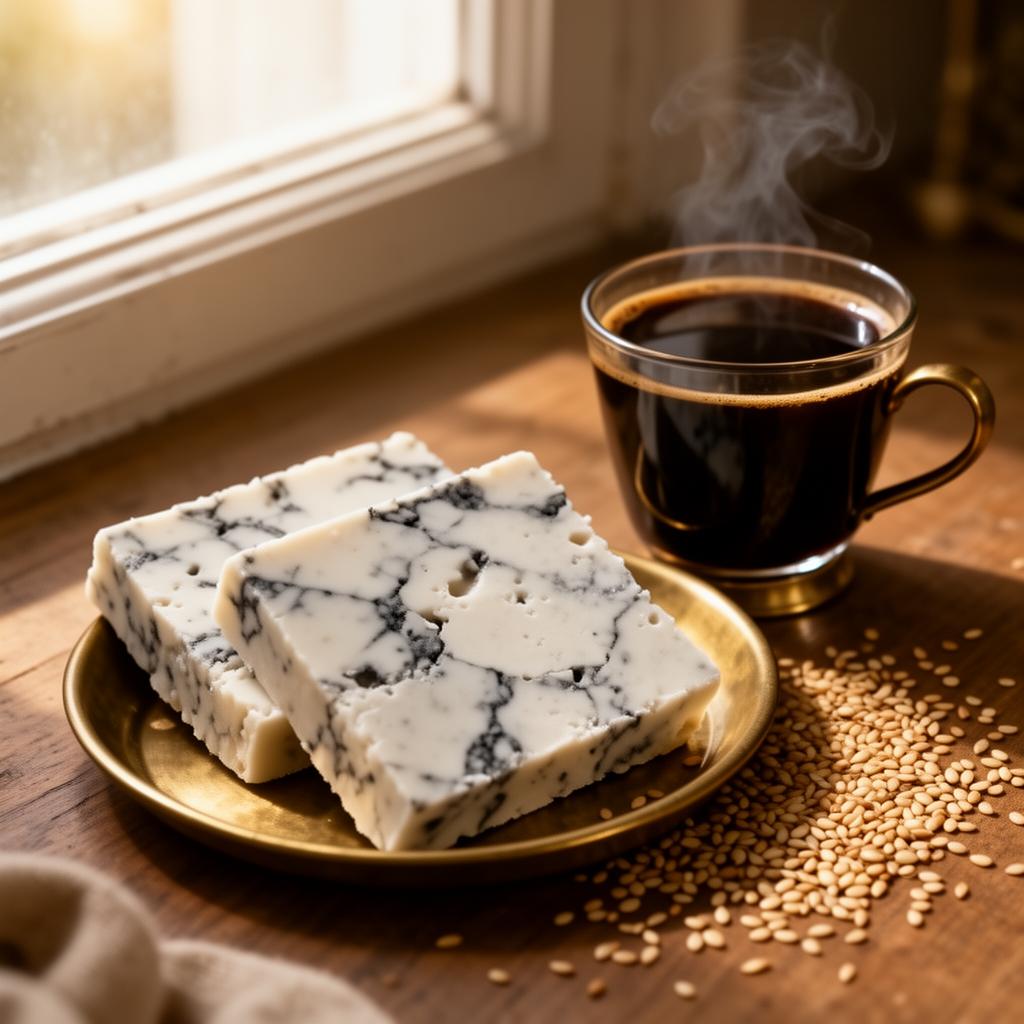
That dual heritage — humble street sweet and refined market delicacy — is part of halva's charm. It carries the memory of grandparents' kitchens for some and the buzz of a modern food market for others. Either way, it is a confection deeply woven into Jewish food culture and the wider tapestry of Mediterranean cooking.
Why Tahini Halva Is Trending
Search interest in homemade halva has climbed steadily, and a few clear forces are behind it. The biggest is tahini's transformation from niche import to mainstream pantry star. Once you have a jar for dressings, sauces, and cookies, halva becomes an obvious next experiment. As people grow comfortable cooking with sesame paste, they get curious about its most magical form.
There is also the broader rise of Mizrahi and Israeli cuisine in American food media, with chefs and cookbook authors spotlighting sesame in everything from savory dishes to desserts. Add the social-media appeal — the hypnotic swirl of marbling, the dramatic snap of a fresh slab — and halva becomes irresistible content. Finally, it fits a modern craving for treats that feel a little more wholesome: it is plant-based, naturally gluten-free, and made from recognizable ingredients.
Ingredients and Key Concepts
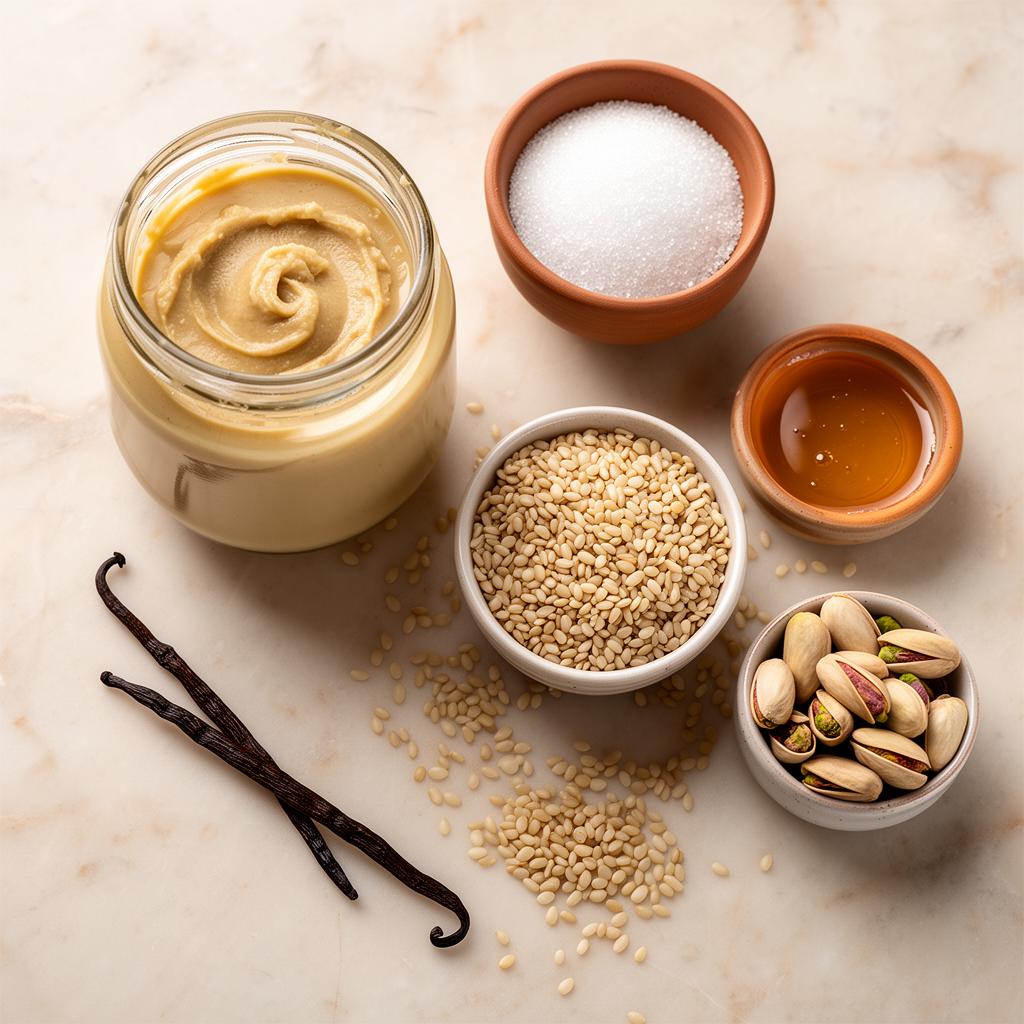
Because there are so few ingredients, the quality of each one matters enormously. This is not a recipe to make with the dusty, separated tahini at the back of the cabinet. Here is what you need for one small loaf pan of halva, roughly 12 generous pieces.
Core Ingredients
- 2 cups (about 480 g) good-quality pure tahini, well stirred and at room temperature
- 1 ½ cups (300 g) granulated sugar
- ⅓ cup (80 ml) water
- 1 teaspoon vanilla extract or the seeds of half a vanilla pod
- A pinch of fine salt
Optional Add-Ins
- ½ cup toasted pistachios, almonds, or walnuts, roughly chopped
- 2 tablespoons cocoa powder or melted dark chocolate for a marbled effect
- 1 teaspoon instant espresso for coffee halva
- A scrape of orange zest or a whisper of cardamom
Step-by-Step Insights
The defining moment of halva is when hot sugar syrup meets tahini. The syrup must reach the soft-ball stage so that, as it cools and is worked into the sesame paste, it crystallizes into the fine, flaky strands that give halva its character. A candy thermometer takes the guesswork out of it.
Step 1: Warm the Tahini
- Stir the tahini thoroughly until completely smooth and uniform.
- Gently warm it in a bowl set over warm water, or in short bursts, until it is lukewarm and loose.
- Add the vanilla and salt now, so they distribute evenly before the syrup goes in.
Step 2: Cook the Sugar Syrup
- Combine the sugar and water in a small heavy saucepan over medium heat.
- Stir just until the sugar dissolves, then stop stirring and let it bubble.
- Clip on a candy thermometer and cook to the soft-ball stage, 240–245°F (115–118°C).
- Do not walk away — the final degrees happen fast, and overcooking makes halva hard.
Step 3: Combine and Work the Mixture
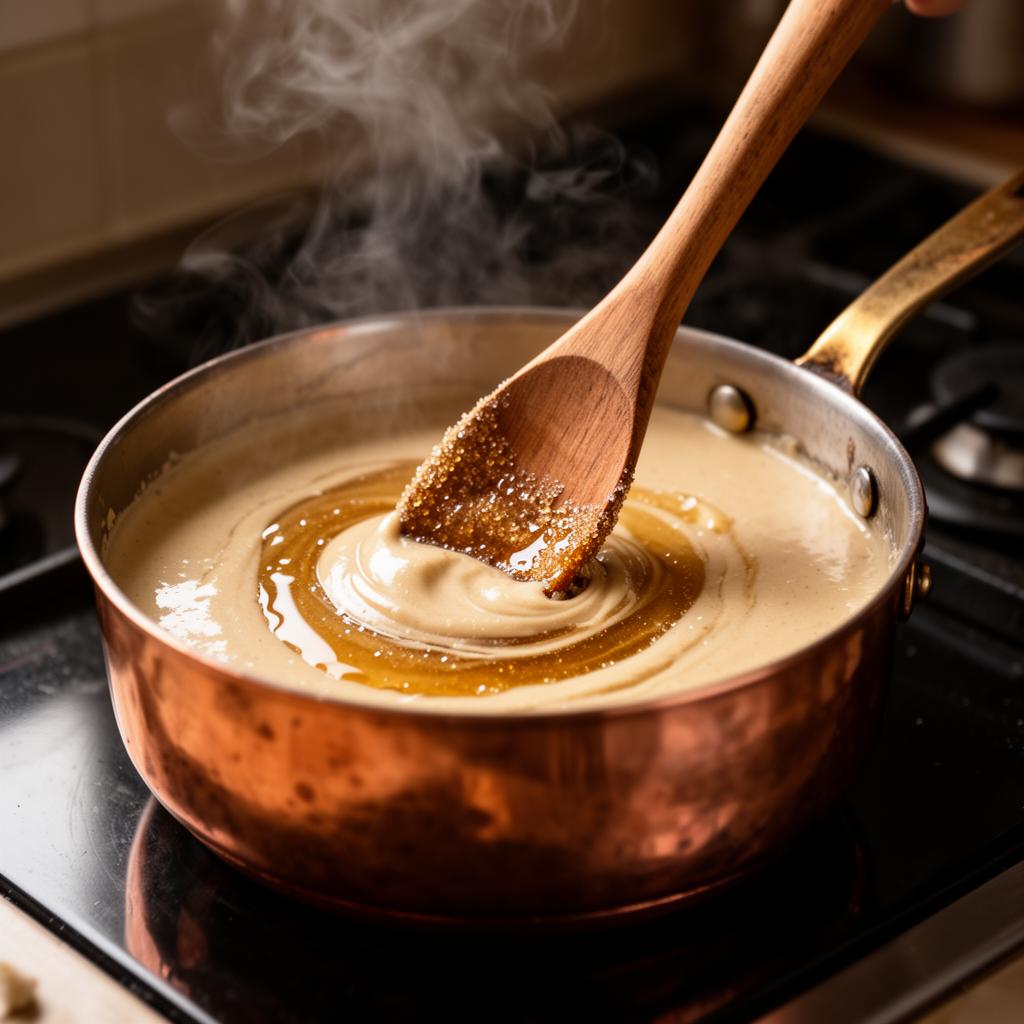
- Pour the hot syrup into the warm tahini in a steady stream while stirring with a sturdy spoon or spatula.
- Mix until the two come together into a thick, glossy paste, about 1 to 2 minutes — do not overmix.
- Stop the moment it looks unified; the strands form as it cools, and excessive stirring turns it pasty.
- Fold in nuts or swirl in melted chocolate now for a marbled effect.
Step 4: Press, Rest, and Slice
- Scrape the mixture into a parchment-lined loaf pan and press it level.
- Cover and let it cure at room temperature, then refrigerate for at least 24 to 36 hours.
- This rest is not optional — it allows the sugar to crystallize and the flaky texture to develop.
- Slice with a sharp knife and serve at room temperature for the best melt.
Patience during that final rest is the single biggest difference between halva that crumbles into delicate flakes and halva that feels like sweet putty. Give it the full day and a half before you judge your results.
Expert Tips
- Use a candy thermometer; eyeballing the syrup is the most common reason home halva fails.
- Warm the tahini so the syrup does not seize the moment it hits cold paste.
- Mix briefly and deliberately — over-stirring after combining destroys the flaky strands.
- Let it cure a full 24 to 36 hours before cutting; the texture transforms overnight.
- For clean marbling, drizzle melted chocolate and fold just two or three times, no more.
Common Mistakes to Avoid
- Undercooking the syrup, which leaves halva soft and sticky instead of flaky.
- Overcooking the syrup past soft-ball, which makes it hard, dry, and brittle.
- Using low-quality or unstirred tahini, leading to bitter, oily, separated halva.
- Overmixing after the syrup is added, which yields a dense, pasty block with no flake.
- Cutting into it too soon, before the sugar has had time to crystallize and set.
Respect the temperature, respect the rest, and start with great tahini — do those three things and you will turn out halva that rivals anything from a specialty counter. It is one of the most rewarding two-ingredient projects in the entire dessert world.
Key Takeaways
- Tahini halva is an ancient sesame confection made from just tahini and a cooked sugar syrup.
- Its signature flaky texture comes from sugar crystallizing around strands of sesame paste.
- Cook the syrup precisely to the soft-ball stage (240–245°F) for the right texture.
- Mix briefly after combining and let the halva cure 24 to 36 hours before slicing.
- It is naturally pareve, dairy-free, and gluten-free, making it a versatile kosher dessert.
Frequently Asked Questions
What is tahini halva made of?
Classic tahini halva is made from just two core ingredients: pure sesame paste (tahini) and sugar cooked into a syrup. Vanilla, salt, nuts, or chocolate are common additions, but the flaky base is simply sesame and sugar.
Why is my homemade halva not flaky?
The most common causes are an undercooked syrup or overmixing. Cook the syrup to the soft-ball stage (240–245°F), combine it with the tahini for only a minute or two, and let the halva cure for at least 24 hours so the sugar can crystallize into strands.
Do I need a candy thermometer to make halva?
It is strongly recommended. Halva's texture depends on the sugar syrup reaching the soft-ball stage precisely. A few degrees too low leaves it sticky, and too high makes it hard, so a thermometer removes most of the guesswork.
How long does tahini halva last?
Stored in an airtight container, tahini halva keeps well for two to three weeks at room temperature or in the refrigerator. Many people find the flavor and texture actually improve a few days after making it.
Is tahini halva kosher and pareve?
Yes. Tahini halva contains no dairy or eggs, so it is pareve and can be served after a meat meal. Just make sure your tahini and any added chocolate carry reliable kosher certification.
Loved this recipe?
Share it with your family, leave a comment, and explore more traditional and modern Jewish dishes on JewishCuisine.
Explore more Desserts recipes