Bukharian Plov: The Festive Rice and Lamb of Central Asian Jews
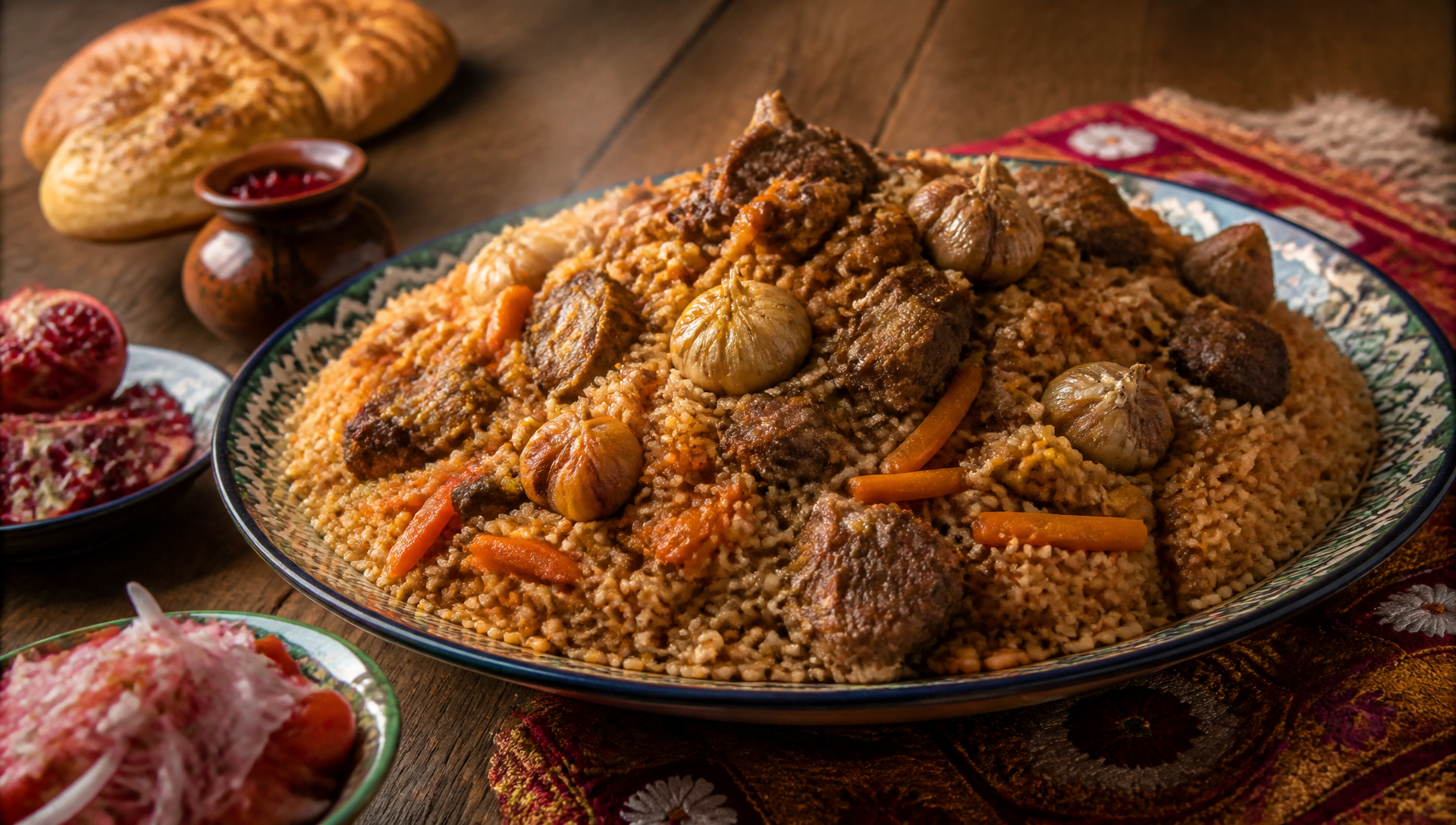
In a Bukharian Jewish home, the smell of plov cooking is the smell of celebration. It drifts from a heavy cast-iron kazan where rice, lamb, and ribbons of sweet carrot have been slowly steaming into one glossy, golden mound. Known simply as osh in Bukhori, this dish is the undisputed centerpiece of the Central Asian Jewish table — served at weddings, brises, holidays, and above all, at Shabbat. To make plov is to honor thousands of years of history along the Silk Road.
Bukharian Jews trace their roots to the ancient communities of Central Asia — cities like Bukhara, Samarkand, and Tashkent in what are now Uzbekistan and Tajikistan. Their cuisine is a delicious meeting point of Persian spicing, Central Asian technique, and Jewish tradition. Plov sits at the heart of it: a one-pot masterpiece that manages to be humble and grand at the same time, feeding a crowd from a single, deeply flavored pot.
This guide will walk you through everything you need to make Bukharian plov at home with real confidence. We will trace where the dish comes from, explain why it is finding new fans far beyond the community, break down the ingredients and the all-important technique, and share the tips that separate a light, fluffy plov from a heavy, gluey one.
Table of Contents
- What Bukharian Plov Actually Is
- Historical and Cultural Context
- Why Plov Is Trending Again
- Ingredients and Key Concepts
- Step-by-Step Insights
- Expert Tips
- Common Mistakes to Avoid
- Frequently Asked Questions
- Key Takeaways
- Conclusion
What Bukharian Plov Actually Is
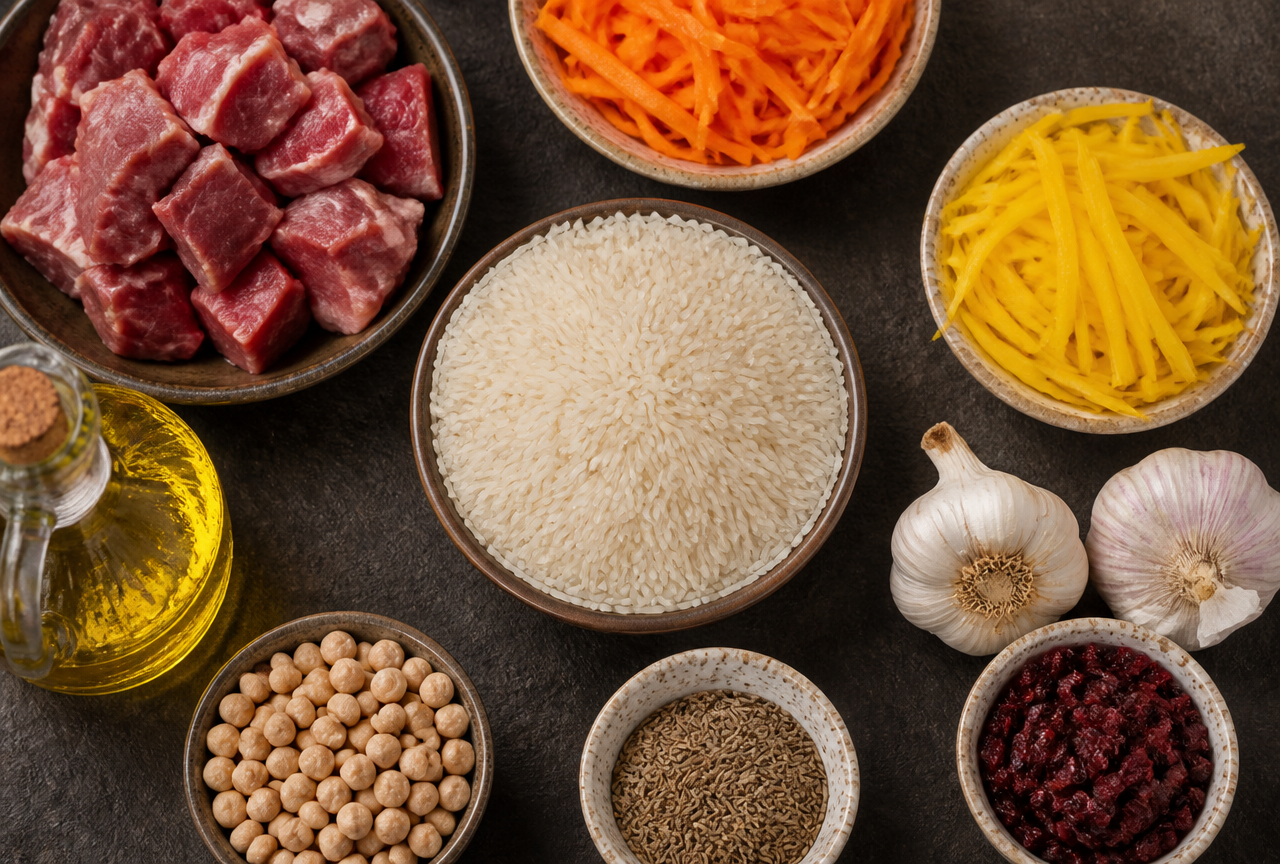
Plov (also spelled palov, pilaf, or pilau) is a rice dish built in careful layers. First, chunks of lamb or beef are browned in oil until deeply colored. Then onions and a generous quantity of julienned carrots are added and softened. Rice goes on top, water is poured over, and the whole pot is left to steam undisturbed until every grain is separate, tender, and infused with the meaty, sweet-savory broth beneath it. Whole heads of garlic and chickpeas are often tucked in for extra flavor and richness.
What makes Bukharian plov distinct from other Central Asian versions is the Jewish kitchen it grew up in. It is always kosher — no shellfish, no pork, and never mixed with dairy — which is why the dish leans on lamb, beef, and vegetables. Cooks also tend to add their own touches: some fold in raisins or dried fruit for sweetness, others garnish with a cooked egg or a scattering of fresh herbs. The result is a dish that is unmistakably Central Asian and unmistakably Jewish at once.
Historical and Cultural Context
The Jewish community of Bukhara is one of the oldest in the world, with a presence in Central Asia stretching back well over two millennia. Living along the Silk Road, Bukharian Jews absorbed the flavors of the caravan routes — cumin, coriander, dried fruit, and the region's famous long-grain rice — while keeping the laws of kashrut that set their table apart from their neighbors.
Plov became the natural food of hospitality and simcha. It could be scaled up to feed an entire wedding party from a single enormous kazan, cooked over an open flame by a specialist known as an oshpaz. To this day, many Bukharian families reserve the making of the plov for a respected elder or a designated cook, treating it as an act of care and even artistry rather than a routine chore.
Waves of migration in the twentieth century — and especially after the fall of the Soviet Union — brought large Bukharian communities to Israel, Vienna, and above all Queens, New York, now home to the largest Bukharian population outside Central Asia. Wherever they settled, the kazan came too, and plov remained the dish that anchored family gatherings to their heritage.
For Bukharian Jews, plov is not simply dinner. It is memory, hospitality, and identity served on one great shared platter.
Why Plov Is Trending Again
Bukharian plov is having a moment well beyond its home kitchens, and several forces are behind it. Central Asian food generally is one of the fastest-rising cuisines in American cities, as diners look past the familiar for bold, layered flavors. Neighborhoods like Rego Park and Forest Hills in Queens have turned Bukharian restaurants into destinations, and food media has followed.
The one-pot, feed-a-crowd nature of plov also fits perfectly with how people cook now. Home cooks who fell in love with slow, communal dishes are drawn to a recipe that transforms budget-friendly cuts and humble vegetables into something festive. And as more people explore the diversity within Jewish cuisine — far beyond the Ashkenazi classics — Mizrahi and Central Asian dishes like plov are finally getting the spotlight they deserve.
If you love discovering the range of the Jewish table, plov pairs naturally with other regional treasures. Fans of our Persian Jewish gondi dumplings or hearty Ashkenazi cholent will recognize the same instinct at work: turning time, patience, and a single pot into a dish worth gathering around.
Ingredients and Key Concepts
Great plov is less about a long shopping list and more about proportion and technique. Here is what you will need and why each element matters.
The Core Ingredients
- Rice: A medium- or long-grain rice that holds its shape, such as a good basmati or a dedicated plov rice. Rinse until the water runs clear to remove excess starch.
- Meat: Bone-in or boneless lamb shoulder is traditional; beef chuck works well too. You want a cut with some fat and connective tissue for richness.
- Carrots: The soul of the dish. Use plenty, cut into thin matchsticks, not grated. A mix of orange and yellow carrots is classic and adds visual depth.
- Onions: Yellow onions, sliced, form the savory base with the meat.
- Oil: A neutral oil in a generous amount. Plov is not a low-fat dish; the oil carries flavor and keeps the rice separate.
- Garlic: Whole heads, tucked into the rice to steam and turn sweet and mellow.
- Chickpeas: Dried and soaked, or a handful of cooked ones, for nutty texture.
- Spices: Whole cumin seeds are essential. Coriander, a little dried barberry or raisin for sweetness, and salt round it out.
The Kazan and the Zirvak
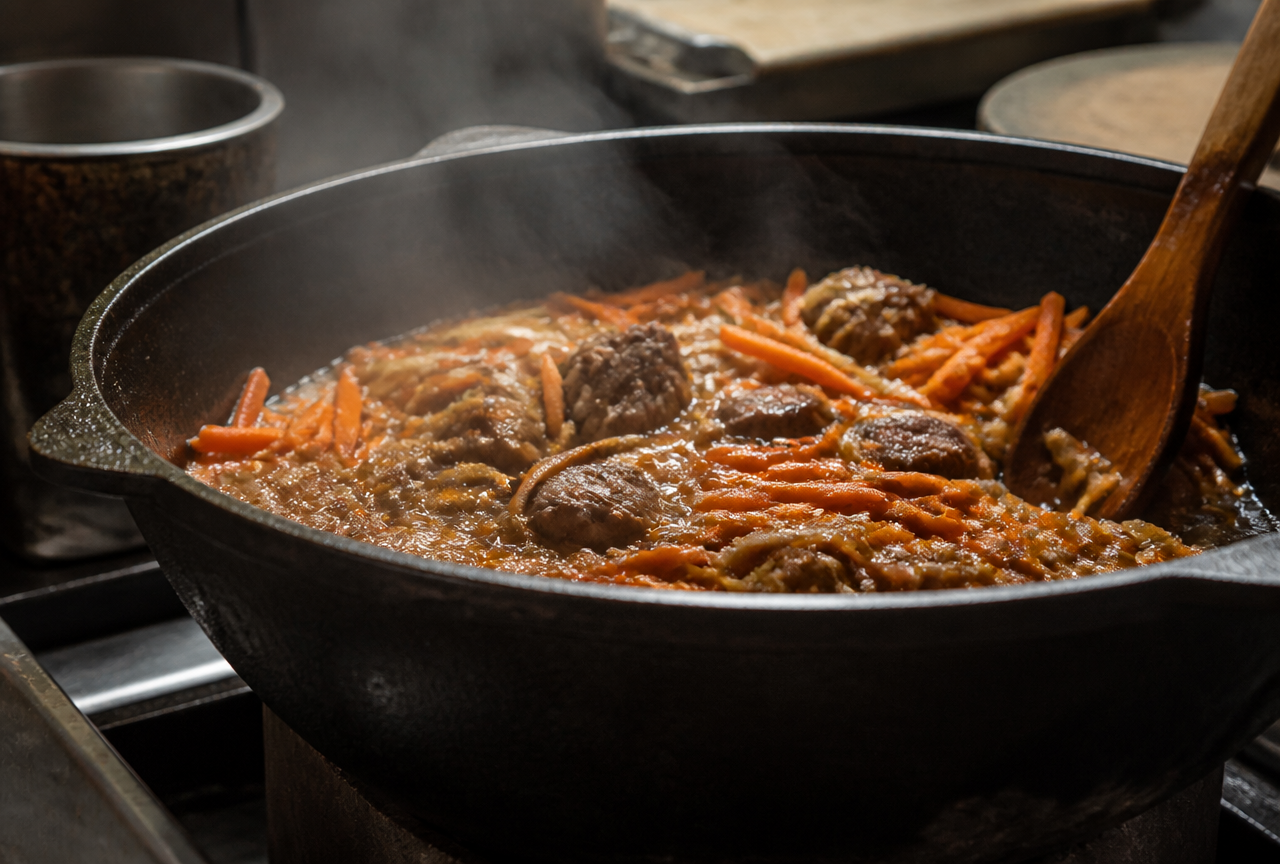
Two concepts define authentic plov. The first is the kazan — a heavy, thick-walled cast-iron pot with a rounded base that distributes heat evenly and holds it steadily. A Dutch oven is the best home substitute. The second is the zirvak: the flavorful base of browned meat, onions, carrots, spices, and water that you build before the rice ever goes in. A well-made zirvak is the difference between plov and plain rice with meat on top.
Step-by-Step Insights
Plov rewards patience and a light hand. Read through all the steps once before you start so the rhythm makes sense, then work through them without rushing.
Step 1: Prep and Rinse
- Rinse the rice in several changes of cold water until the water runs nearly clear, then leave it to soak in warm salted water while you build the base.
- Cut the meat into large, bite-sized chunks and pat it dry so it browns rather than steams.
- Cut the carrots into thin matchsticks by hand for the best texture; slice the onions thinly.
Step 2: Build the Zirvak
- Heat a generous amount of oil in your kazan or Dutch oven until it shimmers.
- Brown the meat in batches until deeply colored on all sides, then set most of it aside.
- Add the onions and cook until golden, then add the carrots and cook until softened and glossy.
- Return the meat, add cumin, coriander, salt, and enough hot water to just cover. Simmer gently, uncovered, for 30 to 40 minutes until the flavors marry.
Step 3: Add Garlic, Chickpeas, and Rice
- Nestle whole heads of garlic and the soaked chickpeas into the zirvak.
- Drain the rice and spread it in an even layer over the top. Do not stir it into the meat and carrots — the layers matter.
- Gently pour in enough hot water to sit about half an inch above the rice, pouring over the back of a spoon so you do not disturb the layer.
Step 4: Steam Undisturbed
- Bring to a brisk simmer over medium-high heat, uncovered, until the water is mostly absorbed to the level of the rice.
- With the handle of a spoon, poke several deep holes down through the rice to help steam escape evenly.
- Mound the rice toward the center, cover tightly, reduce the heat to very low, and steam for 20 to 25 minutes without lifting the lid.
The golden rule of plov: once the lid goes on for the final steam, resist every urge to peek. Trapped steam is what makes the rice fluffy.
Step 5: Rest, Fold, and Serve
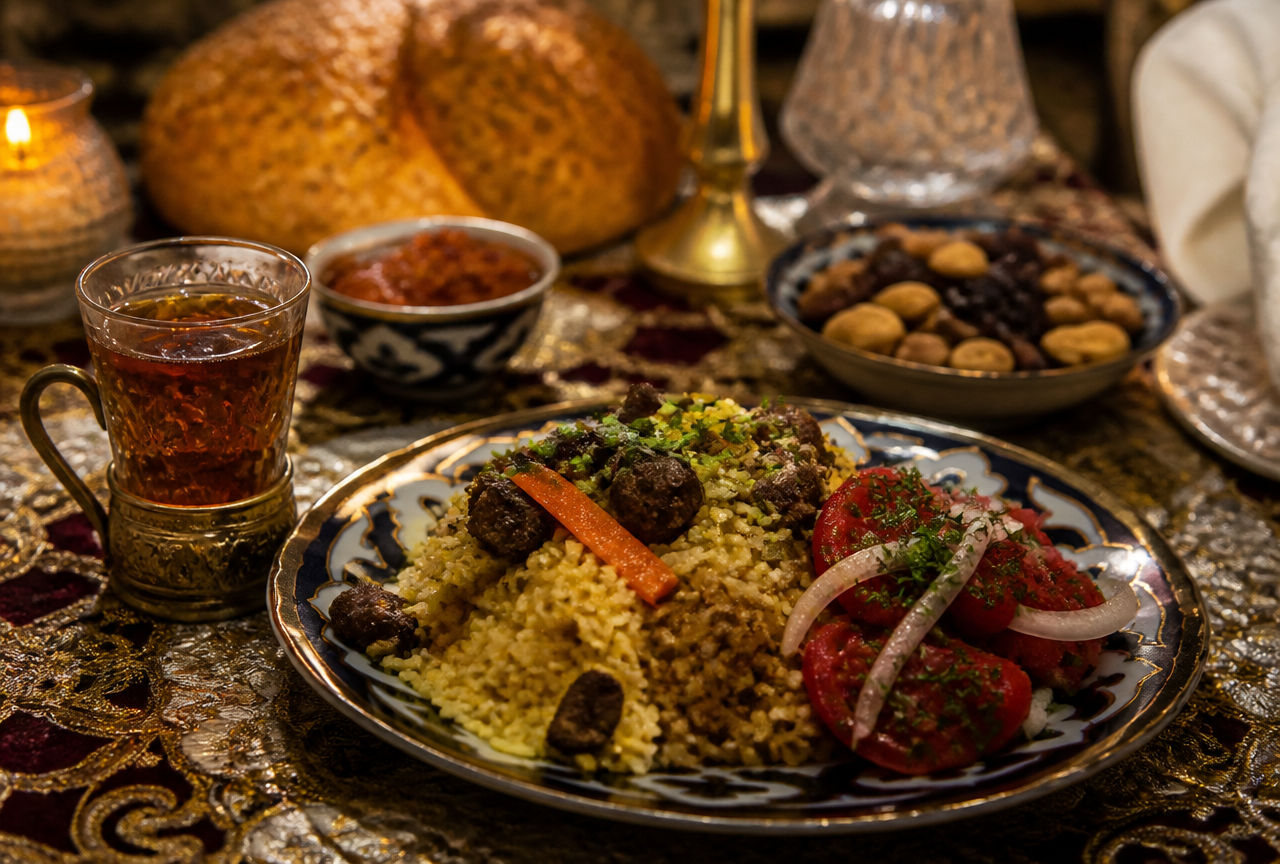
Turn off the heat and let the plov rest, covered, for about 10 minutes. Then gently fold the rice, meat, and carrots together from the bottom up so everything is combined and glossy. Mound it on a large platter, arrange the meat and softened garlic heads on top, and serve family-style with a sharp tomato-and-onion salad on the side. Traditionally, everyone eats from the shared platter — that communal spirit is part of the dish.
Expert Tips
- Cut carrots by hand into matchsticks; grated carrot dissolves and turns the plov mushy.
- Do not skimp on oil or salt — both are essential to keeping the rice separate and well seasoned.
- Rinse and soak the rice; it is the single biggest factor in achieving distinct, fluffy grains.
- Use hot water, never cold, when adding it to the pot so you never stall the cooking.
- Let the plov rest before folding so the grains firm up and hold their shape.
Common Mistakes to Avoid
- Stirring the rice into the meat too early, which prevents the clean layers that make plov fluffy rather than sticky.
- Using too little carrot; the carrots provide the signature sweetness and color, so be generous.
- Lifting the lid during the final steam and letting the crucial steam escape.
- Skipping the rinse, which leaves surface starch that glues the grains together.
- Cooking over heat that is too high at the end, which scorches the bottom before the rice cooks through.
Master those few points and plov becomes one of the most rewarding dishes in your repertoire — a single pot that turns modest ingredients into a feast. It is generous, forgiving once you know the rhythm, and built for sharing, which is exactly the spirit of the Bukharian table.
Key Takeaways
- Bukharian plov (osh) is the festive rice-and-lamb centerpiece of Central Asian Jewish cuisine, served at Shabbat and celebrations.
- The dish is built in layers: a browned-meat-and-carrot base called the zirvak, topped with rinsed rice that steams undisturbed.
- Generous carrots, plenty of oil, whole garlic, and chickpeas give plov its signature sweetness and richness.
- Rinsing the rice and never stirring it into the meat too early are the keys to fluffy, separate grains.
- Plov reflects the Silk Road heritage of Bukharian Jews and their tradition of communal, shared meals.
Frequently Asked Questions
What is Bukharian plov and how is it different from other pilaf?
Bukharian plov, or osh, is a layered rice dish of lamb or beef, sweet carrots, garlic, and chickpeas from the Central Asian Jewish community. It differs from other pilafs in being strictly kosher and in its heavy use of julienned carrots and a slow-cooked meat base called the zirvak.
Can I make plov without a kazan?
Yes. A heavy Dutch oven or any thick-walled, wide pot with a tight lid is an excellent substitute. The key is even heat and a lid that traps steam during the final cooking stage.
Which rice is best for plov?
A medium- or long-grain rice that holds its shape works best, such as a quality basmati or a dedicated plov rice. Always rinse it until the water runs clear and soak it briefly for the fluffiest result.
Is Bukharian plov healthy?
Plov is hearty and higher in fat because of the generous oil, but it also delivers protein from the meat and chickpeas plus vitamins from the carrots. Enjoyed as a shared celebration dish, it fits well into a balanced diet.
Can I make plov ahead of time?
Plov is best fresh, but it reheats well. Warm leftovers gently, covered, with a splash of water to restore moisture. Avoid stirring too much so the grains stay intact.
Loved this recipe?
Share it with your family, leave a comment, and explore more traditional and modern Jewish dishes on JewishCuisine.
Explore more Traditional recipes