Israeli Schnitzel: The Crispy Weeknight Icon That Conquered the Jewish Table
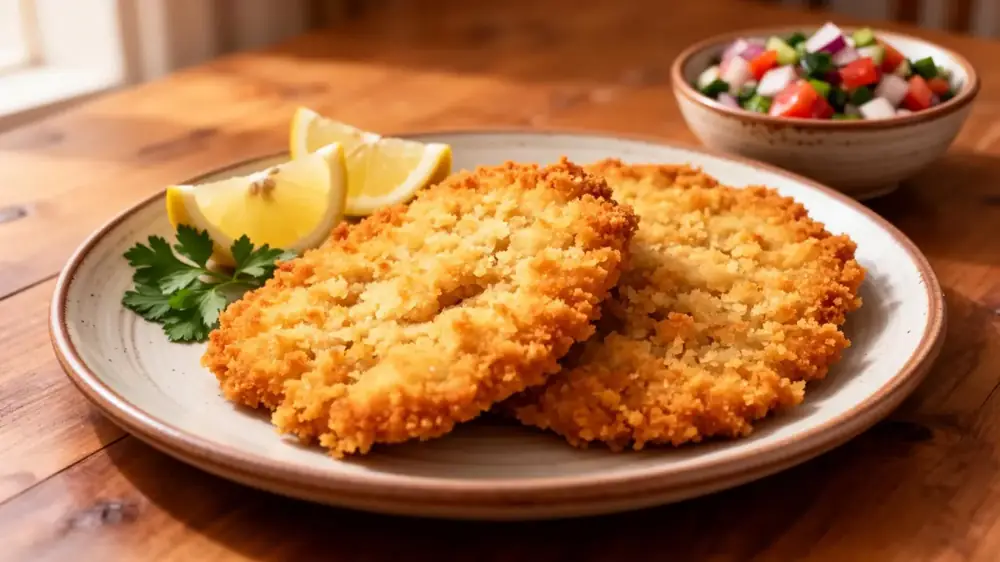
Ask almost anyone who grew up in Israel to name the food of their childhood, and there is a very good chance they will say schnitzel. Not a holiday delicacy or a fussy heirloom dish, but the humble, golden, breaded chicken cutlet that shows up on weeknight dinner tables, gets folded into warm pita for lunch, and appears — cold and just as delicious — in lunchboxes the next day. Thin, crisp, and endlessly comforting, schnitzel is the unofficial national comfort food of modern Israel.
What makes Israeli schnitzel special is not complexity but execution. There are no exotic ingredients and no complicated techniques. It is chicken breast, pounded thin, dredged through flour, egg, and breadcrumbs, then shallow-fried until the crust shatters at first bite. Yet the difference between a forgettable cutlet and a truly great schnitzel comes down to a handful of small details — the right seasoning, the right crumb, the right oil temperature. Get those right and you'll understand why this dish earns such fierce devotion.
This guide covers everything you need: the surprising journey schnitzel took from Central Europe to the heart of Israeli cooking, why it is having a fresh moment online, a foolproof step-by-step recipe, the seasoning secrets home cooks swear by, the most common mistakes, and the best ways to serve it. By the end, you'll be making schnitzel that rivals any neighborhood Israeli kitchen.
Table of Contents
- A Short History of Israeli Schnitzel
- Why Schnitzel Is Trending Again
- What You'll Need: Ingredients
- Step-by-Step Instructions
- The Seasoning Secret
- Expert Tips for the Crispiest Schnitzel
- How to Serve Israeli Schnitzel
- Variations Worth Trying
- Common Mistakes to Avoid
- Storage and Reheating
- Frequently Asked Questions
- Key Takeaways
- Conclusion
A Short History of Israeli Schnitzel
Schnitzel did not begin in Israel. Its roots reach back to Central Europe, where the Austrian Wiener Schnitzel — a thin, breaded, pan-fried cutlet traditionally made from veal — became a celebrated dish in 19th-century Vienna. Similar breaded cutlets appear across European cuisines, and the technique of coating thin meat in crumbs and frying it was well established long before it reached the Eastern Mediterranean.
The dish arrived with the great waves of Jewish immigration in the early and mid-20th century. European Jews fleeing persecution and later building new lives in the land that would become Israel brought their kitchens with them, and the breaded cutlet came along. But two practical realities transformed it. First, keeping kosher meant separating meat from dairy, so the classic veal-and-butter approach gave way to something new. Second, beef and veal were expensive and scarce in the lean early decades of the state, while poultry was far more affordable and available.
Chicken — and sometimes turkey breast, which remains hugely popular in Israel — quickly became the standard. Fried in neutral oil rather than butter to stay pareve and kosher-friendly, the dish shed its formal European identity and became something distinctly Israeli: fast, cheap, kid-approved, and adaptable. By the second half of the 20th century, schnitzel had become a fixture of home cooking, army mess halls, falafel-stand menus, and street-corner pita shops alike.
Schnitzel is the rare dish that crossed an ocean, changed its meat, dropped its butter, and somehow became more beloved than ever in its new home.
Why Schnitzel Is Trending Again
Schnitzel has never really gone away, but in 2026 it is enjoying a fresh wave of attention. As home cooks rediscover simple, satisfying comfort food and step back from elaborate restaurant-style recipes, the appeal of a perfectly fried cutlet is obvious. It is the kind of dish that delivers maximum reward for minimal skill, and that is catnip for today's home kitchens.
Social media has helped, too. Short cooking videos showing the satisfying crunch of a fork cracking through a crisp crust rack up millions of views, and the schnitzel-in-pita sandwich has become a star of the global street-food conversation. As interest in Israeli and broader Middle Eastern cuisine continues to grow worldwide — driven by chefs, cookbooks, and a new generation curious about the region's flavors — schnitzel has stepped into the spotlight as the approachable, everyday face of that food culture.
There is also a nostalgia factor. For the millions in the Israeli diaspora and beyond, schnitzel tastes like home, childhood, and family dinners. Making it yourself is a way to reconnect with that memory — and to share it with a new table.
What You'll Need: Ingredients
This recipe serves 4 and uses pantry staples. The single most important ingredient is the chicken itself — thin, evenly pounded cutlets are the foundation of every good schnitzel.
For the Chicken
- 4 boneless, skinless chicken breasts (or turkey breast cutlets), about 1.5 lbs total
- 1 cup all-purpose flour
- 3 large eggs
- 2 cups breadcrumbs (plain or panko, or a mix — see seasoning notes below)
- Neutral oil for frying (canola, sunflower, or vegetable), about ½ inch deep in the pan
For Seasoning
- 1½ tsp kosher salt, plus more for finishing
- ½ tsp black pepper
- 1 tsp sweet paprika
- ½ tsp garlic powder
- Optional: ½ tsp ground cumin or a pinch of turmeric for an Israeli twist
For Serving
- Lemon wedges
- Fresh pita or sliced bread
- Israeli salad (diced cucumber, tomato, onion, lemon, olive oil)
- Tahini sauce, hummus, or amba for drizzling
- Pickles and shredded lettuce
Step-by-Step Instructions
Step 1: Pound the Chicken Thin
Place each chicken breast between two sheets of plastic wrap or parchment and pound with a meat mallet or the bottom of a heavy pan until it is an even ¼ inch thick. If your breasts are very thick, slice them in half horizontally first. Even thickness is the single biggest factor in cooking the schnitzel through without burning the crust. Pat the cutlets dry and season both sides with a little salt and pepper.
Step 2: Set Up Your Breading Station
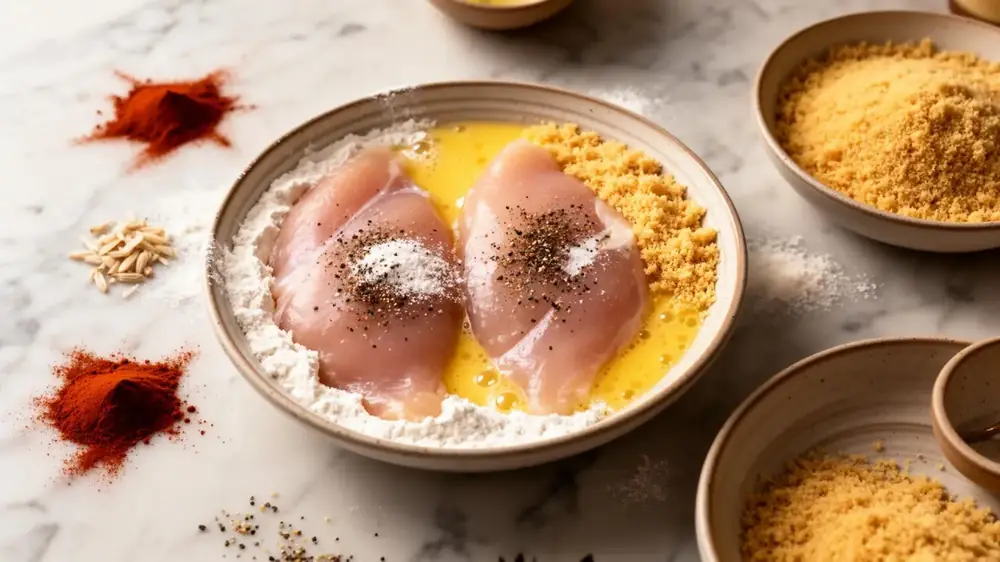
Arrange three shallow bowls. In the first, add the flour. In the second, beat the eggs with a tablespoon of water until smooth. In the third, combine the breadcrumbs with the paprika, garlic powder, remaining salt, and any optional spices. Mixing the seasoning directly into the crumbs ensures flavor in every bite, not just on the surface.
Step 3: Bread the Cutlets
Working one at a time, dredge a cutlet in the flour and shake off the excess. Next, dip it fully into the egg, letting any extra drip away. Finally, press it firmly into the seasoned breadcrumbs, coating both sides and pressing gently so the crumbs adhere. The firm press matters — it builds the craggy, clingy crust that turns shatteringly crisp in the oil. Set each breaded cutlet aside on a plate.
Step 4: Heat the Oil
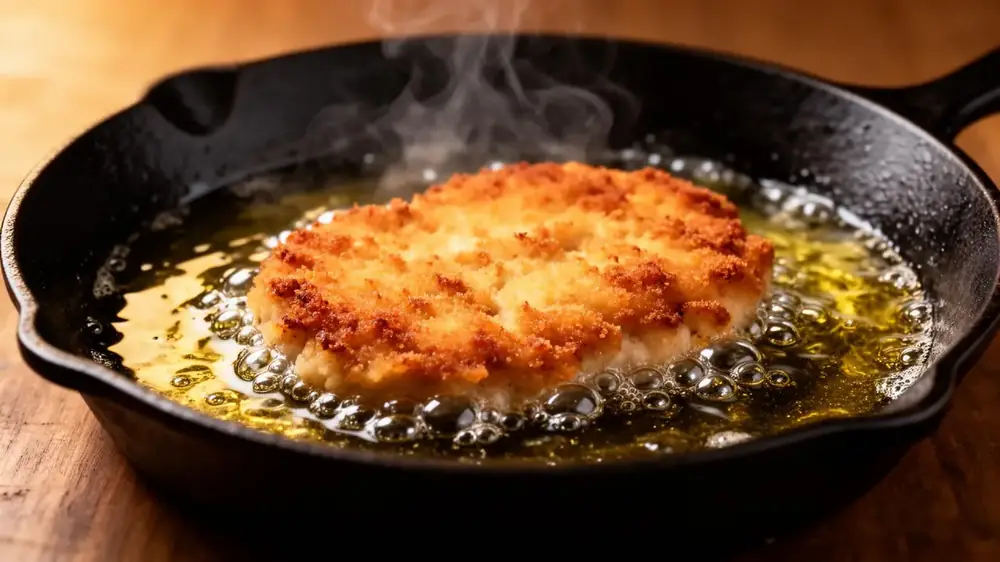
Pour about ½ inch of neutral oil into a wide, heavy skillet and heat over medium-high. The oil is ready when a pinch of breadcrumbs dropped in sizzles immediately and floats — around 340 to 350°F (170 to 175°C). Oil that is too cool produces a greasy, pale schnitzel; oil that is too hot burns the crumbs before the chicken cooks. A thermometer takes the guesswork out, but the breadcrumb test works well.
Step 5: Fry Until Golden
Gently lower a cutlet into the hot oil, away from you to avoid splashes. Fry for about 2 to 3 minutes per side, until deeply golden brown and cooked through (the internal temperature should reach 165°F / 74°C). Don't crowd the pan — fry in batches so the oil stays hot. As you flip, you'll hear the crust crackle, which is exactly what you want.
Step 6: Drain and Finish
Transfer the fried schnitzel to a wire rack set over a baking sheet, or to a plate lined with paper towels. A wire rack is best because it keeps the bottom from steaming and going soft. Sprinkle with a little flaky salt while still hot, and serve immediately with lemon wedges. The squeeze of fresh lemon cuts through the richness and is utterly traditional.
The Seasoning Secret
Plain breadcrumbs make a plain schnitzel. The cooks who make the best version always season the crumbs themselves. Sweet paprika gives warmth and color, garlic powder adds savory depth, and a whisper of cumin or turmeric nods to the Israeli pantry. Some families add a little dried parsley, sesame seeds, or even a touch of grated lemon zest to the crumbs.
The choice of crumb matters as much as the spice. Classic fine breadcrumbs produce a thin, tightly clinging crust — the traditional Israeli style. Panko, the Japanese-style flake, makes a chunkier, extra-crunchy coating that many modern cooks love. A blend of the two gives you both adhesion and crunch, which is a reliable favorite.
Expert Tips for the Crispiest Schnitzel
- Pound evenly: a uniform ¼-inch thickness cooks fast and prevents a raw center under a browned crust.
- Dry the chicken before breading — surface moisture makes the coating slide off in the oil.
- Press the crumbs on firmly so the crust grips the meat and crisps rather than flaking away.
- Keep the oil at a steady 340 to 350°F; let it recover between batches so the schnitzel never goes greasy.
- Drain on a wire rack, not a closed pile, so steam escapes and the crust stays crisp.
- Salt the moment it comes out of the oil, while the surface is hot enough to grab the seasoning.
How to Serve Israeli Schnitzel
Schnitzel is wonderfully flexible. The most classic plate is a hot cutlet with lemon, a generous heap of Israeli salad, and a side of rice, mashed potatoes, or french fries. It is the quintessential Israeli weeknight dinner. But the dish truly shines as street food.
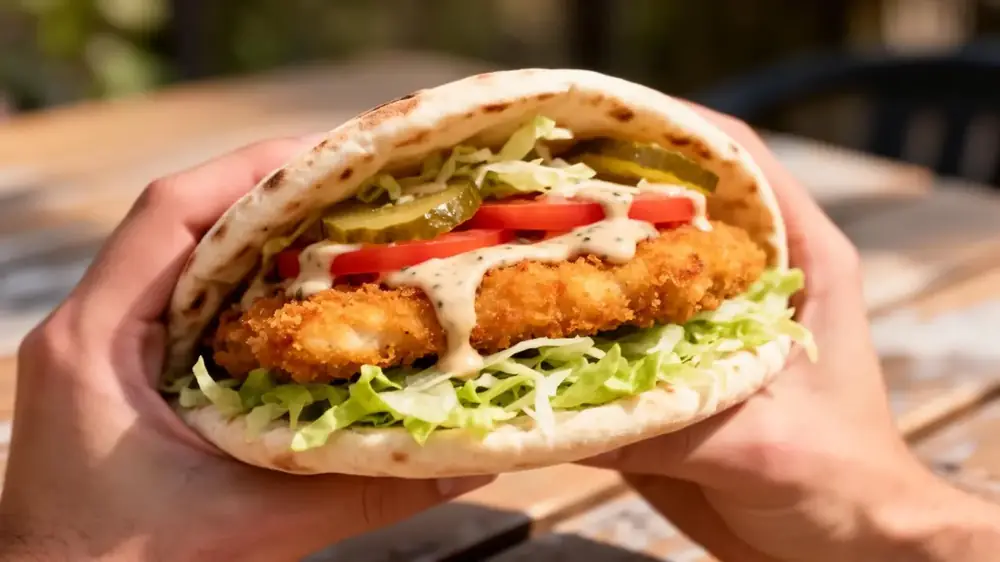
- Schnitzel in pita: slice the cutlet, tuck it into warm pita with shredded lettuce, tomato, pickles, and a drizzle of tahini or amba — the iconic Israeli sandwich.
- Schnitzel platter: serve with hummus, fresh vegetables, and warm bread for a relaxed spread.
- Cold schnitzel sandwich: leftover cutlets in soft bread with mayonnaise and pickles make a lunchbox legend.
- Schnitzel with a fried egg: a crisp cutlet topped with a runny egg is a beloved comfort plate.
Variations Worth Trying
- Turkey schnitzel: turkey breast cutlets are the traditional everyday choice in many Israeli homes and stay especially juicy.
- Sesame schnitzel: add a few tablespoons of sesame seeds to the breadcrumbs for nutty crunch and a Middle Eastern accent.
- Za'atar schnitzel: mix a tablespoon of za'atar into the crumbs for herby, tangy depth.
- Cornflake crust: crushed cornflakes in place of some breadcrumbs make a famously crunchy, slightly sweet coating.
- Baked or air-fried: for a lighter version, spray the breaded cutlets with oil and bake at 425°F or air-fry until golden, flipping once.
Common Mistakes to Avoid
- Skipping the pounding step, which leaves thick cutlets that burn outside before cooking through.
- Frying in oil that is too cool, producing a soggy, oily crust instead of a crisp one.
- Crowding the pan, which drops the oil temperature and steams the schnitzel.
- Under-seasoning the breadcrumbs, leaving the crust bland.
- Stacking hot schnitzel on a plate, where trapped steam quickly softens the crust.
- Forgetting the lemon — that final squeeze of acid is part of what makes schnitzel taste authentically Israeli.
Storage and Reheating
Schnitzel is best fresh, but it keeps well — which is part of its charm. Let leftovers cool completely, then store them in an airtight container in the refrigerator for up to 3 days. Cold schnitzel is genuinely delicious and is a classic lunchbox and picnic food in Israel.
To reheat and revive the crust, skip the microwave, which turns the coating soft and rubbery. Instead, warm the schnitzel in a 375°F (190°C) oven or toaster oven for about 8 to 10 minutes, or crisp it in an air fryer for a few minutes. Both methods restore much of the original crunch. You can also freeze breaded, uncooked cutlets between sheets of parchment for up to 2 months and fry them straight from frozen, adding a minute or two to the cooking time.
Conclusion
Israeli schnitzel proves that the most beloved foods are rarely the most complicated. A thin chicken cutlet, a well-seasoned crumb, and a pan of hot oil are all it takes to make something that tastes like home to millions of people. Its journey — from the cafés of Vienna to the kosher kitchens and pita stands of Israel — is a small, delicious story of how Jewish cooking adapts, absorbs, and makes a dish entirely its own.
Make a batch this week. Pound the chicken thin, season the crumbs with intention, keep the oil hot, and serve it the moment it's crisp with a wedge of lemon and a bowl of fresh salad. Whether you plate it for dinner or fold it into warm pita for lunch, you'll be tasting one of the truest comfort foods the Israeli table has to offer.
Key Takeaways
- Israeli schnitzel is a thin, breaded, shallow-fried chicken (or turkey) cutlet that became Israel's everyday comfort food.
- It evolved from the European veal Wiener Schnitzel, switching to affordable poultry and neutral oil to stay kosher and pareve.
- Even, thin pounding and a hot oil temperature of 340 to 350°F are the keys to a crisp, fully cooked cutlet.
- Seasoning the breadcrumbs themselves — with paprika, garlic, and optional cumin — is the secret to deep flavor.
- Serve it hot with lemon and salad, or stuff it into warm pita with tahini for the iconic Israeli sandwich.
Frequently Asked Questions
What is Israeli schnitzel made of?
Israeli schnitzel is typically made from boneless chicken breast (or turkey breast) pounded thin, then dredged in flour, beaten egg, and seasoned breadcrumbs and shallow-fried in neutral oil. Unlike the original Austrian veal version, it uses poultry and oil rather than veal and butter, which keeps it affordable and kosher-friendly.
How is Israeli schnitzel different from Wiener Schnitzel?
Wiener Schnitzel is the traditional Austrian dish made from veal and often fried in butter or lard. Israeli schnitzel adapted the technique to chicken or turkey and fries it in neutral oil to keep it pareve and kosher. Israeli versions also frequently season the breadcrumbs with spices like paprika, garlic, and cumin.
Why is my schnitzel soggy instead of crispy?
Soggy schnitzel usually comes from oil that is not hot enough, crowding the pan (which lowers the temperature), or stacking the fried cutlets so trapped steam softens the crust. Keep the oil between 340 and 350°F, fry in batches, and drain the schnitzel on a wire rack rather than piling it on a plate.
Can I bake or air-fry schnitzel instead of frying?
Yes. For a lighter version, spray the breaded cutlets generously with oil and bake at 425°F until golden, flipping halfway, or cook them in an air fryer for a few minutes per side. The texture is slightly different from deep-golden fried schnitzel but still crisp and delicious.
How do I keep schnitzel crispy when reheating?
Avoid the microwave, which makes the crust rubbery. Reheat schnitzel in a 375°F oven or toaster oven for 8 to 10 minutes, or in an air fryer for a few minutes, to restore the crunch. Cold leftover schnitzel is also a popular sandwich filling and needs no reheating at all.
Loved this recipe?
Share it with your family, leave a comment, and explore more traditional and modern Jewish dishes on JewishCuisine.
Explore more Traditional recipes