Jewish Stuffed Cabbage (Holishkes): The Sweet-and-Sour Holiday Classic Worth Reviving
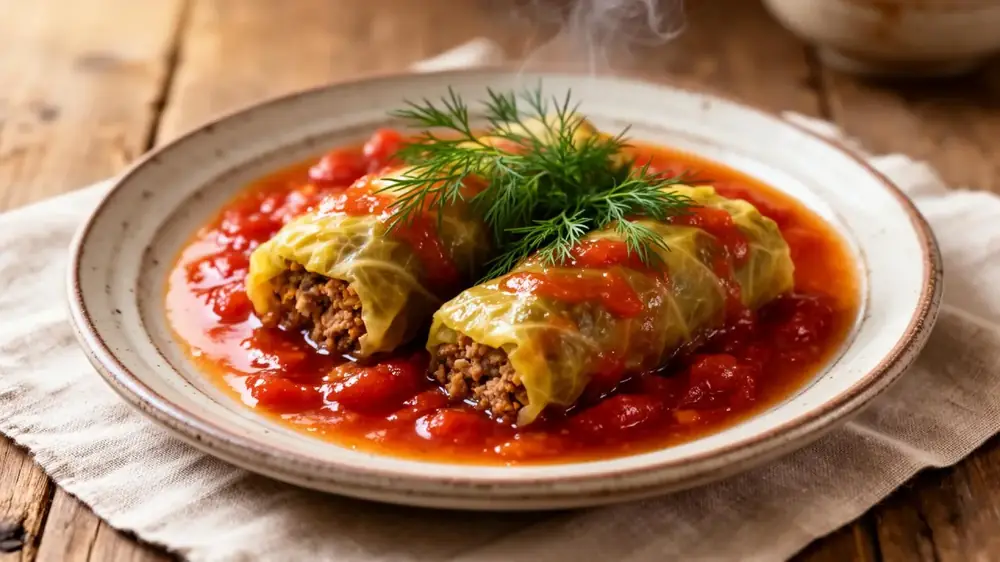
Few dishes say comfort, family, and tradition quite like a plate of holishkes. These plump bundles — tender cabbage leaves wrapped snugly around a savory filling of ground beef and rice, then slowly braised in a glossy sweet-and-sour tomato sauce — are one of the great heirloom dishes of the Ashkenazi Jewish kitchen. They are humble and unhurried, the kind of food that fills a house with a deep, sweet-tangy aroma for hours and brings everyone to the table before they're even called.
Known by many names — holishkes, holipches, prakas, gevikelte kraut, or simply stuffed cabbage — this dish carries generations of memory in every bite. For many families it is inseparable from the autumn holidays, especially Sukkot and Simchat Torah, when its rolled, abundant shape symbolizes a wish for plenty. Yet for all its sentimental weight, stuffed cabbage had quietly slipped off many modern menus, dismissed as old-fashioned or fussy. That is changing fast.
This guide walks you through everything: where holishkes came from, why a new generation of cooks is rediscovering them, the ingredients that make them sing, a foolproof step-by-step method, expert tips, and the mistakes to avoid. By the end you'll be able to make a pot of stuffed cabbage that tastes exactly like the version someone's grandmother used to make — and maybe start a tradition of your own.
Table of Contents
- A Short History of Jewish Stuffed Cabbage
- Why Holishkes Are Trending Again
- What You'll Need: Ingredients
- Step-by-Step Instructions
- The Sweet-and-Sour Sauce Secret
- Expert Tips for Perfect Holishkes
- Variations Worth Trying
- Common Mistakes to Avoid
- Make-Ahead, Storage, and Freezing
- Frequently Asked Questions
- Key Takeaways
- Conclusion
A Short History of Jewish Stuffed Cabbage
Stuffed cabbage is not unique to Jewish cooking — versions appear across Eastern Europe, the Balkans, and the Middle East, from Polish gołąbki to Romanian sarmale to Hungarian töltött káposzta. What makes holishkes distinctly Jewish is the way Ashkenazi cooks adapted the dish to a kosher kitchen and gave it a signature sweet-and-sour character that sets it apart from its neighbors.
The dish took root among Jewish communities in Poland, Russia, Hungary, and the surrounding regions, where cabbage was cheap, hardy, and available through long winters. Filled with whatever was affordable — usually a stretch of ground meat extended with rice or grain — stuffed cabbage was practical food that could feed a crowd from modest ingredients. That thrift is part of its soul: it is a dish born of making much from little.
Over time, holishkes became tied to the harvest festival of Sukkot and the joyous celebration of Simchat Torah. The plump, wrapped bundles were said to evoke abundance and a bountiful harvest, and serving two rolls was sometimes linked to the two tablets of the Torah. As Jewish families emigrated to America and beyond, they carried the recipe with them, and stuffed cabbage became a fixture of holiday tables and delicatessen menus alike — each family guarding its own balance of sweet and sour.
Holishkes is thrift turned into tradition — a pot of cheap cabbage and a little meat transformed, with patience and a sweet-and-sour sauce, into one of the most beloved dishes of the Jewish year.
Why Holishkes Are Trending Again
After years on the sidelines, stuffed cabbage is having a genuine revival, and the reasons say a lot about how we cook now. The first is the broad return to slow, comforting, nostalgic food. As home cooks lean back into braises, stews, and the unhurried dishes their grandparents made, holishkes fit the moment perfectly — humble, hearty, and deeply satisfying.
There is also a practical appeal that resonates today. Stuffed cabbage is naturally budget-friendly, it stretches a small amount of meat across many servings, and it freezes beautifully, making it a smart choice for batch cooking and meal planning. In an era of rising grocery costs and renewed interest in reducing food waste, a dish built on thrift feels newly relevant rather than old-fashioned.
Finally, there's a wider cultural rediscovery of heritage Jewish cooking. A new generation of cooks, writers, and restaurants is celebrating Ashkenazi classics with fresh pride, and dishes once labeled dated are being reclaimed and reinterpreted. Holishkes, with its glossy sauce and its connection to the holidays, has become a quiet star of that movement.
What You'll Need: Ingredients
This recipe makes about 12 to 14 rolls and serves 6. The ingredients are simple and forgiving — the magic is in the slow braise and the balance of the sauce.
For the Cabbage
- 1 large head of green cabbage (about 3 lbs), with large, pliable outer leaves
- Water and a large pot for blanching
For the Filling
- 1½ lbs ground beef (or a mix of beef and veal, or ground turkey)
- ½ cup long-grain white rice, uncooked (or partially cooked)
- 1 small onion, finely grated or minced
- 1 large egg
- 2 cloves garlic, minced
- 1½ tsp kosher salt
- ½ tsp black pepper
- Optional: 1 tsp sweet paprika and a handful of chopped fresh parsley
For the Sweet-and-Sour Sauce
- 1 (28 oz) can crushed tomatoes
- 1 (15 oz) can tomato sauce
- 1 medium onion, thinly sliced
- ¼ cup brown sugar or honey (adjust to taste)
- 3 tbsp lemon juice or apple cider vinegar (adjust to taste)
- ½ cup raisins (a classic touch — optional but traditional)
- 1 tsp kosher salt, plus pepper to taste
Step-by-Step Instructions
Step 1: Soften the Cabbage Leaves
The trickiest part of holishkes is getting whole, intact leaves that bend without tearing. The easiest method: core the cabbage, then lower the whole head into a large pot of boiling water. As the outer leaves soften, peel them off one at a time with tongs and set them aside to cool. Alternatively, freeze the whole head for a day or two, then thaw it — the freezing breaks down the leaves so they peel off soft and pliable with no boiling needed.
Once you have 12 to 14 large leaves, trim down the thick central rib of each with a paring knife or shave it flat so the leaf rolls easily. Save the smaller inner leaves and any torn pieces to line the bottom of your pot.
Step 2: Make the Filling
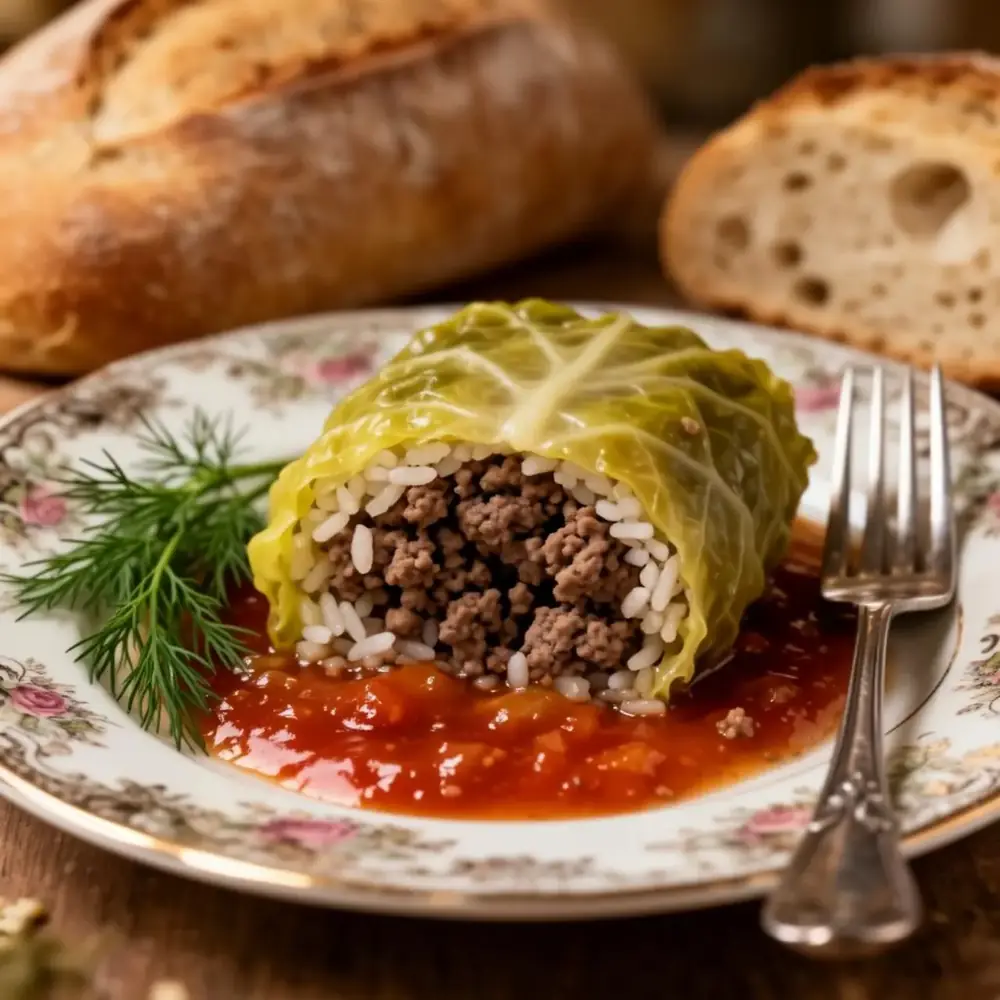
In a large bowl, gently combine the ground beef, uncooked rice, grated onion, egg, garlic, salt, pepper, and any optional seasonings. Mix just until evenly blended — overmixing makes the filling dense. Using uncooked or only partially cooked rice is traditional; it absorbs the flavorful sauce as the rolls braise and finishes tender. Keep the seasoning confident, since the rice and cabbage will mellow it.
Step 3: Roll the Holishkes
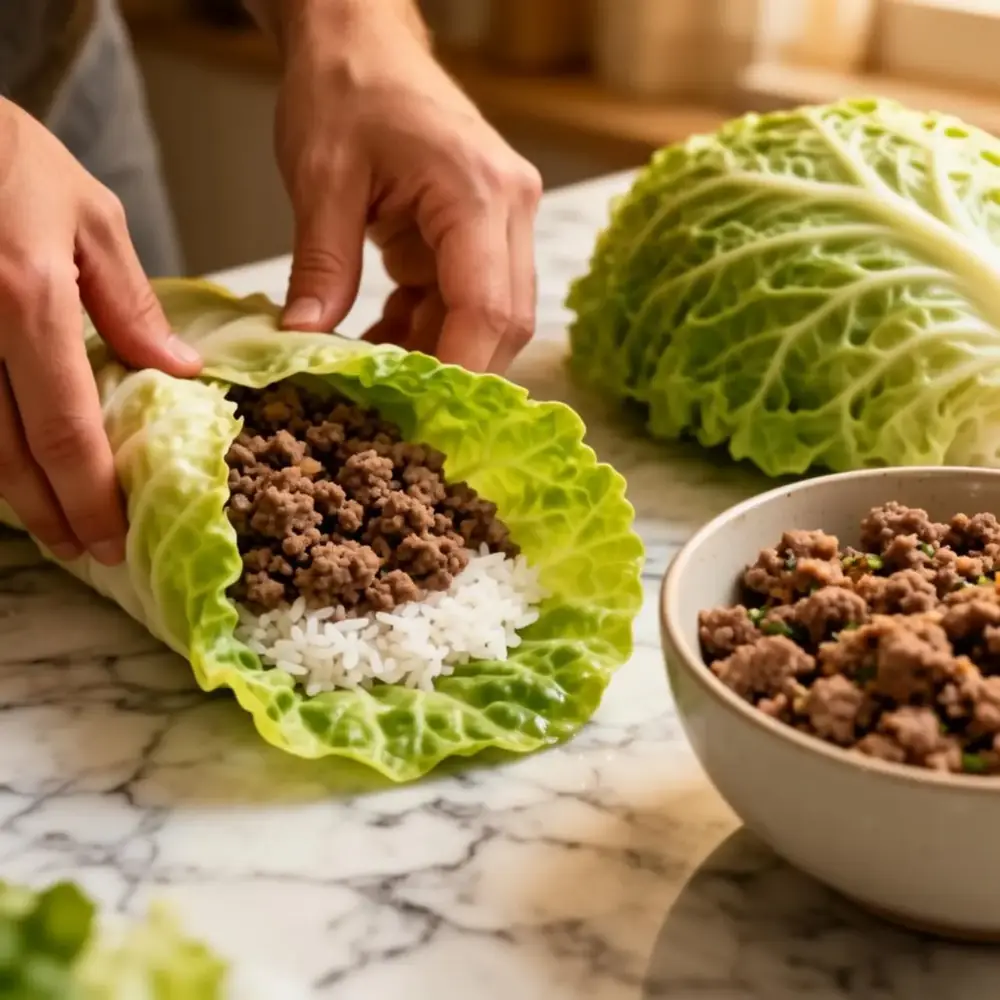
Place a leaf on your work surface, cut-rib side toward you. Spoon about ¼ cup of filling near the base of the leaf. Fold the bottom edge up over the filling, fold in both sides like an envelope, and roll away from you into a snug bundle. Don't overfill — the rice expands as it cooks, and a too-tight roll can burst. Set each roll seam-side down as you go.
Step 4: Build the Pot
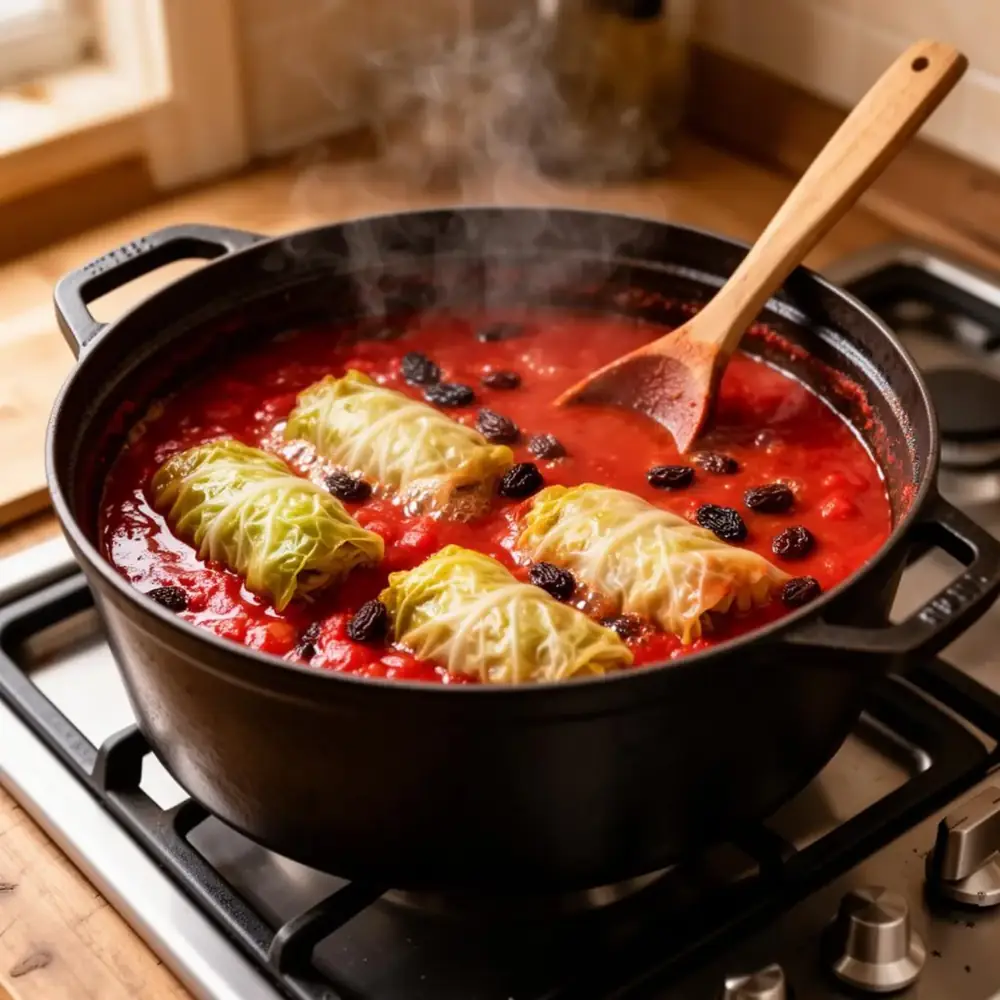
Line the bottom of a large Dutch oven or heavy pot with the reserved torn leaves and the sliced onion — this cushions the rolls and prevents scorching. Stir together the crushed tomatoes, tomato sauce, brown sugar, lemon juice, raisins, salt, and pepper to make the sauce. Spread a layer of sauce over the leaves, then nestle the cabbage rolls seam-side down in tight layers. Pour the remaining sauce over the top so the rolls are mostly submerged.
Step 5: Braise Low and Slow
Bring the pot to a gentle simmer on the stovetop, then cover and either keep it at a low simmer or transfer it to a 325°F (165°C) oven. Cook for 1½ to 2 hours, until the cabbage is meltingly tender, the rice is fully cooked, and the sauce has thickened and turned deep red. Baste once or twice along the way. Many cooks swear holishkes taste even better the next day, after the flavors have settled.
Step 6: Taste, Adjust, and Serve
Before serving, taste the sauce and fine-tune the balance — a little more sugar for sweetness or a squeeze more lemon for tang until it hits that bright, glossy sweet-and-sour note. Serve the rolls hot with plenty of sauce spooned over the top, alongside crusty bread, mashed potatoes, or buttered noodles to soak up every drop.
The Sweet-and-Sour Sauce Secret
The single thing that defines Jewish stuffed cabbage is its sweet-and-sour sauce. Unlike the more straightforwardly savory tomato sauces of other cuisines, the Ashkenazi version balances sweetness and acidity until the two play off each other. The sweetness traditionally comes from brown sugar, honey, or raisins; the sour from lemon juice, vinegar, or even a splash of sour salt (citric acid) in old recipes.
There is no single correct ratio — every family lands somewhere different, and arguments over how sweet is too sweet are part of the tradition. The key is to taste and adjust at the end, adding sugar and acid in small increments until the sauce tastes bright and balanced rather than flat. A handful of raisins melting into the sauce adds gentle sweetness and little pops of texture that many consider essential.
Expert Tips for Perfect Holishkes
- Use a large, loose-leaf green cabbage; tight, dense heads are harder to separate into whole leaves.
- Freeze and thaw the whole cabbage head instead of boiling for the easiest, most pliable leaves with zero tearing.
- Shave down the thick central rib of each leaf so it rolls smoothly and lies flat in the pot.
- Don't overfill the rolls — leave room for the rice to expand so they don't burst.
- Line the pot bottom with torn leaves and sliced onion to protect the rolls from scorching.
- Braise low and slow; rushing the cook leaves the cabbage tough and the rice undercooked.
- Make them a day ahead — holishkes almost always taste better after resting overnight.
Variations Worth Trying
- Vegetarian holishkes: replace the meat with a mix of mushrooms, cooked rice or barley, lentils, and sautéed onion for a hearty meat-free version.
- Turkey or veal filling: ground turkey makes a lighter roll, while veal (or a beef-veal blend) gives a classic, delicate texture.
- Hungarian style: add sauerkraut and a generous dose of sweet paprika to the sauce for a tangier, smokier profile.
- Unstuffed 'lazy' cabbage: short on time? Layer chopped cabbage, the meat-and-rice mixture, and sauce in a casserole and bake — all the flavor, none of the rolling.
- Gluten-free: the classic recipe is naturally gluten-free as long as your tomato products and any add-ins are certified gluten-free.
Common Mistakes to Avoid
- Using leaves that are too stiff, which crack and tear when rolled — soften them fully first.
- Overstuffing the rolls so the expanding rice splits them open during cooking.
- Forgetting to line the pot, which lets the bottom rolls scorch against the hot surface.
- Skimping on the braise time, leaving tough cabbage and crunchy, undercooked rice.
- Letting the sauce go one-note — taste and balance the sweet and sour at the end, not just the start.
- Boiling instead of gently simmering, which can make the rolls fall apart.
Make-Ahead, Storage, and Freezing
Holishkes are a make-ahead dream. They keep beautifully in an airtight container in the refrigerator for up to 4 days, and the flavor deepens overnight — many families deliberately cook them a day before serving. Reheat gently on the stovetop or in a covered dish in a moderate oven, adding a splash of water if the sauce has thickened too much.
They also freeze exceptionally well, which is part of why they're such a practical holiday and batch-cooking dish. Cool the cooked rolls completely, then freeze them in their sauce in airtight containers for up to 3 months. Thaw overnight in the refrigerator and reheat gently. This freezer-friendliness makes it easy to prepare holishkes well ahead of a busy holiday and serve them with almost no last-minute effort.
Conclusion
Jewish stuffed cabbage is proof that the most meaningful dishes are rarely the flashiest. A head of humble cabbage, a little ground meat, a handful of rice, and a patient sweet-and-sour braise come together into something far greater than the sum of its parts — a dish wrapped in history, holiday, and the memory of generations of cooks who made plenty from little.
If holishkes feel like a project, that's part of the gift. Set aside a slow afternoon, soften your leaves, roll your bundles, and let the pot do its quiet work while your kitchen fills with that unmistakable sweet-and-sour aroma. Whether you serve them for Sukkot, Simchat Torah, or simply a cozy family dinner, you'll be keeping a beautiful tradition alive — and very likely starting one of your own.
Key Takeaways
- Holishkes are Ashkenazi stuffed cabbage rolls filled with beef and rice and braised in a sweet-and-sour tomato sauce.
- The dish is tied to the autumn holidays of Sukkot and Simchat Torah, where its abundant rolled shape symbolizes a bountiful harvest.
- Freezing and thawing the cabbage head (or blanching it) is the easiest way to get soft, pliable leaves that roll without tearing.
- Using uncooked rice and a long, gentle braise lets the filling absorb the flavorful sauce and finish meltingly tender.
- Balancing the sweet and sour at the end — and making the dish a day ahead — gives holishkes their signature, deepened flavor.
Frequently Asked Questions
What are holishkes made of?
Holishkes are made from large green cabbage leaves wrapped around a filling of ground beef (or veal or turkey) and rice seasoned with onion, garlic, and egg, then braised in a sweet-and-sour tomato sauce. Raisins, brown sugar or honey, and lemon juice or vinegar give the sauce its signature Ashkenazi sweet-tangy flavor.
Why is Jewish stuffed cabbage served on Sukkot and Simchat Torah?
Stuffed cabbage became associated with the autumn harvest festivals of Sukkot and Simchat Torah because its plump, abundant rolled shape symbolizes a bountiful harvest. Serving two rolls is also sometimes linked to the two tablets of the Torah celebrated on Simchat Torah.
What's the easiest way to soften cabbage leaves for rolling?
The two best methods are blanching and freezing. To blanch, lower a cored cabbage head into boiling water and peel off leaves with tongs as they soften. Even easier: freeze the whole head for a day or two, then thaw it — the freezing breaks down the leaves so they peel away soft and pliable with no boiling required.
Can I make holishkes ahead of time or freeze them?
Yes — holishkes are ideal for making ahead. They keep in the refrigerator for up to 4 days and the flavor deepens overnight, so many cooks make them a day before serving. Cooked rolls also freeze well in their sauce for up to 3 months; thaw overnight in the fridge and reheat gently.
Do I use cooked or uncooked rice in the filling?
Traditionally you use uncooked or only partially cooked rice. During the long braise the raw rice absorbs the flavorful sauce and finishes tender right inside the cabbage roll. Just avoid overfilling, since the rice expands as it cooks and an overstuffed roll can burst.
Loved this recipe?
Share it with your family, leave a comment, and explore more traditional and modern Jewish dishes on JewishCuisine.
Explore more Holidays recipes