Classic Jewish Tzimmes: The Sweet Carrot Stew for a Sweet New Year
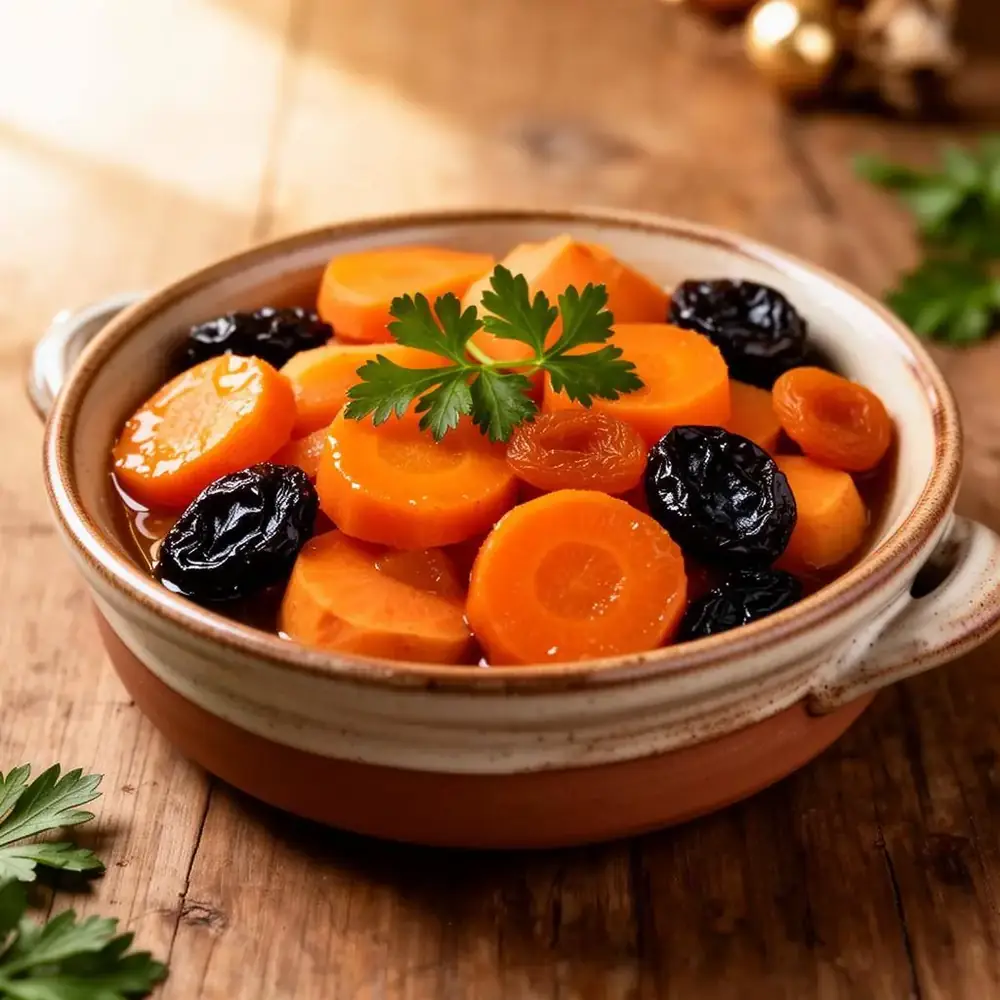
Few dishes capture the spirit of the Jewish holiday table quite like tzimmes. Sweet, glossy, and deeply comforting, this slow-simmered stew of carrots, dried fruit, and warm spices is the kind of food that fills the kitchen with the smell of cinnamon and honey and signals that something special is about to happen. It is humble peasant food elevated into a symbol of hope — a dish you make when you want the year ahead to be as sweet as the one on your plate.
Tzimmes shows up most famously at Rosh Hashanah, the Jewish New Year, but it has quietly become a year-round favorite. Search interest spikes every autumn, and a new generation of home cooks is rediscovering it as a naturally sweet, plant-forward side that fits beautifully alongside brisket, roast chicken, or a vegetarian holiday spread. It is gluten-free, easily made pareve or vegan, and almost impossible to mess up — which is exactly why it has endured for centuries.
This guide will walk you through everything: what tzimmes actually is, the symbolism that makes it a Rosh Hashanah staple, a foolproof recipe for the classic carrot-and-sweet-potato version, and all the tips you need to get that signature glossy glaze without ending up with mush. Whether you grew up with your grandmother's version or are making it for the very first time, you will finish this article ready to bring a sweet new year to your own table.
What Is Tzimmes, Exactly?
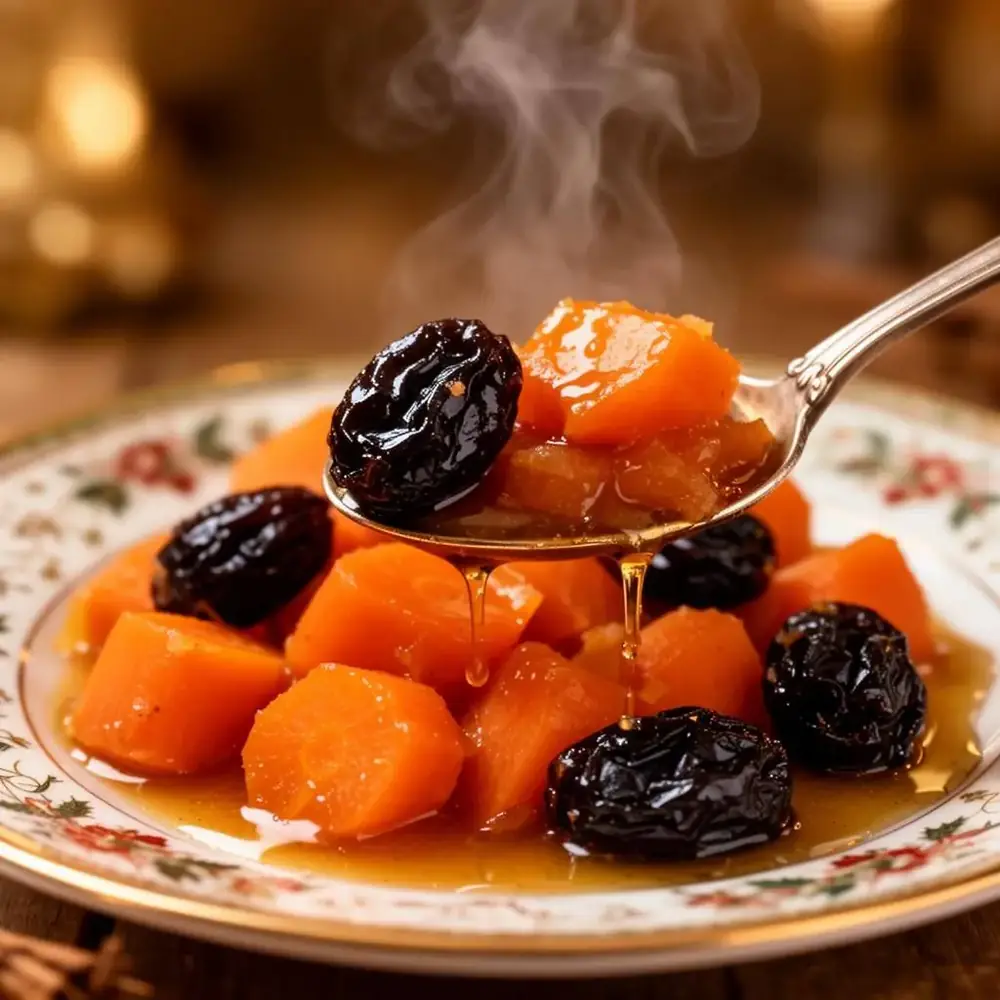
Tzimmes (pronounced TSIM-iss) is a traditional Ashkenazi Jewish dish of sweetened cooked vegetables and dried fruit. At its heart it is almost always built around carrots, slow-cooked until tender and glazed with honey or sugar, orange juice, and warm spices like cinnamon. From there, the variations are endless: sweet potatoes, prunes, dried apricots, raisins, and sometimes chunks of meat or potato all find their way into the pot depending on the family and the region.
The word itself comes from Yiddish and is thought to derive from the German tzu (to) and essen (eat) — roughly, “to eat” or “a mix-up.” Fittingly, in everyday Yiddish, “to make a tzimmes” out of something means to make a big fuss over it. The dish is, in a sense, a delicious fuss: an assortment of ordinary ingredients coaxed into something far greater than the sum of its parts.
There are two broad styles. A savory tzimmes is cooked with brisket or flanken and served as a hearty main or side, the meat juices melding with the sweet glaze. A sweeter, dessert-leaning tzimmes leaves out the meat entirely and leans into honey and dried fruit, often served as a side dish or even spooned over the meal like a relish. The version below is the beloved sweet, pareve carrot-and-sweet-potato tzimmes — the one most people picture when they hear the word.
The Symbolism: Why Tzimmes Belongs on the Rosh Hashanah Table
Tzimmes is not just delicious — it is meaningful, and that is a big part of why it appears at Rosh Hashanah. The Jewish New Year is a time of symbolic foods eaten with intention, each one a small edible prayer for the year to come. Tzimmes hits several of these notes at once.
- Sweetness for a sweet year: Like apples dipped in honey, the natural sweetness of carrots, dried fruit, and honey expresses the wish for a sweet, joyful new year.
- Carrots and abundance: The Yiddish word for carrots, meren, also means “to increase” or “to multiply.” Eating carrots is a wish for increased blessings, good deeds, and prosperity.
- Coins of plenty: Carrots sliced into rounds resemble gold coins, a visual prayer for a year of plenty and good fortune.
- Comfort and continuity: Made the same way for generations, tzimmes connects each table to the ones that came before it — a taste of family and history.
Why This Recipe Works
There is a reason this version becomes the one people ask for year after year. It balances sweetness with brightness, achieves that essential glossy glaze, and keeps the carrots tender without turning them to baby food.
- A balanced glaze of honey and fresh orange juice keeps the dish sweet but never cloying, with a citrusy lift that wakes everything up.
- Two kinds of dried fruit — prunes and apricots — add deep, jammy sweetness and a little tartness for contrast.
- Sweet potatoes give body and a creamy counterpoint to the firmer carrots.
- A pinch of cinnamon and a knob of fat (butter, margarine, or oil) carry the flavor and create that signature sheen.
- It is naturally gluten-free and easily made vegan or pareve, so it fits almost any holiday table.
- It reheats beautifully, which makes it a make-ahead hero for busy holiday cooking.
Ingredients
This recipe makes a generous side dish for 6 to 8 people. Everything is forgiving — feel free to adjust the dried fruit and sweetness to your taste.
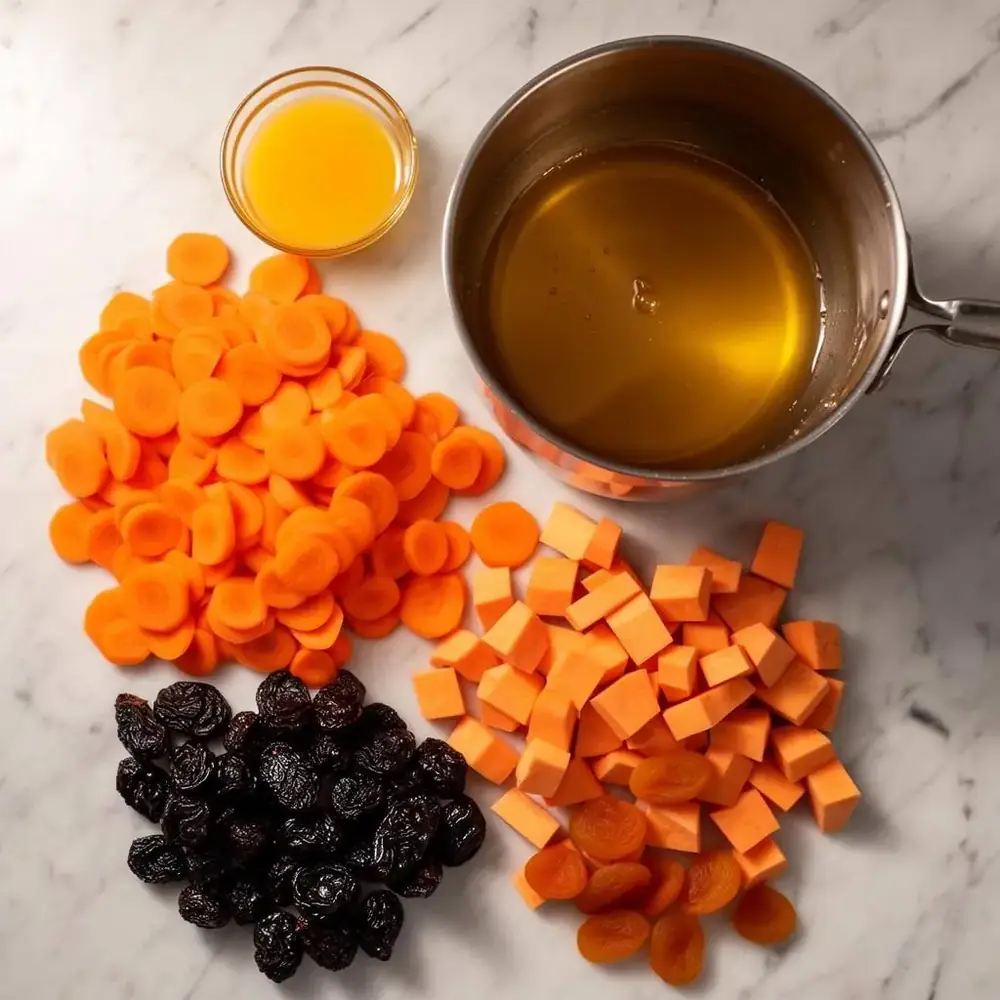
- 2 lbs carrots (about 8 medium), peeled and cut into ½-inch rounds
- 1½ lbs sweet potatoes (about 2 medium), peeled and cut into 1-inch cubes
- 1 cup pitted prunes
- ¾ cup dried apricots, halved if large
- ½ cup honey (or maple syrup for vegan)
- 1 cup fresh orange juice (about 3 oranges)
- ½ cup water, plus more as needed
- 3 tablespoons unsalted butter, margarine, or neutral oil
- 1 teaspoon ground cinnamon
- ¼ teaspoon ground ginger (optional)
- ½ teaspoon kosher salt
- 1 tablespoon fresh lemon juice, to finish
- Chopped fresh parsley, for garnish (optional)
How to Make Tzimmes: Step by Step
Step 1: Prep the Vegetables
Peel the carrots and slice them into even ½-inch rounds so they cook at the same rate. Peel and cube the sweet potatoes into roughly 1-inch pieces — slightly larger than the carrots, since they soften faster. Uniform pieces are the single biggest factor in tzimmes that cooks evenly, so take a minute to keep your cuts consistent.
Step 2: Build the Base
In a large, heavy pot or Dutch oven, combine the carrots, sweet potatoes, honey, orange juice, water, butter or oil, cinnamon, ginger, and salt. Stir to coat everything in the liquid. Bring the mixture to a gentle simmer over medium heat, then reduce the heat to low and cover.
Step 3: Simmer Until Tender
Let the tzimmes simmer gently, covered, for about 30 minutes, stirring occasionally so nothing sticks. The carrots should be starting to soften but still hold their shape. Add the prunes and apricots, give everything a stir, and continue cooking, partially covered, for another 20 to 30 minutes. The dried fruit will plump up and the vegetables will turn meltingly tender.
Step 4: Reduce to a Glaze
Once the carrots and sweet potatoes are fork-tender, uncover the pot and turn the heat up to medium. Let the liquid bubble and reduce for 10 to 15 minutes, stirring gently and often, until it thickens into a glossy syrup that coats the vegetables. This is where tzimmes goes from “watery” to “wow.” Watch it closely near the end so the sugars do not scorch.
Step 5: Finish and Serve
Take the pot off the heat and stir in the fresh lemon juice — this small step brightens all that sweetness and keeps the dish from feeling heavy. Taste and adjust: a little more honey if you want it sweeter, a pinch of salt if it needs grounding. Transfer to a serving dish, scatter with parsley if you like, and serve warm.
Oven-Baked vs. Stovetop Tzimmes
The stovetop method above is the fastest and easiest, but many families swear by the oven. To bake tzimmes, build the base in an oven-safe pot or baking dish, cover tightly with foil, and bake at 350°F for about 1 hour. Uncover, baste the vegetables with the liquid, and bake another 30 to 45 minutes until tender and glazed. The oven gives a slightly deeper, more caramelized flavor and frees up your stovetop — a real advantage on a crowded holiday cooking day.
A slow cooker also works beautifully for hands-off cooking: combine everything except the lemon juice and cook on low for 6 to 7 hours. If the sauce is too thin at the end, transfer it to a pot and reduce on the stovetop, or leave the lid off for the final 30 minutes.
Tips for the Best Tzimmes
- Do not skip the reduction. The difference between forgettable tzimmes and great tzimmes is that final glaze. Let the liquid cook down until it clings to the vegetables.
- Cut for even cooking. Keep carrots in uniform rounds and sweet potatoes slightly larger so both finish tender at the same time.
- Balance the sweetness. The lemon juice at the end is not optional — it keeps the dish bright. Start with less honey; you can always add more.
- Don't over-stir. Once the vegetables are tender, stir gently so they hold their shape rather than breaking into mush.
- Make it your own. Add a cinnamon stick, a splash of orange liqueur, a handful of raisins, or a pinch of nutmeg to personalize the flavor.
Variations to Try
- Meat tzimmes: Brown 2 lbs of cubed brisket or flanken first, then simmer it with the vegetables for a rich, hearty main course.
- Pineapple tzimmes: Add a cup of pineapple chunks (and a little of the juice) for a tangy, tropical sweetness popular in many American Jewish homes.
- Passover tzimmes: Naturally Passover-friendly — just confirm your honey and dried fruit are certified kosher for Passover.
- Lighter tzimmes: Reduce the honey and lean on the natural sweetness of the carrots, sweet potatoes, and dried fruit.
Make-Ahead, Storage, and Reheating
Tzimmes is a make-ahead dream, which is exactly what you want during a hectic holiday. In fact, many cooks insist it tastes even better the next day, once the flavors have had time to meld. Cook it fully, cool it, and refrigerate in an airtight container for up to 5 days.
To reheat, warm it gently on the stovetop over low heat or in a 325°F oven, adding a splash of orange juice or water if it has thickened too much. Tzimmes also freezes well for up to 3 months; thaw overnight in the refrigerator before reheating. Avoid the microwave for large batches, as it can heat unevenly and soften the vegetables too much.
Tzimmes is a wish you can taste — carrots like coins, honey for sweetness, and a pot full of hope for the year ahead.
Serving Suggestions
Tzimmes is endlessly versatile on the table. Its sweetness is the perfect foil for savory, salty mains, which is why it pairs so naturally with brisket and roast chicken. Serve it alongside braised brisket and potato kugel for a classic Ashkenazi holiday spread, or let it shine next to a simple roast for an easy weeknight upgrade. For a vegetarian Rosh Hashanah, tzimmes makes a satisfying, colorful centerpiece next to a grain pilaf and roasted vegetables.
However you serve it, tzimmes does what the best holiday food always does: it turns a meal into a memory. Make it once, and it just might become the dish your family asks for every new year.
Key Takeaways
- Tzimmes is a sweet Ashkenazi stew of carrots, dried fruit and warm spices, traditionally served at Rosh Hashanah for a sweet new year.
- Carrots symbolize abundance (the Yiddish meren means 'to increase') and their coin-like rounds represent prosperity.
- The secret to great tzimmes is reducing the liquid to a glossy honey-orange glaze and finishing with lemon juice for brightness.
- It is naturally gluten-free, easily made vegan or pareve, and tastes even better made a day ahead.
Frequently Asked Questions
What does tzimmes taste like?
Tzimmes is sweet and comforting, with tender carrots and sweet potatoes glazed in honey and orange juice, plump prunes and apricots for jammy depth, and warm notes of cinnamon. A finishing squeeze of lemon keeps it bright rather than overly sugary.
Why is tzimmes eaten on Rosh Hashanah?
Tzimmes is full of symbolism for the Jewish New Year. Its sweetness expresses the wish for a sweet year, carrots represent abundance (the Yiddish word for carrots also means 'to increase'), and carrot rounds resemble gold coins, symbolizing prosperity.
Can I make tzimmes ahead of time?
Yes, tzimmes is ideal for making ahead and many people think it tastes even better the next day. Refrigerate for up to 5 days or freeze for up to 3 months, then reheat gently on the stovetop or in a low oven, adding a splash of orange juice if needed.
How do I keep tzimmes from being watery?
After the carrots and sweet potatoes are tender, uncover the pot and simmer over medium heat for 10 to 15 minutes to reduce the liquid into a glossy glaze that coats the vegetables. Stir often near the end so the sugars don't scorch.
Loved this recipe?
Share it with your family, leave a comment, and explore more traditional and modern Jewish dishes on JewishCuisine.
Explore more Holidays recipes