Mandelbrot: The Twice-Baked Jewish Almond Cookie Making a Big Comeback
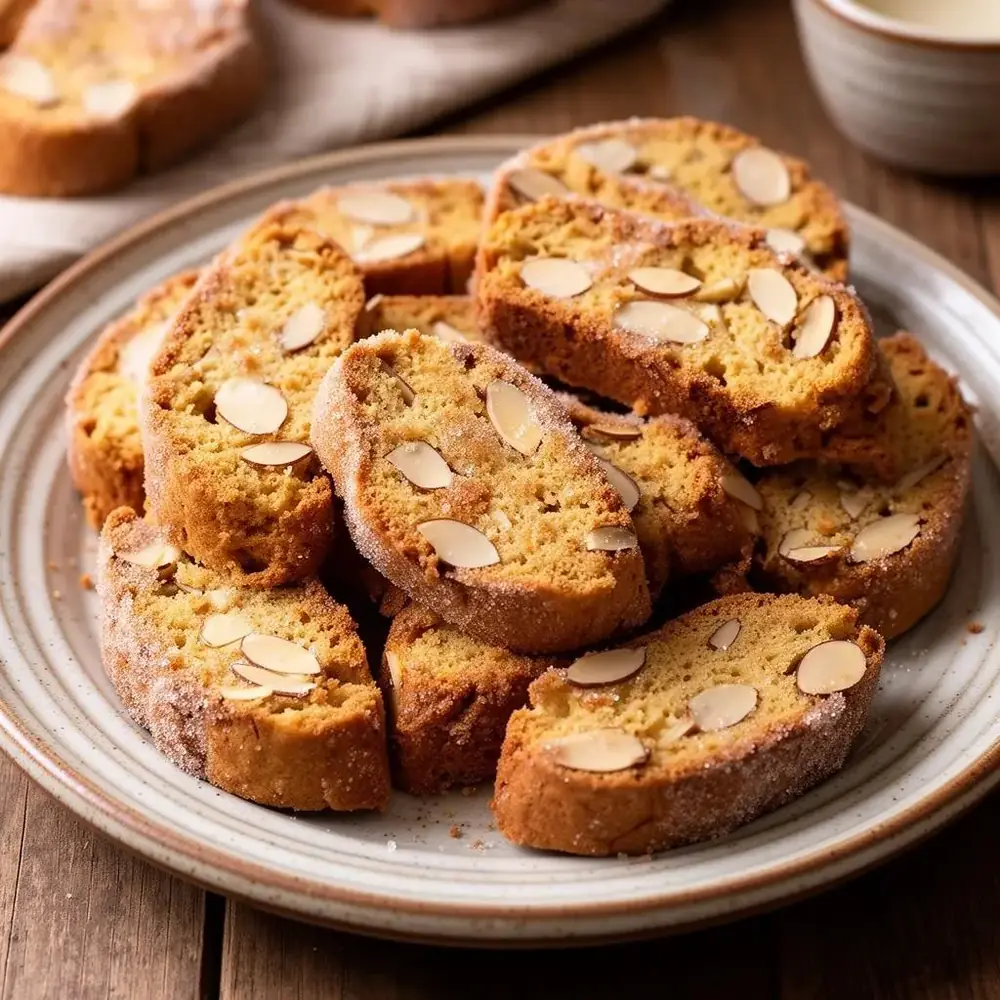
Every Jewish family seems to have a tin of them somewhere — slightly crisp, faintly sweet, studded with almonds, and absolutely perfect dunked in a glass of hot tea. Mandelbrot, the twice-baked cookie whose name literally means “almond bread” in Yiddish, has quietly anchored the Ashkenazi dessert table for well over a century. And right now, it's having a genuine moment.
As home bakers rediscover old-world recipes and search interest in nostalgic, low-fuss cookies climbs, mandelbrot has surged back into the spotlight. It's the original make-ahead cookie: it keeps for weeks, travels beautifully, and only gets better as it sits. Food writers have started calling it “Jewish biscotti,” and while the comparison isn't wrong, mandelbrot has a softer, richer character all its own.
This guide will walk you through a foolproof, bakery-quality mandelbrot — from mixing the dough to that all-important second bake that gives these cookies their signature crunch. Along the way you'll find flavor variations, kosher notes, troubleshooting, and a little history to share at the table.
What Makes This Recipe Special?
Mandelbrot lives or dies by texture. Too soft and it's just a sweet loaf; too hard and it shatters teeth. This tested version threads the needle for a cookie that's crisp on the outside, tender at the center, and deeply nutty.
- A reliable dough that's easy to shape into logs — no special equipment needed.
- Toasted almonds for maximum flavor and that classic mandel crunch.
- Naturally pareve (non-dairy), so it works after both meat and dairy meals and for Shabbat dessert.
- Endlessly customizable — chocolate chips, dried cherries, citrus zest, or anise all welcome.
Ingredients
For the Dough
- 3 cups all-purpose flour
- 2 teaspoons baking powder
- ½ teaspoon salt
- 3 large eggs
- 1 cup granulated sugar
- ¾ cup neutral oil (such as canola or light vegetable oil)
- 2 teaspoons pure vanilla extract
- 1 teaspoon almond extract
- 1 cup whole or sliced almonds, lightly toasted and roughly chopped
For the Cinnamon-Sugar Coating
- 3 tablespoons granulated sugar
- 1 teaspoon ground cinnamon
Step-by-Step Instructions
Step 1: Toast the Almonds
- Spread the almonds on a dry baking sheet and toast at 350°F (175°C) for 7–10 minutes, until fragrant and lightly golden.
- Let them cool, then roughly chop. Toasting deepens the almond flavor and is the single biggest upgrade to classic mandelbrot.
Step 2: Make the Dough
- In a bowl, whisk together flour, baking powder, and salt.
- In a larger bowl, beat the eggs and sugar until pale and slightly thickened, about 2 minutes.
- Beat in the oil, vanilla, and almond extract until smooth.
- Add the dry ingredients in two additions, mixing just until a soft, slightly sticky dough forms.
- Fold in the toasted almonds. The dough should be soft but workable; if it's too sticky to handle, chill it for 20–30 minutes.
Step 3: Shape and First Bake
- Preheat the oven to 350°F (175°C) and line a baking sheet with parchment.
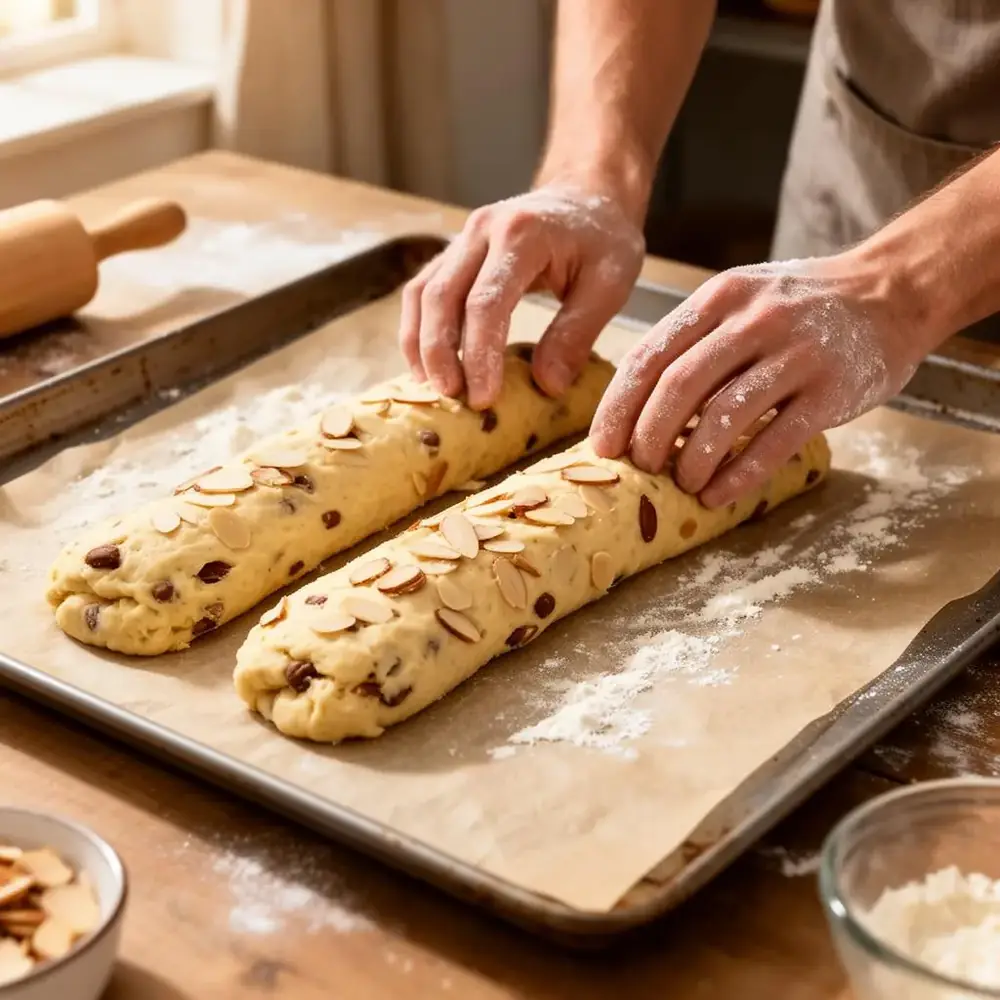
- Divide the dough in half. With lightly oiled or floured hands, shape each piece into a log about 3 inches wide and ¾ inch tall.
- Place the logs several inches apart — they spread. Sprinkle half the cinnamon-sugar over the tops.
- Bake for 25–30 minutes, until set and lightly golden. The logs should feel firm to the touch.
Step 4: Slice and Second Bake
- Remove the logs and lower the oven to 325°F (160°C). Let the logs cool for 10 minutes — this prevents crumbling.
- Using a serrated knife, slice each log on a slight diagonal into ¾-inch pieces.
- Lay the slices cut-side up on the baking sheet and sprinkle with the remaining cinnamon-sugar.
- Bake 10–15 minutes more, flipping halfway, until the edges are crisp and golden. For extra-crunchy mandelbrot, bake a few minutes longer.
The secret is patience: cool the logs before slicing, then let that second bake do its work. That's what turns soft dough into the crisp, dunkable cookie everyone remembers.
A Little Jewish Culinary History
Mandelbrot has been a fixture of Ashkenazi Jewish baking since at least the 19th century in Eastern Europe, where almonds were a prized and somewhat luxurious ingredient. Its twice-baked method wasn't just for texture — it made the cookies shelf-stable, an enormous practical advantage in homes without refrigeration and for families who needed sweets that could last through a long Shabbat or a journey. Some food historians draw a line between mandelbrot and Italian biscotti, while others see parallels with German zwieback; the most likely truth is that twice-baked breads arose independently across cultures because the technique simply works.
When Jewish immigrants brought mandelbrot to America, regional and family variations blossomed. Some bakers swear by butter (in dairy households), others by oil for a pareve cookie. Chocolate chip mandelbrot became a mid-century favorite, while Sephardic and Israeli kitchens added orange zest, anise, or even a splash of brandy. Today, as nostalgic baking trends and Jewish food culture enjoy a wider spotlight, mandelbrot is being rediscovered by a whole new generation of bakers.

Delicious Variations
- Chocolate chip: Fold in 1 cup pareve chocolate chips with the almonds for a beloved modern classic.
- Dried cherry & almond: Add ½ cup chopped dried cherries for a sweet-tart contrast.
- Citrus: Stir in the zest of one orange or lemon for a bright, fragrant twist.
- Chocolate-dipped: Dip the cooled ends in melted pareve chocolate and let set for an elegant finish.
- Anise: Swap the almond extract for 1 teaspoon anise seeds or extract for an old-world flavor.
Cooking Tips From the Experts
- Toast your almonds — it's the difference between good and unforgettable mandelbrot.
- Don't overmix the dough once the flour goes in, or the cookies turn tough.
- Cool the logs before slicing to get clean cuts without crumbling.
- A serrated knife and a gentle sawing motion give the neatest slices.
- Bake longer for crunchy mandel bread, shorter for a slightly tender center — both are traditional.
Common Mistakes to Avoid
- Slicing the logs while they're still hot (they'll crumble).
- Skipping the second bake — it's what makes mandelbrot mandelbrot.
- Using a thin dull knife, which tears rather than slices.
- Crowding the logs on the pan; they need room to spread.
Storage and Make-Ahead
Mandelbrot is the ultimate make-ahead cookie. Stored in an airtight container at room temperature, it stays crisp and delicious for up to two weeks — many bakers insist it tastes even better after a day or two. For longer storage, freeze the baked cookies in a sealed bag for up to three months and bring them back to room temperature before serving. Because they keep so well and ship without crumbling, mandelbrot makes a thoughtful homemade gift and a reliable contribution to any holiday dessert spread.
Key Takeaways
- Mandelbrot (“almond bread” in Yiddish) is a twice-baked Ashkenazi cookie, similar to but softer than Italian biscotti.
- Made with oil instead of butter, classic mandelbrot is pareve and pairs with any meal.
- Toasting the almonds and chilling sticky dough are the two upgrades that make the biggest difference.
- Cool the logs before slicing, then bake a second time to achieve the signature crisp texture.
- Mandelbrot keeps for up to two weeks at room temperature and freezes for months, making it a perfect make-ahead treat.
Frequently Asked Questions
What is the difference between mandelbrot and biscotti?
Both are twice-baked cookies, but mandelbrot is typically made with oil (making it pareve) and tends to be a bit softer and richer than the harder, drier Italian biscotti. Mandelbrot also leans on almonds and warm spices like cinnamon.
Why is my mandelbrot crumbling when I slice it?
The logs are likely too hot or the slices too thin. Let the logs cool for about 10 minutes after the first bake, then use a serrated knife with a gentle sawing motion to cut ¾-inch slices.
Can I make mandelbrot dairy or gluten-free?
Yes. For a dairy version, substitute melted butter for the oil (note it will no longer be pareve). For gluten-free, use a quality 1:1 gluten-free baking blend, though the cookies will be slightly more delicate.
How long does mandelbrot stay fresh?
Stored airtight at room temperature, mandelbrot stays crisp for up to two weeks and often tastes even better after a day. It also freezes well for up to three months.
Loved this recipe?
Share it with your family, leave a comment, and explore more traditional and modern Jewish dishes on JewishCuisine.
Explore more Desserts recipes