Kuku Sabzi: The Persian Jewish Herb Frittata Everyone Serves for the New Year
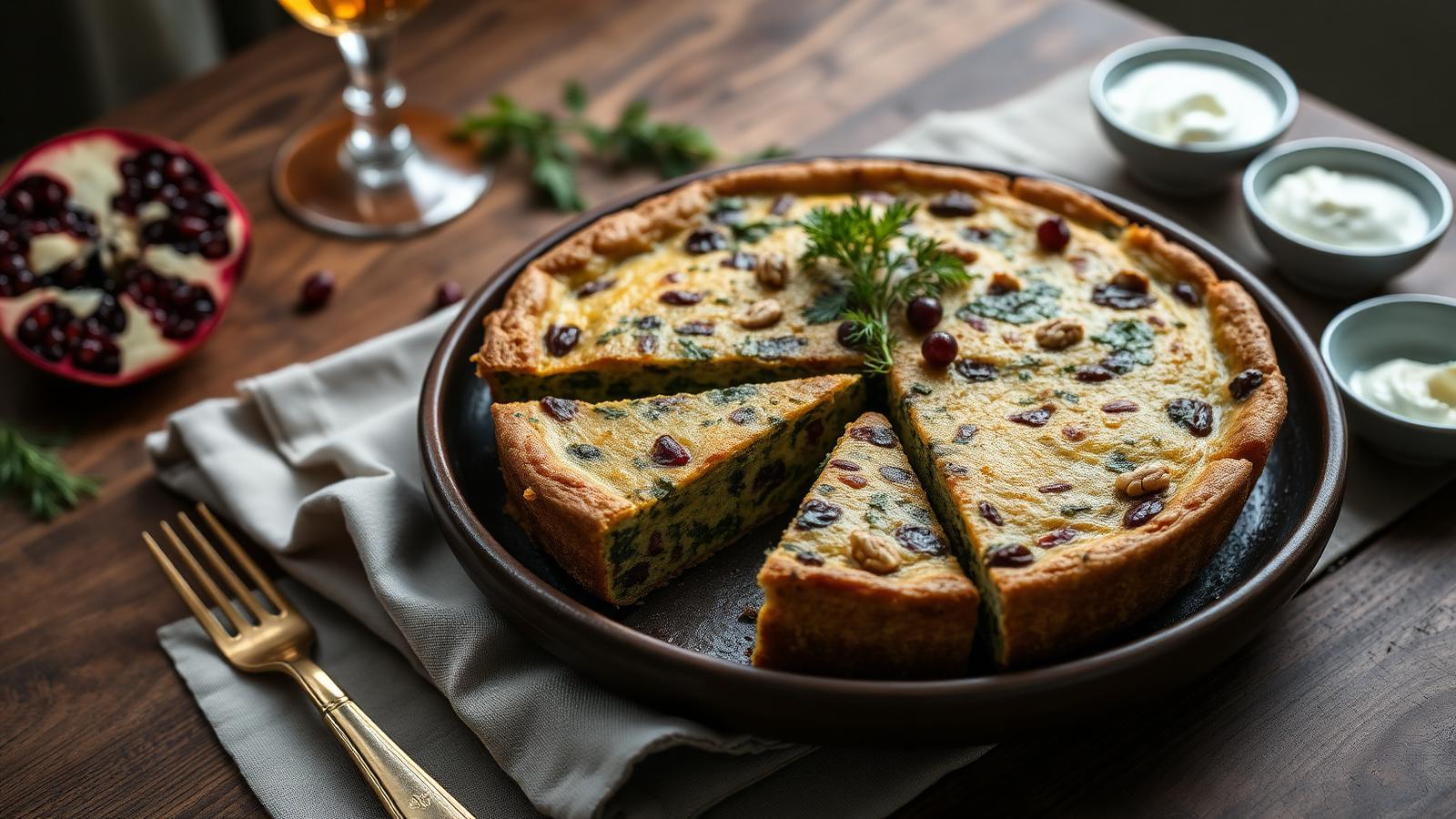
Cut into a proper kuku sabzi and the inside is almost shockingly green — a dense, tender slab of eggs bound to more herbs than eggs, jeweled with ruby barberries and toasted walnuts. It is the dish Persian Jewish families put at the center of the Nowruz table each spring and again on Rosh Hashanah in the fall, because greens signal renewal and eggs signal the fresh start of a new year. It is also one of the most quietly clever recipes in the Jewish repertoire: pareve, gluten-free, make-ahead friendly, and just as good cold from the fridge as it is warm from the pan.
If you have only ever met kuku sabzi as a pale, sad omelet with a few flecks of parsley, this guide is for you. The real thing is a herb-forward, deeply savory main course with a golden crust and a moist, almost custardy heart. Below you will find the cultural background, the exact ingredient list Persian Jewish grandmothers actually use, a step-by-step method for both the skillet and the oven, and the small technical fixes that separate a memorable kuku from a rubbery one.
Table of Contents
- A Short History of Kuku Sabzi
- Why Kuku Sabzi Is Trending Right Now
- Ingredients: What Goes Into an Authentic Kuku
- Step-by-Step: How to Make Kuku Sabzi
- Expert Tips From the Persian Jewish Kitchen
- Common Mistakes to Avoid
- How to Serve Kuku Sabzi
- Frequently Asked Questions
- Key Takeaways
- Conclusion
A Short History of Kuku Sabzi
Kuku (sometimes spelled kookoo) is the Persian family of thick, baked or pan-cooked egg dishes — closer in spirit to an Italian frittata or a Spanish tortilla than to a French omelet. The word sabzi simply means "greens" or "fresh herbs" in Farsi. Persian cooks make dozens of kuku variations: kuku sibzamini with potato, kuku kadoo with zucchini, kuku gerdoo with walnut. Kuku sabzi is the herb one, and it is the most famous by a wide margin.
Persian Jews — one of the oldest Jewish communities in the world, with roots in Iran going back more than 2,700 years — folded kuku sabzi into their holiday cycle centuries ago. On Nowruz, the Persian New Year that falls at the spring equinox, the dish appears on the sofreh alongside sabzi polo (herbed rice with fish), because a wealth of greens is understood to invite a green, growing year. Persian Jewish households doubled down: they also serve kuku sabzi on Rosh Hashanah, layering Persian symbolism on top of the Jewish tradition of eating symbolic foods (simanim) for a sweet, prosperous new year.
After the 1979 Iranian Revolution, tens of thousands of Persian Jews resettled in Los Angeles, New York, Tel Aviv, and London, and kuku sabzi traveled with them. Today it is one of the clearest culinary through-lines connecting the Iranian Jewish diaspora across four continents.
Why Kuku Sabzi Is Trending Right Now
Three currents are pushing kuku sabzi into wider American kitchens in 2026. First, the herb-forward cooking movement — championed by chefs like Yotam Ottolenghi, Naz Deravian, and Einat Admony — has trained home cooks to buy parsley and cilantro by the fistful instead of by the sprig. Kuku sabzi rewards that shopping habit better than almost any other dish.
Second, the demand for high-protein, low-carb, gluten-free mains that still feel like a real meal has never been stronger, and kuku sabzi is exactly that: eggs, greens, nuts, olive oil. A single wedge delivers around 15 grams of protein with virtually no starch. Third, the make-ahead, meal-prep aesthetic favors dishes that hold up in the fridge for days and eat well at room temperature. Kuku sabzi does both effortlessly — Persian home cooks have always packed it for picnics, Shabbat lunch, and long road trips.
Ingredients: What Goes Into an Authentic Kuku
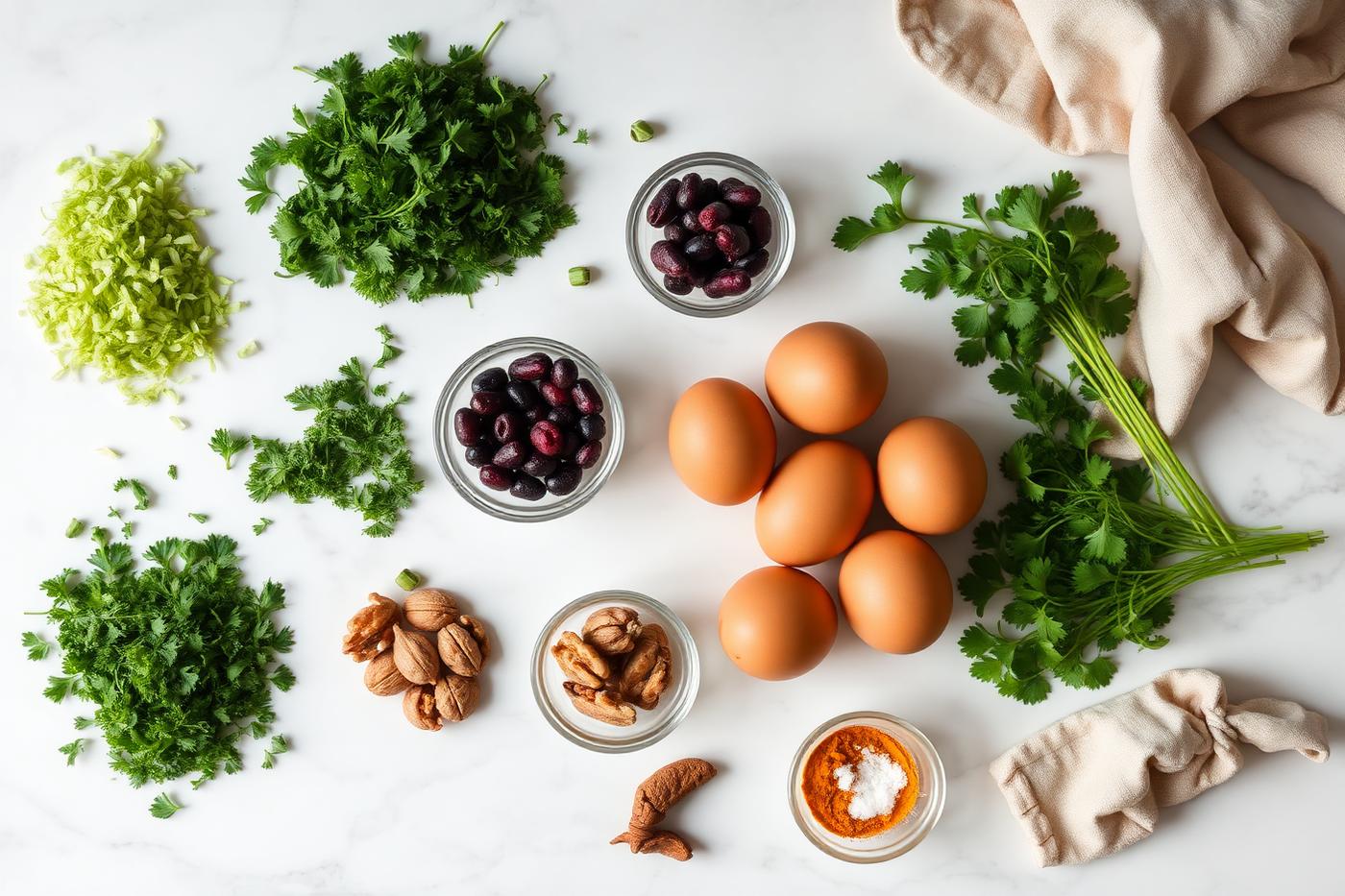
The Herb Base (the whole point of the dish)
- 2 large bunches flat-leaf parsley, thick stems removed
- 2 large bunches cilantro, thick stems removed
- 1 large bunch fresh dill
- 1 bunch chives or the green tops of 6 scallions
- Optional but traditional: a small handful of fresh fenugreek leaves (shanbalileh), or 1 teaspoon dried
You want roughly 6 packed cups of finely chopped herbs after trimming. It looks like a wildly excessive pile before it cooks down; it is not. The ratio of herbs to eggs is what gives kuku sabzi its identity.
The Binding and the Jewels
- 6 large eggs
- 2 tablespoons flour, matzo meal, or chickpea flour (chickpea flour keeps it gluten-free and Passover-appropriate for many families)
- 1/2 teaspoon baking powder (leave out on Passover)
- 1 teaspoon ground turmeric
- 1 teaspoon fine sea salt, plus more to taste
- 1/2 teaspoon freshly ground black pepper
- 1/3 cup toasted walnuts, roughly chopped
- 3 tablespoons dried barberries (zereshk), rinsed — or dried cranberries chopped small, in a pinch
- 3–4 tablespoons neutral or olive oil for cooking
Step-by-Step: How to Make Kuku Sabzi
1. Wash and dry the herbs thoroughly
This is the step people rush and regret. Wet herbs steam instead of frying and produce a soggy kuku. Fill a large bowl with cold water, plunge the herbs in, swish, lift them out into a salad spinner, and spin dry in batches. Then spread them on clean kitchen towels and pat once more.
2. Chop finely by hand
Resist the food processor — it bruises the herbs, releases too much water, and turns the color olive rather than emerald. A sharp chef's knife and 10 minutes of chopping gives you the light, fluffy pile you want.
3. Whisk the base, then fold in everything
Beat the eggs in a large bowl with the flour, baking powder, turmeric, salt, and pepper until smooth. Add the chopped herbs, walnuts, and barberries. Fold gently with a spatula until every strand of green is coated. The mixture will look barely wet — that is correct.
4. Cook it (skillet or oven)
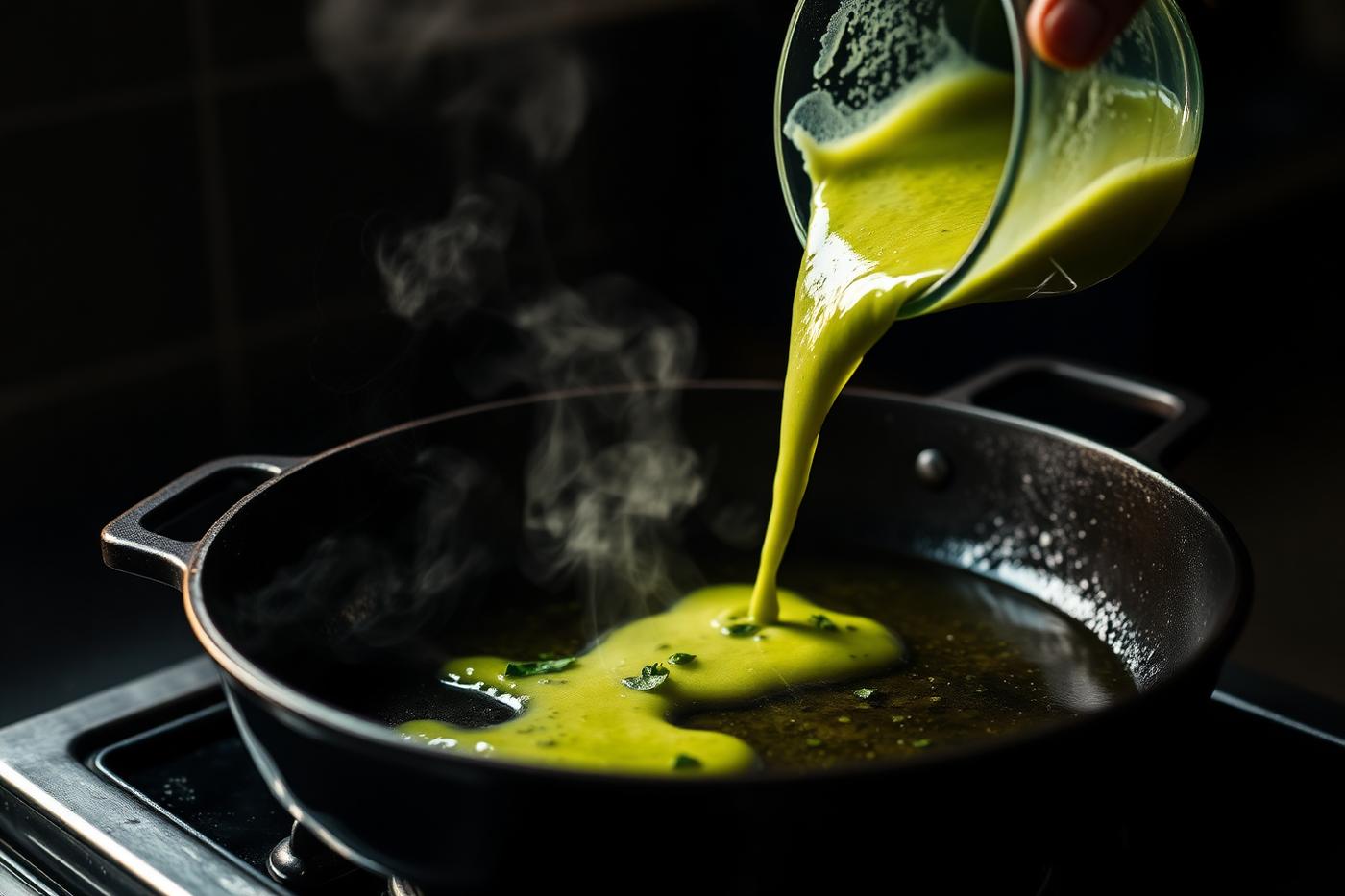
Skillet method: Heat 3 tablespoons oil in a 10-inch nonstick or well-seasoned cast iron pan over medium heat until it shimmers. Scrape in the mixture, press flat, cover with a lid, and cook 10–12 minutes until the bottom is deeply golden and the top is nearly set. Slide onto a plate, invert back into the pan with another tablespoon of oil, and cook 5–7 minutes more.
Oven method (the one Persian Jewish home cooks lean on for holidays): Preheat to 375°F. Pour the mixture into a well-oiled 9-inch cake pan or square baking dish, drizzle another tablespoon of oil on top, and bake 35–40 minutes until the top is set, springy, and browned at the edges. Broil the last minute for a deeper crust if you like.
5. Rest, then cut
Let the kuku rest at least 10 minutes. It slices cleanly warm, but it is arguably better after an hour at room temperature, when the flavors settle.
Expert Tips From the Persian Jewish Kitchen
- Salt the herbs after chopping, wait 5 minutes, and squeeze out any released water in a towel. This single move is the difference between a kuku that sets crisply and one that weeps.
- Toast the walnuts in a dry pan until fragrant before chopping — raw walnuts taste flat inside eggs.
- Bloom the turmeric in a spoonful of the cooking oil for 20 seconds before mixing it in; the color and flavor deepen noticeably.
- For a taller, more custardy kuku, use 7 eggs and bake in a smaller pan; for a thinner, crispier one, use 5 eggs and a wider skillet.
- Line the baking pan with parchment for effortless release — Persian home cooks often skip this and just oil the pan heavily, but parchment is more forgiving.
Common Mistakes to Avoid
- Using dried parsley or a jar of "Italian herb blend." Kuku sabzi is a fresh-herb dish, full stop. Dried herbs turn it dusty and bitter.
- Skipping the fenugreek. It is a small ingredient with an outsized effect — earthy, slightly maple-sweet — and its absence is what makes most Western attempts taste generic.
- Cooking over high heat. The eggs seize, the herbs scorch, and the interior stays raw. Medium or medium-low, patiently, is the rule.
- Overmixing after adding the herbs. You are folding, not whipping, so the greens stay distinct and the texture stays airy.
- Cutting into it straight out of the pan. Ten minutes of rest lets the structure firm and the slices hold together.
How to Serve Kuku Sabzi
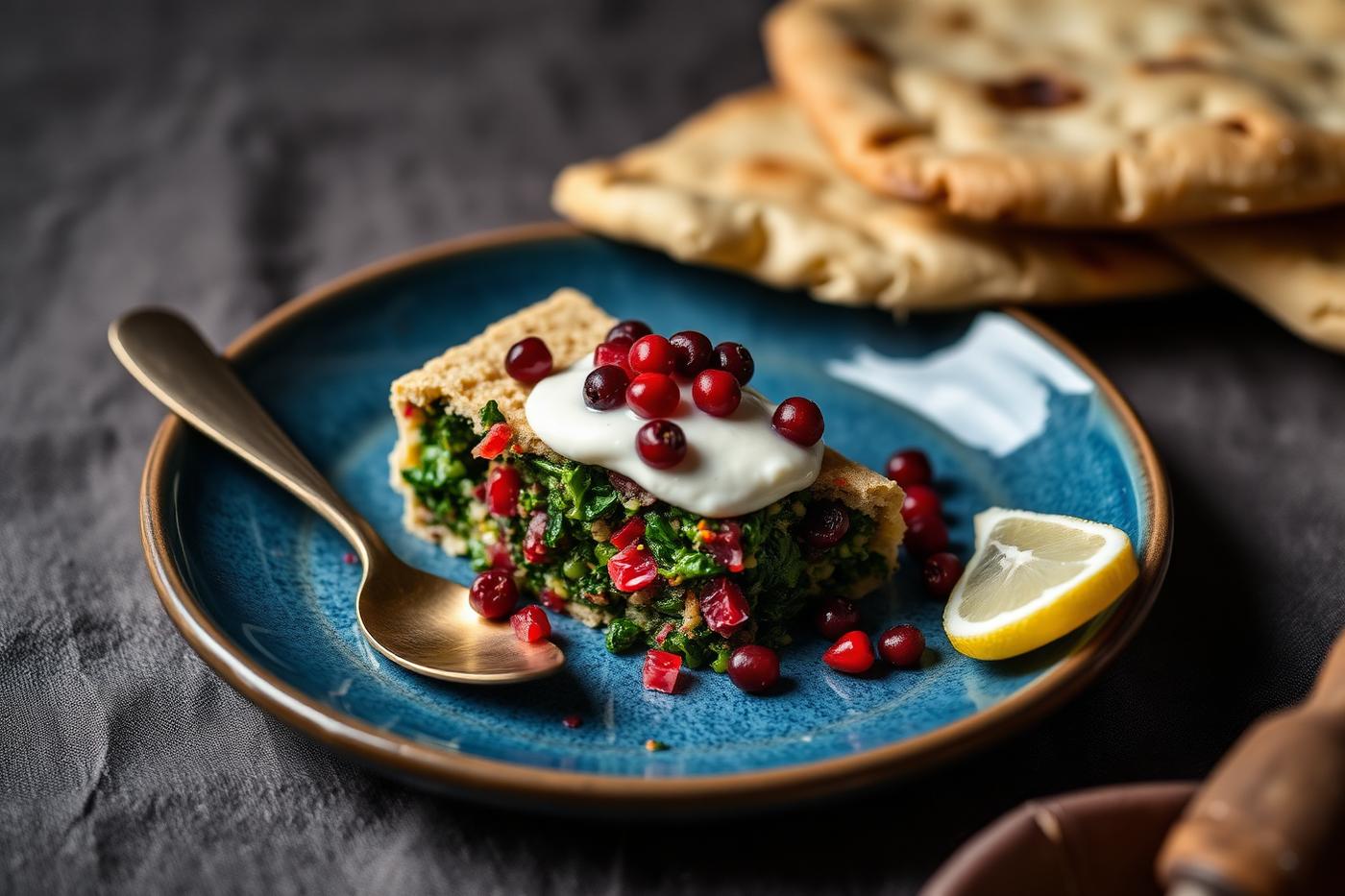
The traditional Persian Jewish plate pairs kuku sabzi with warm sangak or lavash flatbread, a bowl of thick strained yogurt (mast) or labneh, torshi (Persian pickles), sliced radishes, and a wedge of lemon. It is a full meal that way. For Shabbat lunch, many households serve it cold alongside cold roast chicken and a herby rice salad; for Rosh Hashanah, it takes a spot on the appetizer table between the round challah and the pomegranate seeds.
Frequently Asked Questions
Is kuku sabzi Passover-friendly?
Yes, with two small swaps: use matzo meal (for Ashkenazi households) or chickpea flour (accepted in most Sephardi and Mizrahi traditions) in place of regular flour, and omit the baking powder. Persian Jewish families have served kuku sabzi at Passover Seders for generations.
Can I make kuku sabzi ahead of time?
Absolutely. It keeps beautifully in the fridge for up to 4 days, tightly wrapped. Persian home cooks consider it a picnic and travel food precisely because it holds so well. Serve it cold, at room temperature, or briefly rewarmed in a low oven.
What is the difference between kuku sabzi and a frittata?
The herb-to-egg ratio. A frittata is mostly eggs with vegetables mixed in; kuku sabzi is mostly herbs bound together by just enough egg. That inversion produces a completely different texture — denser, greener, more savory — and makes the herbs the star rather than a garnish.
Can I freeze kuku sabzi?
You can, but the texture softens on thawing. Cool it completely, slice into wedges, wrap individually, and freeze up to 2 months. Reheat from frozen at 325°F for about 15 minutes. It is best fresh or fridge-cold, honestly.
Do I have to use barberries?
No, but they are worth the small effort to find. Their tart pop is the counterweight to the earthy herbs and rich walnuts. If you truly cannot get them, use finely chopped dried cranberries (soaked briefly in lemon juice) or a squeeze of fresh lemon over the finished kuku.
Key Takeaways
- Kuku sabzi is the Persian Jewish herb frittata served for Nowruz and Rosh Hashanah as a symbol of renewal.
- The dish is mostly herbs, not mostly eggs — plan on about 6 packed cups of chopped greens for 6 eggs.
- Dry the herbs thoroughly and cook over moderate heat to avoid a soggy, dull-colored result.
- Fenugreek and barberries are the two ingredients that turn a good kuku into an authentic one.
- It is naturally gluten-free with chickpea flour, keeps for days, and travels beautifully.
Conclusion
Kuku sabzi is proof that a Jewish holiday centerpiece does not have to be a slow-braised roast to feel meaningful. It is a dish built entirely on greens — a whole herb garden folded into a handful of eggs — and it carries centuries of Persian Jewish belief that a green year is a good year. Whether you serve it at your Rosh Hashanah table this fall, at a Nowruz brunch, or simply cold from the fridge on a Tuesday, you are joining one of the oldest continuous Jewish food traditions still on the table today. Make the pile of herbs bigger than seems reasonable, cook it low and slow, and let it rest before you cut. The rest takes care of itself.
Key Takeaways
- Kuku sabzi is the Persian Jewish herb frittata for Nowruz and Rosh Hashanah, symbolizing renewal.
- The recipe is mostly herbs bound by eggs, not the other way around.
- Dry herbs, moderate heat, and a proper rest produce the right green, custardy texture.
- Fenugreek and barberries are the signature flavors of an authentic kuku sabzi.
- It is naturally gluten-free, make-ahead, pareve, and travels well.
Frequently Asked Questions
Is kuku sabzi Passover-friendly?
Yes — swap chickpea flour or matzo meal for regular flour and omit the baking powder.
Can I make kuku sabzi ahead of time?
Yes, it keeps 4 days in the fridge and is famously good cold or at room temperature.
What is the difference between kuku sabzi and a frittata?
Kuku sabzi is mostly herbs bound by just enough egg; a frittata is mostly eggs with add-ins.
Can I freeze kuku sabzi?
Yes, up to 2 months in individual wedges, but the texture softens slightly on thawing.
Do I have to use barberries?
They are traditional and worth sourcing, but chopped dried cranberries with lemon juice work in a pinch.
Loved this recipe?
Share it with your family, leave a comment, and explore more traditional and modern Jewish dishes on JewishCuisine.
Explore more Holidays recipes